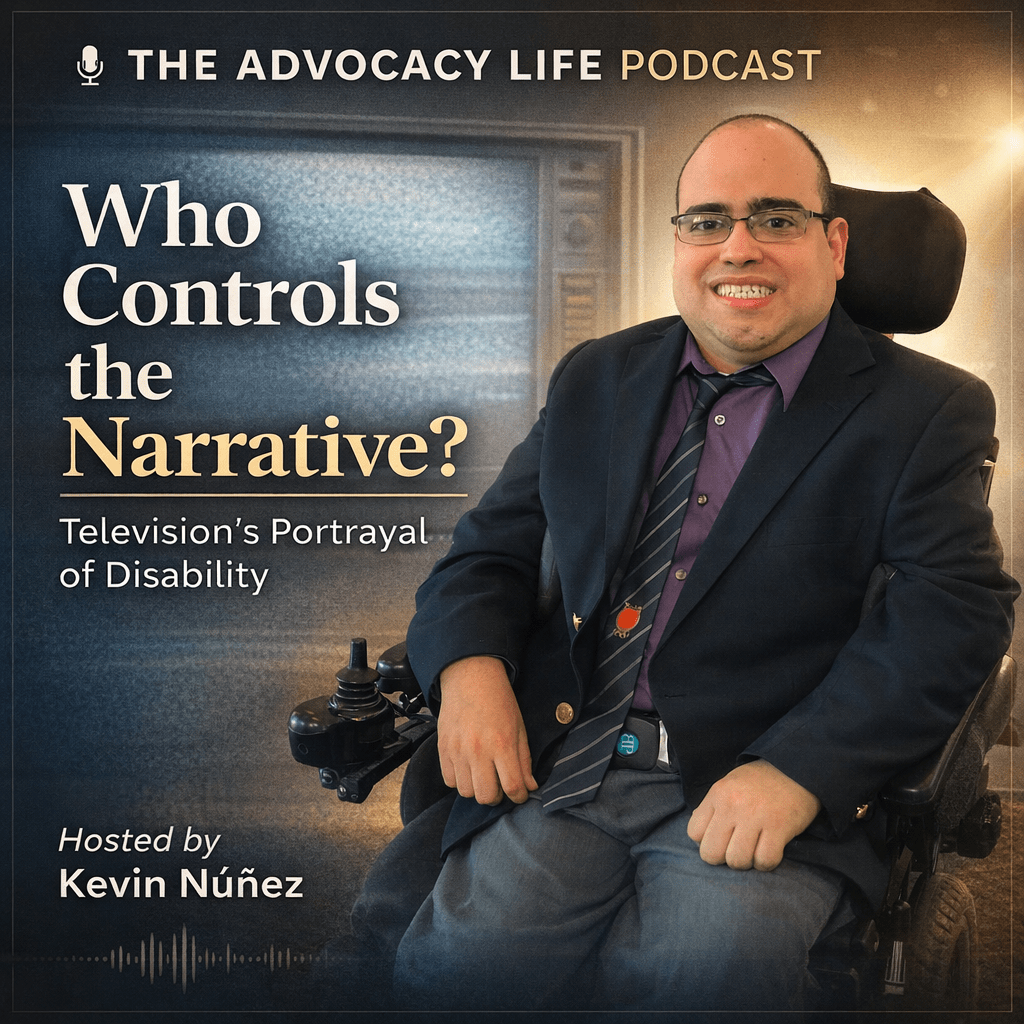
Why is it that in the movies we watch and the reality TV we consume, disability is only portrayed in a handful of ways? Why are we always the “inspiration” or the “tragedy,” but never just the person?
In this episode of The Advocacy Life, Kevin Nunez delves into the “Exposure Method” to explore how American media sanitizes the disability experience. From the “cute” portrayals on TV to the harsh reality of “survival math” and the lack of “days off” from a diagnosis, Kevin bridges the gap between how the world sees us and how we actually live.
It might not surprise those of you who follow my work regularly that I don’t get out into the physical world as much as I’d like. Since the pandemic in 2020, the rising cost of living and the complexities of coordinating care have made “getting out” a major operation.While 95% of my advocacy work happens virtually—which has certainly made things more accessible—I have to be honest: I miss the personal touch. There is no digital substitute for a firm handshake with a colleague, a hug from a friend, or seeing a meaningful smile in person rather than through a Zoom tile.
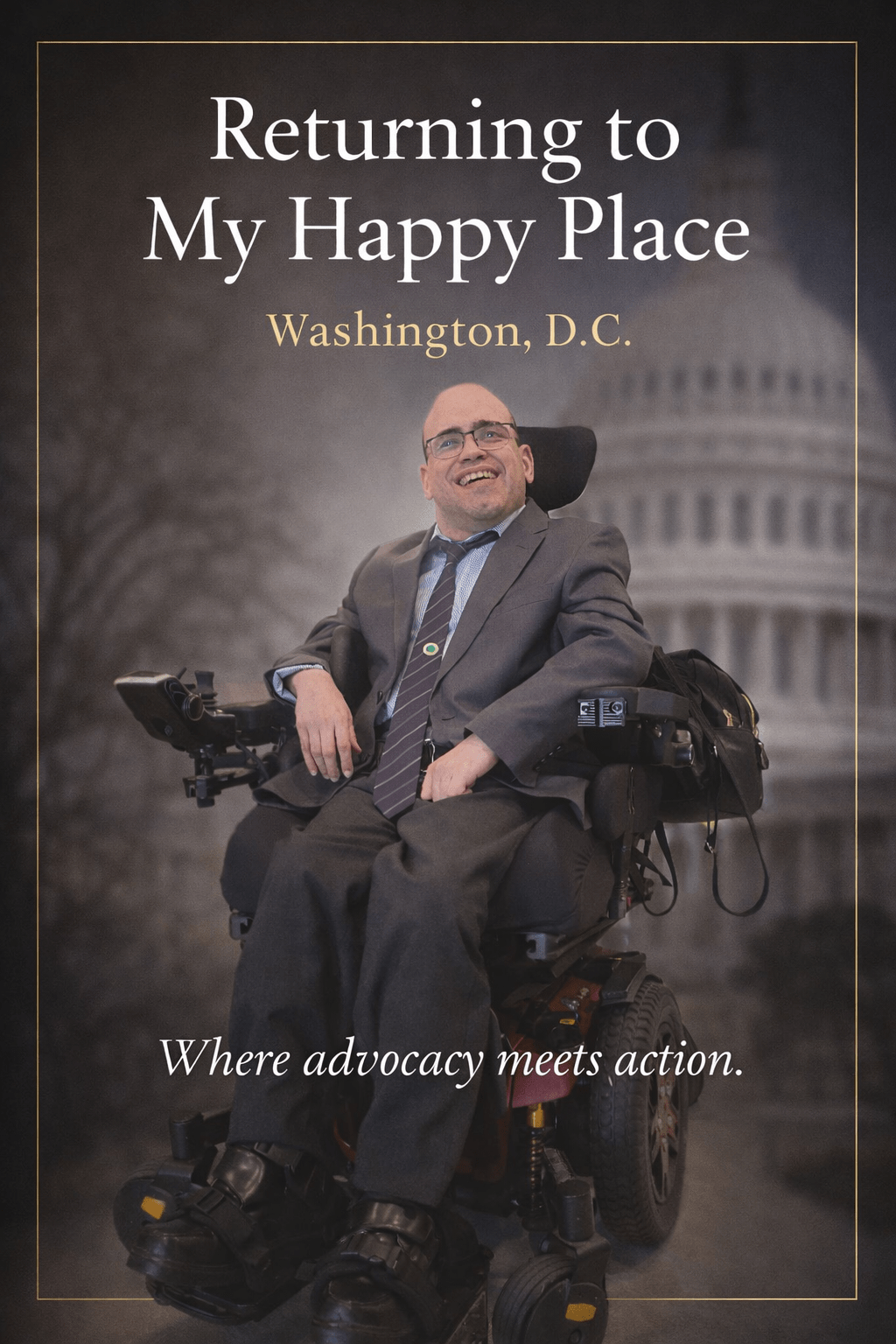
That is why I am so energized to share that at the end of March, I am heading back to my “Happy Place”: Washington, D.C.To some, D.C. is just a place where politicians work. But as a child, I never wanted to be a baseball player or an astronaut. I wanted to be in Washington. I wanted to be where the laws are made, because I knew that was where someone like me could make the most difference.
Rolling—my way through Capitol Hill is my dream job. Representing the state of New Jersey and the individuals with disabilities in our community is a privilege I do not take lightly. It humbles me every single time.Before I can get on the road, the real work happens here at home. I am currently spending my afternoons contacting legislative offices to schedule visits on behalf of the New Jersey Council on Developmental Disabilities (NJCDD).These meetings are where the “Exposure Method” meets the “Legislative Process.We
We aren’t just going there to share stories; we are going there to ensure that when policy is written, our lives are not treated as an afterthought or a “survival math” equation.Some might say these seminars are just formalities and that nothing really gets done. I disagree. In advocacy, small things add up to big things. Every phone call to a staffer, every scheduled visit, and every face-to-face conversation on the Hill is a brick in the bridge between existence and a full life.
At 39, I’ve learned that the natural rhythm of life can sometimes feel like things are being taken away. But my message to you today is this: Don’t ever stop trying. Don’t ever stop reaching. Don’t ever stop getting excited.What might feel like “nothing” to someone else is “everything” to us. I can’t wait to head to the nation’s capital to represent you, and I look forward to telling you all about the adventures when I return. Keep on rolling. Keep on living.
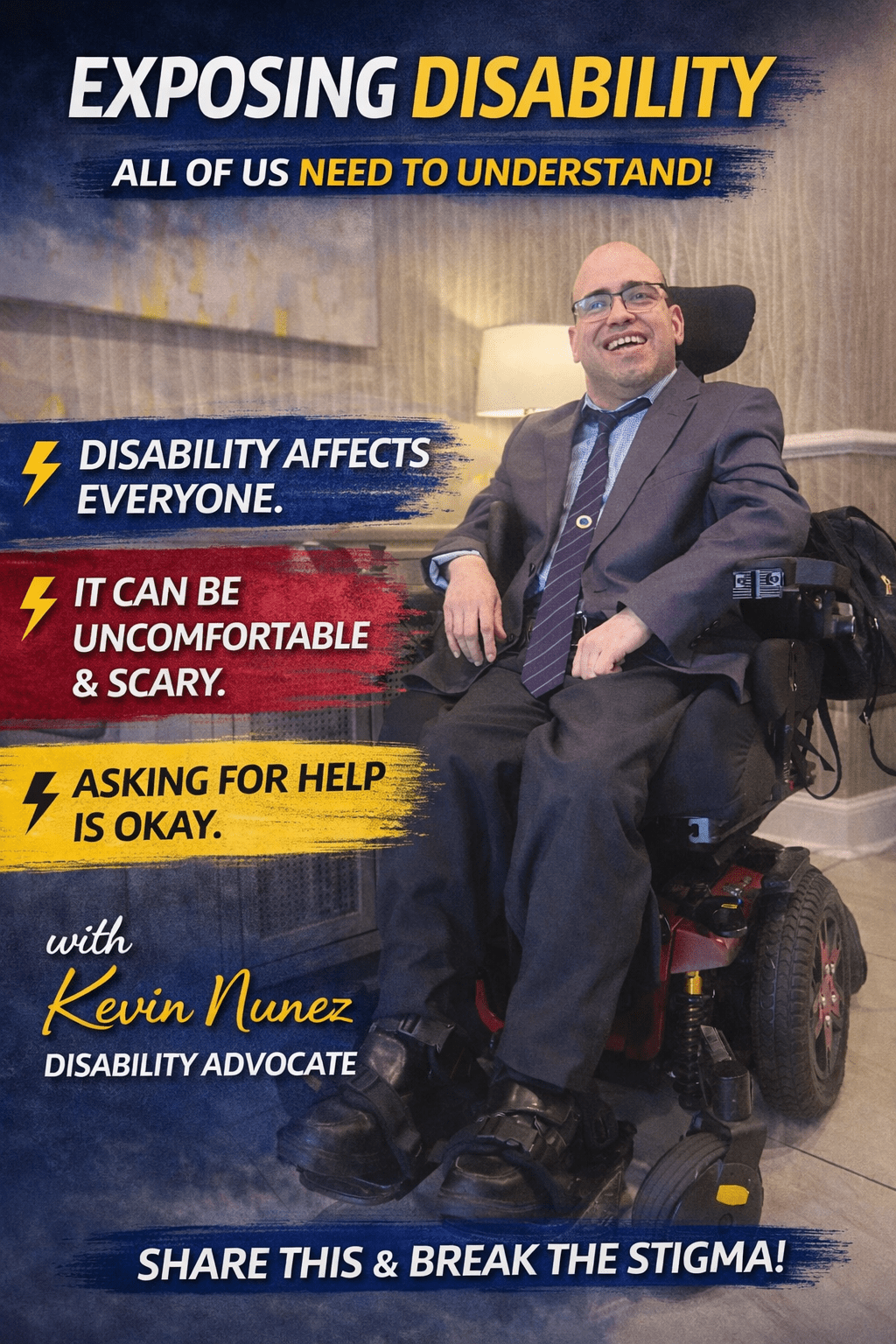
Description:What exactly makes people uncomfortable about disability? Often, it’s because society only sees the “cute and cuddly” version of our lives. In this episode of The Advocacy Life Podcast, we’re breaking that mold.I’m talking about the power of full exposure. To bridge the gap in understanding, people need to see the raw, unfiltered reality of disability—not just the triumphs, but the struggles, the financial hurdles, and the everyday resilience required to navigate a world that wasn’t built for us.In this episode, we discuss:New Year’s Resolutions: I’m sharing an update on my goal to finish my next book draft by March and have it out by December 2026! How are your resolutions holding up in mid-February?The Exposure Method: Why showing the “uncomfortable” parts of disability is the only way to create true empathy and change.Existence vs. A Full Life: There is a massive difference between just “experiencing” life and actually living it. We explore how to find value in every moment.The Price of Advocacy: Why being a leader means being willing to be the first one to step into the fire.Universal Truths: Disability and death are the only two certainties in life. It’s time we stop hiding from them and start talking about them.We are all part of the same human story. Let’s stop wasting time and start living with purpose.📍
TIMESTAMPS:0:00 – Introduction: What makes people uncomfortable?1:50 – New Year’s Resolution Update (Book 2026!)4:10 – Why we need to “Expose” Disability9:30 – Moving past the “After-School Special” version of our lives14:00 – The burden and beauty of being an Advocate19:45 – Living a Full Life vs. Just Existing24:00 – Final thoughts: Don’t waste your life.
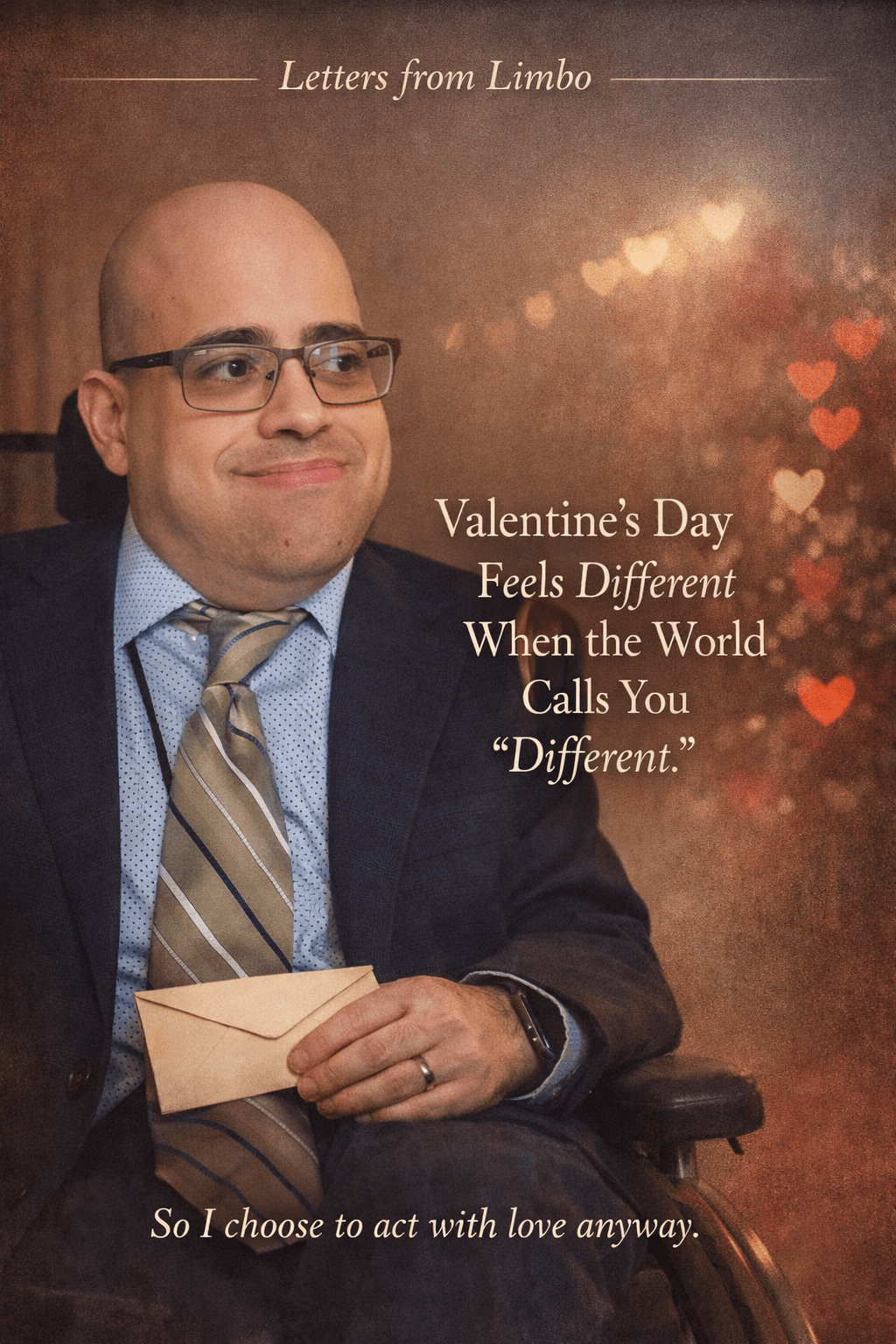
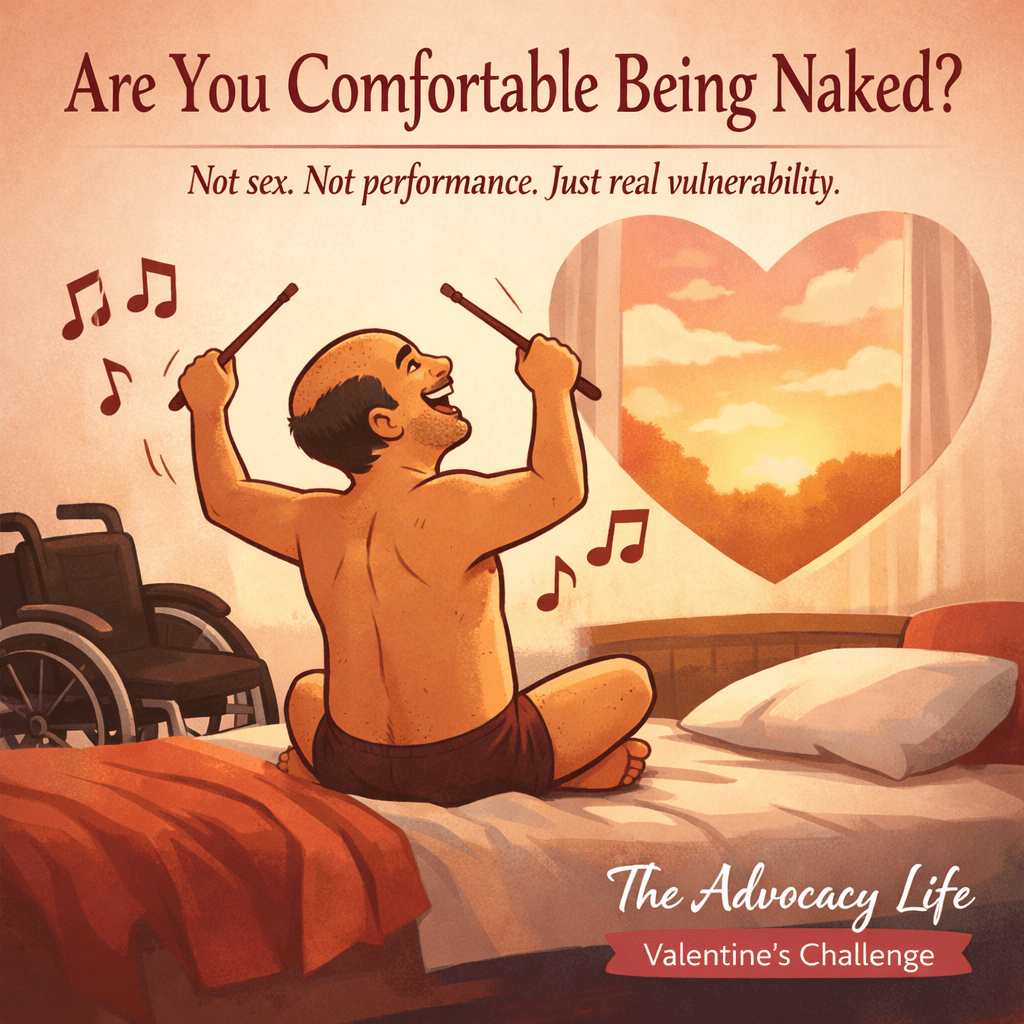
Note: The following is an excerpt and refresh of a chapter from my book, “Confessions From Disability Limbo.” It is a raw, crude, and honest look at disability life. With Valentine’s Day just a few days away, everyone is talking about romance and intimacy. But today, I want to talk about a different kind of “getting naked”—the kind that has nothing to do with sex and everything to do with being human.I have a problem. I know some will find this controversial. I’m half-expecting an email from a legislative office removing me from my committees, and I’m fairly certain my mother and grandmother are already lining up to scold me. But I beg your indulgence. This is advocacy in its purest, most unfiltered form.I have to ask: Are you comfortable being naked
A few years ago, I was on respite with my twin brother. The staff had undressed me and placed me on the bed when my brother suddenly had an urgent need for the restroom. The staff rushed to help him, leaving me like Adam in Paradise before he discovered the fig leaf.Did I panic? No. I rolled over, grabbed my phone, and started blasting music. A few minutes later, the staff walked back in to find me in my own little world, air-drumming with everything I had to the epic solo in Phil Collins’ “In the Air Tonight.”
It was a ridiculous moment, but it highlighted a strange reality of my life: While I am often uncomfortable with my body, I have become incredibly comfortable being naked around strangers.I am a 38-year-old male, roughly 130pounds, exactly five feet tall, with hair everywhere but my head and a collection of scars from past surgeries that tell the story of my survival. I won’t be on the cover of GQ anytime soon.
For me, being naked isn’t about romance; it’s about maintenance. Most people only show their bodies to those they love and trust. For those of us with disabilities, our bodies are often “public property.” We are poked, prodded, lifted, and cleaned by people we barely know. We have to trust a stranger to handle our most private needs with dignity.I am one of the lucky ones. For many in our history, being naked wasn’t a moment of Phil Collins air-drumming; it was a tool of torture. In the old institutions, cold showers were used for behavioral control. Vulnerability was met with violation.
Even today, I think about the non-verbal members of our community. How do you communicate that the water is too hot? How do you maintain your soul when your body is being handled like a piece of equipment? This happens every single day.A Valentine’s Challenge: Get RealAs Valentine’s Day approaches, we are bombarded with images of “perfect” bodies. We are told that intimacy is about performance. I want to challenge that.True intimacy is the ability to be seen—fully seen—without a mask. I have a challenge for every person reading this, whether you are able-bodied or disabled:Talk to someone you love while you are nude. I don’t mean sex. I don’t mean it as a joke. I mean sit in that vulnerability and have a real, personal conversation about your life, your fears, or your dreams.
The Rules:No “Post-Sex” Cheating: Don’t do it when the oxytocin is flowing and everything feels perfect.No Attention Seeking: This isn’t a “look at me” moment.No Distractions: Don’t ask, “Does this mole look weird?” Keep it real.The most important conversations of my life have happened in these moments of total exposure. When you take away the clothes, the suits, and the “Advocate Kevin” persona, all that is left is the man.I share these experiences because society often forgets that people with disabilities are people first. We deserve dignity in our vulnerability and respect in our nakedness.Thank you to anyone brave enough to try this. Happy Valentine’s Day.Keep on rolling. Keep on living.
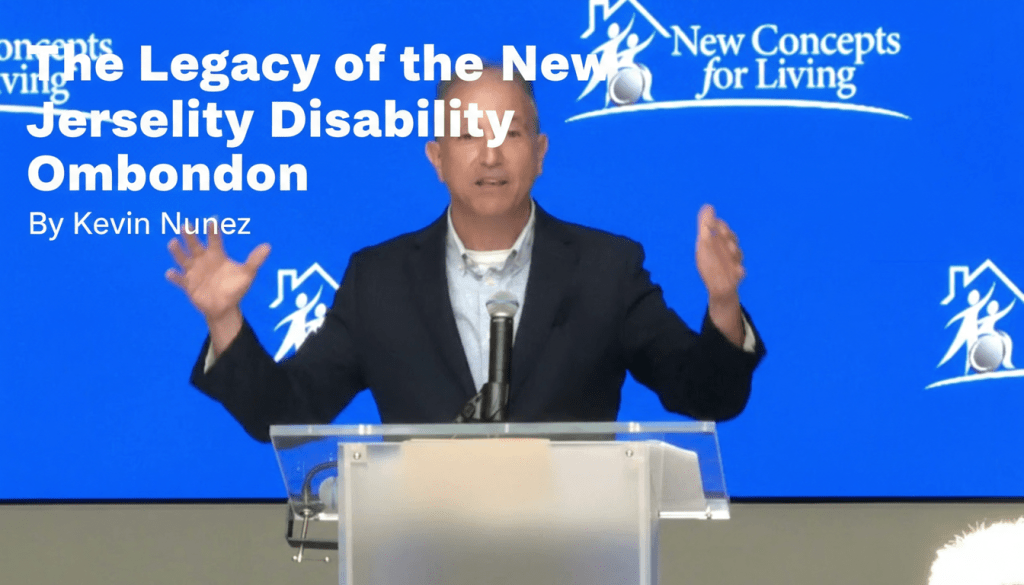
In the world of advocacy, we often talk about “the system.” We talk about it as if it’s a giant, immovable machine—something that operates at a distance from the people it’s meant to serve. But for the last several years in New Jersey, we had a leader who refused to look at the system from a distance. Instead, he got in his car and drove 148,000 miles to see the reality for himself. As Paul Aronsohn prepares to step down as the New Jersey Ombudsman for Individuals with Intellectual or Developmental Disabilities and Their Families, I want to take a moment to reflect on his legacy. I’ve had the distinct pleasure of working alongside Paul through my roles with the New Jersey Council on Developmental Disabilities (NJCDD) and Self-Advocates Becoming Empowered (SABE)
In Paul, we didn’t just have an official; we had a witness. The Courage to Speak Truth to Power When Paul was first appointed by Governor Phil Murphy in 2018, he didn’t settle into a comfortable office in Trenton. As noted in the recent Star-Ledger profile, he submitted a report early on that described New Jersey as a “tale of two systems”—one that was functioning well and one that was failing.That kind of honesty is rare in government. It ruffled feathers. It made people in power uncomfortable.
Paul noted, he wasn’t there to make people comfortable; he was there because “lives, frankly, depend upon it.”That is the heart of advocacy. It is the willingness to say the thing that needs to be said, even when the administration that appointed you isn’t happy to hear it. Paul understood that his loyalty wasn’t to a political office, but to the families who were struggling to find housing, the individuals waiting for services, and the people trapped in the “benefits trap” that I often talk about.In my work with NJCDD and SABE, I saw firsthand how Paul valued the voices of self-advocates. He didn’t just speak for us; he created space for us to speak for ourselves.
He understood that the “Exposure Method”—the idea that people need to see the raw, unfiltered reality of disability to create change—was the only way forward. Whether he was visiting families in their living rooms or standing with us in Trenton, he was always listening. He took the “heartbreaking” stories he found on the road and turned them into actionable recommendations.He helped us navigate the “limbo” between existence and a full life.He
He knew that for many in our community, the difference between the two is often a single phone call, a specific waiver, or a caregiver who actually shows up. Paul leaves behind an office that is more vital than ever. He fought for it to be independent, and he fought for it to be loud. He showed us that the government works best when it is empathetic, transparent, and—most importantly—willing to admit where it is failing.While Paul is moving on to his next chapter, the 148,000 miles he traveled have left a permanent map for the rest of us to follow. He showed us that you cannot fix a system you aren’t willing to see up close. Paul, on behalf of the entire disability community in New Jersey, thank you. Thank you for the miles, thank you for the honesty, and thank you for being a “fearless” leader who wasn’t afraid to show his own heart. You’ve taught us that while the system may be a machine, the people fighting for change must always be human.
Paul’s departure shouldn’t mean a quiet period for the Ombudsman’s office. We must continue to support this office and ensure it remains a candid, independent voice for our community. Keep on rolling. Keep on living.
Description: Have you ever said, “I hate politics,” or felt like the government is just too complicated to understand? You’re not alone. In this episode of The Advocacy Life Podcast, I’m doing something a little “insane”—I’m going to oversimplify government and politics so you can get involved without losing your mind. Using nothing but a few imaginary pizza pies, we’ll break down:The “Kevin Definition” of Politics: Why it’s actually just the art of politely arguing over resources.The Majority Rule Myth: Why a direct democracy doesn’t always work and how our representative system actually gives you a voice.The Disability History Gap: Why advocates must know their own history and how it ties into the greater American story.Accountability: Why “eternal vigilance” is the price of freedom and how you can hold elected officials accountable.As disability advocates, we have a role to play. If we sit back and stay silent, we won’t get the resources or rights we need. Let’s bridge those gaps together in a fun, conversational style
: 0:00 – Welcome to The Advocacy Life 1:30 – Fun Fact: My thoughts on the Stranger Things finale 4:15 – The Pizza Analogy: How politics and resources work 9:00 – Choice vs. Control: Socialism, Group Homes, and Prisons 15:30 – Democracy vs. Representative Republic 20:00 – The Constitution & Why Education Matters 25:00 – A Call to Action for Disability Advocates
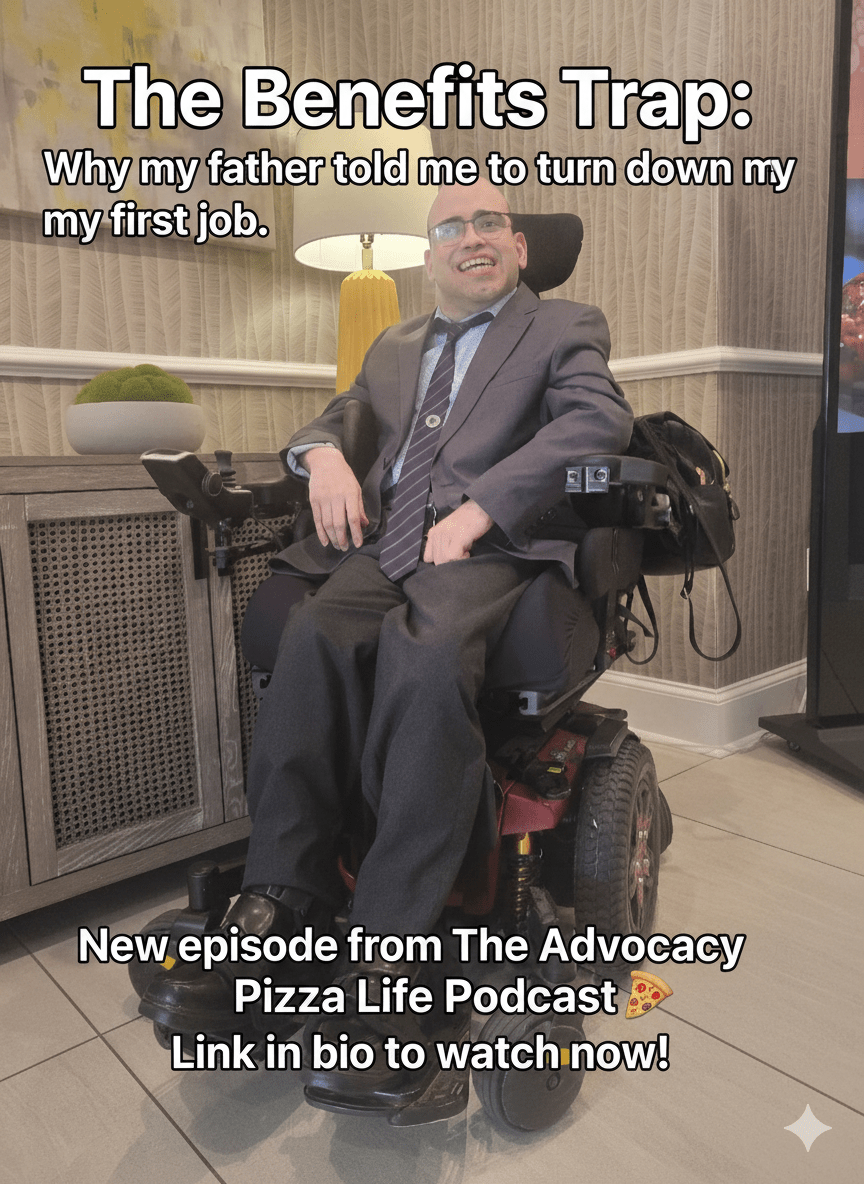
In 2006, I was given my first job offer. To be a greeter at Walmart. I filled out the application online with tons of enthusiasm. I was in the final weeks of my senior year. This would have been a respectable first employment. I was hit with a horrid dilemma. Around their 18th birthday, there is a bizarre rite of passage that takes place for my community, and that is their initial enrollment for Social Security benefits: Supplemental Security Insurance (SSI)
I rushed home to tell my dad, he was furious.
“If you’re going to risk your life, don’t be a clown in people’s circus. You can’t grow there. Sooner or later, you will lose the benefits you need, and then what are you going to do? You’re going to go there with the best of intentions, saying hi to everyone, and people are just going to walk right by you. You could work there for 20 years, and you’ll be exactly where you are now. You don’t have a safety net in this life. Everything you do must be calculated. Do something where you can make a difference and make sure it’s worth it. “
The summer before I went to college, I did an internship for my local mayor’s office. That was the right fit. Her office was right by the high school. The school bus would drop me off. I spent afternoons there twice a week. I put together all the packets for the new residents. Complete with a signed letter from the mayor. I was a good office clerk. After 2 weeks, I was featured in the town newsletter. My dad kept that for the longest time.As a parting gift, they gave me a small blue piggy bank for me to save my money.
“I’ve always believed that, given the tools and equipment they need and on a level playing field, American workers can out compete and beat the pants off anybody, anywhere.”-Rnold Reagan.
In the midst of the pandemic, I worked with Assemblywoman Carroll Murphy to improve New Jersey’s Workability program. It required an update. It is not perfect by any means, but it’s a needed step in the right direction. While everyone was watching Netflix and gaining weight during the shutdown. I worked with the NJCDD to launch the disability legislative caucus across the Garden State. It is completely nonpartisan with leadership from both sides of the aisle. The goal is to foster conversations with legislators before bills are passed into law.


 The Advocacy Life Podcast & Blog