
Subscribe to continue reading
Become a paid subscriber to get access to the rest of this post and other exclusive content.
Become a paid subscriber to get access to the rest of this post and other exclusive content.
One day a few years ago, I was walking down the Atlantic City Boardwalk with one of my caregivers. Sadly, that person is no longer with us. We had just lost a few dollars at a casino (don’t worry, it wasn’t much). Afterward, we sat on a bench, talking and enjoying the day. Then, out of nowhere, two strangers walked up to us. They asked if they could pray with us. It was an unusual request for 2 in the afternoon, but I figured, why not?

So, I gave them my hands and closed my eyes. The man prayed out loud, saying, “Dear Lord, please bless this man so that the demons leave his body and he may walk.”
Hi, my friend! I hope you’re doing well. What would you do if something like this happened to you? After it was over, I just said thank you, and we exchanged a few nice words. But my first instinct was to laugh! I pray all the time, but I wasn’t expecting that.
Some people might say I’m being punished and that only God’s grace can take me out of this wheelchair. But I don’t believe that.
I don’t want to make anyone uncomfortable. This isn’t a religious blog. It’s about advocacy and awareness. Talking about God shouldn’t be controversial, but I understand why it is for some people. Just like with disability, not everyone will understand.
Here’s the thing: I couldn’t write this blog or live my life without my disability. People like me, in the disability community, have made a difference in the world—one day at a time. And no matter your faith or beliefs, we can all agree on one thing: God is perfect, and He doesn’t make mistakes.
John 9:3 NIV [3] “Neither this man nor his parents sinned,” said Jesus, “but this happened so that the works of God might be displayed in him.
Some people ask me, “How can you say that when you’re in a wheelchair every day?”
This is what I know to be true: Without my cerebral palsy, my family wouldn’t be as close as we are. My disability didn’t just affect me—it took all my family members, by blood and by choice, to help get me where I am today. And I think that’s true for most people with disabilities. Having a disability like mine makes you see the world differently, no matter how much you wish you could be like everyone else.
Here’s something many people don’t realize: You will suffer in life, but you aren’t given life just to suffer. My life hasn’t been easy. I’ve had plenty of days where I’ve been frustrated with myself—and with God. It does hurt to miss out on some experiences that others get to have.
But here’s what I’ve learned: A lot of the experiences I’ve had, and many others with disabilities have had, are things most people can’t even imagine. We aren’t given anything we can’t handle. Giving up on ourselves and others is easy. But the mission is to find the good. Living with a disability, it’s easy to focus on the bad. But we spend our lives finding the good in the darkness.

Become a paid subscriber to get access to the rest of this post and other exclusive content.
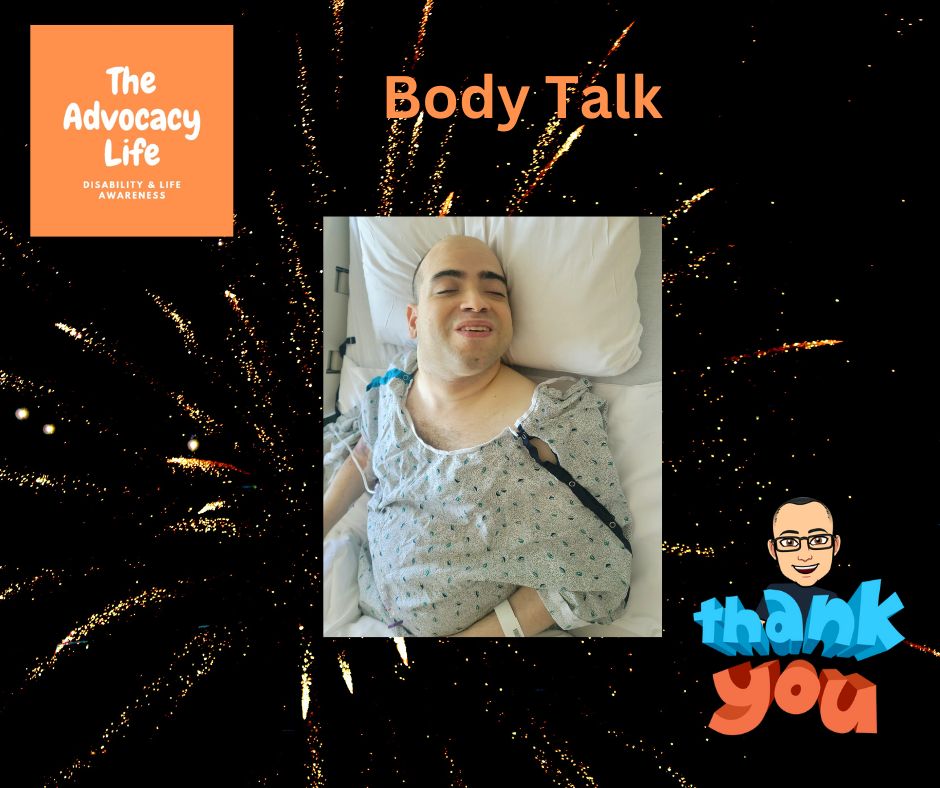
Greetings once again to all my readers. I don’t just enjoy writing blogs; I love reading them, too. Recently, I came across an inspiring post by Lily Pierce, a remarkable woman who lives with a disability. She wrote a powerful piece on how we perceive our physical appearance, and her words deeply resonated with me. I’ll include a link to the post for those interested. Lily’s post sparked an idea within me—one that I want to share today: a letter to thank my body for everything it has done for me, even when I’ve taken it for granted.
When people first see me, they may notice someone standing no taller than five feet, with little hair on my head since my twenties—but plenty elsewhere! Grooming can be awkward for anyone, but imagine having to ask for help to do it. That’s my reality. Some people may focus on the scars I carry from countless surgeries, or how no matter how much time I spend at the gym, I’ll never regain the six-pack I lost at sixteen.
I often joke that it’s only my body that’s broken—not my mind or heart. Of course, I know that’s not entirely true. But humor has always been a way for me to embrace my situation and make light of things. In a world that often values outward appearances, I can’t change societal standards—but perhaps, with this letter to my body, I can inspire a shift in how we view ourselves.
Galatians 5:17 NIV [17] For the flesh desires what is contrary to the Spirit, and the Spirit what is contrary to the flesh. They are in conflict with each other, so that you are not to do whatever you want.
Dear Body,
Many hands have helped care for you—not just mine. So many doctors, nurses, friends, family, and caregivers have played a role in keeping you strong, and I thank you for accepting all of them. Thank you for enduring years of medication and surgeries, and for allowing me to stay as healthy as I am today. I’m grateful that those medical interventions have lessened as we’ve aged.
Thank you to my eyes for showing me the beauty in the world, even when others focus on its negatives. Thank you to my nose for savoring the smells of home-cooked meals, and to my ears for absorbing laughter, wisdom, and the sounds that make life rich. Thank you to my voice and lips for helping me speak up for others and advocate for those in need.
To my arms and legs, thank you for always trying—despite the pain you endure. Even when walking or standing isn’t easy, you never give up. And as personal as this may sound, I want to thank my “male organ”—for reminding me that no matter how the world sees me, I am a man, whole and complete.
Lastly, thank you to my feet. Though I’ve never stood fully on you, I know I would have no foundation without you.
Our bodies may not always look or function as we wish, but they carry us through life nonetheless. For that, I am deeply thankful. Thank you for reading, and I hope you have a wonderful day.
This is a Rewritten exert for my first book Confessions From Disability Limbo. Exclusively on Amazon.
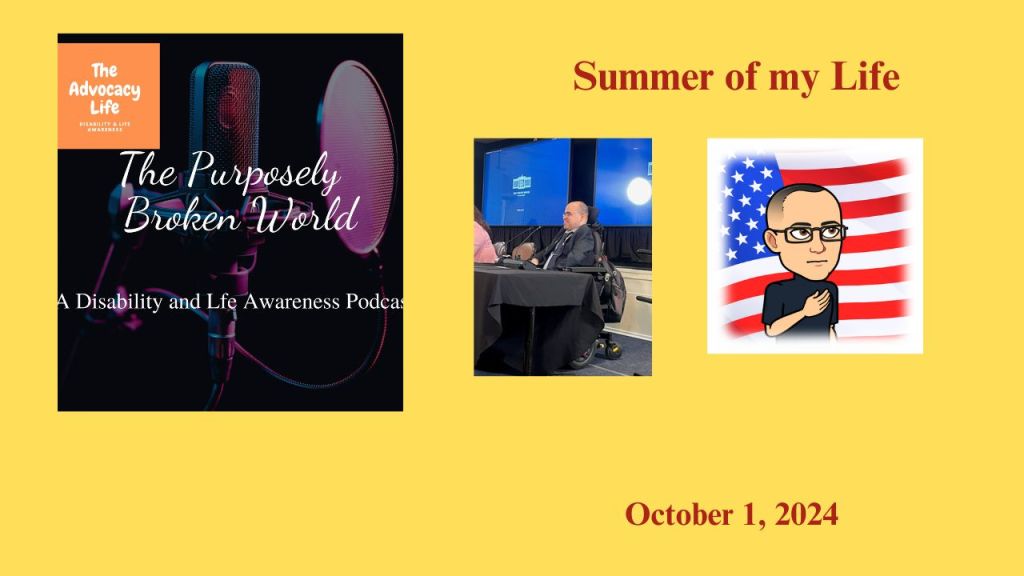
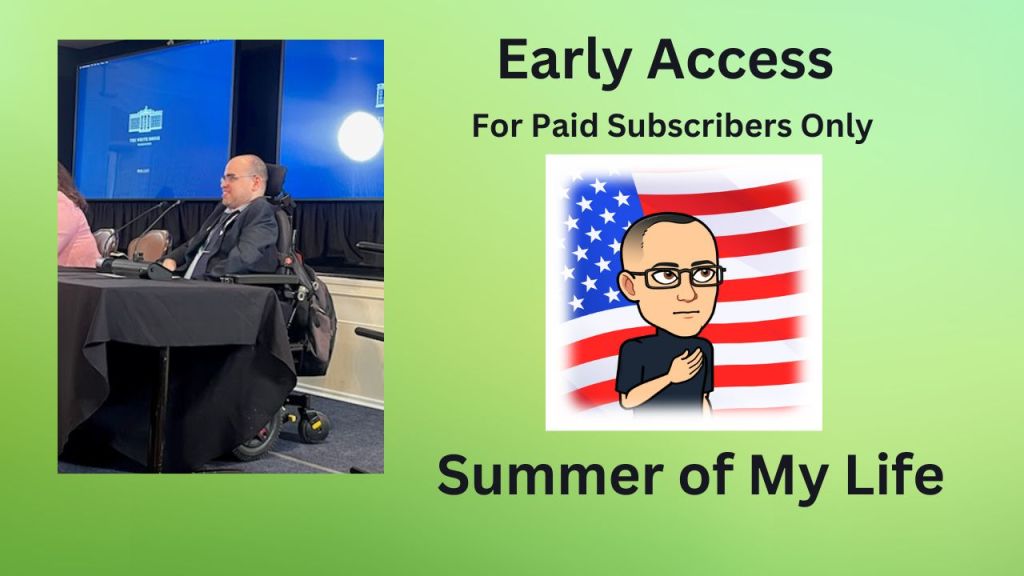
I’m back! After a long summer absence. Here is an update from your favorite little podcaster. From the White House to the hospital. This summer was the summer of perseverance. Never give up! Subscribe and share, please.
SHOW NOTES
National Association on Council on Disability
White House celebration on Olmstead decision
SHOW LINKS
Confessions from Disability Limbo

Become a paid subscriber to get access to the rest of this post and other exclusive content.
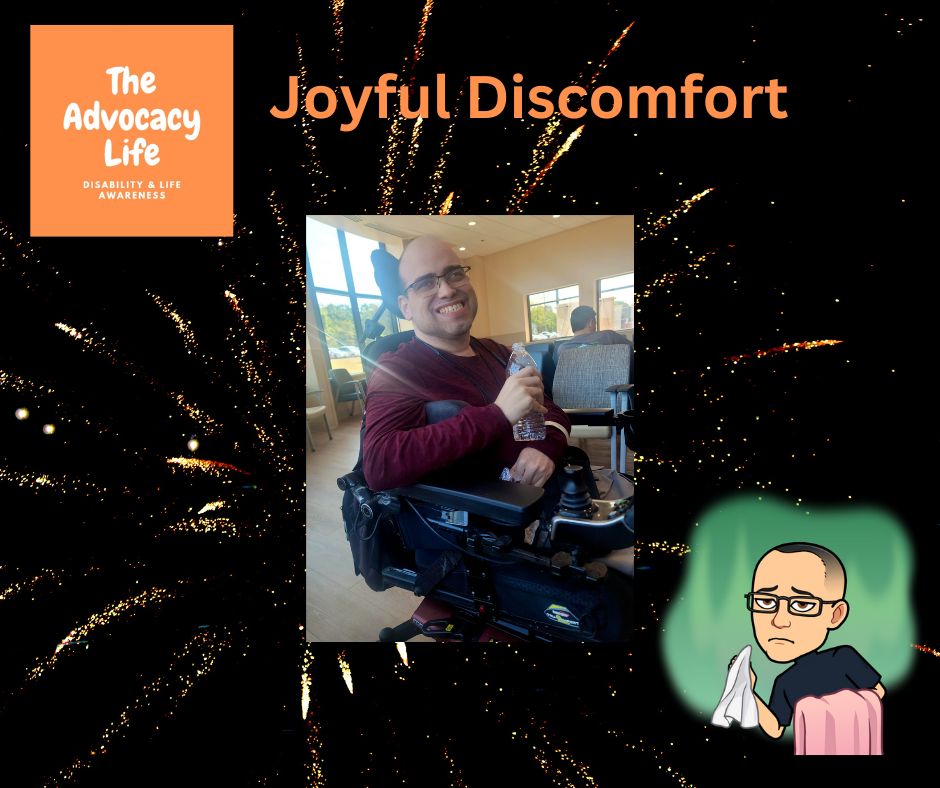
As I write this blog in late September, I feel the evening chill getting crisp. When you cannot leave the house without a late jacket or hoodie. One or two leaves have already started to change color. This kind of weather usually affects our bodies in some way. Whether that be arthritis for older folks or runny noses adjusting to the cold. My body will feel a little bit stiff for the next week or so. This week I want to try to answer a question that I get asked now and again.
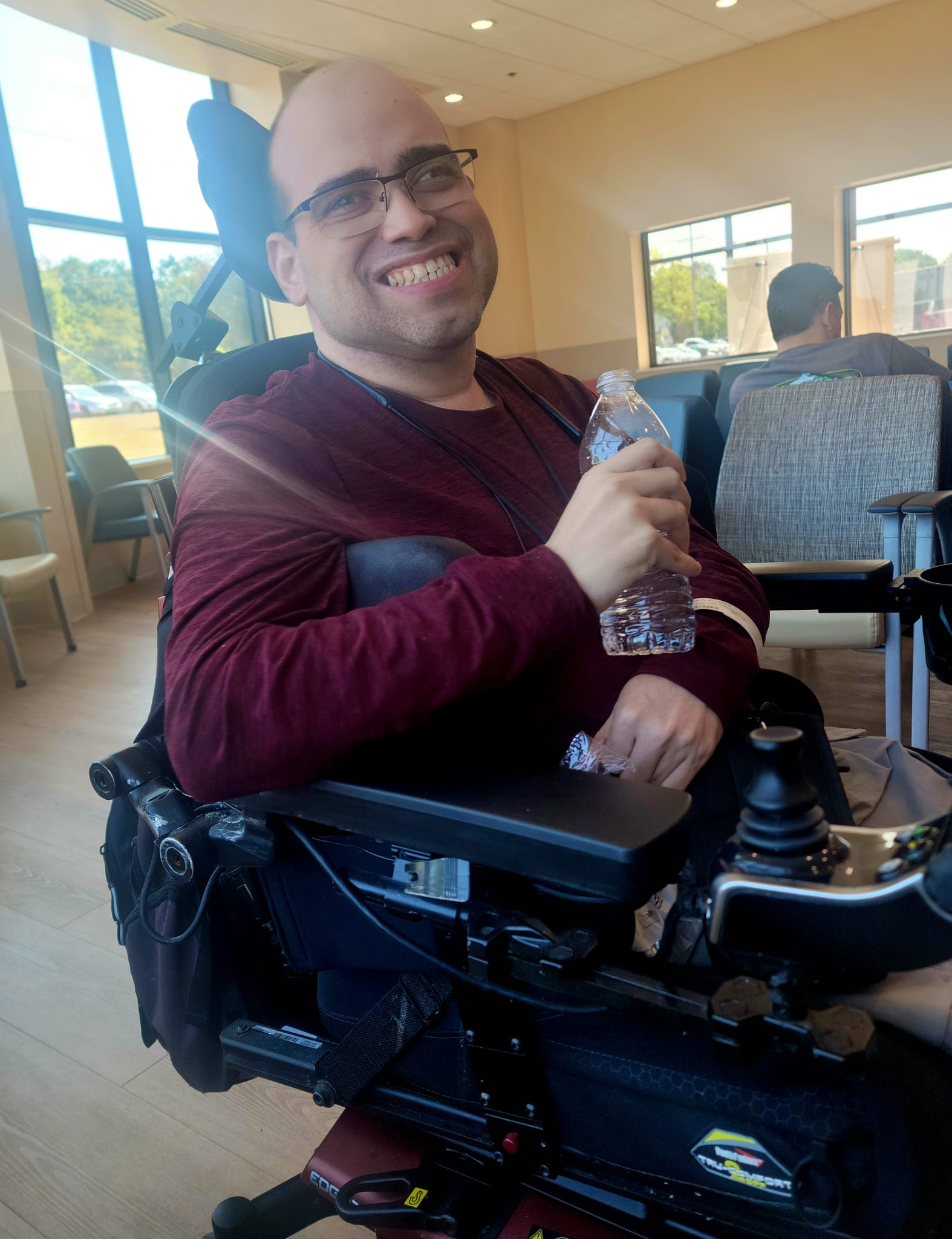
“What does it feel like to have a disability?”
I love pondering on inquiries like this because it’s a challenge both as an individual and as a writer. My short answer is I don’t know; this is my “normal.” I was born with this, Neurological condition, I will die with it. For comparison, imagine if I asked you “What it’s like being an astronaut?
For the record, I was diagnosed at birth with Cerebral Palsy (CP). It is important to note that every person is affected differently by their disability. I can line up individuals with the diagnosis of CP and they will all have different strengths and weaknesses. A disability is like a person no two are equal.
When you look at me it is easy to feel pity and sadness because you picture the things I can’t do. Depending on how you measure success I am a failure. I don’t have a job, I’ve never walked more than a few steps in a therapeutic setting. I need help with most personal tasks. I have not had a real kiss since before Facebook and TikTok became household names. Society has locked me into a systemic financial prison. I know this is a small blog, and a lot of people don’t read it, but I hope this post gets shared. What I’m going to say next is not going to make sense to a lot of people.
Romans 8:18 NIV [18] I consider that our present sufferings are not worth comparing with the glory that will be revealed in us.
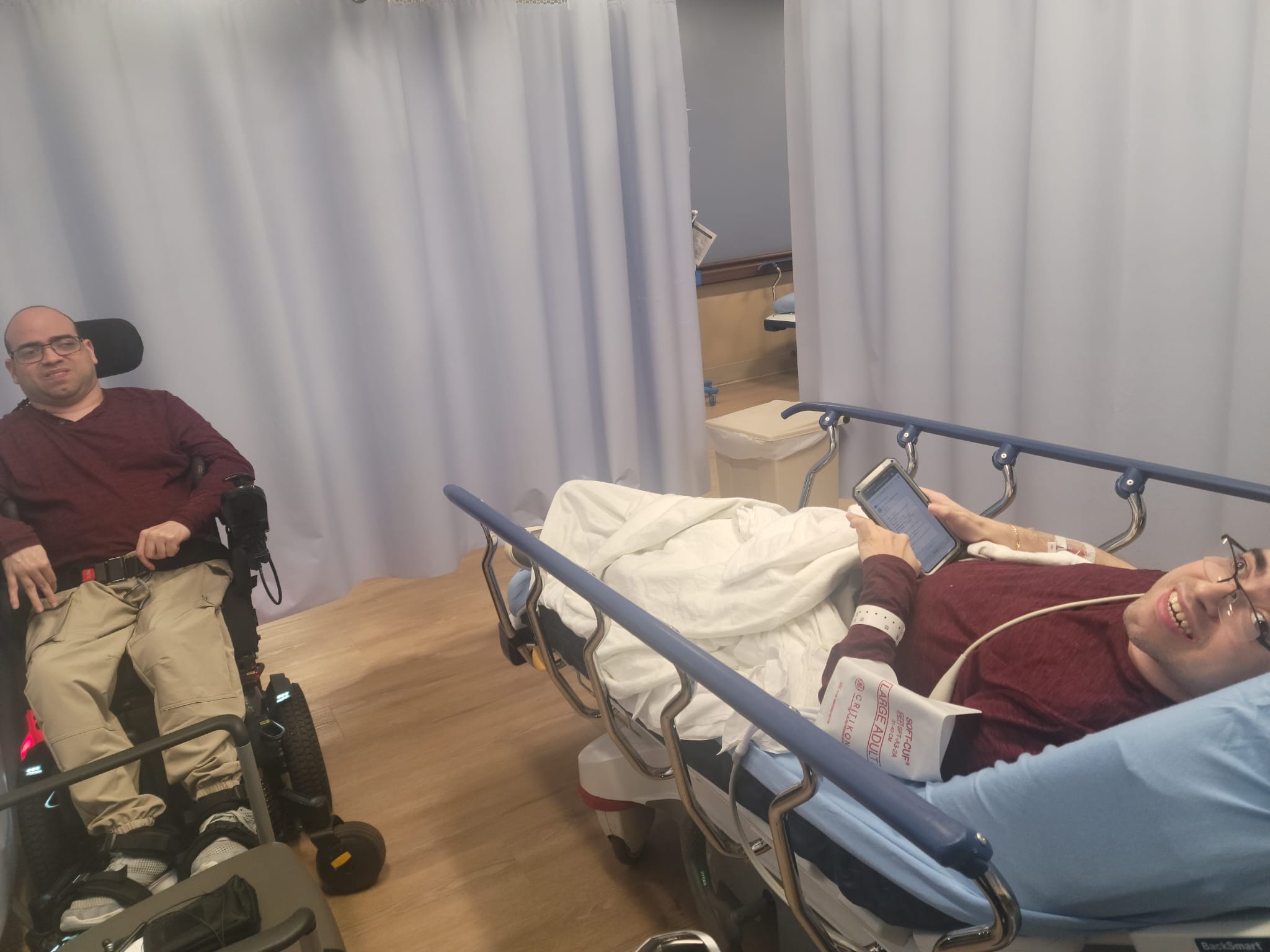
“I am thankful for my disability!”
A few weeks back I found myself in the hospital for the fourth time in 4 months. This time with a kidney stone. Fortunately, it was small and able to pass quickly and without infection. I will not deny that it was painful and not fun at the moment. There was one moment, in the hospital when it was quiet. I was able to reflect on how blessed I was and how I’ve been a blessing to others without realizing it. I’ve never cashed the paycheck, and that’s not fair, but I have made a difference with my advocacy work. I realize that my job is to plant seeds of trees that others will sit under one day. I’ve had plenty of awkward moments with new staff, trusting them with my most intimate needs, but still, there are currently two wars going on in this world, and people have forgotten all about it. Not even giving a second thought to the widows and the children affected by these global conflicts.
I’ll be the first to admit that some days I get lonely, but isn’t it better to wait for the right person than knowing a partner is cheating on me? It is wrong that I can only have no more than $2,000 in my bank account at any one time, but if you go to your local Walmart, you can see both the mentally obese and the malnourished. I will always fight for the rights of those with disabilities, but tell me how in the richest, most powerful nation on Earth, we have veterans who have served this country openly, choosing to live homeless because they don’t want to scare their families due to their mental illness.
Life is a matter of perspective. I know I don’t live for this world; I live for the next one, where I will openly walk and dance. I feel sadness for those so stuck in this world that they don’t realize a glorious World is waiting for them.
Become a paid subscriber to get access to the rest of this post and other exclusive content.
As an individual living with Cerebral Palsy (CP), I take pride in being nonpartisan. My disability does not care if I support the elephants or the donkeys in November. Most likely, I will not walk in January regardless of who is sitting in the Oval Office. I may have been born disabled but everyone else is temporarily abled. Your body will fail, and you will need help from someone else to help you live your life. I can see both sides of most hot-button issues if you want to balance the economy ask someone who has a balanced budget on a fixed income for the majority of their life.

I would never impede anyone’s opinions or beliefs, Please be a patriot and go vote in November. Many suggest that eliminating the Department of Education would help balance the budget and bring money back to the states. This is not an efficient way to cut down on wasteful spending. This would be wrong and dangerous for individuals and families with disabilities.
Most Americans have never heard of the Individuals with disabilities education Act (IDEA). The legislation was revised in 1990 under a republican administration. Here is a quick overview of the law. According to Access for Special KidsResource Center (ASK)

I am not ashamed to admit that I had an IEP meeting every year since I can remember. It ensured I had the proper support I needed to thrive as a student. I had a paraprofessional accompany me to every class who took my notes, helped me review materials after class, and helped me with my personal takes. I attended mainstream classes. I was not locked away in the special ed classroom. Every year some of the teachers f thought that’s where I belonged because I was a wheelchair user. I loved proving them wrong. The other students had to see me as a person not just a disability. I was a student just like them with goals, dreams, and embarrassing moments to overcome.
Psalms 41:1 NIV [1] Blessed are those who have regard for the weak; the Lord delivers them in times of trouble.
Disability should not be a burden on society, it should be an asset to their communities. Students without disabilities should not be afraid to approach those who are different. All children should be able to learn and help each other. That is how we build a prosperous future for America The reporter Geraldo Rivera exposed the horrors of Institutional living in the mid-80s. All these years later our population is still being Isolated. What makes one student less than another? Disabled students are placed in out-of-district schools that “specialize in disabilities.” They need to be allowed to see if they can adapt and grow with non-disabled peers before being segregated. The easiest solution is not always the best solution. There should not be a disabled population, versus a non-disabled population, but Americans. We need to move forward not backward.

Become a paid subscriber to get access to the rest of this post and other exclusive content.
 The Advocacy Life Podcast & Blog