
Subscribe to continue reading
Become a paid subscriber to get access to the rest of this post and other exclusive content.

Become a paid subscriber to get access to the rest of this post and other exclusive content.

Description
In the 7th episode of Season 3, Kevin provides a list of tips on how to thrive in official meetings as a disability advocate. Develop soft skills so you can thrive in uncomfortable situations.
Show Notes
In the 6th episode of season 3 Kevin provides his honest reaction to the movie Good Bad Things. This is an unfiltered, unsponsored breakdown.
Show Notes
@TheAdvocacyLife
FB @theadvocacyliferelaunched
Mean Website
Tumblr
Threads
Living Beyond Disability book series
PayPal
Cashapp

Do you want anything on your pizza? What toppings do you want on your pizza? What toppings do you not want on your pizza? Let’s assume you’re hosting a party for 10 people, and everyone wants pizza. A typical pizza usually has eight slices. Some people want pineapple, others want meat lovers, a few only eat vegetables on their pizza, and one person will only eat plain pizza. How do you raise money for the needed second pizza? Is it fair to ask people to pay for a pizza they are not planning to eat? Do you vote, and does the majority get what they want? What about everyone else? Should they go hungry? This crude scenario is an illustration of politics.
“The art or science concerned with guiding or influencing governmental policy.” -Merriam-Webster dictionary
Disability is a great way to understand politics. Politics will affect you at some point in your life, and so will disability. An Inconvenient truth is that these two are linked. How much should a wheelchair cost? How much should a person be allowed to make to maintain their Medicaid eligibility? At some point, everyone uses a Walker or a wheelchair. If your loved one requires any sort of extensive rehab or care, they will need Medicaid. One in three children in New Jersey receives some sort of Medicaid benefit. There is an illusion that disability will only affect the elderly or those diagnosed early in life. Disability can affect anyone at any time. 16-year-olds can have brain aneurysms and be changed forever. Eric LeGrand was only 20 years old when he became paralyzed on a football field.
Mark 12:31 NIV The second is this: ‘Love your neighbor as yourself.’ There is no commandment greater than these.”
Disability must be part of the political discussion when children are taught civics in their social studies classrooms. Disability is a great representation of the human race. It goes beyond political parties. Don’t be so focused on the toppings on your slice of pizza that you forget about all those who need to eat from the same pie. In America, we all eat from the same pie. Political parties are not sports teams. Winning the White House should never feel like winning a World Series; it should feel like a new chapter in the great book of American history. Political parties play a vital role in the political process. However, over-reliance is dangerous. Our elected officials must always remember that they serve their constituents and not their parties. The American people must vote to hold those who are elected accountable. Casting a vote is not a decision that should be made lightly.
“Alternate domination” of one party over another, and the associated desire for revenge, could lead to horrible atrocities and ultimately, a “frightful despotism”- George Washington.
We need new disability advocates to enter the political arena and provide a fresh perspective. To remind all of us what the ideals of America should be. Disabled Americans are Republicans. Disabled Americans are Democrats. By getting a new perspective, Americans can see their boundless potential.

Read more of this content when you subscribe today.
Choose an amount
Or enter a custom amount
Your contribution is appreciated.
Your contribution is appreciated.
Your contribution is appreciated.
DonateDonate monthlyDonate yearly
Become a paid subscriber to get access to the rest of this post and other exclusive content.
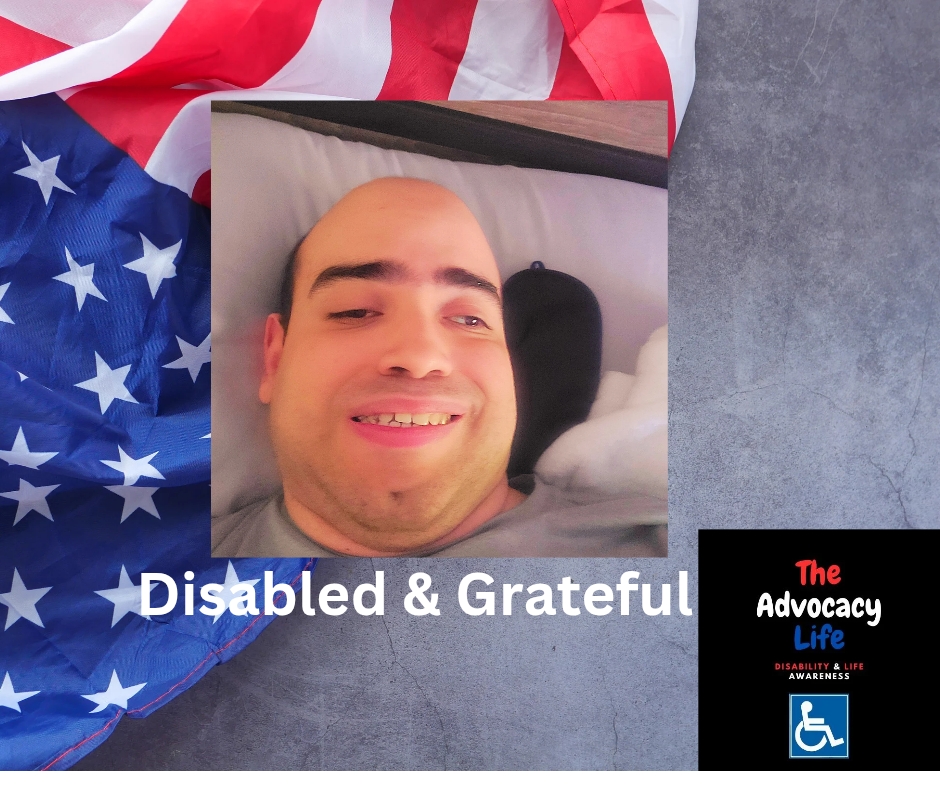
“I’m thankful for my struggles because they revealed my gifts.”
Hey friends, I hope you’re having an outstanding day.
The quote above is from a meme I posted years ago on a random Friday night. I completely forgot about it—until it popped up in my memories recently. When I saw it, I paused. It hit me differently this time. And what I’m about to say next might annoy some people. I might even lose a few followers over it. But I have to be honest. I’ve never actually said this out loud—so I’m using voice dictation just to get it out:
“Thank you, Father God, for giving me Cerebral Palsy.”
1 Thessalonians 5:18 NIV [18] give thanks in all circumstances; for this is God’s will for you in Christ Jesus.
Still reading? If you think I’ve lost it, give me a minute to explain.
Like most people, I spend too much time on social media, especially since I started this blog. I haven’t made a single dollar from anything I’ve posted (as I promised myself from day one), but let’s be real: if you want people besides your grandma, cousins, and a few loyal friends to read your content, this is one of the few ways.
I know social media is a battleground now—red team vs. blue team, constant opinions, arguments, and sides. But that’s not what bothers me. Everyone’s entitled to their perspective. I’m not going to stop being friends with someone just because we disagree.
What does hit hard, though, are the subtle (and not-so-subtle) reminders of the expectations society places on us. At 37, I’m not young anymore—but I’m not old either. I’m not even considered middle-aged. It’s this strange in-between stage, this unspoken limbo.
When you scroll past all the politics and noise, you’ll find the beautiful things: baby announcements, first day of school photos, wedding pictures, memes about hating jobs and loving new homes.
And then… there’s me.
No kids. No house. No wedding photos to share.
But please—don’t pity me. And don’t call me a martyr.
It took me a long time to understand that I was created on purpose for a specific purpose. Yes, there are hard days. Life isn’t fair. And a lot of people just don’t get me. But here’s the truth: if I didn’t have this disability, I wouldn’t be writing this blog.
There are plenty of writers—disabled and able-bodied—but none of them have my story. My perspective. And that makes this blog uniquely mine.
I don’t waste time playing the “what if” game. I focus on what is and what can be. The closest I’ve come to “what if” is something my brother and I once agreed on: without our disability, we probably wouldn’t be as humble, patient, or grounded as we are today.
Disability changes how you see the world. It gives you strength you can’t explain. Honestly, I can only call it what it is: God’s grace.
Because of it, I’ve seen the best—and the worst—in people.
When I first started this blog, I thought it would be strictly about disability policy. But sometimes, you can’t ignore when something bigger is working through you. If it weren’t for one of my transition coordinators, I would’ve never joined that leadership training series that launched me into disability advocacy.
I ended up in a day program for the majority of my twenties I did not like it. I thought it was for those who are forgotten. I was so determined to go to college, just to prove everyone wrong. Fast forward, and now I have parents thanking me for bringing their concerns to legislators, on behalf of the children and adults who can’t speak for themselves.
Do I still have things I want? Of course. That’s what it means to be human. But growing, learning, and discovering new strengths is also part of the human journey.
I pray these words reach you in whatever way you need them to.
I thank God for creating you—and for all the gifts He’s given you, whether you’ve discovered them yet or not.
Have a great day, and I hope to see you next time.
Read more of this content when you subscribe today.
Choose an amount
Or enter a custom amount
Your contribution is appreciated.
Your contribution is appreciated.
Your contribution is appreciated.
DonateDonate monthlyDonate yearly
In the 5th episode of season 3. Kevin relives his experience attending the joint session of Congress on March 4th, 2025. Trigger warning: this may be moving for some listeners or viewers. As always, if you like this content, please like and share.
Read more of this content when you subscribe today.
Choose an amount
Or enter a custom amount
Your contribution is appreciated.
Your contribution is appreciated.
Your contribution is appreciated.
DonateDonate monthlyDonate yearly
Become a paid subscriber to get access to the rest of this post and other exclusive content.
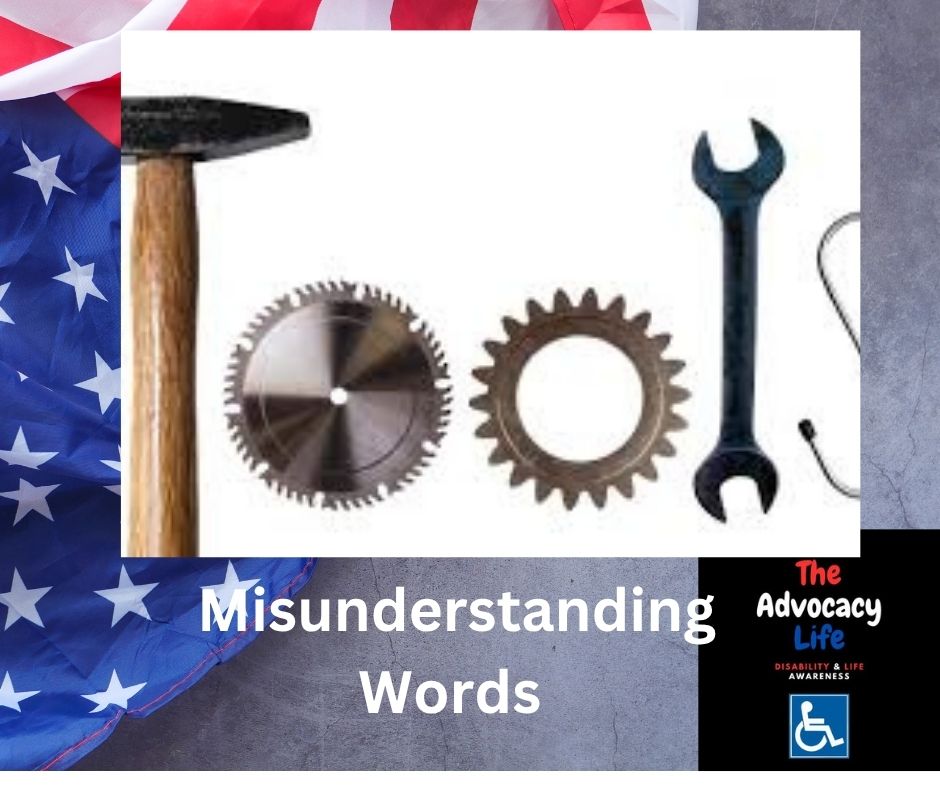
“Dude, your car is awesome!” “This pizza is awful, I’m never ordering from here again!”
If those sentences sound normal to you, think again. The words “awesome” and “awful” both come from the same root—meaning something overwhelming or filled with awe. Yet one now means something great, and the other, something terrible.
Words change over time. But sometimes, we don’t realize how much meaning they still carry. Take “idiot” or “insane.” These words used to be medical terms used to describe people with mental disabilities. Even the New Jersey Constitution once said that “no idiot or insane person” could vote. Thankfully, that language was removed in the early 2000s. Still, words like these show how language can be harmful, even if we don’t mean it to be.I want to invite you to explore how the words we use can shape how we treat each other—especially people with disabilities.
This might sound like just a matter of “political correctness” or semantics, but it’s more than that. Think about how some slurs are still used jokingly among friends but would be completely unacceptable from someone outside that group. Language isn’t just about words—it’s about context, history, and tone.
Let me give you a real example. One night, I was out with friends. During our conversation, someone casually used the R-word. I cringed inside. No one meant any harm, but it still hit me hard. I didn’t want to turn the night into a lesson or make a scene. So, when the evening ended, I quietly pulled that person aside and explained why the word was offensive. They apologized, and that was it. No drama, no lecture—just an honest moment of learning.
Being an advocate doesn’t mean I can’t have fun. It means choosing how and when to speak up, and doing it in a way that encourages understanding—not shame.
Today, we talk a lot about acceptance, but we also need to practice tolerance. People will make mistakes. They’ll say the wrong thing. That doesn’t mean they deserve to be “canceled” or shut out forever. Words are tools. They can hurt, but they can also heal, build, and inspire change.
A few years ago, comedian Kevin Hart made a joke about parenting that upset many people. Years later, it cost him a chance to host the Oscars. If we’re going to judge everyone by their past mistakes, we’ll never grow or forgive. We need to teach, not just punish.
In the end, language is like comedy—it’s all about delivery. It’s not just what you say, but how you say it. Tone matters. Audience matters. Communication isn’t one-size-fits-all. We all make mistakes, but we can learn and do better.
Thank you for reading. I hope this makes you think more deeply about the words you use—and how we can all become more mindful of the messages we send.
Read more of this content when you subscribe today.
Choose an amount
Or enter a custom amount
Your contribution is appreciated.
Your contribution is appreciated.
Your contribution is appreciated.
DonateDonate monthlyDonate yearly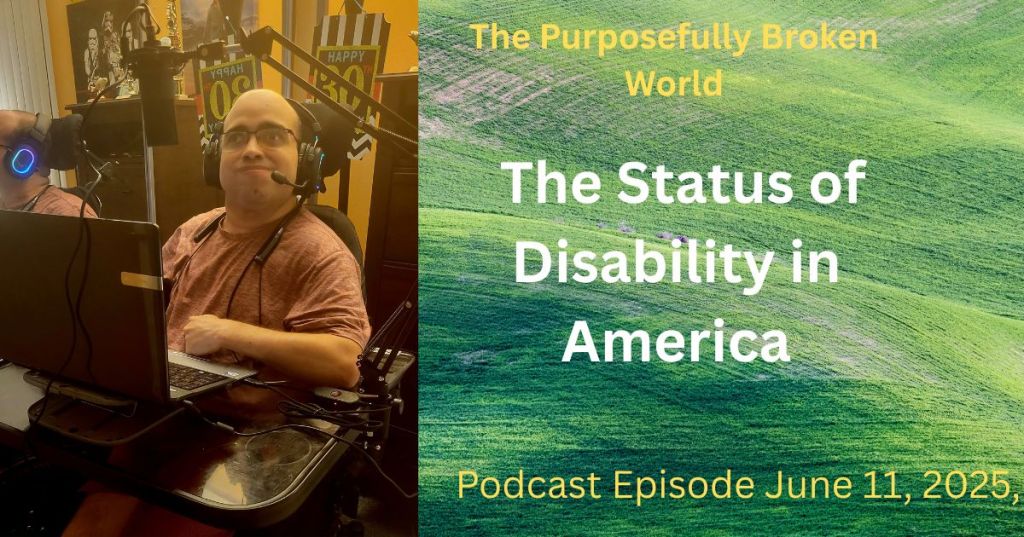
For the fourth episode of season 3, Kevin describes how he sees the state of the disability movement in America today. This is not factual. This is my opinion. The point is to motivate people to act. If you like this content, please subscribe for more details in the show notes.
 The Advocacy Life Podcast & Blog