Paid subscribers,
since you pay for Early my website here is the first preview of the new season of my podcast. Please provide feedback.
Paid subscribers,
since you pay for Early my website here is the first preview of the new season of my podcast. Please provide feedback.
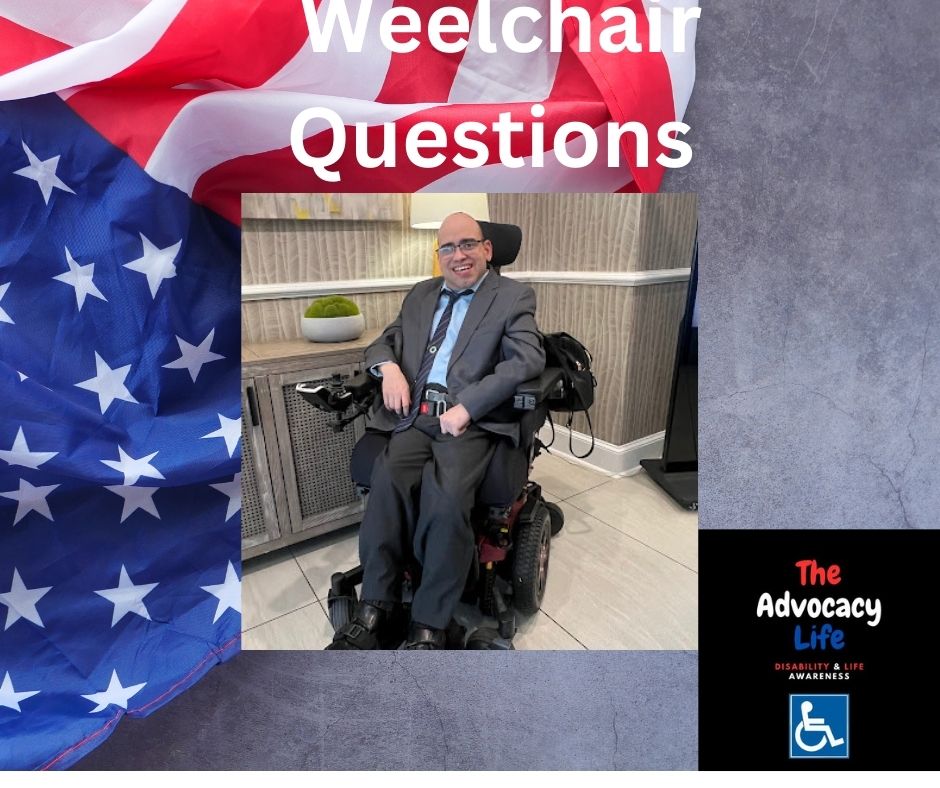
Every time someone sees my wheelchair for the first time, I get a lot of questions. “How much did it cost?” “Is it comfortable?” The most common one? “Do you need a license to drive that thing?”
So here are a few answers: It cost just over $50,000. No, it’s not about comfort—it’s a tool that gives me access to the world. And no, you don’t need a license to operate an electric wheelchair.
This 300-pound machine is my lifeline. I don’t love it, but I treat it with care—because I have to. It’s been five long years since I even became eligible to apply for a new one.
People often joke that it must be fun to cruise around all day. What they don’t see is the exhaustion that comes with being in the same position from the moment I wake up until I go to bed—especially on busy days. They smile when they see me recline in my chair, but they don’t realize I do it to prevent pressure sores. If I don’t, I could literally die from one.
Thanks to God’s grace, I’ve never had one—but I won’t lie, it’s my biggest fear. Even Christopher Reeve, with all his resources, passed away from a bedsore.
1 Thessalonians 5:18 NIV [18] give thanks in all circumstances; for this is God’s will for you in Christ Jesus.
There’s a whole world of challenges most people don’t notice: Going around the block just to find one curb cut. Never being able to see over a counter. Being invisible in a crowded room—until someone bumps into me and then apologizes like it’s their worst mistake.
Please, don’t feel sorry for me. That’s not why I’m writing this. This is about awareness. About understanding.
Take care of yourself. I hope you never need a wheelchair—but if you do, maybe now you’ll have a better idea of what it means to live in one.

Read more of this content when you subscribe today.
Choose an amount
Or enter a custom amount
Your contribution is appreciated.
Your contribution is appreciated.
Your contribution is appreciated.
DonateDonate monthlyDonate yearly

Become a paid subscriber to get access to the rest of this post and other exclusive content.
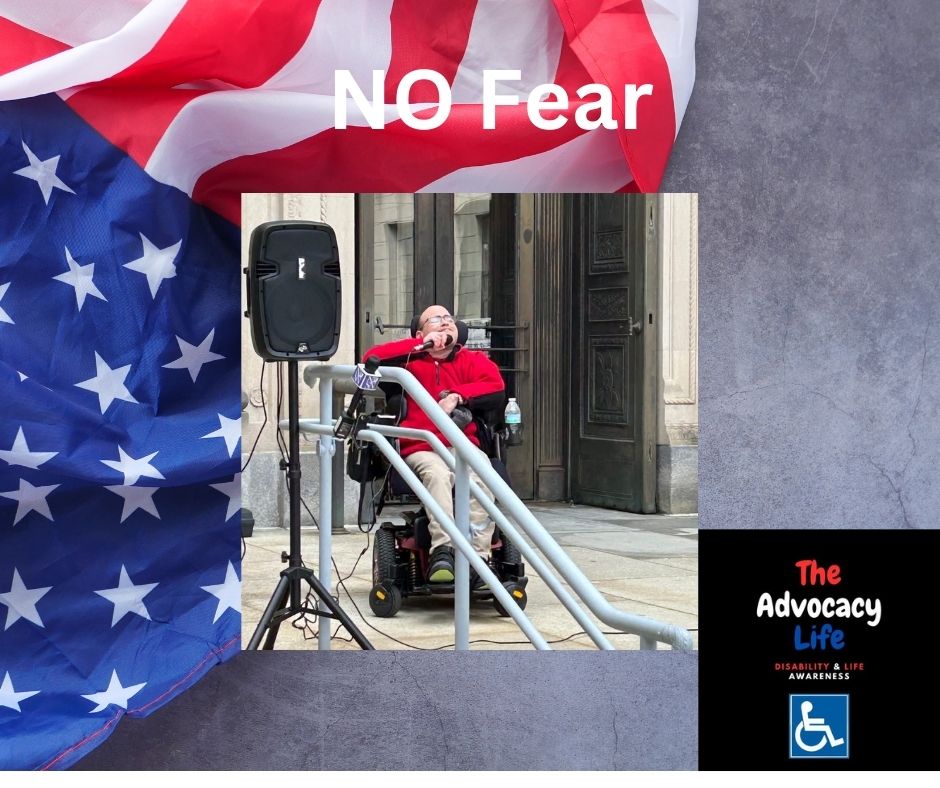
My fellow individuals and families living with disabilities. No matter what you’re diagnosed with, whether your disability is visible or invisible, the truth is we face difficult times. What can we do about it? Disabled Americans are Americans. We must remind our neighbors that we do exist. That we can and do lead productive lives. Don’t go back in isolation. Don’t go back to being treated like a plant or a house pet. Be the human being you were made to be. Go out to the store and run your errands. Go bowling with your friends. Go out to dinner and order that steak.
If you are an individual with more significant needs, then encourage your family or caregivers to take you out to those stores so people can see you and see that your life has value. Show them what matters in this world. Money and possessions will only be temporary. We live in a world where people project false faith. Some folks have to see it before they believe it.
John 20:25 NIV So the other disciples told him, “We have seen the Lord!” But he said to them, “Unless I see the nail marks in his hands and put my finger where the nails were, and put my hand into his side, I will not believe.”
We were made to be more than “inspirational’’ right now, that might be what this world needs. Fighting is inevitable, but the way we fight is just as important as what we’re fighting for. Engage in battle using your words and spirit. Not with anger and violence, because that is what they want. It is up to us to change the narrative. To lead by example, not from the shadows, as some are doing today. Disability is not a partisan issue. It is a natural part of human existence. When you frame your proposals, your presentations, and your peaceful protests, show them that it makes “common sense” to support individuals and families with disabilities. Show them that by not supporting us, they’re only doing themselves harm. We might have been born disabled, but everyone else is just temporarily abled. People only support disability unless they’re affected by it.
The time is now to affect their lives with our disabilities. With our perceived weaknesses, help them see our strengths. This cannot wait until tomorrow. This cannot wait until the fear subsides. We must lean on each other so we don’t break. Our journey is long; our struggle and challenges are ever-present. We have the advantage because we were born resilient. We were bred for this battle. They’re not. They protect fear because they are afraid. They bluster because they don’t understand. They boast because they are afraid to lose. Disability is not to be feared. Disability is not a curse or a punishment. It is a platform to show their true values in life. I would like to close with this question: if you were the holy creator, would you use your strongest warriors for the easy battles or save them for the ones you need to win?
Read more of this content when you subscribe today.
Choose an amount
Or enter a custom amount
Your contribution is appreciated.
Your contribution is appreciated.
Your contribution is appreciated.
DonateDonate monthlyDonate yearly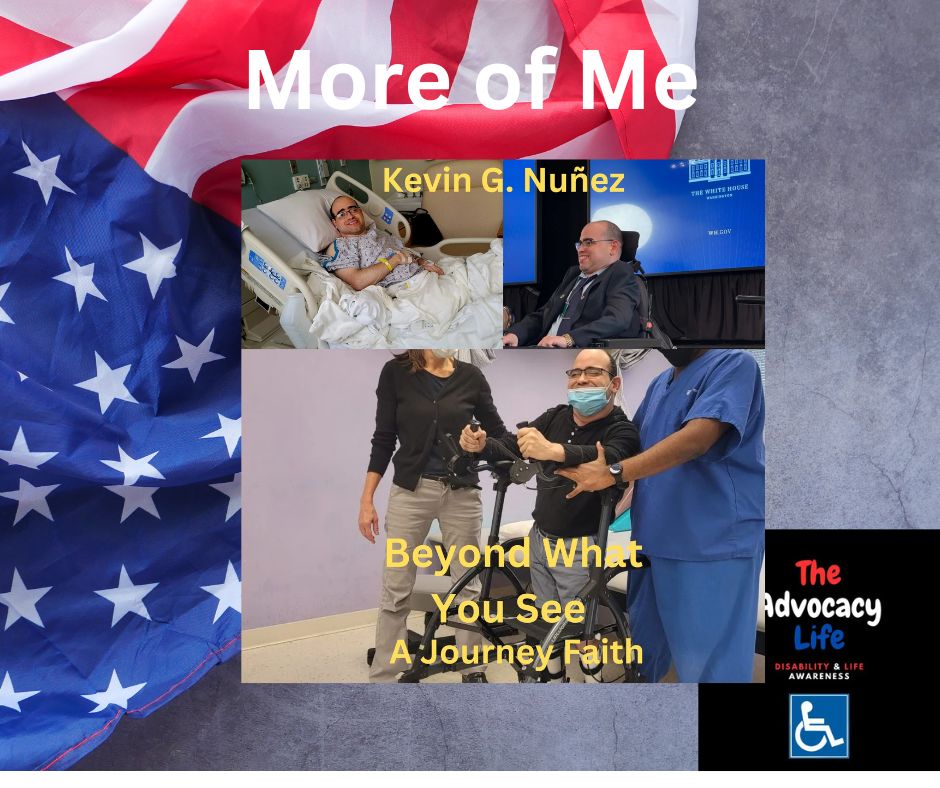
Everyone requires assistance sometimes; I’m no exception. As some of you know, my book came out late last month. Beyond What You See, a Journey of Faith is now available on Amazon. I need people to see my heart on a page. Below, you will find a very short excerpt from that book. If you’re comfortable, please buy a copy and leave a review. Even if you don’t feel like it’s a good book, just be honest. The book is also available in audiobook As always, thank you for your time, and see you next week.
Do you remember where you sat on the first day of high school? Most travel with someone with whom you shared a mutual interest. Perhaps you shared physical characteristics. I’m chuckling as I’m writing this. In some ways, part of us have not left that lunch table. There’s an entire field of study dedicated to how humans interact with each other. People claim to be “open-minded,” but I have a little secret for you: we are like-minded, not open-minded. Sure, we can have a conversation around the water cooler. People sympathize with someone for a given time. Honestly, we only go so far outside of our comfort zone.
Folks today simply do not know how to communicate effectively. One of my favorite parts about going to Puerto Rico every summer as a boy was that I always met new family members. We would know everyone’s life stories within 20 minutes and then start dancing. On my father’s side, my grandfather was one of 10 kids! Nowadays, at all events across our nation, there’s a line of chairs up against the wall with people on their phones. Sometimes texting the person three chairs down! Theoretically, we should know each other better than ever. However, unless we see someone’s birthdays on our Facebook page, they will forget all about them. How sad is that?
In the year 2025, we all practically have instant communication. Yet there is more division and arguing amongst family and friends than ever. Before people sit down to eat, they intentionally make a list of subjects not to talk about. We have become afraid to speak to each other! Subjects that should be said are not. More importantly, topics that should be said are silenced.
Be wise in the way you act toward outsiders; make the most of every opportunity. Let your conversation be always full of grace, seasoned with salt, so that you may know how to answer everyone.
Colossians 4:5-6
My freshman year of high school was tough. Every day, I sat alone at a table, eating my cold sandwich and oversized pickle. I was the guest of honor at my very own pity party, and I was upset that my first relationship ended abruptly. My friend group dissolved in the summer between 8th and 9th grade. From the corner where I sat, I could see the entire student body. They all had to walk by me if they wanted a snack. I should have had a conversation every time someone bought a 50-cent cookie or a 75-cent honey bun from the snack bar, but I never noticed that I was seated directly parallel to it. Instead, all I did was stuff my face.
Become a paid subscriber to get access to the rest of this post and other exclusive content.

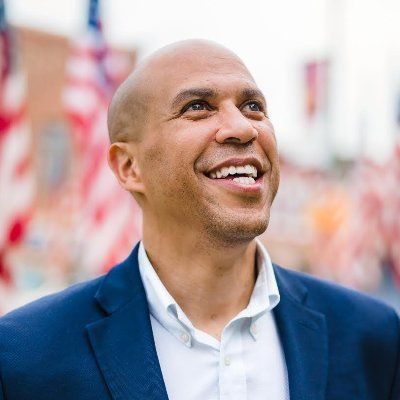
I am a political nerd. I like to watch C-SPAN when I can. This week I knew something special was going to happen. In case you missed it, New Jersey Senator Cory Booker was on the Senate floor for over 25 hours. The man did not stop speaking. He did not sit down unless he was asked a question. He answered the question despite that, he did not sit down! Most Americans feel unheard by their elected officials. Many of the senator’s words were reading letters from his constituents to protect Medicaid. The Medicaid program is not healthcare, it is a lifeline for millions of Americans. Senator Booker, thank you for hearing us.
I still don’t understand how cutting 880 billion dollars over 10 years is the best path forward for America. Are The prices of eggs going to go down? One in three children who use these benefits are they going to be okay? So many counties nationwide use the Meals on Wheels program to feed older adults. Can local municipalities be ready to pick up the cost? Can they even do so? Yes, the American way of life is expensive, but we cannot save costs at the expense of the most vulnerable. Individuals with disabilities are so strong they need the right support and the opportunities to show it.
1 Corinthians 3:10 NIV By the grace God has given me, I laid a foundation as a wise builder, and someone else is building on it. But each one should build with care.
I understand and will fully admit that the government can be way too big. I’m a capitalist through and through. This website is where I sell my books and other works. Americans do need more money in their pocket, but this is not how to do it. When a doctor takes a sample for a biopsy, they use a scalpel, not a hacksaw! If you are going to switch to a new mode of operation, then give people a chance to learn so they can follow it. This week, Secretary Kennedy and President Trump cut a lot of positions from the Department of Human Services. That is a prerogative. What’s wrong is how they do it. Depending on the position, they’re not offered a severance package. You cannot build America without its people.
Is there a formula that decides what jobs are needed and what jobs are not? Are these decisions being made by artificial intelligence? How do you value an American life? I want the best for vongressional representatives, senators, and president Trump. I want the best for the American people. America will not be the best if we leave others behind. The next building, a strong future, means using all Americans.
Senator Booker gave us a call to action. A lot of us cannot go, march in Washington, DC. I have another idea post video of your day post them all over social media. Show yourself getting out of bed with twheelsgiver. show yourself with your husband or wife going to the store. If you deliver Meals on Wheels, then take a picture with the person you gave the food to. Let those in power see the smiles on our faces. Help them remember that brief moment also built America. America is more than money. America is neighbors helping each other. America is everyone doing the part. America is alive. Either we all thrive or we will not survive. Thank you for your time.
Read more of this content when you subscribe today.
Choose an amount
Or enter a custom amount
Your contribution is appreciated.
Your contribution is appreciated.
Your contribution is appreciated.
DonateDonate monthlyDonate yearly
I was going to write another blog this week about protecting the rights of individuals with disabilities, but then I realized that this kind of blog also has to be shared because we also have the right as human beings to be loved and to be seen as sexual beings. As long as both individuals can consent and can fully comprehend what a relationship and or sexual encounter entails. Individuals with significant physical disabilities are discouraged from seeking any kind of romantic relationship. In movies and TV, they never show us in a realistic relationship scenario. We are saved for the “inspirational movie.” we are never seen going past a gentle kiss or a cute moment.
As an individual with a disability, I have grown comfortable with my “different body.” However, in reality, it’s not different at all. I was born with ten fingers and ten toes—two legs and two arms—and most importantly, a heart. Over the years, I’ve learned that my disability can make me feel undesirable to the opposite sex. I can confidently speak in front of legislators and lobbyists, and I can maintain my balance, but the thought of talking to a woman instantly makes me sweat. Why is this?
I don’t want this to be a “woe is me” narrative; rather, it’s a wake-up call to society regarding the choices they have made. Society often excludes us from love and relationships. We are not just children; we grow up to be adults, too.
1 Corinthians 13:5-7 NIV It does not dishonor others, it is not self-seeking, it is not easily angered, it keeps no record of wrongs. Love does not delight in evil but rejoices with the truth. It always protects, always trusts, always hopes, always perseveres.
Growing up, I looked up to physical specimens like Hulk Hogan and The Rock. However, none of them looked like me. As an adult, I noticed that the main character in “Fifty Shades of Grey” is a 6-foot-tall, muscular, very masculine man. When will people with disabilities be portrayed beyond their limitations? I believe that, at some point, they will remake “Basic Instinct.” Why not cast someone with a disability in those provocative scenes? In Hollywood, they now employ intimacy coaches to ensure that everyone feels safe during intimate moments.
We know that the adult film industry is rife with human trafficking and abuse, including victims with disabilities, yet it often goes unnoticed. Our voices matter; our lives matter. I recognize that some men can be terrible. Women are frequently exposed to situations that allow them to be taken advantage of. The good guys tend to hesitate to approach women for fear of being perceived as a threat. By 2025, I’m sure every woman with a cell phone over a certain age will have received inappropriate pictures. As a result, women constantly keep their guard up. If a woman wants to be treated differently by a partner, she should seek a different kind of partner!
If you search social media, you will likely find relationships where one person is paralyzed. I believe these relationships tend to be more socially acceptable because they were once considered “normal,” and there is a prevailing belief that those with such disabilities can do more for themselves. The concept of a disability hierarchy is another system designed to divide us. A human is a human; we all need love!
I know I’ve covered a lot in this short blog, but that’s intentional. I want to encourage people to start having difficult conversations and become comfortable with being uncomfortable. By doing so, you will gain a better understanding of what it’s like to live with a disability.
Choose an amount
Or enter a custom amount
Your contribution is appreciated.
Your contribution is appreciated.
Your contribution is appreciated.
DonateDonate monthlyDonate yearly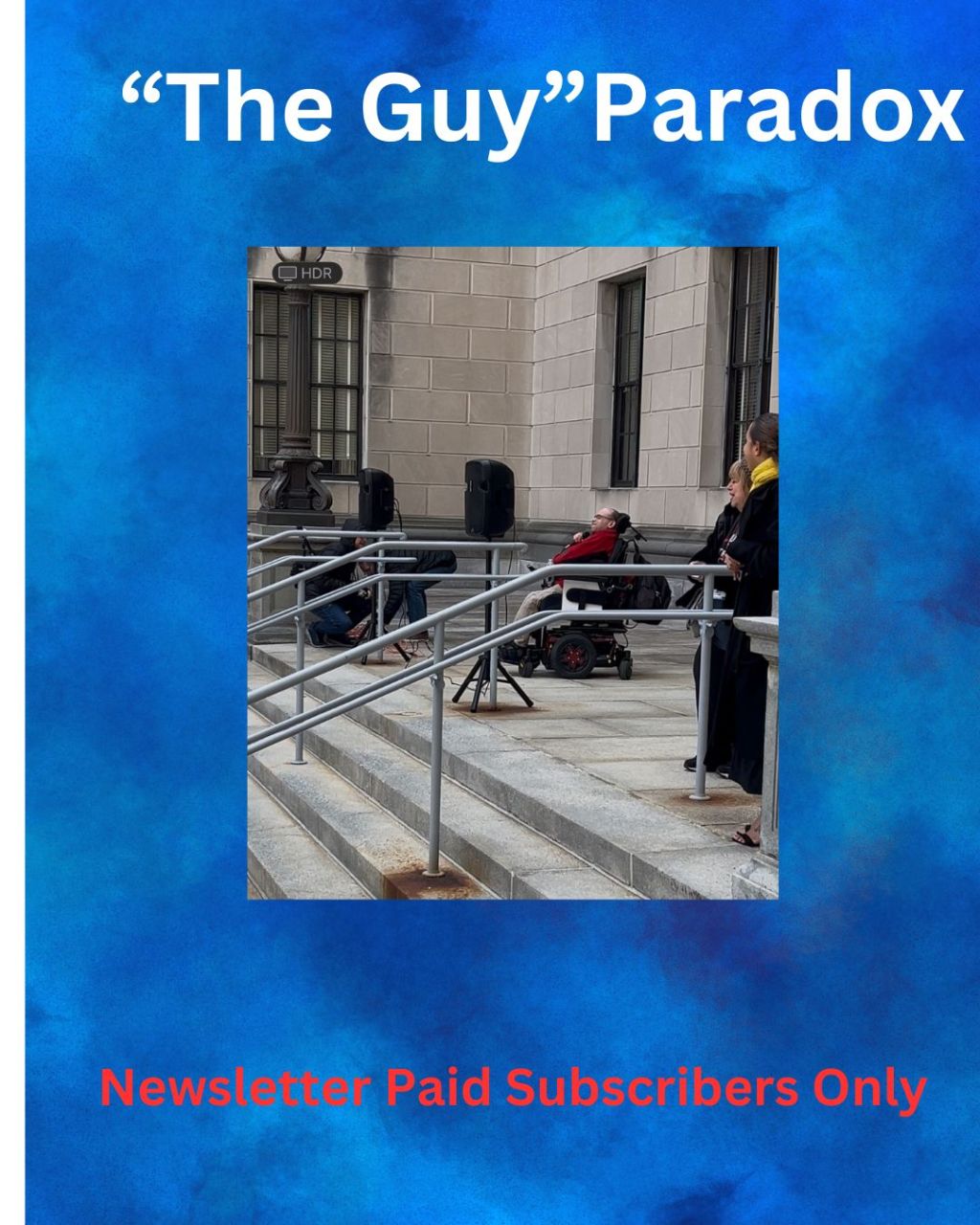
Become a paid subscriber to get access to the rest of this post and other exclusive content.
I know this writing is going to be controversial. All I ask is that you read to the end because an aspect of life is in danger. The assumption is that if you have a disability you automatically align with one political party. The reality is disability affects every aspect of life. I know people with disabilities on all sides of the political spectrum. The art of democracy is compromise and negotiation. Disability is not a partisan issue. I Love working with both Democrats and Republicans. I hope that someone from a red state or a conservative mindset is reading this because I am confused. I will never condemn a woman for choosing to terminate a pregnancy. Who am I to judge? All I know is God gave me a disability and a voice for a reason. My heart breaks every time I hear of a young lady going through with the procedure.
As an American in 2025, my heart hurts more than ever. If we are pro-life can we put others’ lives in danger? The proposed cuts or caps to Medicaid would directly impact millions of lives. This will not save the taxpayers money, this will not cut wasteful spending. One in three children receives assistance through the Medicaid program. Medicare stops paying for nursing home assistance after 90 days most residents use Medicaid to live. Supporting individuals with disabilities is symbiotic to the growth of the American economy supporting one person with a disability guarantees three to four jobs a day. The Medicaid program is common sense. There is no downside.
Most individuals and their families do not take advantage of the Medicaid program and its benefits. Give social workers the tools to investigate each case instead of limiting and overworking them. If you want to cut down on waste, go after the providers and corporations. That is where you find fraud and abuse. People will die!
Isaiah 43:7 NIV “everyone who is called by my name, whom I created for my glory, whom I formed and made.”
This misguided belief that people with significant needs will not be affected by these potential cuts to Medicaid is a lie. The word fear is a mnemonic device for Fake Evidence Appearing Real. When you call your elected official, ask them if they choose life or if they choose to fear. The Democratic Republic I was raised in was built on prosperity and hope, not fear.
It’s no secret society fears what is different and difficult. Children in wheelchairs always get lots of attention and blessings from onlookers. Until about the age of 14 then it becomes a stare and pity. Life, no matter what age, is not meant to be convenient. It’s meant to be a journey. At what age does life stop having value? Is it when they cannot apply for a job? Is it when they don’t qualify for income tax? I hope my fellow Americans value more life than money. Otherwise, we are all hypocrites and liars. America, choose between life or hypocrisy?
Choose an amount
Or enter a custom amount
Your contribution is appreciated.
Your contribution is appreciated.
Your contribution is appreciated.
DonateDonate monthlyDonate yearly The Advocacy Life Podcast & Blog