This episode is for the guys. In “Man Talk,” Kevin gets real about the unique and often unaddressed challenges of being a disabled man in America today.
In a society that holds a narrow view of masculinity, many disabled men feel emasculated by simple acts, like having a door opened for them. The conversation goes beyond the superficial, diving into deeper fears that are rarely discussed openly—fears about being helpless around a partner, and the anxieties that come with financial disparities in a relationship
Kevin also tackles the ableist idea that people with disabilities should only date other people with disabilities, comparing it to an “ableistic” version of racial segregation
He offers an honest perspective on how dating a non-disabled person means your “honeymoon phase” as a couple will be burst almost immediately when you are in public and have to face the world together.
This episode is a confidence boost for all men with disabilities, a reminder that you are valuable and you can go after what you want. Listen to the full episode! Ready for a raw, honest conversation that doesn’t shy away from the hard questions?
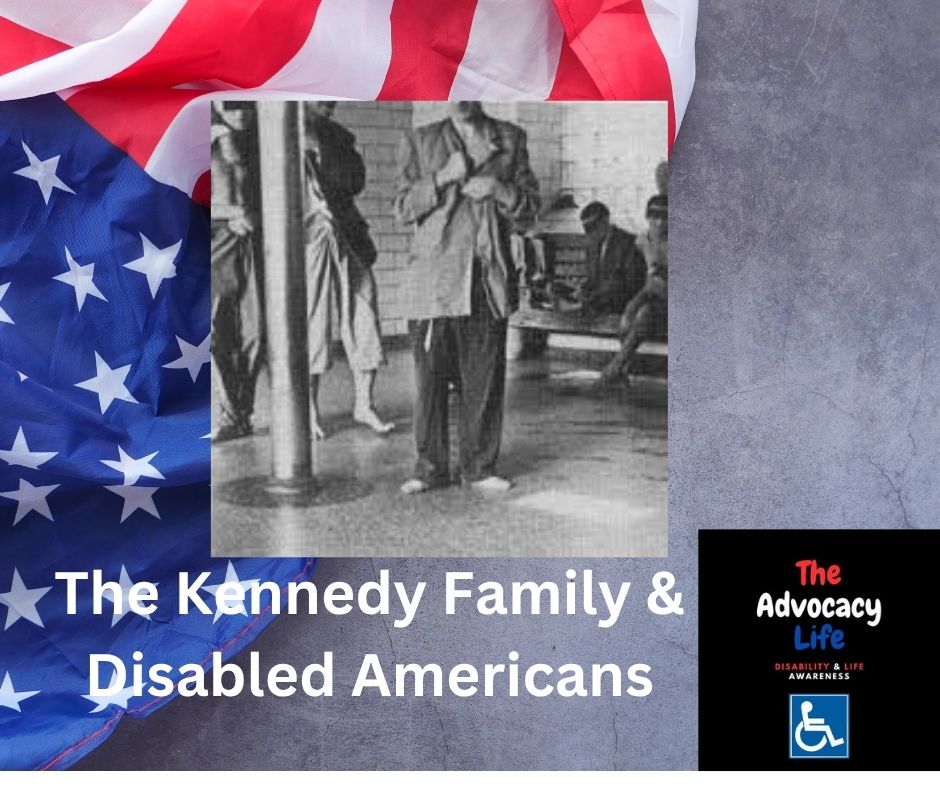
“A snake pit, where they live in filth and dirt, their clothing in rags, in rooms less comfortable and cheerful than the cages in which we put animals in a zoo.”
Robert Kennedy Senior made this statement when he was visiting Willowbrook in 1965.
Willowbrook State School was a state-supported institution for children with intellectual disabilities. Designed to accommodate 4,000 children, by 1965, Willowbrook had a population of 6,000, and a scandal soon erupted over news of the institution’s horrendous conditions and questionable medical practices. It was not closed for another 2 years despite all the outrage. Would you want your child to live in these conditions?
Disability does not have a political party. A disability does not have a skin color or a specific ethnic race. Disability is America. The only two things certain in this world are death and disability. What makes America great is that we learn from our past so we don’t repeat the mistakes we have made. Disability is not waste, fraud, or abuse. Disability is an example of Hope and prosperity in the American dream. The American Disability community is an example of living prosperity and endurance.
It’s hard to pinpoint the exact birth of the disability rights movement because disability has been around since the beginning of time, and it will be there until the end of days. America was introduced to the harsh reality of abuse through Robert Kennedy Sr.’s poignant account. Devoid of proper respect and support. Our community faces suffering and death. An autism diagnosis is not evil or a death sentence. A wheelchair is not a confinement, but a tool for opulence.
This is the current battle that disabled America is facing. We won’t stand for our brothers and sisters being locked up. We aim to help people live fulfilling lives. In the land of the free and the brave, we uphold truth, justice, and the American way as a testament to our identity. Living with a disability presents many challenges. While that’s a fact, things worth pursuing are rarely simple.
“We choose to do these things not because they’re easy, but because they’re hard.”
President John F Kennedy made this statement when referring to reaching the Moon in a decade. We have the same privilege to reach for the same stars as anyone else. In America, we do not fear challenges; we embrace them so we can grow. America today is making choices out of fear and misunderstanding. I believe in America, I believe in its people. We still have time to change course. To see value in all of us. Our chosen elected officials need to listen to us.
'“ Do not seek revenge or bear a grudge against anyone among your people, but love your neighbor as yourself. I am the Lord. 'Leviticus 19:18
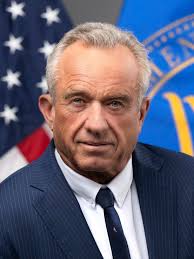
“I don’t think people should take medical advice from me.’
This statement was made by Robert Kennedy Jr. The current Secretary of Health and Human Services. There will always be misconceptions around disability and our healthcare. However, if we are left out of the conversation, we cannot help the country move forward. The current administration and the disability community cannot be enemies, we must be allies to achieve tomorrow’s victories. Without disability, America will fail because we are America.
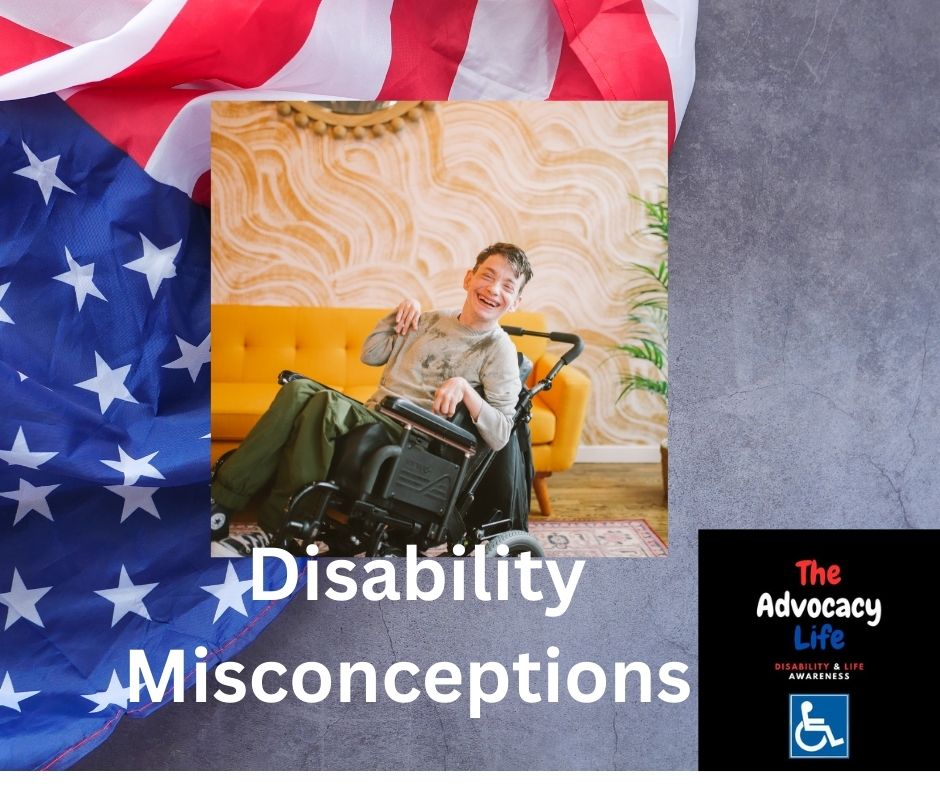
Every now and then, I get frustrated—not because I’m angry at individuals, but because there’s still so much misunderstanding about disability. What seems straightforward to me often isn’t to others. So, instead of stewing about it, I’ve decided to put together a list of things that I hope will help educate and shift perspectives.
Luke 6:31 NIV 31 Do to others as you would have them do to you.
1. Not All Disabilities Are the Same
We say “everyone is different,” yet so often people treat disability like a one-size-fits-all label. You could line up ten people with the same medical diagnosis, and each one would be affected in a completely different way. Needs, goals, and abilities vary from person to person. What someone can or can’t do depends on a mix of their individual abilities, the support they receive, and the resources available to them.
2. We’re Not Here to Inspire You—Just to Be Your Equal
It shouldn’t be “inspirational” just to see someone with a disability walking down the street. And yet, when we live independently—with the right support—people often question it. Why? We’re just living our lives like anyone else. We want to be treated as equals, not exceptions.
3. Be Flexible
Life doesn’t always go to plan for anyone—and that includes those of us with disabilities. Flexibility, patience, and understanding go a long way when you interact with us. A rigid mindset helps no one.
4. Hollywood Gets It Wrong—A Lot
Movies often miss the mark when it comes to portraying disability. Sure, actors like Tom Hanks and Cuba Gooding Jr. have received awards for their roles, but their performances don’t always reflect reality. Times have changed, and so have our perspectives. It’s important to remember that what you see on screen is entertainment—not education.
5. Ask Questions—Just Be Respectful
Curiosity is fine. But respect is essential. If it’s something you wouldn’t want to be asked or called, don’t say it to someone else—disability or not.
6. Disability Doesn’t Discriminate
It doesn’t care about your skin color, background, or bank account. Anyone can be affected. And just because something is written in a study online doesn’t mean it reflects the lived reality of everyone.
7. We Get Tired Too
Yes, everyone gets tired. But for many people with disabilities, there’s no “clocking out” at the end of the day. The challenges don’t stop at 5 p.m. Sometimes you just don’t want to use the wheelchair or the communication device. And speaking of that—imagine how exhausting it is trying to communicate when you can’t speak.
8. Laugh With Us, Not At Us
Humor is powerful—and we love to laugh! But make sure you’re laughing with us, not at us. That small shift makes all the difference.
9. Don’t Pity Us—Just See Us
We know life isn’t easy. But we’re doing our best, just like you are. We don’t need pity. We need understanding, support, and a fair shot.
I know this list isn’t revolutionary, and it might not be the most eloquent thing you’ll ever read. But I’ve kept it simple for a reason: clarity helps change hearts. Maybe someone will print this out and stick it on the fridge. Maybe the next time they meet someone with a disability, they’ll see the person—not just the label.
Thanks for reading. Be kind. Be curious. Be human.
Good night, friends.
As a child with a disability, I attended mainstream classes all my life. One memorable class was DARE (Drug Awareness Resistance Education), aimed at preventing drug addiction—a fear shared by all parents. This program made me realize the importance of early education on critical issues. Just as children learn about the dangers of drugs, they should also be taught about disability etiquette and inclusion from a young age.
Children’s natural curiosity about differences should be nurtured, not stifled. When a child asks about someone with a disability, parents often shush them out of discomfort. This only perpetuates ignorance. Instead, open discussions can foster understanding and empathy. I recall a time at a mall with my brother Abner and our caregivers. We exited an elevator and overheard a father tell his son, “Thank God you’re not like them.” This comment stung, but more than that, it made me pity the man for his ignorance—a product of likely never having been exposed to individuals with disabilities.
The disability community is the largest underrepresented and underserved group in the U.S., encompassing every body shape, skin color, sexual orientation, and gender. Despite this, society often ignores us to avoid disrupting their busy lives. Disability is not going away; it’s a natural part of the human experience. Everyone is only “temporarily able” and might need help eventually.
Living with a disability means no days off; it’s a constant presence. Every day, I face frustrations and struggles. In school, I wasn’t just the last picked for dodgeball—I was excluded entirely because it was deemed “too dangerous.” In home economics, while others learned to sew, I was switched to a different elective because the teacher assumed I couldn’t use the sewing machine pedal. I was never given a chance to adapt or prove my abilities.
Ableism limits growth for societal convenience, imposing barriers that exclude rather than include. Consider the story of Judy Heumann and the 504 sit-in—a pivotal moment in American history that highlights the fight for disability rights. Stories like hers should be part of our collective knowledge, teaching us about resilience and the importance of inclusivity.
Exposure to disability issues from a young age can normalize differences and reduce stigma. Integrating disability awareness into education can help children grow into empathetic, informed adults. The more we see and understand people with disabilities, the less “other” they become.
Our society must recognize that disability is part of the human condition and that inclusivity benefits everyone. By breaking down barriers and challenging ableist attitudes, we create a world where everyone has the opportunity to thrive. We must move beyond fear and ignorance to embrace a future where all individuals are valued for their unique contributions.
This week’s blog is going to be difficult for me to write. When I first started this project, it was meant to uplift my disability community and shed a light in this often dark world. I never want to bash anyone with a disability; our lives can be difficult enough. There is someone out there who is using various social media platforms to perpetuate negative narratives and victimize herself to gain fame and fortune. Alex Dacy, otherwise known as Wheelchair Rapunzel, is a disabled female living with Spinal Muscular Atrophy (SMA). She is not an influencer; she is seeking attention.
I used to follow her on TikTok and Instagram. I am not an influencer, nor am I judging her based on her disability. She makes me sad and angry because she has so many blessings but does not appreciate them. She should be an example for people with disabilities. Instead, she is an albatross for our way of life. In 1977, Judith Heumann the mother of the disability rights movement, was on the cover of Time magazine. In 2024, our community will see negative stereotypes reinforced because of people like Alex. You don’t have to take my word for it; I have a list of sources below that will let you see for yourself.
' “Watch out for false prophets. They come to you in sheep’s clothing, but inwardly they are ferocious wolves. 'Matthew 7:15
I feel it’s important for people with disabilities to support others. When I used to follow her, it was fun to see someone with a major disability going to the club and living their best life. After a few videos, her content got old fast for me because it reminded me of one of those guests on Jerry Springer. There is a medication called Spinraza that stops or severely slows the progression of her particular disability. The closest thing there is to a miracle drug. As long as it is taken daily. Alex calls it “twerk juice.” It does not take a rocket scientist to see that she is using other drugs or alcohol throughout the day. It is also clear that her content is monetized. Good for her.
On a recent podcast, she was asked about her adult entertainment site, which I never followed. Again, not a judgment on her. Individuals with disabilities have sex. However, she cannot claim that she had no other choice and she only did it to support her daughter., You cannot have your cake and eat it too. She is blessed with a beautiful daughter who is showcased frequently in her videos. Honestly, I forgot all about her until a few days ago, when I noticed our community was divided on whether to support her or not after she posted several videos victimizing herself for having Child Protective Services (CPS) make several visits to the home.
CPS harasses parents with disabilities. It is a sad right of passage for a new disabled mom or dad. This is not the case for Wheelchair Rapunzel and her baby’s father. They received home visits because they were high or drunk. The child is being neglected. Don’t take my word for it. Watch the videos for yourself. Her face is always bloodshot, and her partner” is smoking in the videos! One of the sources is an interview with one of her former caregivers. Alexis clearly needs counseling and to seek help. I do wish her the best, but right now she is not someone that should be followed or admired.
There are so many real disabled content creators and influencers who show their lives in the right way. Squirmy and Grubs a man with the same disability, have a YouTube channel with his wife. I commend them for the courage it took to document the struggle they went through trying to conceive a child. I know so many disabled couples who cry themselves to sleep, knowing they cannot have a child. So many men and women just happen to have some sort of disability that is constantly ignored because people don’t take the time to see their hearts. This world is so backward. All I can say is to investigate what you consume with your time and energy; don’t just watch something because it’s trending. As always, thanks for reading. I will see you next week.



 The Advocacy Life Podcast & Blog