Tag: disability

  • The Backwards Life

    The Backwards Life

    A Community Blog

    This blood can be read aloud


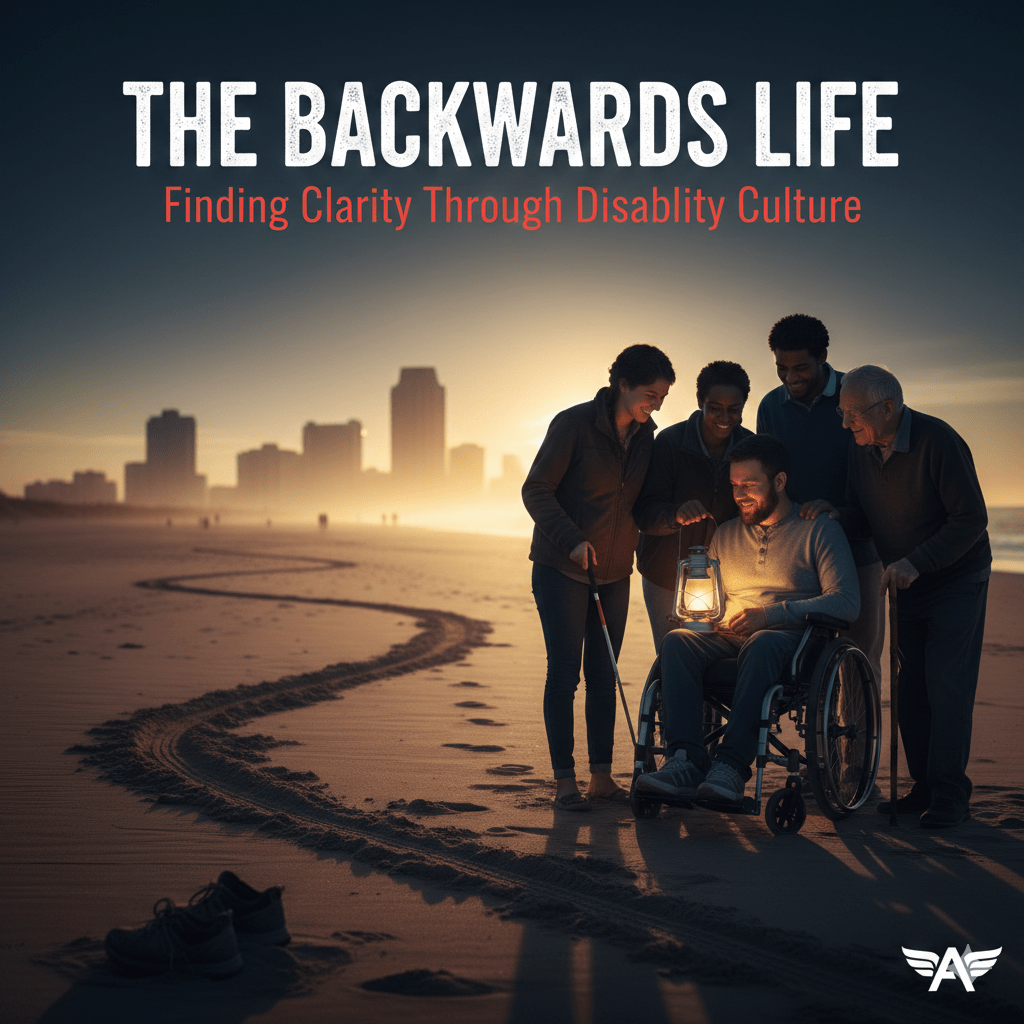
    The best way to master a new language is to immerse yourself completely in its culture. For the first community blog of 2026, I invite you to join me in this exploration. I want to invite you into the world of disability awareness—not just to see how I live, but to learn how disability culture can reshape your understanding of the world.

    John 12:25 NIV [25] Anyone who loves their life will lose it, while anyone who hates their life in this world will keep it for eternal life.
     
    From the outside looking in, many people see my life through a lens of lack. They might see a man without a traditional nine-to-five career and assume he has no path, no prospects for a family, or no chance at success. In a society that measures worth by visible output, they might call it a “loser” lifestyle. To an extent, their observations of my physical limitations are correct—but their conclusions are entirely wrong. Disability has taught me the immense value of living what I call a “backwards life”.
     
    In America, we are often guilty of a dangerous short-sightedness. We tend to only value what is directly in front of us—the things we can touch, see, or buy. We chase momentary satisfaction and fast-paced metrics, but disability forces a different perspective. It demands that we look at the bigger picture of humanity. 

    Take the simple act of getting out of bed. I cannot do this on my own. On the surface, that feels like a loss of independence. But in reality, it creates a moment of profound connection. To get up, I have to hug a caregiver or a friend. In a world where so many people live without love or physical affection, I start every single day with a human embrace. Who is truly more “independent”—the person who stands up alone, or the person who begins their day fueled by a community of support?

    During a recent physical therapy session, I took approximately 20 steps. By the end, I was exhausted, drenched in sweat, and guzzling water as if I’d run a marathon. It was a monumental effort for a seemingly small distance. 
    Contrast that with the thousands of people who walk miles every day but never actually “go” anywhere. They move through their lives on autopilot, working jobs they don’t like to buy fashion they don’t need or tools they won’t use. They are moving, but they aren’t progressing. They are chasing a momentary satisfaction that evaporates as soon as the next trend arrives. 
    I am a capitalist—I sell books and bonus content because money and resources are necessary tools for advocacy. But money only matters if you are intentional with it. We are wasting our lives in front of screens and empty consumerism. We are existing, but we aren’t necessarily living. 

    Perspective applies to our hearts, too. Many people spend their lives chasing relationships they know are wrong for them, simply to avoid being alone. I’ve been there. I’ve gone to sleep crying because I had to accept that a person I wanted was not “the one” for me. 

    But I’ve learned that it is better to find the one person who truly matters than to chase four relationships that go nowhere. The “backwards” way to find love isn’t to chase it; it’s to stand out and let it come to you. When you stop chasing the wrong things and instead let your own light shine, the world begins to see you for who you truly are.

    As we move into 2026, I challenge you to look at your own “front-facing” values. Are you walking just to move, or are you walking with purpose? Are you surrounding yourself with things, or with people? 

    Living a backwards life isn’t about moving in reverse—it’s about refusing to follow a society that is heading in the wrong direction. Thank you for being part of this community, for reading, and for listening. Let’s make this year about the things we can’t always see, but that matter the most. 

  • A Message to the New Governor

    A Message to the New Governor

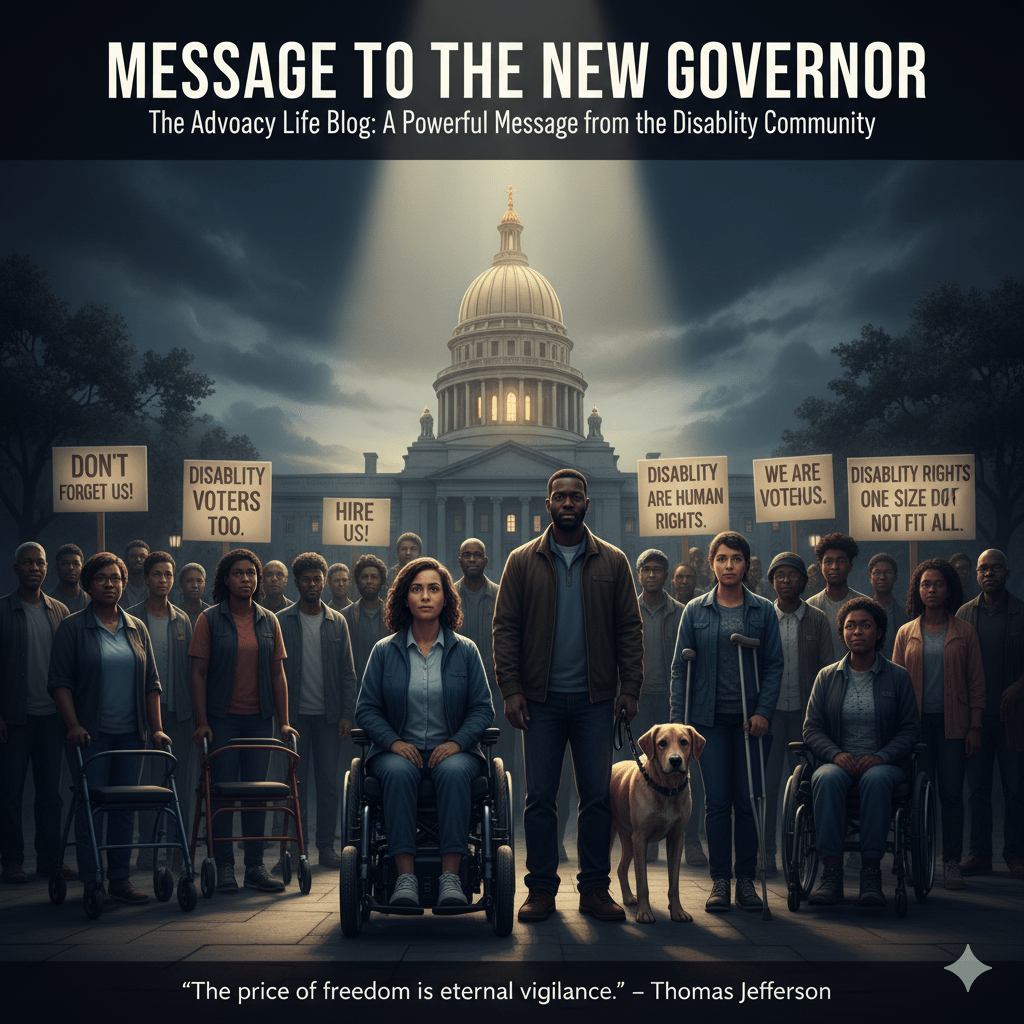
    “The price of freedom is eternal vigilance,” Thomas Jefferson famously declared.

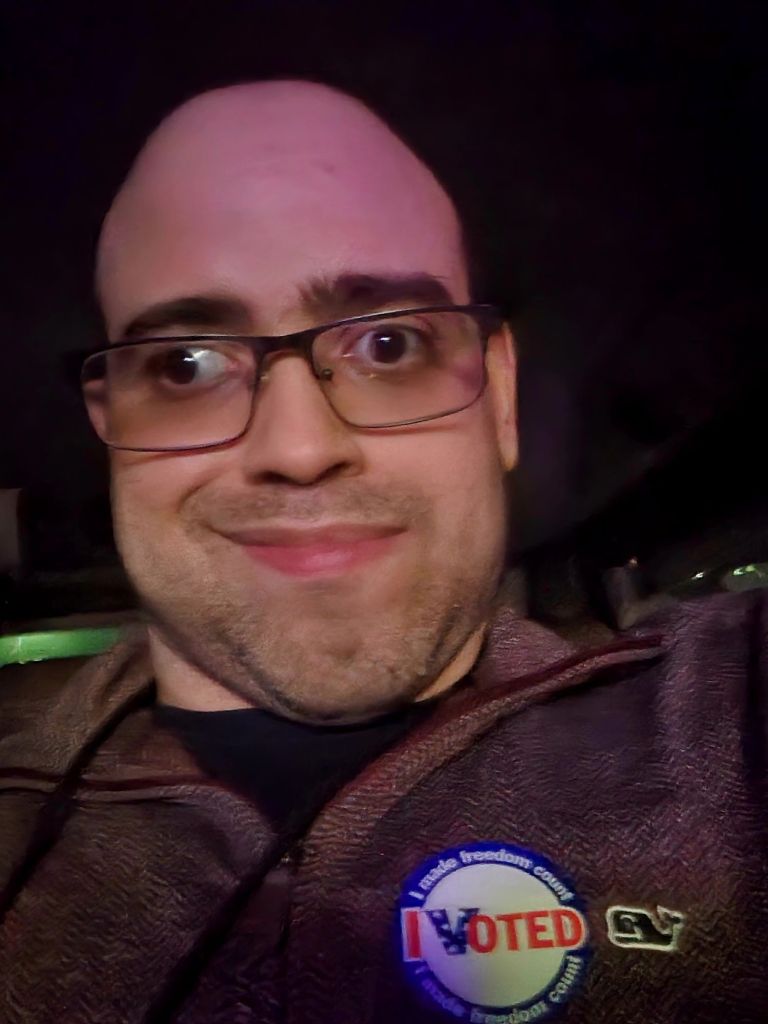
    I’m writing this blog just hours before the election results roll in here in New Jersey. By the time many of you read this, our state will probably have a new governor-elect. If I could address the incoming governor, I would start with this: Do not forget us.

    The disability population is the largest, most underserved, and most underrepresented community in America. We are voters. We are taxpayers. We are citizens. Yet, we are an afterthought, if thought of at all. Our needs are frequently sidelined in policy debates, treated as niche issues rather than fundamental human rights. This needs to change.

    Our community is incredibly diverse. Disability comes in every skin color, every background, every walk of life. It touches families across all demographics, socio-economic statuses, and geographic locations. This means that disability rights are unequivocally human rights. They do not subscribe to any single political party, and our allegiance isn’t to a red or blue banner, but to the dignity of every person.

    We stand for policies that genuinely support independence and self-determination, not those that inadvertently trap individuals in poverty or limit their potential. The disability experience is unique to the individual; a “one size fits all” approach simply does not work. We need policies crafted with nuance, understanding that what empowers one person may not work for another. We need legislation that respects the dignity of risk, allowing individuals to make choices, to learn, to contribute, and to live full, meaningful lives without fear of losing essential supports.

    Many people with disabilities can and want to work. We want to contribute to our communities, to pay taxes, and to be active participants in the economy. Yet, current systems often create perverse disincentives, penalizing individuals who earn above a certain threshold by stripping away vital benefits like healthcare or personal care assistance. This traps people in a cycle of dependence when they desire nothing more than to be independent. Help us break these barriers. Help us contribute without fearing penalty. Help us be taxpayers, not perceived burdens.

    Our community wants to contribute, not just consume resources. We seek opportunities, not charity. We demand respect, not pity. We are a vital part of New Jersey, and our voices deserve to be heard, our needs addressed, and our rights protected.

    As the new administration takes shape, I urge them to remember Thomas Jefferson’s warning. The freedom and well-being of the disability community depend on constant vigilance from our leaders. We will be watching, advocating, and striving for a New Jersey where every citizen can thrive.

  • Laughing with Your Disability Podcast Episode

    Laughing with Your Disability Podcast Episode

    Laughter is powerful. It can disarm uncomfortable situations and help us connect with one another on a deeper, more human level. In this episode of The Advocacy Life, I explore how embracing humor, even in the most embarrassing moments, can be an incredible tool for living with a disability.

    I share three personal stories where laughter became my saving grace. The first involves a spectacular fall at a Boston Market, a moment where my poor depth perception led to an unexpected tumble. My staff and I couldn’t help but laugh, and it became a family joke. The lesson? When you fall—physically, mentally, or spiritually—laugh, learn, and get up.

    My second story is more personal, a lesson in unexpected growth during an intimate moment with a new caregiver. It was uncomfortable, but by teaching and growing together, we built a lasting friendship.

    Finally, I recount a time when I was angry and isolated, purposely hiding from my peers with disabilities. The staff and clients at my day program played a prank on me with a speaker that made fart sounds, and it was that ridiculous, joyous moment that made me feel truly welcome. It taught me that kindness and acceptance are key to overcoming ableism, a lesson that everyone, with or without a disability, needs to learn.

    This episode is about more than just a few laughs. It’s a reminder to find the joy in the unexpected, to embrace awkward moments, and to welcome others with open arms.

    Podcast Transcript

    The Podcast

    Published Books

    Subscribe to Letter from Limbo

    Read more of this content when you subscribe today.

    One-Time
    Monthly
    Yearly

    Make a one-time donation

    Make a monthly donation

    Make a yearly donation

    Choose an amount

    $1.00
    $3.00
    $5.00
    $5.00
    $15.00
    $100.00
    $5.00
    $15.00
    $100.00

    Or enter a custom amount

    $

    Your contribution is appreciated.

    Your contribution is appreciated.

    Your contribution is appreciated.

    DonateDonate monthlyDonate yearly
  • Advocacy day 1 Podcast

    Advocacy day 1 Podcast

    My Start in Advocacy

    Greetings, my friends, and welcome. In this world, it’s not always easy to understand the path you’re meant to follow. For a long time, I was lost. When I was 18, I was very disappointed in myself and in the world because I could not go to college. At that time, it was not in the cards, and I was very angry. I had basically given up and accepted the fact that I was worthless and I couldn’t do anything.

    That all changed because one person didn’t give up on me. My school had a transition coordinator who always had my best interest at heart, even though I was, without a doubt, the most difficult client she ever had. She gave me this application for a course called

    Partners in Policymaking, which she described as a disability learning think tank. I filled it out very, very, very basically—I wrote a bunch of crap because I didn’t believe in myself. But she saw my potential. She made me do better, telling me I could do a better job and made me write an essay on top of it.

    Months later, I got a call from the program director, who said she was very impressed with my words. I had no idea what I had said, even to this day. When I finally went to the first session, I purposely sat in the back because I didn’t feel like I belonged. Where I grew up, I was one of the only kids with a physical disability, and I had no concept of the disability community, or of inclusion.

    But as I listened to the stories of the other families and people in that room, I realized something. I’m not alone. There’s a whole community out there for you. I learned more from listening to their stories and successes than I did from the actual course. It was the first time as an adult I had ever been left alone as a person. I had never even slept in a room by myself before. That experience taught me that I wasn’t helpless, that I had resources, and that I could manage a situation on my own.

    One course, one day, one person changed my life. What was that one course, that one day, or that one person for you? Let me know in the comments below! Full podcast episode is below as well.

    episode transcript

    The Podcast

    Published Books

    Subscribe to Letter from Limbo

    Read more of this content when you subscribe today.

    One-Time
    Monthly
    Yearly

    Make a one-time donation

    Make a monthly donation

    Make a yearly donation

    Choose an amount

    $1.00
    $3.00
    $5.00
    $5.00
    $15.00
    $100.00
    $5.00
    $15.00
    $100.00

    Or enter a custom amount

    $

    Your contribution is appreciated.

    Your contribution is appreciated.

    Your contribution is appreciated.

    DonateDonate monthlyDonate yearly

  • Sneak Peek

    Sneak Peek

    Subscribe to continue reading

    Become a paid subscriber to get access to the rest of this post and other exclusive content.

  • Down but Never Out

    Down but Never Out

    Subscribe to continue reading

    Become a paid subscriber to get access to the rest of this post and other exclusive content.

  • The DSP World

    The DSP World

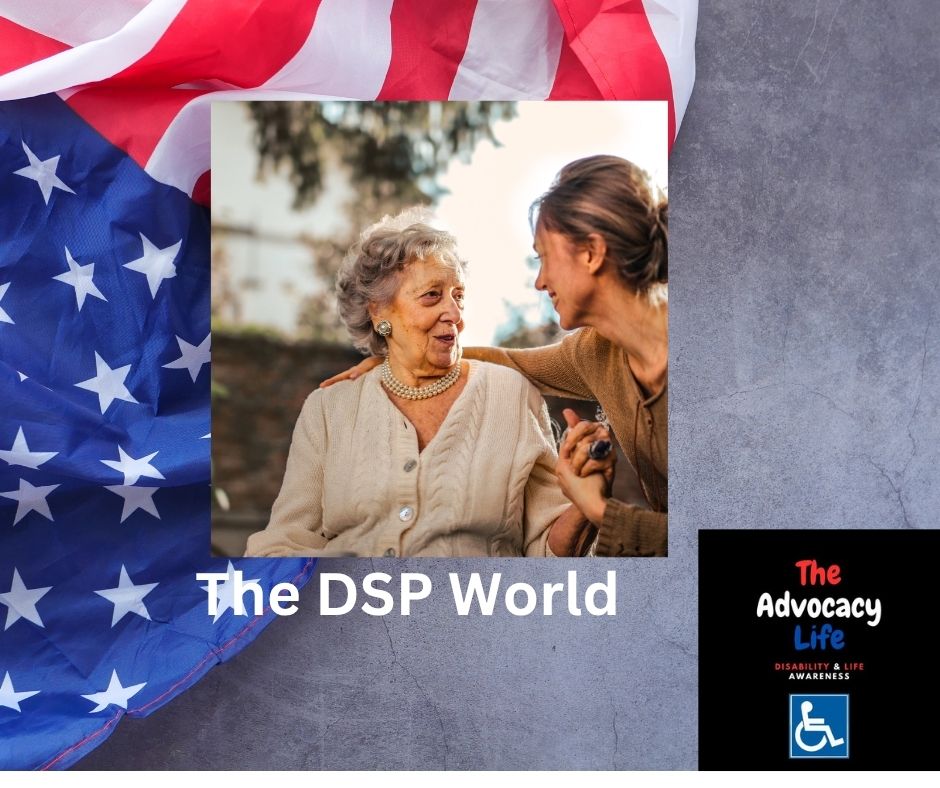
    I wanted to raise awareness to a very big problem in our world today. It rarely gets any publicity; the average person doesn’t even know about it. The truth is unless you are affected by this problem, you don’t even know it exists. The problem is the lack of pay and benefits for direct support professionals (DSPs). What is a DSP? A direct support professional is someone who is paid through a provider agency or an individual to provide support and care to a person with a disability. As long as there are people who need assistance in their lives there will always be need for these professionals. There are four groups of people who are affected by this issue. They are: the individuals receiving the care, the family of the individual, the providers, and the professionals themselves. 

    Let me begin by addressing the individuals receiving the care.  People that have a disability will learn that they often must depend on others to assist them in one way or another.  They depend on the kindness of others to help them live their day-to-day lives. Could you trust someone with your most intimate tasks if you knew they would leave in six months? Just imagine knowing you’re going to lose the person you most confide in, even before they start. People with disabilities can tell almost immediately if the person is going to be good at their job. Most of all they can tell if the person will last. 

    Use your imagination for this next part please. You meet a person named Matt. After meeting him for only four hours, you need a shower. He must first undress you completely. Then he puts you in a shower chair. He then proceeds to give you a shower. Matt does his best to wash your private areas. After finishing and drying you off, he begins to dress you. If the individual is so fortunate, he can direct Matt on how and what to do. The truth is there are many individuals in the disability community that cannot speak for themselves. Therefore, Matt must try to interpret what they are trying to communicate. This is just one of the many duties of a DSP. I hope this brief example can illustrate the need for these very special people. 

    Next, I would like to talk about the direct support professionals themselves.  These professionals receive about 10 to 11 dollars an hour with no promise of growth in their career. Most providers offer little to no benefits at all (this includes sick time or health insurance). As a result if DSPs don’t work, they aren’t paid. This leads to severe burnout. Many times, they sacrifice their own health and well-being to make sure they can provide for their family and/or pay their bills. It’s ironic that they are responsible for the health and well-being of another human when, due to the lack of health benefits such as sick days, they cannot take care of their own health needs. What inevitably happens is the person leaves to another company in hopes of a dollar more. People believe they can use this job as a steppingstone toward a larger career goal. The other misconception is this job will only be a temporary solution until another opportunity opens up. They end up living paycheck to paycheck. The professional waits in limbo until they burn out or they get another job. 

    So why would someone do this job at all? These wonderful people do it because they care for others. They look forward to the moments when their individual lights up when they arrive in the morning for their shift. The relationship between an individual and the professional is truly symbiotic if done correctly. The individual gets a companion to help them with their wants and needs. In turn the professional should receive joy in the knowledge they are doing something to help someone live their life. Some things are worth more than money. It is truly heartbreaking when it is time for the professional to move on. The best way I know to describe this feeling for an individual, it’s like losing a loved one. For the professional, they are left with the memories of a person that has worked their way into their hearts. 

    The family and/or parents of an individual can also be affected by the DSP issue. Try to imagine having a 25-year-old son that you have cared for his entire life. One day someone shows up at your door ready to take him out to the park for the day. You as the parent are told almost nothing about the person who will be supporting your child for the rest of the day. By the same token, the professional knows almost nothing about the individual and the family they will be supporting. Most times both parties are just given a name with a brief description. A relationship of trust has to be formed out of thin air. This sadly is one of the best-case scenarios. Most individuals as they get older lose their family and the professional becomes, by default, their brother, mother, etc. Depending on the individual’s disability, they will rely on their “families” in almost every way. They need an advocate, a caregiver, and a friend. Could you imagine learning to give your complete trust to a stranger every six months? 

    The final group of people that are affected by the DSP issue are the provider agencies. The turnover rate in this industry is incredibly high. Providers cannot keep their staff. They spend money training these professionals and then they quit a few months later. The money is lost. The rates for these staff and providers have not been increased in approximately 10 years. For example if the state allows $15 per hour to a provider, and $10 goes towards the DSP, that leaves the provider with only five dollars to spend subsequent overhead, including important items like gloves and vehicle maintenance. The providers cannot give their staff benefits or raises if they are barely able to keep themselves above water. 

    The direct support professional problem in my humble opinion has reached crisis levels not just statewide but nationally as well. As long as there are people, people will always need care.  This industry is not going away any time soon. The system will never be perfect but something needs to be done now. This needs to be a call to action. We need to contact our state and federal officials to educate them on this very real problem. If we don’t act now people with disabilities may not have people around us to help us live our lives. 

    The Podcast

    Published Books

    Subscribe to Letter from Limbo

    Read more of this content when you subscribe today.

    One-Time
    Monthly
    Yearly

    Make a one-time donation

    Make a monthly donation

    Make a yearly donation

    Choose an amount

    $1.00
    $3.00
    $5.00
    $5.00
    $15.00
    $100.00
    $5.00
    $15.00
    $100.00

    Or enter a custom amount

    $

    Your contribution is appreciated.

    Your contribution is appreciated.

    Your contribution is appreciated.

    DonateDonate monthlyDonate yearly
  • The Kennedy Family & Disabled Americans

    The Kennedy Family & Disabled Americans

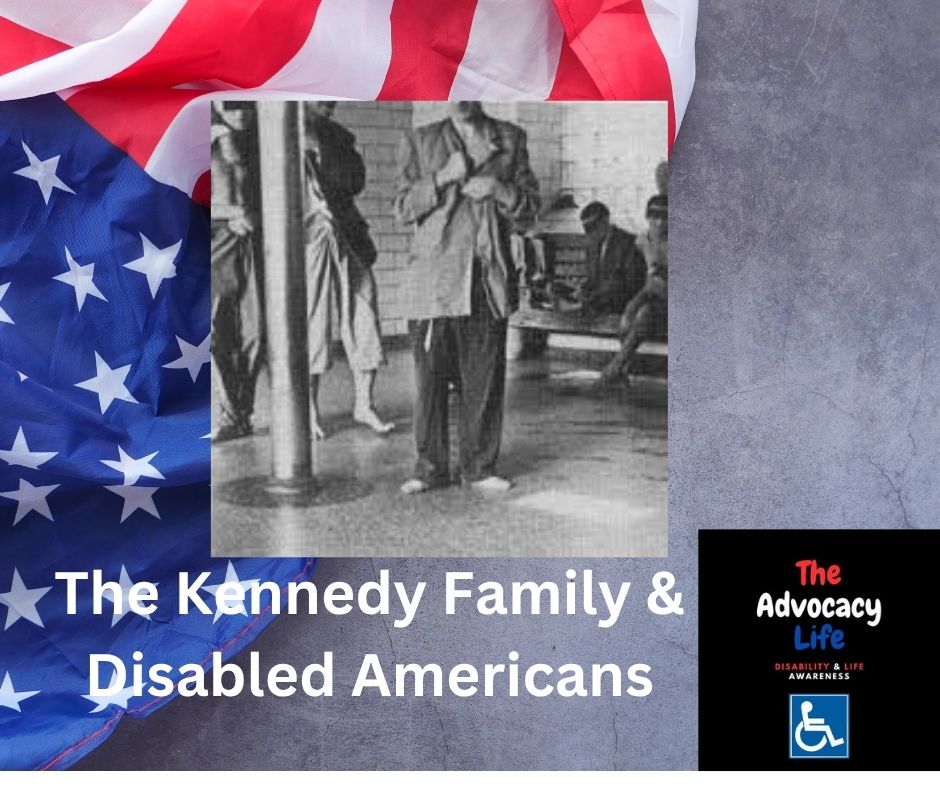
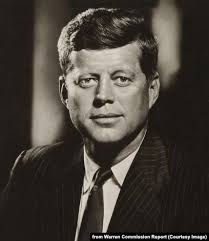
    “A snake pit, where they live in filth and dirt, their clothing in rags, in rooms less comfortable and cheerful than the cages in which we put animals in a zoo.”

    Robert Kennedy Senior made this statement when he was visiting Willowbrook in 1965.

    Willowbrook State School was a state-supported institution for children with intellectual disabilities. Designed to accommodate 4,000 children, by 1965, Willowbrook had a population of 6,000, and a scandal soon erupted over news of the institution’s horrendous conditions and questionable medical practices. It was not closed for another 2 years despite all the outrage. Would you want your child to live in these conditions?

    Disability does not have a political party. A disability does not have a skin color or a specific ethnic race. Disability is America. The only two things certain in this world are death and disability. What makes America great is that we learn from our past so we don’t repeat the mistakes we have made. Disability is not waste, fraud, or abuse. Disability is an example of Hope and prosperity in the American dream. The American Disability community is an example of living prosperity and endurance.

    It’s hard to pinpoint the exact birth of the disability rights movement because disability has been around since the beginning of time, and it will be there until the end of days. America was introduced to the harsh reality of abuse through Robert Kennedy Sr.’s poignant account. Devoid of proper respect and support. Our community faces suffering and death. An autism diagnosis is not evil or a death sentence. A wheelchair is not a confinement, but a tool for opulence.

    This is the current battle that disabled America is facing. We won’t stand for our brothers and sisters being locked up. We aim to help people live fulfilling lives. In the land of the free and the brave, we uphold truth, justice, and the American way as a testament to our identity. Living with a disability presents many challenges. While that’s a fact, things worth pursuing are rarely simple.

    “We choose to do these things not because they’re easy, but because they’re hard.”

    President John F Kennedy made this statement when referring to reaching the Moon in a decade. We have the same privilege to reach for the same stars as anyone else. In America, we do not fear challenges; we embrace them so we can grow. America today is making choices out of fear and misunderstanding. I believe in America, I believe in its people. We still have time to change course. To see value in all of us. Our chosen elected officials need to listen to us.

    '“ Do not seek revenge or bear a grudge against anyone among your people, but love your neighbor as yourself. I am the Lord. 'Leviticus 19:18

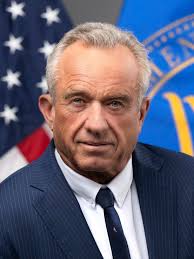
    “I don’t think people should take medical advice from me.’

    This statement was made by Robert Kennedy Jr. The current Secretary of Health and Human Services. There will always be misconceptions around disability and our healthcare. However, if we are left out of the conversation, we cannot help the country move forward. The current administration and the disability community cannot be enemies, we must be allies to achieve tomorrow’s victories. Without disability, America will fail because we are America.

    The Podcast

    Published Books

    Subscribe to Letter from Limbo

    Read more of this content when you subscribe today.

    One-Time
    Monthly
    Yearly

    Make a one-time donation

    Make a monthly donation

    Make a yearly donation

    Choose an amount

    $1.00
    $3.00
    $5.00
    $5.00
    $15.00
    $100.00
    $5.00
    $15.00
    $100.00

    Or enter a custom amount

    $

    Your contribution is appreciated.

    Your contribution is appreciated.

    Your contribution is appreciated.

    DonateDonate monthlyDonate yearly
  • All  Dressed Up

    All Dressed Up

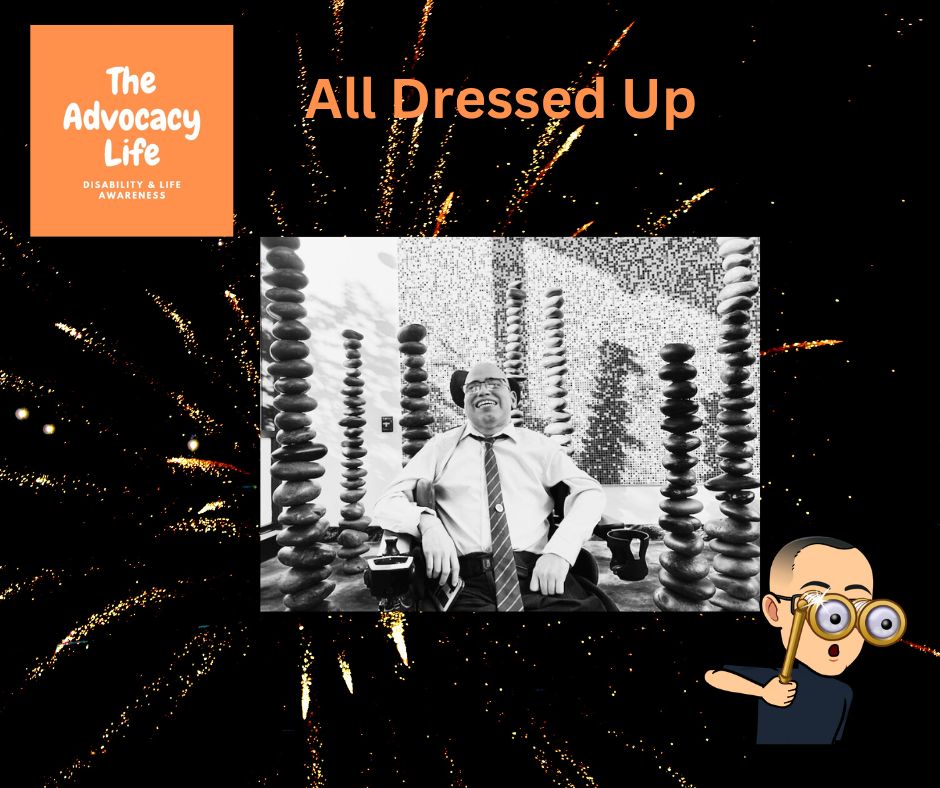
    Today, let’s chat about clothes—not from a fashion standpoint, but how they make us feel. Most people feel comfortable working from home in socks, shorts, and T-shirts. I imagine some of you might feel slightly envious when I say that’s my usual work attire. Working from home truly is a blessing, especially for accessibility. It’s a gift I never take for granted.

    If I worked a typical job, I’d have to navigate public transportation and spend extra time getting dressed. Yet, here’s my paradox: I love getting dressed up! There’s something about wearing a freshly ironed shirt and a tie that makes me feel invincible like I’m donning a suit of armor. It might sound a bit vain, but looking sharp boosts my confidence. When people think of disabilities, they often picture someone disheveled or in poor health. Dressing up helps counter that stereotype, and people stare a little less.

    Ephesians 6:11 NIV [11] Put on the full armor of God, so that you can take your stand against the devil’s schemes.

    I’m not ashamed of my disability, but dressing well feels like the closest thing I have to a day off from the assumptions people make. It may sound odd, but it makes perfect sense to me. I love showing people that those with disabilities can lead successful, goal-oriented lives.

    There’s an old saying: “Dress to impress.” If you want people to see you differently, sometimes you need to show them a different side of you. Some people need to see the miracle before they believe it. I’m not claiming to be a miracle, but I see the miracle in the people who help me get ready, making sure I look my best. That’s the real magic!

    I know only a handful of you read this blog It comes out, but I hope when you get dressed for work tomorrow, you’ll take a little extra time to make yourself look different. Maybe it’s a new bow in your hair or a tie you don’t usually wear. Do the small things that make you feel good. When you look good, you feel good, and when you feel good, you look good. It takes extra effort for me to look good, so when I do, I feel exceptionally great.

    As always thanks for reading. I am always looking for new blog ideas, let me know what topics you want me to cover next.

  • Blind Love

    Blind Love

    Subscribe to continue reading

    Become a paid subscriber to get access to the rest of this post and other exclusive content.