I usually don’t post a community blog on Fridays. In fact, I have a personal policy of limiting the number of blogs I publish each week. But today is a very special day for all the wrong reasons. Today marks the 25th anniversary of the September 11th attacks on the World Trade Center and on America as a whole.
To me, September 11th has always been a deeply somber day. I often feel, sadly, that America has forgotten the tragic realities and ultimate sacrifices made that morning—the people who were forced to leap from burning towers to find a merciful end, the individuals who burned alive, and those who couldn’t even make a final phone call to loved ones as their hijacked planes carried them toward tragedy.
It is striking how, 25 years later, a day that once united all Americans in shared grief has given way to a country more divided than ever. We have built a quasi-psychological civil war. It feels as if every time we meet someone new, we run them through an ideological checklist. If they disagree with us on any single political point, we automatically brand them as the enemy.
On September 11, 2001, it didn’t matter what color you were on the outside you wore on the outside. The blood we shed was all red on the inside. In the hours and days following the attacks, the first thing visible across the nation was a line of citizens standing together, eager to donate blood and volunteer their time to aid the injured and support their country. On that day, there were no red states or blue states—there was simply the United States.
Today, we have degraded into a culture of constant complaining. Instead of seeking genuine solutions to our collective problems, political factions find it far easier to point fingers and blame specific individuals or political parties.
We are better than this, America. We should not require a catastrophic national tragedy to remind us of how great our country is, can be, and will be in the future. We must remain focused on what it truly means to be Americans, to hold genuine pride in our nation, and to look after our fellow citizens. Don’t give up. Don’t forget. Don’t let evil win.
Don’t give up. Don’t forget. Don’t let evil win. God bless our troops and God bless America.
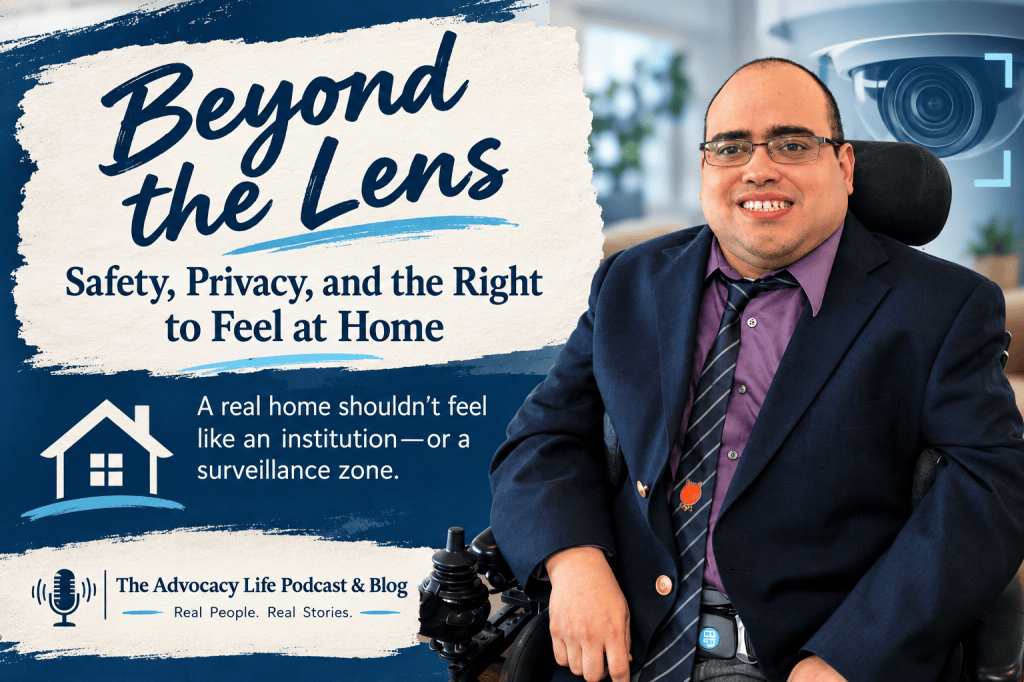
Welcome to the first community vlog entry of fall! I hope you all had a great summer. Today, I want to talk about group homes—specifically, how many of them have gradually turned into smaller, satellite institutions rather than true community homes.
The fundamental problem with most group homes is that they rarely feel like an actual home to the people living in them. For individuals in their mid-to-late 30s or 40s—the average age of most residents—a constant stream of shift staff comes through the door every day, working eight hours at a time. You constantly adjust to new people entering your personal space. Having conducted state program investigations in group home facilities years ago, I’ve seen this reality firsthand. I’ve watched how hard it is for residents who don’t just want to reside in a neighborhood, but actually want to be an active part of their community.
Recently, in New Jersey, there has been a major legislative push driven by concerned parent groups to mandate cameras in all major group home facilities. (S1172 / A2705)
While safety, abuse prevention, and neglect prevention are the primary arguments for this bill, mandating cameras is a dangerous idea and a slippery slope.
Here is why this approach misses the mark:
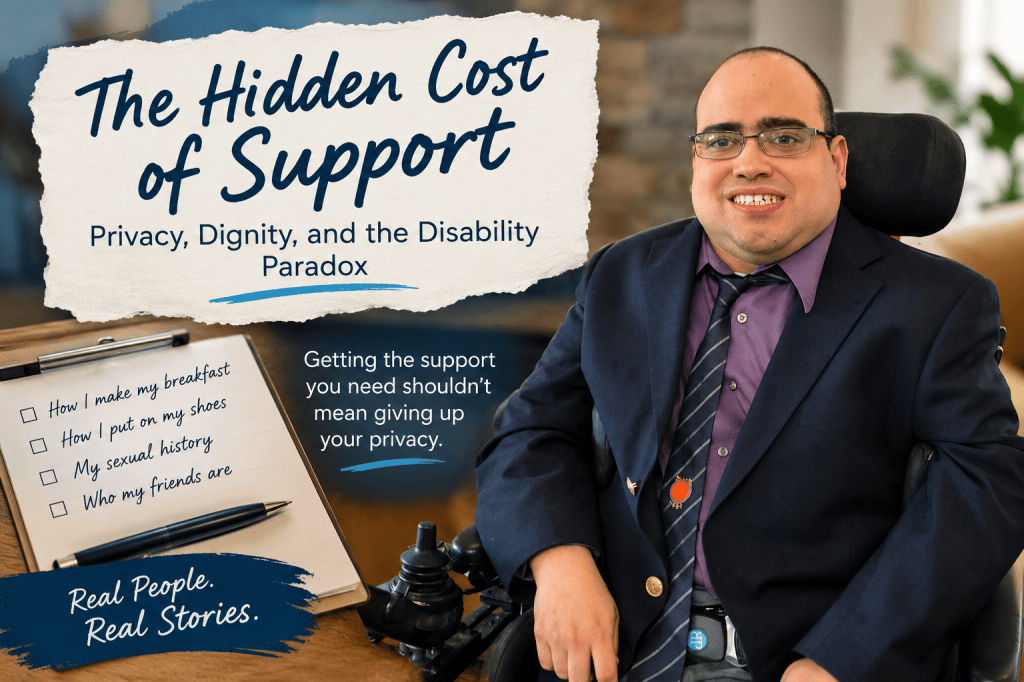
In a typical household, you do not have cameras capturing your every move in the living room 24/7. Proponents argue that schools and buses have surveillance, but you don’t live at a school or on a bus. In your own home, you should have the right to privacy in your most personal moments without constant surveillance.
Surveillance footage does not stop abuse or neglect as it happens; proper staff training and accountability do. Cameras only offer distressing images after a tragic event or death has already occurred. In New Jersey alone, there are roughly 150 unexplained deaths in facilities a year. A camera recording after the fact does not save a life; it only leaves families with unsettling images and more questions.
The current bill in the New Jersey legislature does not mandate audio recording. Key context becomes completely lost without audio. Furthermore, under the proposed language, the group home provider retains control of the footage before any family member can access it, leaving room for footage manipulation.
In its current form, this legislation is a dangerous precedent that fails to protect residents while stripping away their fundamental right to privacy in their own homes. What are your thoughts on this bill and the distinction between safety and privacy in community settings? Let’s keep the conversation going in the comments below, and I’ll see you next week!
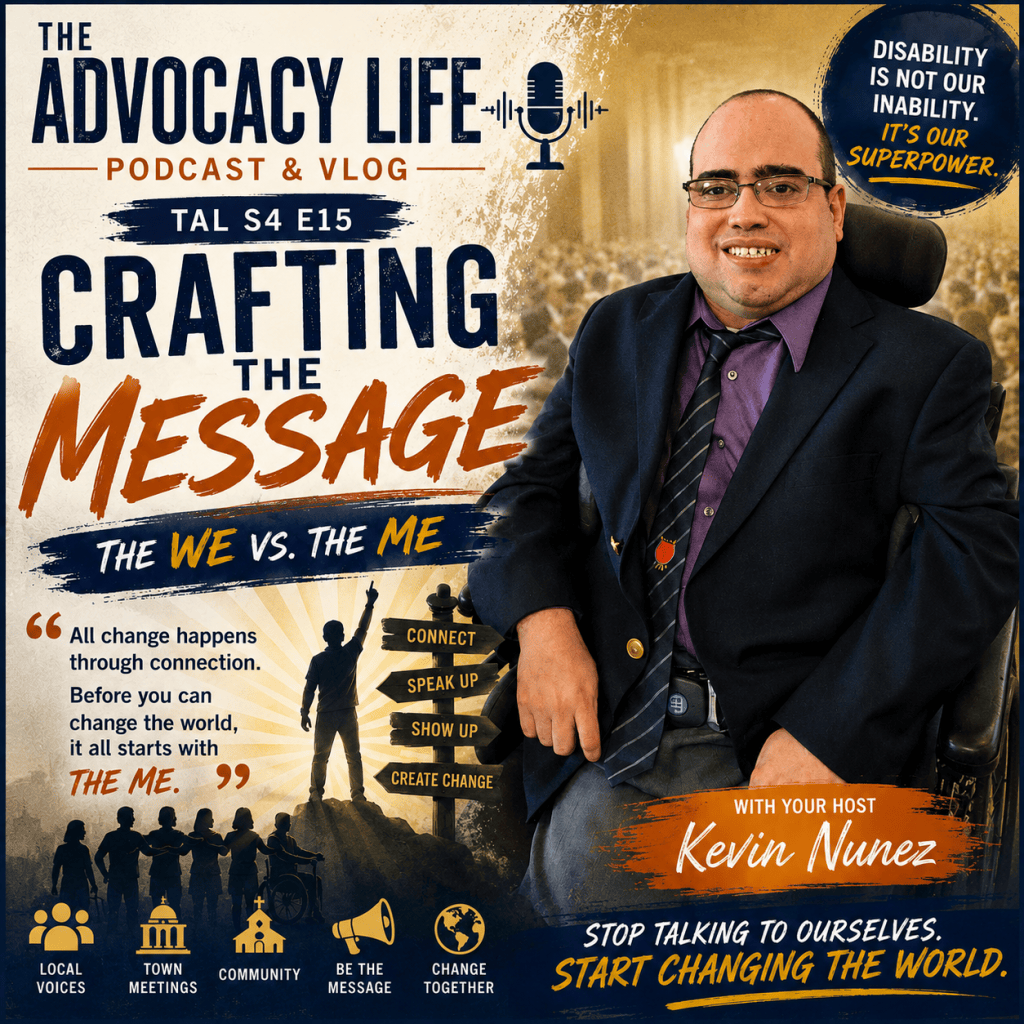
When we advocate, are we standing up for ourselves or fighting for the collective community? In Season 4, Episode 15 of The Advocacy Life, host Kevin Nunez dives into the controversial line between “me” and “we.”
While real policy change takes a community, effective advocacy starts with someone brave enough to step in front of the camera, put their name out there, and show up where decisions are made. Kevin breaks down why social media is only the springboard for advocacy—not the end game—and shares practical, grounded strategies for making your voice heard.
episode transfer below
In this episode, we talk about:
Moving beyond social media algorithms and showing up at local town meetings.
How to balance personal needs with community-wide legislative goals.
Practical tips for presenting your case to elected officials with data, impact, and respect.
Using human connection—from small talk to common interests—to build real bridges with policymakers.
🔔 Subscribe to The Advocacy Life for more unfiltered conversations on disability policy, faith, and authentic advocacy!
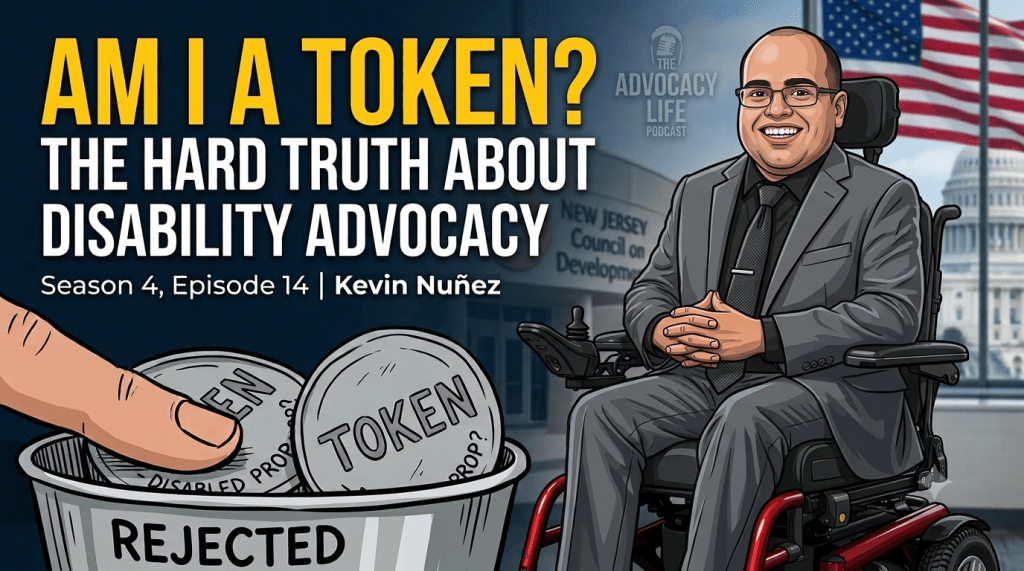
Hello friends, and welcome back to The Advocacy Life podcast with Kevin Nuñez! Disability and death are the only two certainties in life, yet society continues to treat disability like an invisible anomaly or a feel-good inspiration reel. In today’s episode, Kevin addresses a heavy, deeply personal question: Are disability advocates tokens for someone else’s products or political agendas?Kevin candidly discusses his time inside New Jersey’s habilitation day programs, the reality of adult daycare, and his personal perspective on the current New Jersey group home camera legislation. He challenges us to “put our shoes on the wrong feet” to understand the discomfort and lack of control that many nonverbal individuals face daily. If you see a token, you project a token. It’s time to break the mold.Highlights:00:00 – Are disability advocates just props?02:15 – The reality of advocacy: No money, no mansions, just purpose.03:30 – Guest of Senator Andy Kim at the State of the Union.04:45 – What “adult daycare” taught me about communication and “behaviors.”07:30 – The problem with the NJ Group Home Camera Bill.09:15 – Trained staffing vs. surveillance cameras.11:00 – Why I keep rolling.
Description:Why does the concept of disability feel so “alien” in American culture? In this episode of The Advocacy Life, we pull back the curtain on the societal fear of disability, the prevalence of ableism in media, and why we need to break out of our comfort zones to build a more inclusive society.From the “inspiration porn” seen in movies like Forrest Gump to the historical landmark moments like the Capitol Crawl that aren’t in your history books—we cover it all.
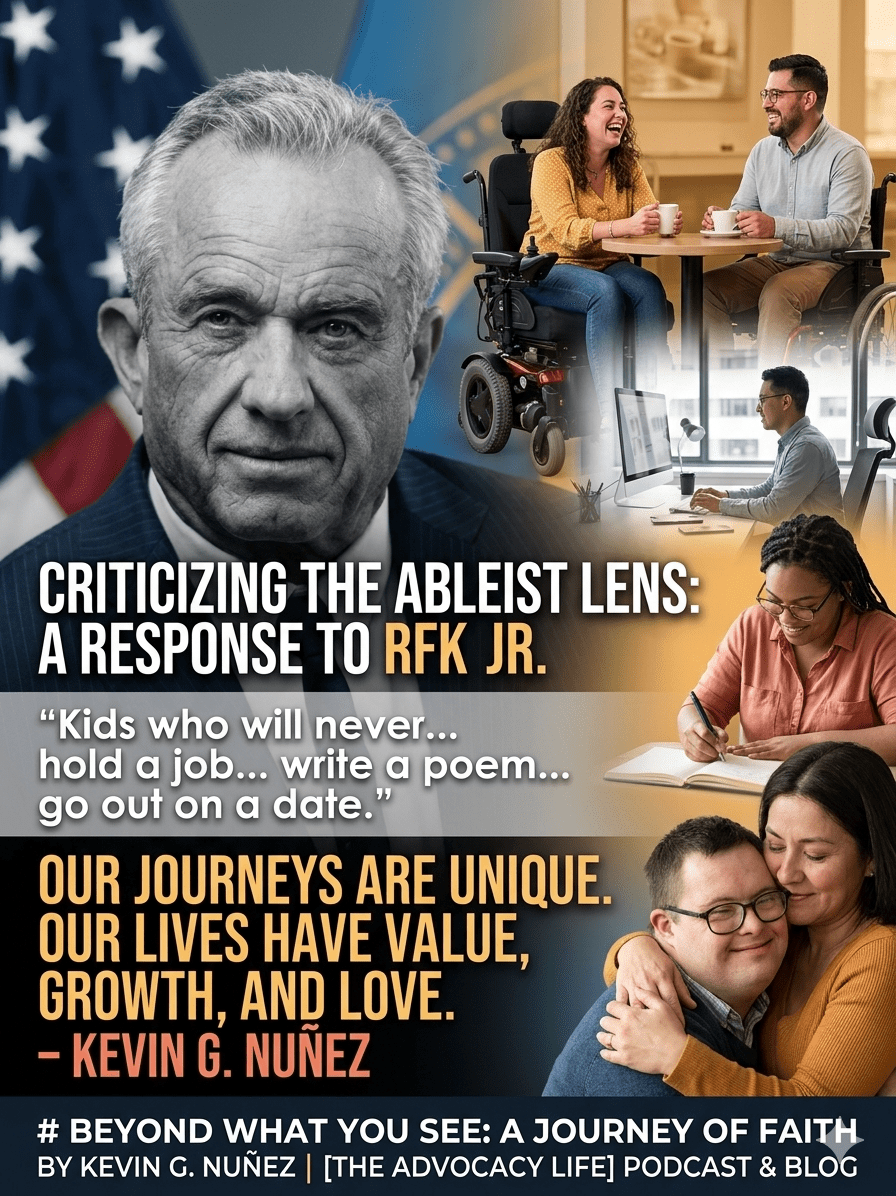
“These are kids who will never pay taxes. They’ll never hold a job. They’ll never play baseball. They’ll never write a poem. They’ll never go out on a date. Many of them will never use a toilet unassisted.” Robert F. Kennedy Jr.
I want to state from the outset: I don’t hate RFK Jr. I respect and love him as a fellow human walking this earth, despite disagreeing on several key issues. Quotes like these are particularly damaging. They embody the ableism and fear that permeate modern American culture.
The problem with this perspective is that it ignores the fundamental truth that every person with a disability has their own unique journey, their own growth process, their own setbacks, and their own successes.
So often, people with disabilities are lumped into boxes by a system that refuses to let them out. We are treated as if our lives are a “nice, comfortable jail cell.” We don’t realize that the door is a cell door until it gets slammed in our faces—and by then, it’s too late to get out.
RFK Jr.’s comments about dating are a prime example of the dehumanization we face. Just because someone may be non-verbal or have different physical needs does not mean they are unable to consent to or enjoy a loving, caring relationship. There are plenty of non-verbal individuals who have had rich, complex romantic lives—some of them having had more sexual encounters than I will ever have!
Society often measures our value by our productivity—by whether we pay taxes or hold a traditional job. With the new “Home and Community Based services HCBS” cuts coming to the nation in October 2026, many of us will be forced to choose between our health insurance and our ability to work.
We are forced to disclose our limitations and decide: Do we stay in poverty to keep our benefits, or do we risk it to earn a little bit of money? It is these societal norms that are damaging us, not our wants or our wills. We want to work—we want to work harder than most other Americans. We just need the real opportunities to do so.
Quotes like these don’t help anyone; they just hurt. If you want to help someone with a disability, don’t look for what you think they “can’t” do. Make them stronger, and they will make you better.
Don’t be afraid of us. Thrive with us. Push us. Educate us—because we can educate you in the same way. Together, we can learn from each other. That is what a good society does. That is what a good America does.
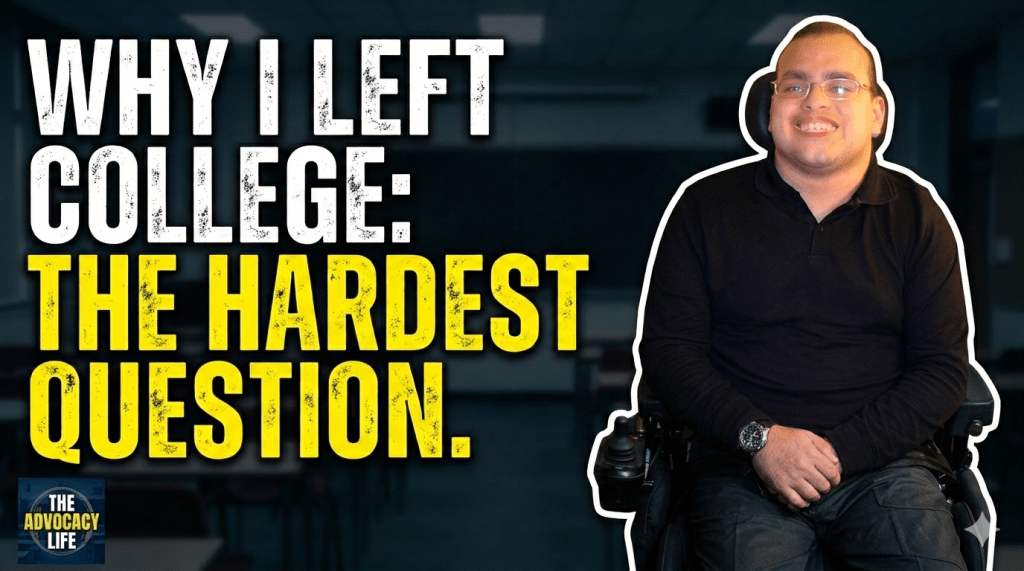
Welcome back to The Advocacy Life Podcast with your host, Kevin Nunez. In this eagerly anticipated and emotionally challenging episode, Kevin tackles a question he receives more often than he can count: Why didn’t you finish college?
The short answer is that it’s a long answer. Join Kevin for a fun, conversational, yet deeply candid reflection on what it was actually like transitioning out of high school as a young man with Cerebral Palsy in the mid-2000s. He dives deep into the realities of navigating a “burden complex,” dealing with extreme transportation barriers, outgrowing a 15-year family housing situation, and hitting systemic red tape across three different higher education institutions.
Ultimately, this episode is about perspective. Kevin shares how missing out on the traditional college experience became a blessing in disguise, leading him to serve on national advocacy boards, visit the White House twice, and become the exact resource leader legislators call on today. If you’ve ever felt stuck, defeated by circumstances, or forced out of your comfort zone, this episode will remind you that your platform is exactly where you stand.
Key Takeaways:
Understanding the emotional toll of the “burden complex” on disabled youth.
The reality of bureaucratic barriers in state vocational rehab and college credit transfers in the early 2000s.
Why “not going to college” became a vehicle for a historic advocacy career.
A look into Kevin’s upcoming national initiatives with TASH and the National Association of Councils on Developmental Disabilities