Tag: mental-health

  • Naked for Valentine’s Day

    Naked for Valentine’s Day

    Community Blog

    Note: The following is an excerpt and refresh of a chapter from my book, “Confessions From Disability Limbo.” It is a raw, crude, and honest look at disability life. With Valentine’s Day just a few days away, everyone is talking about romance and intimacy. But today, I want to talk about a different kind of “getting naked”—the kind that has nothing to do with sex and everything to do with being human.I have a problem. I know some will find this controversial. I’m half-expecting an email from a legislative office removing me from my committees, and I’m fairly certain my mother and grandmother are already lining up to scold me. But I beg your indulgence. This is advocacy in its purest, most unfiltered form.I have to ask: Are you comfortable being naked

    A few years ago, I was on respite with my twin brother. The staff had undressed me and placed me on the bed when my brother suddenly had an urgent need for the restroom. The staff rushed to help him, leaving me like Adam in Paradise before he discovered the fig leaf.Did I panic? No. I rolled over, grabbed my phone, and started blasting music. A few minutes later, the staff walked back in to find me in my own little world, air-drumming with everything I had to the epic solo in Phil Collins’ “In the Air Tonight.”

    It was a ridiculous moment, but it highlighted a strange reality of my life: While I am often uncomfortable with my body, I have become incredibly comfortable being naked around strangers.I am a 38-year-old male, roughly 130pounds, exactly five feet tall, with hair everywhere but my head and a collection of scars from past surgeries that tell the story of my survival. I won’t be on the cover of GQ anytime soon.

    For me, being naked isn’t about romance; it’s about maintenance. Most people only show their bodies to those they love and trust. For those of us with disabilities, our bodies are often “public property.” We are poked, prodded, lifted, and cleaned by people we barely know. We have to trust a stranger to handle our most private needs with dignity.I am one of the lucky ones. For many in our history, being naked wasn’t a moment of Phil Collins air-drumming; it was a tool of torture. In the old institutions, cold showers were used for behavioral control. Vulnerability was met with violation.

    Even today, I think about the non-verbal members of our community. How do you communicate that the water is too hot? How do you maintain your soul when your body is being handled like a piece of equipment? This happens every single day.A Valentine’s Challenge: Get RealAs Valentine’s Day approaches, we are bombarded with images of “perfect” bodies. We are told that intimacy is about performance. I want to challenge that.True intimacy is the ability to be seen—fully seen—without a mask. I have a challenge for every person reading this, whether you are able-bodied or disabled:Talk to someone you love while you are nude. I don’t mean sex. I don’t mean it as a joke. I mean sit in that vulnerability and have a real, personal conversation about your life, your fears, or your dreams.

    The Rules:No “Post-Sex” Cheating: Don’t do it when the oxytocin is flowing and everything feels perfect.No Attention Seeking: This isn’t a “look at me” moment.No Distractions: Don’t ask, “Does this mole look weird?” Keep it real.The most important conversations of my life have happened in these moments of total exposure. When you take away the clothes, the suits, and the “Advocate Kevin” persona, all that is left is the man.I share these experiences because society often forgets that people with disabilities are people first. We deserve dignity in our vulnerability and respect in our nakedness.Thank you to anyone brave enough to try this. Happy Valentine’s Day.Keep on rolling. Keep on living.

    The Podcast

    Published Books

    Subscribe to Letter from Limbo

    Read more of this content when you subscribe today.

    One-Time
    Monthly
    Yearly

    Make a one-time donation

    Make a monthly donation

    Make a yearly donation

    Choose an amount

    $1.00
    $3.00
    $5.00
    $5.00
    $15.00
    $100.00
    $5.00
    $15.00
    $100.00

    Or enter a custom amount

    $

    Your contribution is appreciated.

    Your contribution is appreciated.

    Your contribution is appreciated.

    DonateDonate monthlyDonate yearly

  • A Message to the New Governor

    A Message to the New Governor

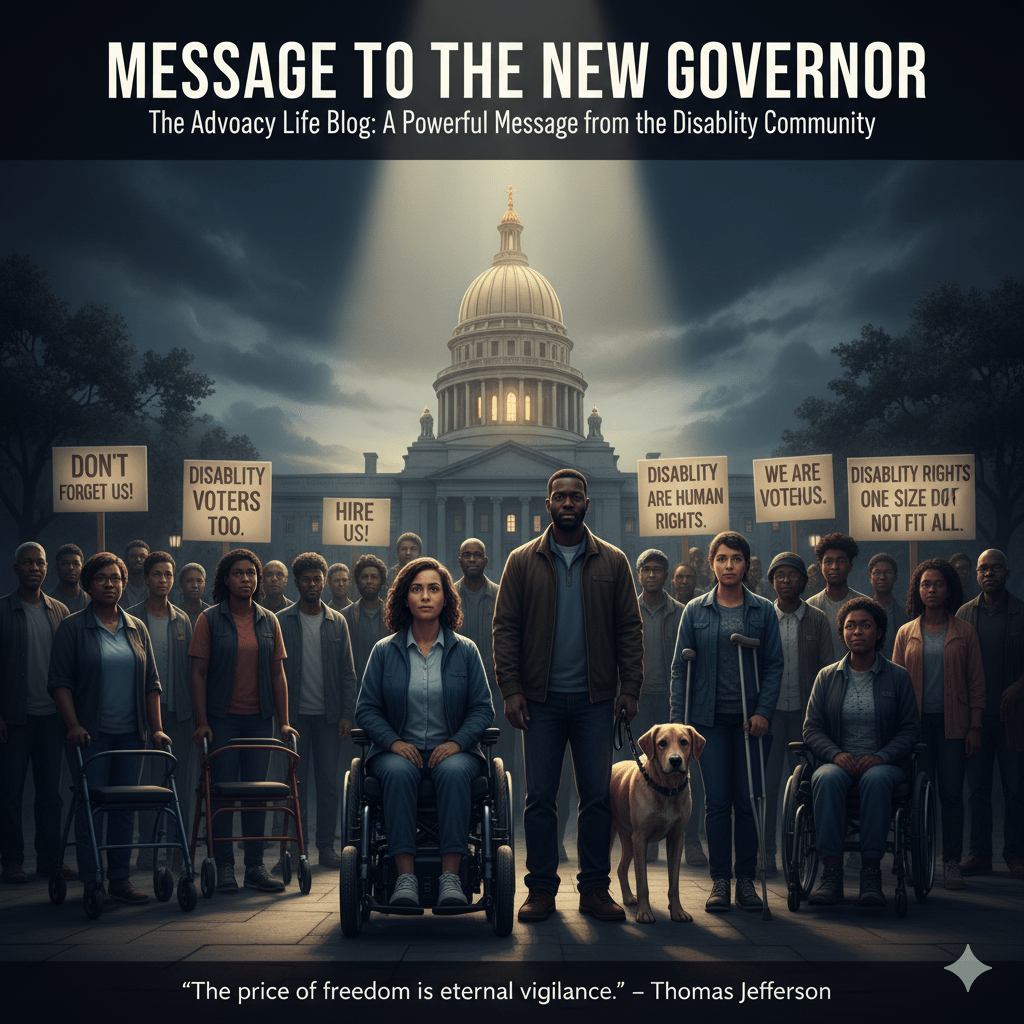
    “The price of freedom is eternal vigilance,” Thomas Jefferson famously declared.

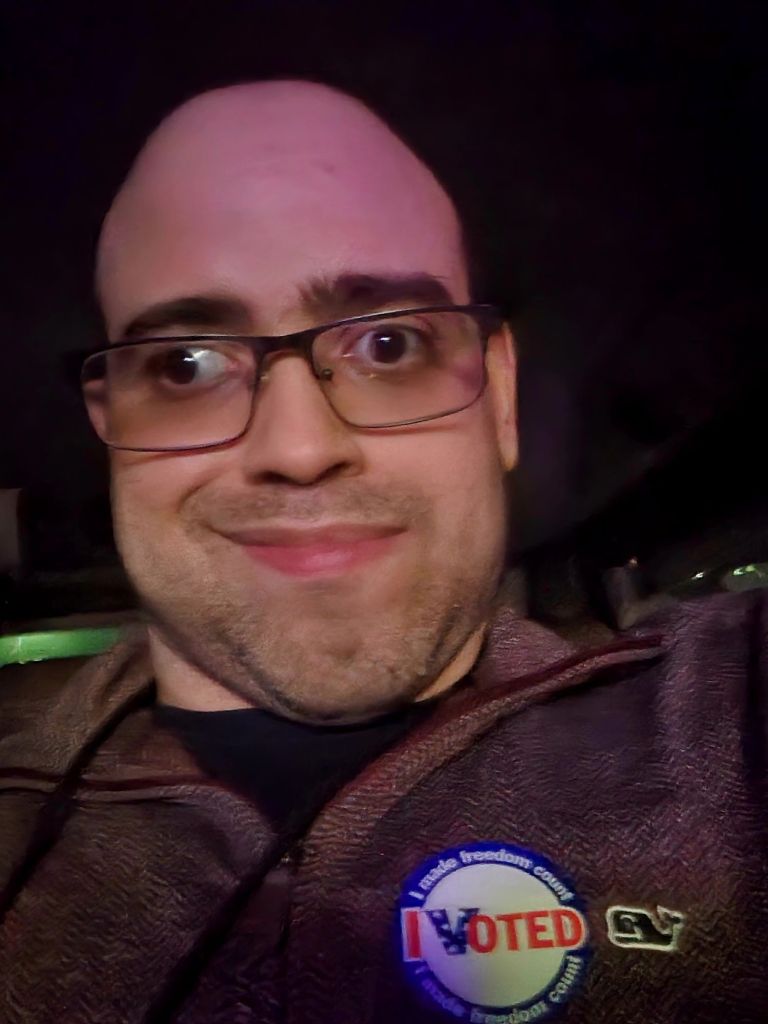
    I’m writing this blog just hours before the election results roll in here in New Jersey. By the time many of you read this, our state will probably have a new governor-elect. If I could address the incoming governor, I would start with this: Do not forget us.

    The disability population is the largest, most underserved, and most underrepresented community in America. We are voters. We are taxpayers. We are citizens. Yet, we are an afterthought, if thought of at all. Our needs are frequently sidelined in policy debates, treated as niche issues rather than fundamental human rights. This needs to change.

    Our community is incredibly diverse. Disability comes in every skin color, every background, every walk of life. It touches families across all demographics, socio-economic statuses, and geographic locations. This means that disability rights are unequivocally human rights. They do not subscribe to any single political party, and our allegiance isn’t to a red or blue banner, but to the dignity of every person.

    We stand for policies that genuinely support independence and self-determination, not those that inadvertently trap individuals in poverty or limit their potential. The disability experience is unique to the individual; a “one size fits all” approach simply does not work. We need policies crafted with nuance, understanding that what empowers one person may not work for another. We need legislation that respects the dignity of risk, allowing individuals to make choices, to learn, to contribute, and to live full, meaningful lives without fear of losing essential supports.

    Many people with disabilities can and want to work. We want to contribute to our communities, to pay taxes, and to be active participants in the economy. Yet, current systems often create perverse disincentives, penalizing individuals who earn above a certain threshold by stripping away vital benefits like healthcare or personal care assistance. This traps people in a cycle of dependence when they desire nothing more than to be independent. Help us break these barriers. Help us contribute without fearing penalty. Help us be taxpayers, not perceived burdens.

    Our community wants to contribute, not just consume resources. We seek opportunities, not charity. We demand respect, not pity. We are a vital part of New Jersey, and our voices deserve to be heard, our needs addressed, and our rights protected.

    As the new administration takes shape, I urge them to remember Thomas Jefferson’s warning. The freedom and well-being of the disability community depend on constant vigilance from our leaders. We will be watching, advocating, and striving for a New Jersey where every citizen can thrive.

  • Disability Limbo Newsletter October 20, 2025

    Disability Limbo Newsletter October 20, 2025

    Subscribe to continue reading

    Become a paid subscriber to get access to the rest of this post and other exclusive content.

  • Sneak Peek

    Sneak Peek

    Subscribe to continue reading

    Become a paid subscriber to get access to the rest of this post and other exclusive content.

  • The DSP World

    The DSP World

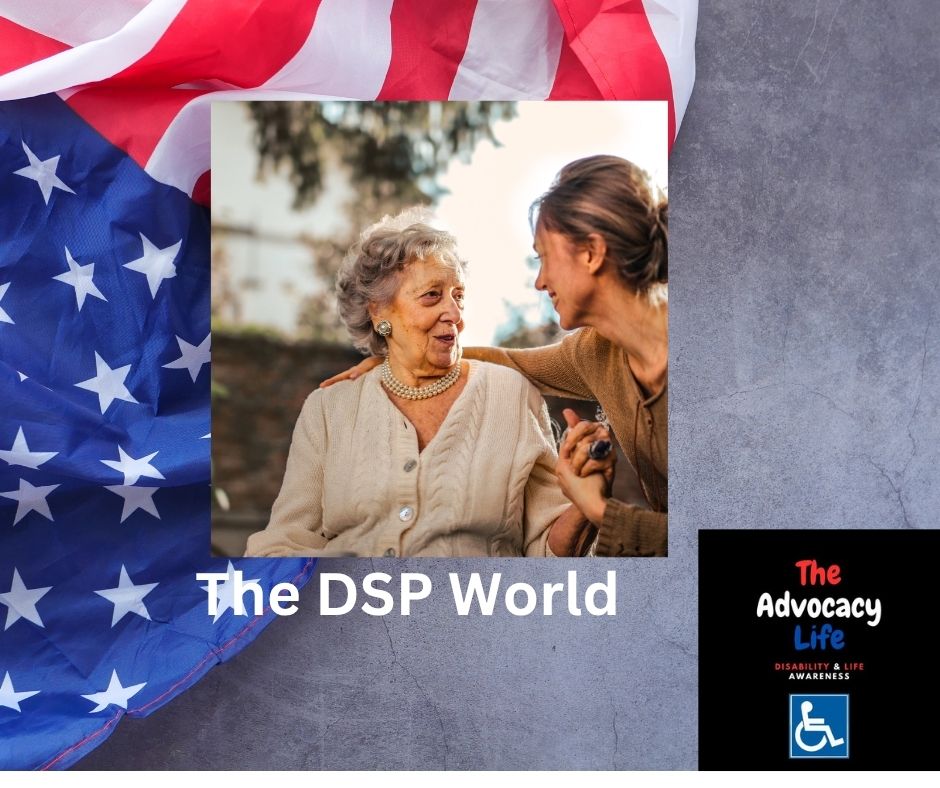
    I wanted to raise awareness to a very big problem in our world today. It rarely gets any publicity; the average person doesn’t even know about it. The truth is unless you are affected by this problem, you don’t even know it exists. The problem is the lack of pay and benefits for direct support professionals (DSPs). What is a DSP? A direct support professional is someone who is paid through a provider agency or an individual to provide support and care to a person with a disability. As long as there are people who need assistance in their lives there will always be need for these professionals. There are four groups of people who are affected by this issue. They are: the individuals receiving the care, the family of the individual, the providers, and the professionals themselves. 

    Let me begin by addressing the individuals receiving the care.  People that have a disability will learn that they often must depend on others to assist them in one way or another.  They depend on the kindness of others to help them live their day-to-day lives. Could you trust someone with your most intimate tasks if you knew they would leave in six months? Just imagine knowing you’re going to lose the person you most confide in, even before they start. People with disabilities can tell almost immediately if the person is going to be good at their job. Most of all they can tell if the person will last. 

    Use your imagination for this next part please. You meet a person named Matt. After meeting him for only four hours, you need a shower. He must first undress you completely. Then he puts you in a shower chair. He then proceeds to give you a shower. Matt does his best to wash your private areas. After finishing and drying you off, he begins to dress you. If the individual is so fortunate, he can direct Matt on how and what to do. The truth is there are many individuals in the disability community that cannot speak for themselves. Therefore, Matt must try to interpret what they are trying to communicate. This is just one of the many duties of a DSP. I hope this brief example can illustrate the need for these very special people. 

    Next, I would like to talk about the direct support professionals themselves.  These professionals receive about 10 to 11 dollars an hour with no promise of growth in their career. Most providers offer little to no benefits at all (this includes sick time or health insurance). As a result if DSPs don’t work, they aren’t paid. This leads to severe burnout. Many times, they sacrifice their own health and well-being to make sure they can provide for their family and/or pay their bills. It’s ironic that they are responsible for the health and well-being of another human when, due to the lack of health benefits such as sick days, they cannot take care of their own health needs. What inevitably happens is the person leaves to another company in hopes of a dollar more. People believe they can use this job as a steppingstone toward a larger career goal. The other misconception is this job will only be a temporary solution until another opportunity opens up. They end up living paycheck to paycheck. The professional waits in limbo until they burn out or they get another job. 

    So why would someone do this job at all? These wonderful people do it because they care for others. They look forward to the moments when their individual lights up when they arrive in the morning for their shift. The relationship between an individual and the professional is truly symbiotic if done correctly. The individual gets a companion to help them with their wants and needs. In turn the professional should receive joy in the knowledge they are doing something to help someone live their life. Some things are worth more than money. It is truly heartbreaking when it is time for the professional to move on. The best way I know to describe this feeling for an individual, it’s like losing a loved one. For the professional, they are left with the memories of a person that has worked their way into their hearts. 

    The family and/or parents of an individual can also be affected by the DSP issue. Try to imagine having a 25-year-old son that you have cared for his entire life. One day someone shows up at your door ready to take him out to the park for the day. You as the parent are told almost nothing about the person who will be supporting your child for the rest of the day. By the same token, the professional knows almost nothing about the individual and the family they will be supporting. Most times both parties are just given a name with a brief description. A relationship of trust has to be formed out of thin air. This sadly is one of the best-case scenarios. Most individuals as they get older lose their family and the professional becomes, by default, their brother, mother, etc. Depending on the individual’s disability, they will rely on their “families” in almost every way. They need an advocate, a caregiver, and a friend. Could you imagine learning to give your complete trust to a stranger every six months? 

    The final group of people that are affected by the DSP issue are the provider agencies. The turnover rate in this industry is incredibly high. Providers cannot keep their staff. They spend money training these professionals and then they quit a few months later. The money is lost. The rates for these staff and providers have not been increased in approximately 10 years. For example if the state allows $15 per hour to a provider, and $10 goes towards the DSP, that leaves the provider with only five dollars to spend subsequent overhead, including important items like gloves and vehicle maintenance. The providers cannot give their staff benefits or raises if they are barely able to keep themselves above water. 

    The direct support professional problem in my humble opinion has reached crisis levels not just statewide but nationally as well. As long as there are people, people will always need care.  This industry is not going away any time soon. The system will never be perfect but something needs to be done now. This needs to be a call to action. We need to contact our state and federal officials to educate them on this very real problem. If we don’t act now people with disabilities may not have people around us to help us live our lives. 

    The Podcast

    Published Books

    Subscribe to Letter from Limbo

    Read more of this content when you subscribe today.

    One-Time
    Monthly
    Yearly

    Make a one-time donation

    Make a monthly donation

    Make a yearly donation

    Choose an amount

    $1.00
    $3.00
    $5.00
    $5.00
    $15.00
    $100.00
    $5.00
    $15.00
    $100.00

    Or enter a custom amount

    $

    Your contribution is appreciated.

    Your contribution is appreciated.

    Your contribution is appreciated.

    DonateDonate monthlyDonate yearly
  • The Kennedy Family & Disabled Americans

    The Kennedy Family & Disabled Americans

    “A snake pit, where they live in filth and dirt, their clothing in rags, in rooms less comfortable and cheerful than the cages in which we put animals in a zoo.”

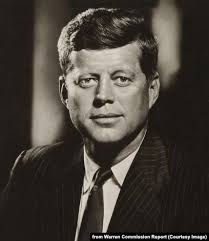
    Robert Kennedy Senior made this statement when he was visiting Willowbrook in 1965.

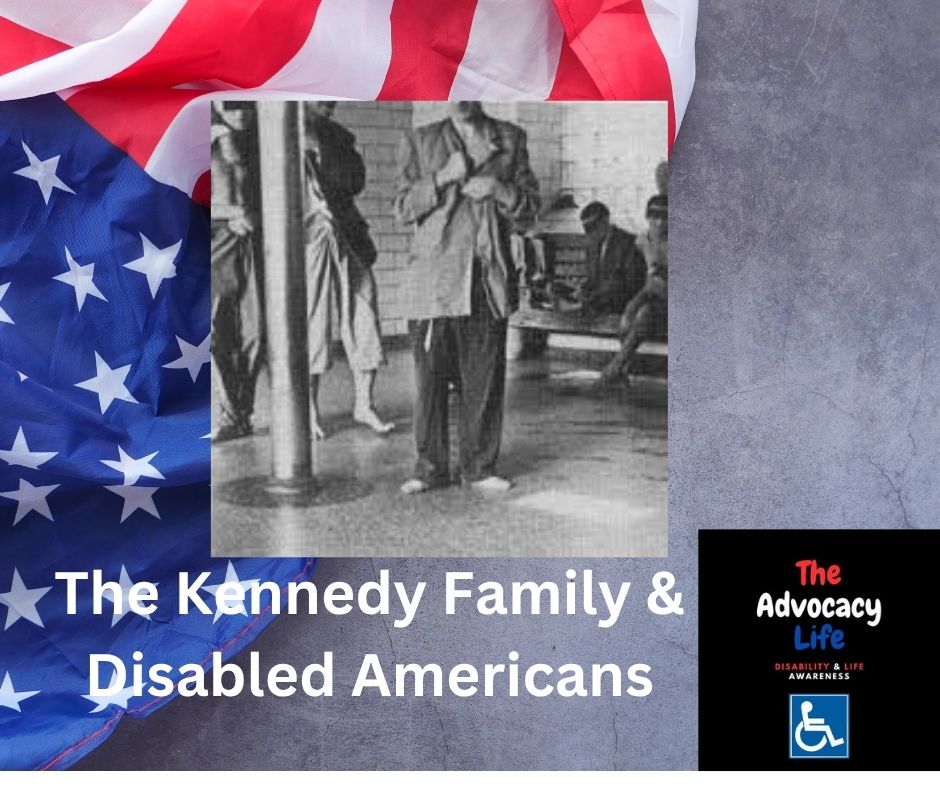
    Willowbrook State School was a state-supported institution for children with intellectual disabilities. Designed to accommodate 4,000 children, by 1965, Willowbrook had a population of 6,000, and a scandal soon erupted over news of the institution’s horrendous conditions and questionable medical practices. It was not closed for another 2 years despite all the outrage. Would you want your child to live in these conditions?

    Disability does not have a political party. A disability does not have a skin color or a specific ethnic race. Disability is America. The only two things certain in this world are death and disability. What makes America great is that we learn from our past so we don’t repeat the mistakes we have made. Disability is not waste, fraud, or abuse. Disability is an example of Hope and prosperity in the American dream. The American Disability community is an example of living prosperity and endurance.

    It’s hard to pinpoint the exact birth of the disability rights movement because disability has been around since the beginning of time, and it will be there until the end of days. America was introduced to the harsh reality of abuse through Robert Kennedy Sr.’s poignant account. Devoid of proper respect and support. Our community faces suffering and death. An autism diagnosis is not evil or a death sentence. A wheelchair is not a confinement, but a tool for opulence.

    This is the current battle that disabled America is facing. We won’t stand for our brothers and sisters being locked up. We aim to help people live fulfilling lives. In the land of the free and the brave, we uphold truth, justice, and the American way as a testament to our identity. Living with a disability presents many challenges. While that’s a fact, things worth pursuing are rarely simple.

    “We choose to do these things not because they’re easy, but because they’re hard.”

    President John F Kennedy made this statement when referring to reaching the Moon in a decade. We have the same privilege to reach for the same stars as anyone else. In America, we do not fear challenges; we embrace them so we can grow. America today is making choices out of fear and misunderstanding. I believe in America, I believe in its people. We still have time to change course. To see value in all of us. Our chosen elected officials need to listen to us.

    '“ Do not seek revenge or bear a grudge against anyone among your people, but love your neighbor as yourself. I am the Lord. 'Leviticus 19:18

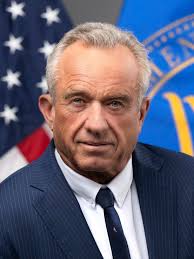
    “I don’t think people should take medical advice from me.’

    This statement was made by Robert Kennedy Jr. The current Secretary of Health and Human Services. There will always be misconceptions around disability and our healthcare. However, if we are left out of the conversation, we cannot help the country move forward. The current administration and the disability community cannot be enemies, we must be allies to achieve tomorrow’s victories. Without disability, America will fail because we are America.

    The Podcast

    Published Books

    Subscribe to Letter from Limbo

    Read more of this content when you subscribe today.

    One-Time
    Monthly
    Yearly

    Make a one-time donation

    Make a monthly donation

    Make a yearly donation

    Choose an amount

    $1.00
    $3.00
    $5.00
    $5.00
    $15.00
    $100.00
    $5.00
    $15.00
    $100.00

    Or enter a custom amount

    $

    Your contribution is appreciated.

    Your contribution is appreciated.

    Your contribution is appreciated.

    DonateDonate monthlyDonate yearly