Hi friends, welcome back to another community blog post. I apologize that this one is a day late—we were busy celebrating my grandmother’s 84th birthday! She had more energy than I did, so God bless her.
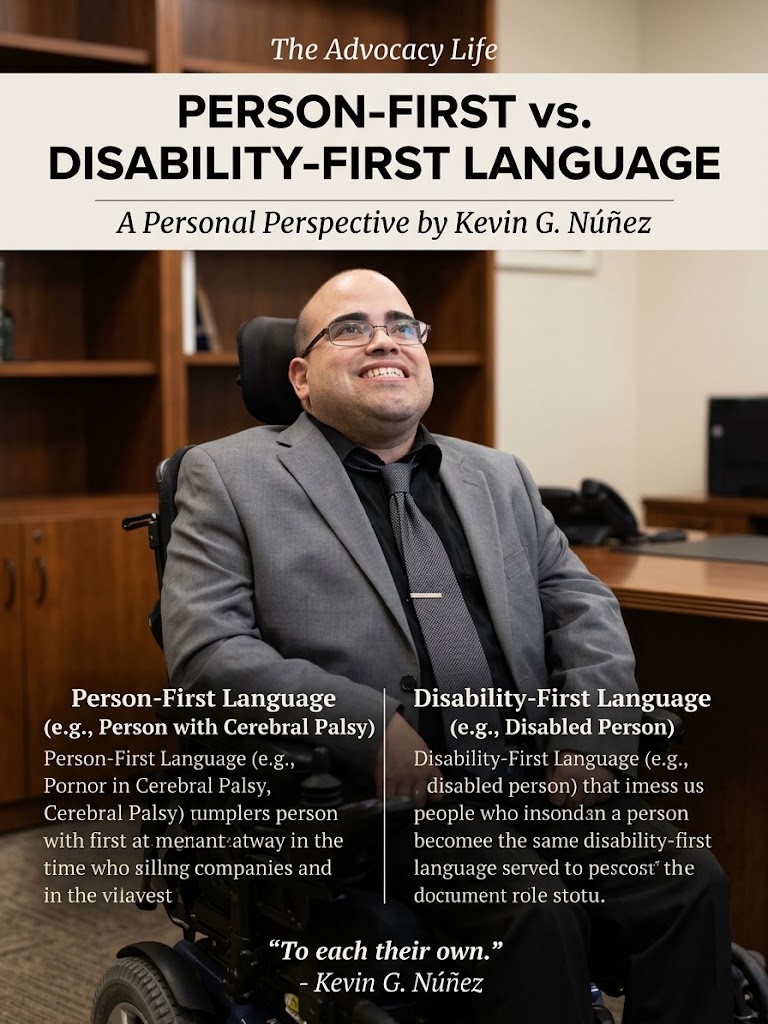
Today, I want to dive into a topic that is always front and center in our community: disability and language.When we refer to our population, there are generally two primary frameworks: Person-First Language and Disability-First (Identity-First) Language.Person-First Language puts the individual before the condition (e.g., a person with Down syndrome, a person with autism). The core philosophy here is that the individual is a human being first, and their disability is just one aspect of who they are.
Disability-First (Identity-First) Language places the disability attribute upfront (e.g., an autistic person, a blind person). Proponents often argue that separating the person from the disability can feel like minimizing or denying a fundamental part of their identity, viewing strict person-first language as a form of ableism.
Where Do I Stand?
This is a deeply personal and often controversial debate within the disability space. My personal stance is simple: To each their own. If you look at my writing, you will notice that I tend to mix both approaches. Personally, I lean toward person-first language in most aspects of life because I believe Kevin the person is separate from my cerebral palsy. Disability is just a part of who I am. At the same time, I certainly don’t think disability-first language is wrong. But for me personally, identifying solely by my disability first feels a bit uncomfortable. Language is powerful, and it acts as a tool—just like a hammer or a knife, it can be used to build something wonderful or to tear it down. We have to use our words with grace and intentionality.
If you want to dive deeper into why language matters and how different advocacy groups approach it, check out these trusted resources:
American Psychological Association (APA) Style Guidelines on Disability – Offers comprehensive guidance on how to write and speak about people with disabilities with neutrality and respect.
National Center on Disability and Journalism (NCDJ) Style Guide – An incredible tool for journalists, creators, and advocates looking up specific terms, preferred language, and the history behind various disability descriptors.
Autistic Self Advocacy Network (ASAN) – A great resource for understanding why many self-advocates within the autistic community strongly prefer identity-first language (autistic person).
The Arc – Preferred Language Guide – One of the oldest and largest community organizations providing clear breakdowns on why language choice matters in public policy and daily life.
This is a rich, ongoing conversation, and there is no single “right” answer for every individual. What are your thoughts? Do you prefer person-first or disability-first language in your daily life? Let me know in the comments below! Thank you guys, and as always—keep on rolling, keep on living!

The Podcast
Published Books
Subscribe to Letter from Limbo
Read more of this content when you subscribe today.
Make a one-time donation
Make a monthly donation
Make a yearly donation
Choose an amount
Or enter a custom amount
Your contribution is appreciated.
Your contribution is appreciated.
Your contribution is appreciated.

