Tag: politics

  • Disability Priorities & Congress

    Disability Priorities & Congress

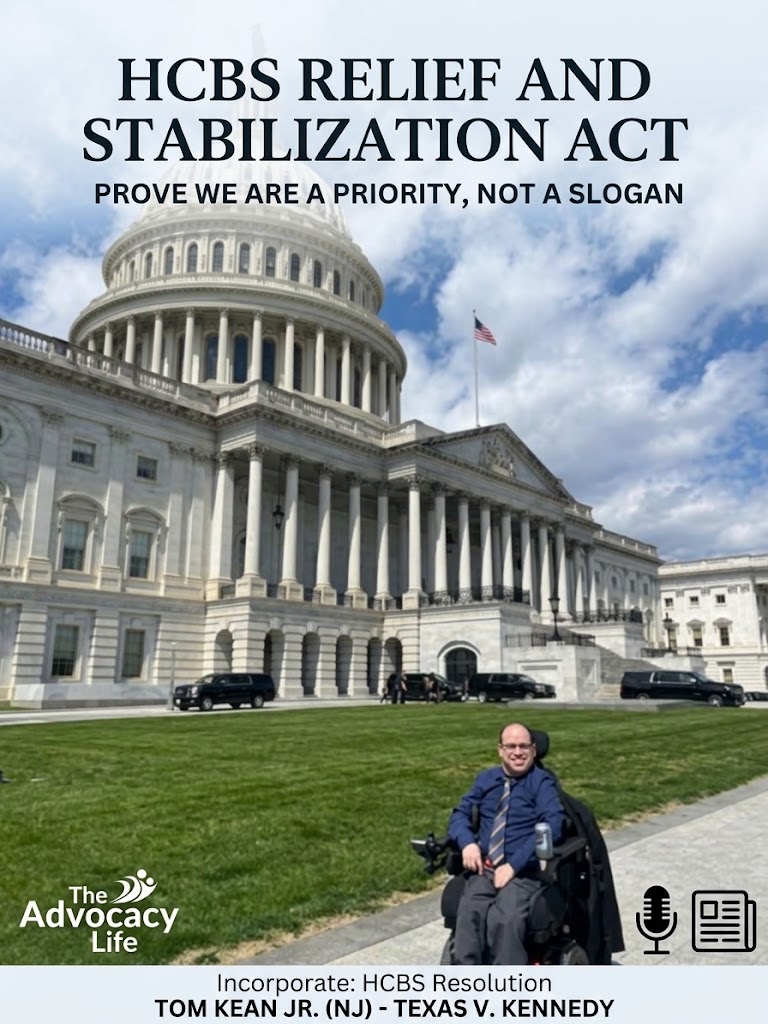
    Have you heard of the HCBS Relief and Stabilization Act? Probably not.

    For this week’s community blog, I want to focus on a specific piece of legislation—or rather, a resolution—that offers a big-picture view of the disability movement and examines where we truly rank in America.

    For those unfamiliar, HCBS stands for Home and Community-Based Services. To oversimplify it, HCBS is a waiver care system funded by Medicaid and Medicare dollars that allows people with disabilities to stay in their homes and local neighborhoods. Regardless of age or level of need, it is always cheaper, more beneficial, and more humane for a person to thrive and function directly within their local community.

    This resolution seeks to uphold and expand Home and Community-Based Services while establishing more significant safeguards for our direct support professionals (DSPs). It directly responds to legal uncertainties following filings like Texas v. Kennedy, which left critical disability care frameworks at a stalemate.
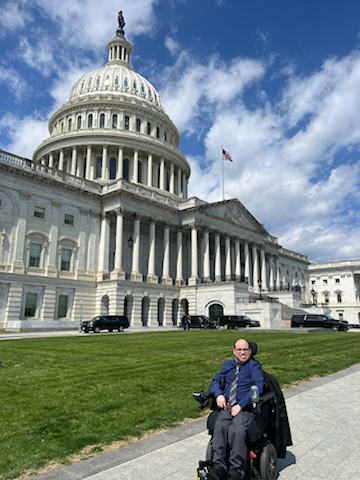
    Through this resolution, members of Congress are attempting to signal to disabled voters and our population as a whole just how much we mean to them.

    While this bipartisan effort is a welcome sight—notably supported by primary sponsors like New Jersey’s own Congressman Tom Kean Jr.—we cannot allow ourselves to be misled.

    It is no coincidence that a resolution like this gains momentum right around election time, or that key co-sponsors are currently running for re-election. So, to politicians on both sides of the political aisle asking for our votes: prove it.

    Show us that we matter. Show us that disabled Americans are a priority. Show us that we are a vital, indispensable part of this nation.

    Lately, there has been a massive push in legislative halls for data centers, infrastructure developments, and commercial housing initiatives. While infrastructure is important, people come first in America. America is funded and run by the people, and people with disabilities are people first.

    To Congressman Kean and all leaders stepping up: thank you for your leadership on this resolution. But to the rest of Congress: it’s time to put your priorities in order and prove that disabled America is a permanent priority, not a seasonal campaign slogan.

    The Advocacy Podcast

    Living Beyond Disability Books

    Both books are available exclusively on Amazon.
    Subscribe to Letters From Limb. Newsletter

    This is an exclusive weekly blog on the more fun and creative side of Kevin and his colleagues..

    Where the Ramp Ends

    This is an affiliated podcast that the advocacy life often collaborates with on Check it out today available on all podcast platforms and YouTube..

    Donate to the Advocacy Life Podcast & Blog

  • Beyond the Lens

    Beyond the Lens

    Community Blog

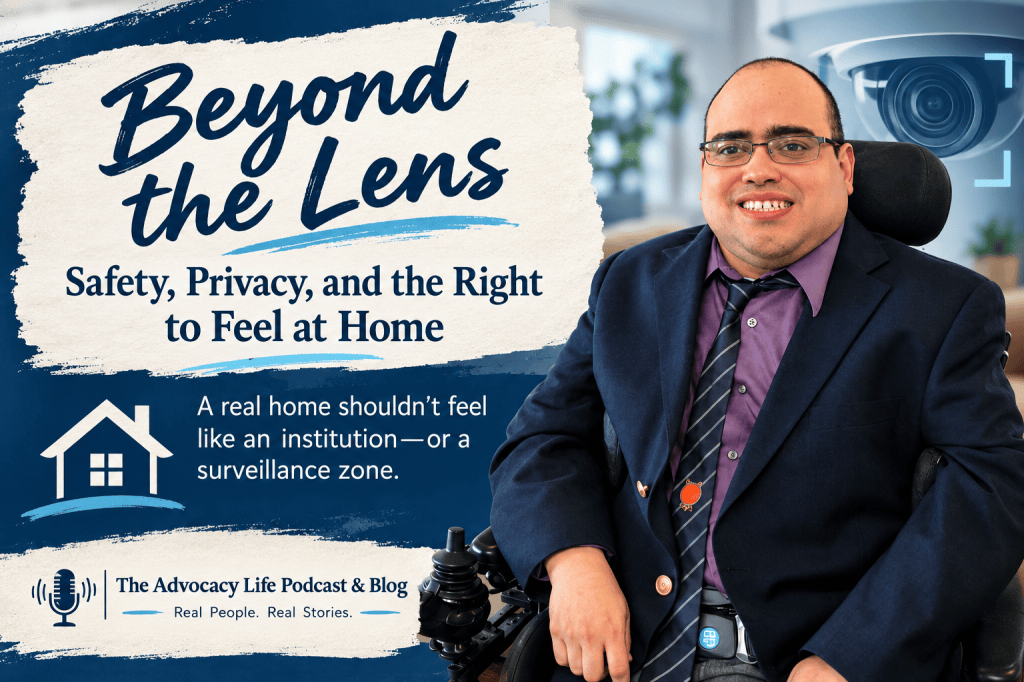
    Welcome to the first community vlog entry of fall! I hope you all had a great summer. Today, I want to talk about group homes—specifically, how many of them have gradually turned into smaller, satellite institutions rather than true community homes.

    The fundamental problem with most group homes is that they rarely feel like an actual home to the people living in them. For individuals in their mid-to-late 30s or 40s—the average age of most residents—a constant stream of shift staff comes through the door every day, working eight hours at a time. You constantly adjust to new people entering your personal space. Having conducted state program investigations in group home facilities years ago, I’ve seen this reality firsthand. I’ve watched how hard it is for residents who don’t just want to reside in a neighborhood, but actually want to be an active part of their community.

    Recently, in New Jersey, there has been a major legislative push driven by concerned parent groups to mandate cameras in all major group home facilities. (S1172 / A2705)

    While safety, abuse prevention, and neglect prevention are the primary arguments for this bill, mandating cameras is a dangerous idea and a slippery slope.

    Here is why this approach misses the mark:

    • In a typical household, you do not have cameras capturing your every move in the living room 24/7. Proponents argue that schools and buses have surveillance, but you don’t live at a school or on a bus. In your own home, you should have the right to privacy in your most personal moments without constant surveillance.
    • Surveillance footage does not stop abuse or neglect as it happens; proper staff training and accountability do. Cameras only offer distressing images after a tragic event or death has already occurred. In New Jersey alone, there are roughly 150 unexplained deaths in facilities a year. A camera recording after the fact does not save a life; it only leaves families with unsettling images and more questions.
    • The current bill in the New Jersey legislature does not mandate audio recording. Key context becomes completely lost without audio. Furthermore, under the proposed language, the group home provider retains control of the footage before any family member can access it, leaving room for footage manipulation.

    In its current form, this legislation is a dangerous precedent that fails to protect residents while stripping away their fundamental right to privacy in their own homes. What are your thoughts on this bill and the distinction between safety and privacy in community settings? Let’s keep the conversation going in the comments below, and I’ll see you next week!

    The Advocacy Podcast

    Living Beyond Disability Books

    Both books are available exclusively on Amazon.
    Subscribe to Letters From Limb. Newsletter

    This is an exclusive weekly blog on the more fun and creative side of Kevin and his colleagues..

    Where the Ramp Ends
    This is an affiliated podcast that the advocacy life often collaborates with on Check it out today available on all podcast platforms and YouTube..

    Donate to the Advocacy Life Podcast & Blog

  • RFK Embodies Fear

    RFK Embodies Fear

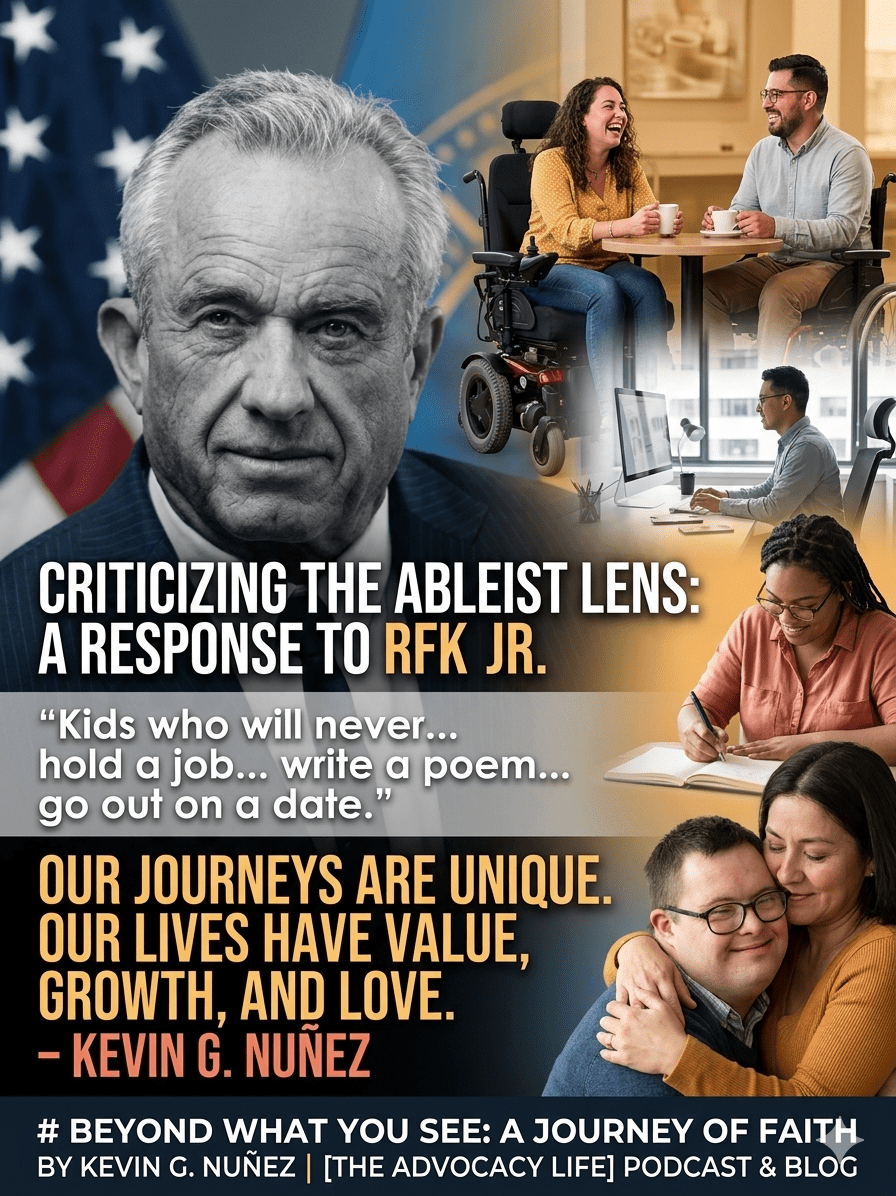
    “These are kids who will never pay taxes. They’ll never hold a job. They’ll never play baseball. They’ll never write a poem. They’ll never go out on a date. Many of them will never use a toilet unassisted.” Robert F. Kennedy Jr.

    I want to state from the outset: I don’t hate RFK Jr. I respect and love him as a fellow human walking this earth, despite disagreeing on several key issues. Quotes like these are particularly damaging. They embody the ableism and fear that permeate modern American culture.

    The problem with this perspective is that it ignores the fundamental truth that every person with a disability has their own unique journey, their own growth process, their own setbacks, and their own successes.

    So often, people with disabilities are lumped into boxes by a system that refuses to let them out. We are treated as if our lives are a “nice, comfortable jail cell.” We don’t realize that the door is a cell door until it gets slammed in our faces—and by then, it’s too late to get out.

    RFK Jr.’s comments about dating are a prime example of the dehumanization we face. Just because someone may be non-verbal or have different physical needs does not mean they are unable to consent to or enjoy a loving, caring relationship. There are plenty of non-verbal individuals who have had rich, complex romantic lives—some of them having had more sexual encounters than I will ever have!

    Society often measures our value by our productivity—by whether we pay taxes or hold a traditional job. With the new “Home and Community Based services HCBS” cuts coming to the nation in October 2026, many of us will be forced to choose between our health insurance and our ability to work.

    We are forced to disclose our limitations and decide: Do we stay in poverty to keep our benefits, or do we risk it to earn a little bit of money? It is these societal norms that are damaging us, not our wants or our wills. We want to work—we want to work harder than most other Americans. We just need the real opportunities to do so.

    Quotes like these don’t help anyone; they just hurt. If you want to help someone with a disability, don’t look for what you think they “can’t” do. Make them stronger, and they will make you better.

    Don’t be afraid of us. Thrive with us. Push us. Educate us—because we can educate you in the same way. Together, we can learn from each other. That is what a good society does. That is what a good America does.

    Keep on rolling, keep on living.

    The Advocacy Podcast

    Living Beyond Disability Books

    Both books are available exclusively on Amazon.

    Subscribe to Letters From Limb. Newsletter

    This is an exclusive weekly blog on the more fun and creative side of Kevin and his colleagues..

    Where the Ramp Ends

    This is an affiliated podcast that the advocacy life often collaborates with on Check it out today available on all podcast platforms and YouTube..

    Donate to the Advocacy Life Podcast & Blog

  • A Message to the New Governor

    A Message to the New Governor

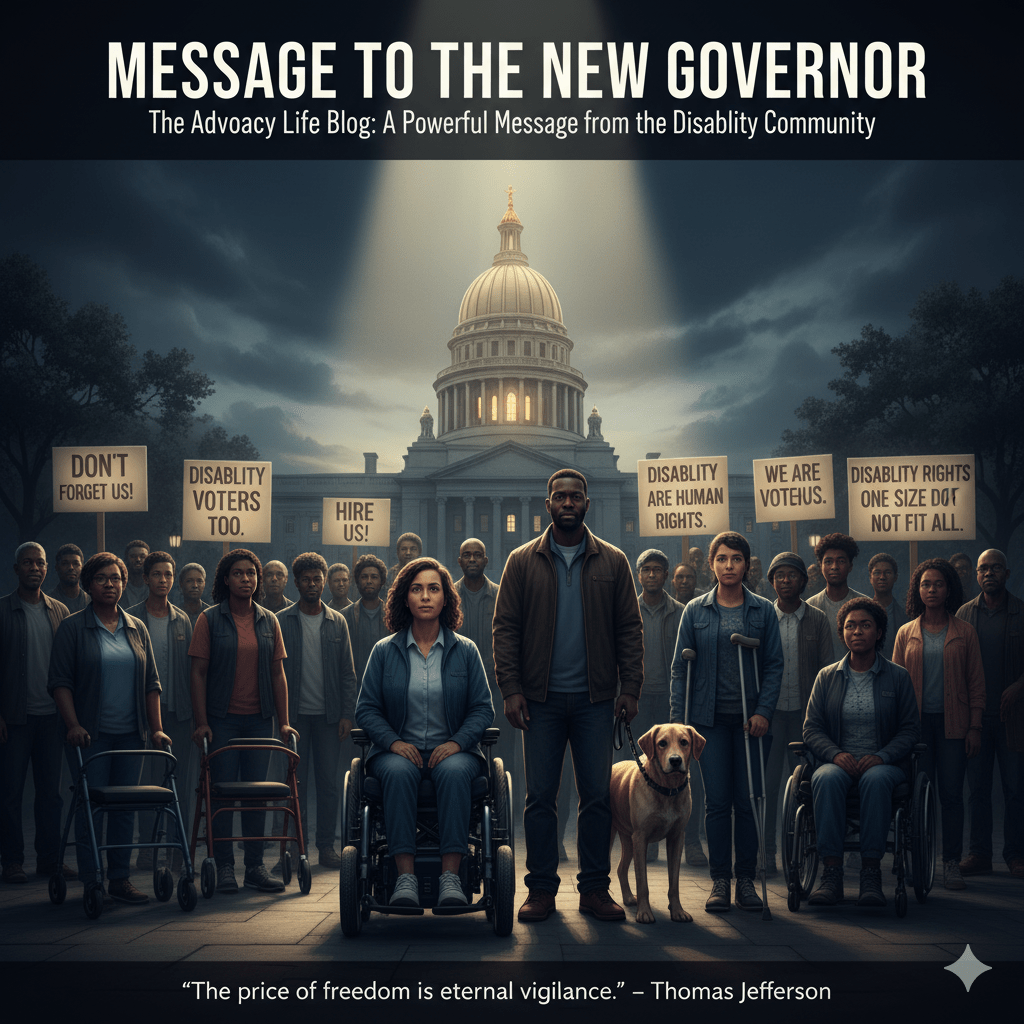
    “The price of freedom is eternal vigilance,” Thomas Jefferson famously declared.

    I’m writing this blog just hours before the election results roll in here in New Jersey. By the time many of you read this, our state will probably have a new governor-elect. If I could address the incoming governor, I would start with this: Do not forget us.

    The disability population is the largest, most underserved, and most underrepresented community in America. We are voters. We are taxpayers. We are citizens. Yet, we are an afterthought, if thought of at all. Our needs are frequently sidelined in policy debates, treated as niche issues rather than fundamental human rights. This needs to change.

    Our community is incredibly diverse. Disability comes in every skin color, every background, every walk of life. It touches families across all demographics, socio-economic statuses, and geographic locations. This means that disability rights are unequivocally human rights. They do not subscribe to any single political party, and our allegiance isn’t to a red or blue banner, but to the dignity of every person.

    We stand for policies that genuinely support independence and self-determination, not those that inadvertently trap individuals in poverty or limit their potential. The disability experience is unique to the individual; a “one size fits all” approach simply does not work. We need policies crafted with nuance, understanding that what empowers one person may not work for another. We need legislation that respects the dignity of risk, allowing individuals to make choices, to learn, to contribute, and to live full, meaningful lives without fear of losing essential supports.

    Many people with disabilities can and want to work. We want to contribute to our communities, to pay taxes, and to be active participants in the economy. Yet, current systems often create perverse disincentives, penalizing individuals who earn above a certain threshold by stripping away vital benefits like healthcare or personal care assistance. This traps people in a cycle of dependence when they desire nothing more than to be independent. Help us break these barriers. Help us contribute without fearing penalty. Help us be taxpayers, not perceived burdens.

    Our community wants to contribute, not just consume resources. We seek opportunities, not charity. We demand respect, not pity. We are a vital part of New Jersey, and our voices deserve to be heard, our needs addressed, and our rights protected.

    As the new administration takes shape, I urge them to remember Thomas Jefferson’s warning. The freedom and well-being of the disability community depend on constant vigilance from our leaders. We will be watching, advocating, and striving for a New Jersey where every citizen can thrive.

  • Real Talk with Cortez PBW 11/18/24

    Real Talk with Cortez PBW 11/18/24

    When life gives you lemons, you’re supposed to make lemonade, or so they say.  In Cortez Range’s world, those lemons kept on coming, with far too little sweet stuff to mix in.  From an early age, Cortez dealt with a world that did not resemble the happy family units seen on TV.  Having a disability only made it harder to come to terms with life’s sometimes harsh twists and turns.  Not one to back down from a good fight, however, Cortez did not accept that a life of pain and unhappiness was his fate.  While it has not been easy, and Cortez has had his share of trouble, his experiences have helped form him into the person he is today. 

    Spending time with Cortez is like being in a classroom – there is always a takeaway – something you can learn about him, but oftentimes, something you can learn about yourself.  Cortez’s drive to question things that just don’t make sense, and his passion for not just being heard but being understood, teach everyone around him valuable lessons about perseverance, forgiveness, and love. 

    Cortez works full-time as an automotive technician and lives in Hillsborough. He enjoys public speaking and advocacy work and is developing his voice so that he can help those who have been marginalized. He has presented twice at the APSE Facing the Future conference and was this year’s keynote speaker for the NJ Youth in Transition conference. Cortez is truly an advocate—not for people with disabilities but for people.