Tag: writing

  • Disability Language Controversy

    Disability Language Controversy

    Hi friends, welcome back to another community blog post. I apologize that this one is a day late—we were busy celebrating my grandmother’s 84th birthday! She had more energy than I did, so God bless her.

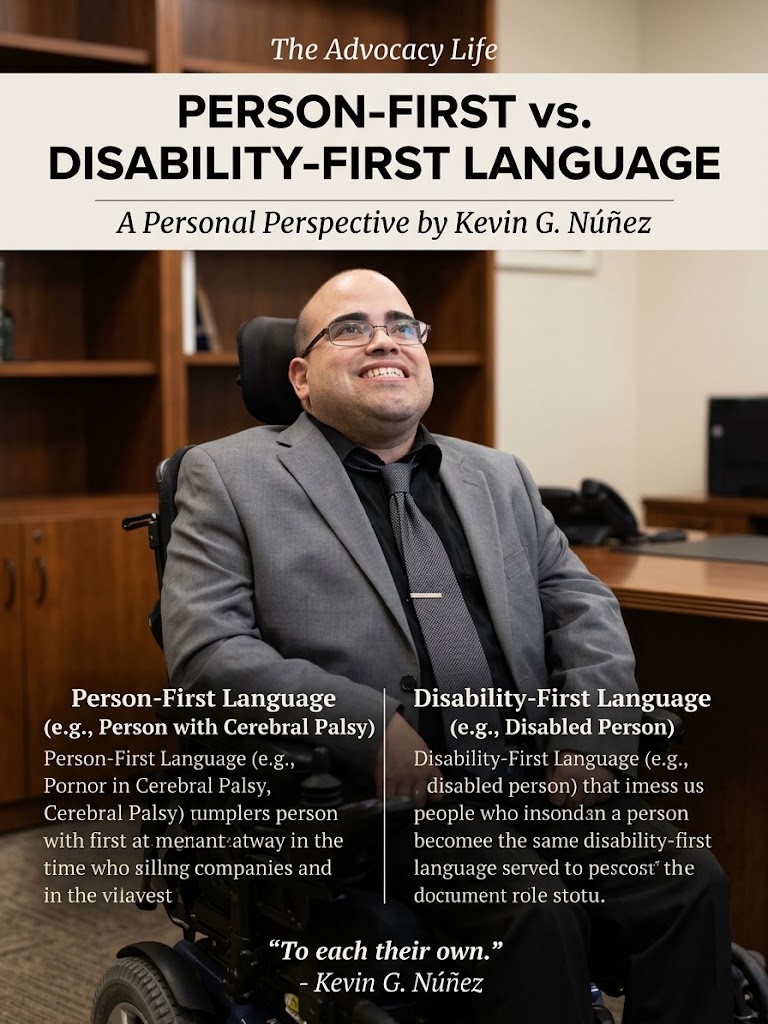
    Today, I want to dive into a topic that is always front and center in our community: disability and language.When we refer to our population, there are generally two primary frameworks: Person-First Language and Disability-First (Identity-First) Language.Person-First Language puts the individual before the condition (e.g., a person with Down syndrome, a person with autism). The core philosophy here is that the individual is a human being first, and their disability is just one aspect of who they are.

    Disability-First (Identity-First) Language places the disability attribute upfront (e.g., an autistic person, a blind person). Proponents often argue that separating the person from the disability can feel like minimizing or denying a fundamental part of their identity, viewing strict person-first language as a form of ableism.

    Where Do I Stand?

    This is a deeply personal and often controversial debate within the disability space. My personal stance is simple: To each their own. If you look at my writing, you will notice that I tend to mix both approaches. Personally, I lean toward person-first language in most aspects of life because I believe Kevin the person is separate from my cerebral palsy. Disability is just a part of who I am. At the same time, I certainly don’t think disability-first language is wrong. But for me personally, identifying solely by my disability first feels a bit uncomfortable. Language is powerful, and it acts as a tool—just like a hammer or a knife, it can be used to build something wonderful or to tear it down. We have to use our words with grace and intentionality.

    If you want to dive deeper into why language matters and how different advocacy groups approach it, check out these trusted resources:

    American Psychological Association (APA) Style Guidelines on Disability – Offers comprehensive guidance on how to write and speak about people with disabilities with neutrality and respect.

    National Center on Disability and Journalism (NCDJ) Style Guide – An incredible tool for journalists, creators, and advocates looking up specific terms, preferred language, and the history behind various disability descriptors.

    Autistic Self Advocacy Network (ASAN) – A great resource for understanding why many self-advocates within the autistic community strongly prefer identity-first language (autistic person).

    The Arc – Preferred Language Guide – One of the oldest and largest community organizations providing clear breakdowns on why language choice matters in public policy and daily life.

    This is a rich, ongoing conversation, and there is no single “right” answer for every individual. What are your thoughts? Do you prefer person-first or disability-first language in your daily life? Let me know in the comments below! Thank you guys, and as always—keep on rolling, keep on living!

    The Advocacy Podcast

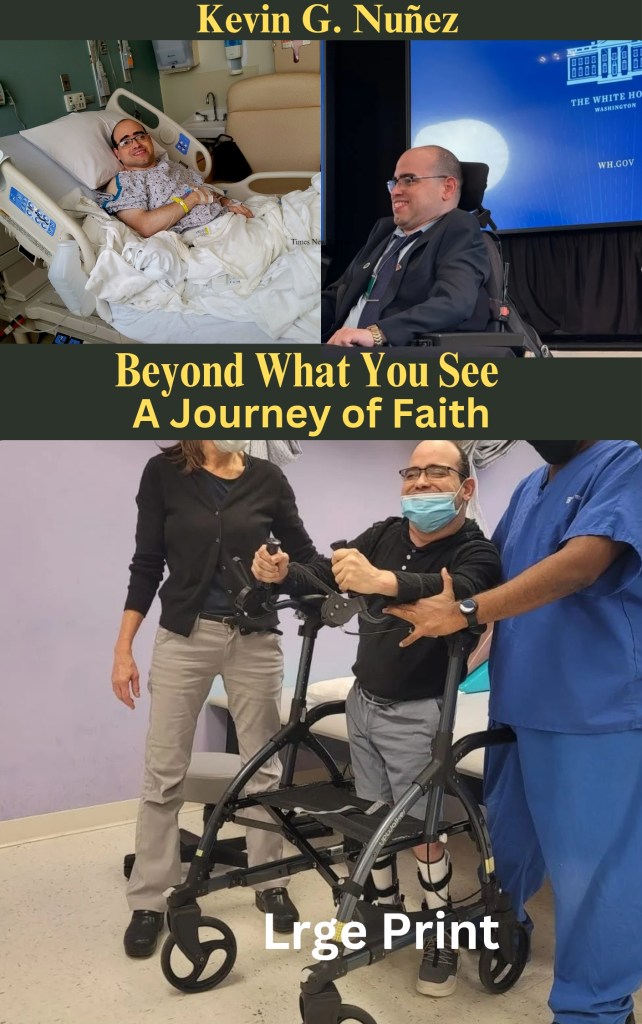
    Living Beyond Disability Books

    Both books are available exclusively on Amazon.
    Subscribe to Letters From Limb. Newsletter

    This is an exclusive weekly blog on the more fun and creative side of Kevin and his colleagues..

    Where the Ramp Ends

    This is an affiliated podcast that the advocacy life often collaborates with on Check it out today available on all podcast platforms and YouTube..

    Donate to the Advocacy Life Podcast & Blog

  • Facing the Future

    Facing the Future

    Subscribe to continue reading

    Become a paid subscriber to get access to the rest of this post and other exclusive content.

  • Prom Stories

    Prom Stories

    Subscribe to continue reading

    Become a paid subscriber to get access to the rest of this post and other exclusive content.

  • Good Neighbors Needed

    Good Neighbors Needed

    A Community Blog

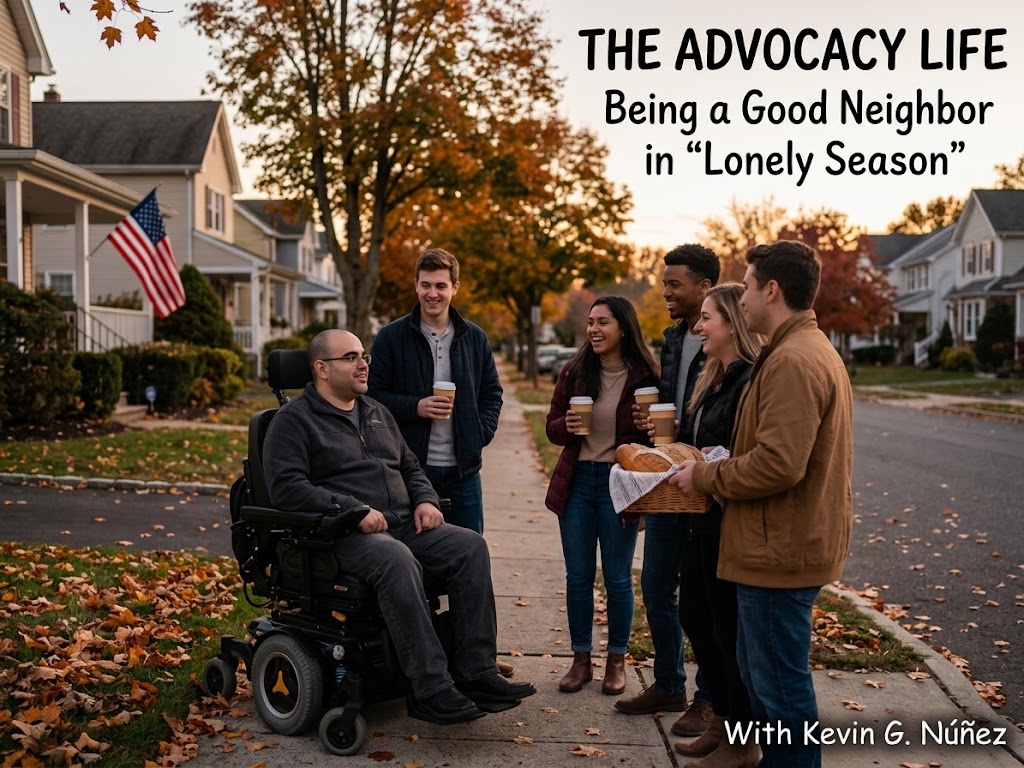
    As the crisp autumn air settles in and fall officially arrives, pumpkin spice lattes are everywhere, and leaves slowly change colors. On a chilly evening, as I enjoyed my first bowl of homemade chicken soup and zipped up my jacket, a quiet, sobering reality struck me. For many people, this time of year isn’t just about cozy evenings or family gatherings—it marks the beginning of what I call “Lonely Season.”

    While the world gets ready for Thanksgiving, Christmas, and New Year’s, many individuals with disabilities—particularly those living in local group homes—are left watching from the sidelines. There is plenty of liberty out there, but far too often, nowhere to go. Many do not have family nearby, leading to a quiet holiday season without invitations, without someone to share a meal with, or without a midnight kiss on New Year’s Eve.

    In America, we pride ourselves on being community-minded. Yet, an entire class of people right down the street remains largely invisible—not out of malice or pity, but out of simple inconvenience. Group home facilities sit right in our residential neighborhoods, surrounded by houses, but few neighbors ever drop by to build genuine relationships with the residents inside.

    What does it truly mean to be a good neighbor?

    • Share the Warmth: The next time you grab a pumpkin spice latte or a coffee for a coworker, consider dropping off a couple at your local group home. Do it not out of pity, but out of basic neighborly courtesy.
    • Extend the Table: When baking bread or prepping meals for the holidays, make an extra loaf or dish and drop it off for the residents. A small gesture of connection can transform someone’s entire week.
    • Practice Genuine Inclusion: Across our nation, thousands of houses of worship open their doors weekly. Yet, individuals with more significant behavioral or physical needs are sometimes subtly discouraged from attending because they might make noise during a service. True worship and community shouldn’t come with strict rules of quiet compliance—everyone deserves a seat at the table.

    Disabilities do not exclude someone from being a friend, a peer, or a neighbor. As the season turns cold, let’s make sure our communities stay warm. Be a neighbor. Be a friend.

    Keep on rolling, keep on living.

    See you next week.

    The Advocacy Podcast

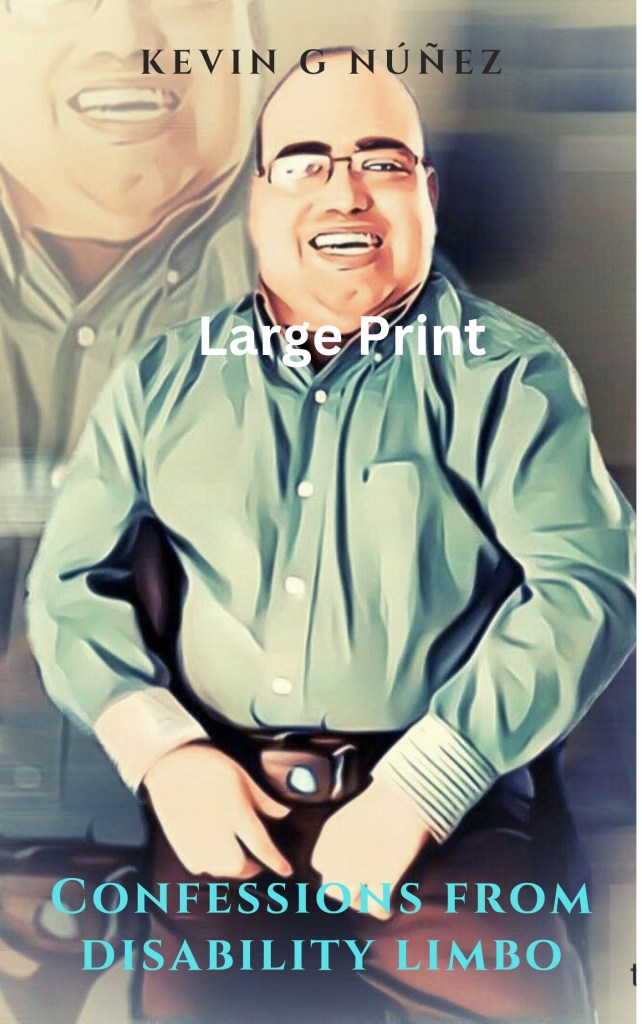
    Living Beyond Disability Books

    Both books are available exclusively on Amazon.
    Subscribe to Letters From Limb. Newsletter
    This is an exclusive weekly blog on the more fun and creative side of Kevin and his colleagues..

    Where the Ramp Ends
    This is an affiliated podcast that the advocacy life often collaborates with on Check it out today available on all podcast platforms and YouTube..

    Donate to the Advocacy Life Podcast & Blog

  • Leader or Fraud

    Leader or Fraud

    Subscribe to continue reading

    Become a paid subscriber to get access to the rest of this post and other exclusive content.

  • The Power of the Chair

    The Power of the Chair

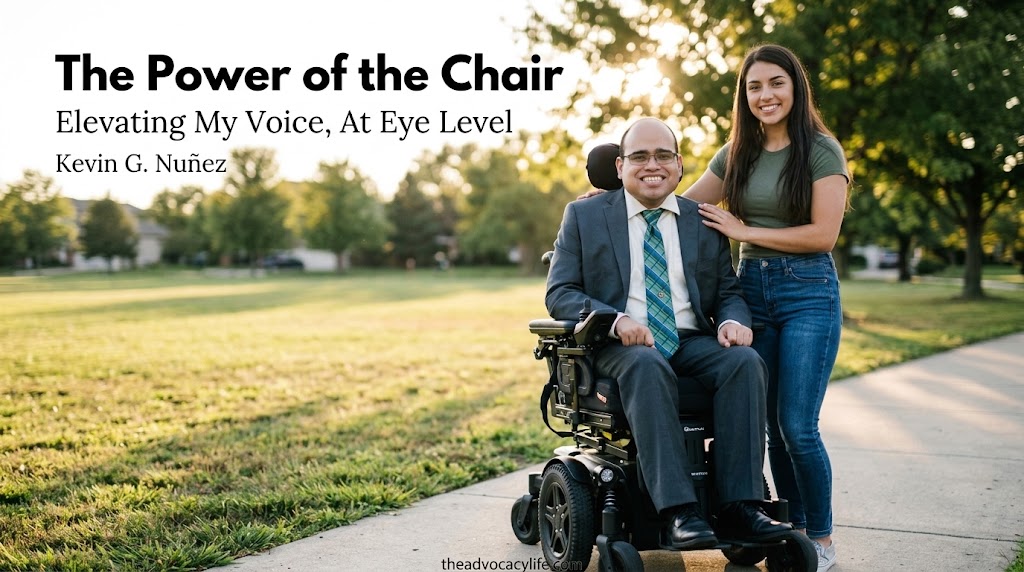
    School starts after Labor Day in New Jersey, and as a kid, that always meant new clothes, new school supplies, and a brand-new wheelchair. This year was different. My new chair didn’t arrive until March.

    The price tag on the chair I’m sitting in to write this? Nearly $60,000.

    When you hear a number like that, it’s easy to do some dark math. Is $60,000 the price tag on my independence? Am I worth $60,000? Why does basic human mobility cost as much as a luxury sedan? That’s an algorithm for insurance companies and policymakers—a topic that usually sits above my advocacy pay grade. But here’s what I can tell you: this technology keeps me from being confined to a bed. It would feel unlivable. With it, I can roll out into the world, make my voice heard, and face life head-on.

    For years, living in a wheelchair meant existing in a world built for vertical people. Everyone else’s chest or waist was where I always saw the world from. But this new chair comes with hydraulic elevation.

    Not long ago, I was at a bar with high-top tables where everyone was standing. Typically, I’d be at a huge disadvantage, craning my neck up just to participate in the conversation. This time, I hit a button on my joystick, elevated my seat, and held a conversation at true eye level. For the first time, I wasn’t being talked down to—literally or figuratively. That single moment alone was worth the price of admission.

    Since I spend at least six to eight hours a day in this chair, I’ve learned a thing or two about how the rest of the world interacts with mobility devices. For those of us who use them—and for the non-disabled allies reading this—here are a few basic ground rules:

    • Running someone over with a wheelchair isn’t a funny prank like in the movies; it’s the exact equivalent of hitting someone with your fist. Treat a person’s mobility equipment with the same respect you’d treat their personal space.
    • Wheelchairs are highly technical, custom-built, and absurdly expensive. Well-meaning people often try to grab the handles or push without asking. You could easily damage the chair or throw off the user’s balance. Always ask first.
    • Bodies break down, and chairs break down. They collect dust, weather, and yes, the occasional stray French fry in the cushions. Keeping a chair clean is part of the routine of staying functional.

    A chair can feel restrictive at times, but so can any human body. Ultimately, it isn’t a cage; it’s a platform. It’s the tool that lets me show up to council meetings, write books, host my podcast, and advocate for our community.

    Your mobility device doesn’t define your worth, but it can certainly amplify your power. Take care of your gear, demand respect for your space, and never let anyone talk down to you—no matter what height you’re sitting at. Keep on rolling. Keep on living.

    The Advocacy Podcast

    Living Beyond Disability Books

    Both books are available exclusively on Amazon.

    Subscribe to Letters From Limb. Newsletter

    This is an exclusive weekly blog on the more fun and creative side of Kevin and his colleagues..

    Where the Ramp Ends

    This is an affiliated podcast that the advocacy life often collaborates with on Check it out today available on all podcast platforms and YouTube..

    Donate to the Advocacy Life Podcast & Blog

  • LFL: Vulnerability on Wheels

    LFL: Vulnerability on Wheels

    Subscribe to continue reading

    Become a paid subscriber to get access to the rest of this post and other exclusive content.

  • Naked for Valentine’s Day

    Naked for Valentine’s Day

    Community Blog

    Note: The following is an excerpt and refresh of a chapter from my book, “Confessions From Disability Limbo.” It is a raw, crude, and honest look at disability life. With Valentine’s Day just a few days away, everyone is talking about romance and intimacy. But today, I want to talk about a different kind of “getting naked”—the kind that has nothing to do with sex and everything to do with being human.I have a problem. I know some will find this controversial. I’m half-expecting an email from a legislative office removing me from my committees, and I’m fairly certain my mother and grandmother are already lining up to scold me. But I beg your indulgence. This is advocacy in its purest, most unfiltered form.I have to ask: Are you comfortable being naked

    A few years ago, I was on respite with my twin brother. The staff had undressed me and placed me on the bed when my brother suddenly had an urgent need for the restroom. The staff rushed to help him, leaving me like Adam in Paradise before he discovered the fig leaf.Did I panic? No. I rolled over, grabbed my phone, and started blasting music. A few minutes later, the staff walked back in to find me in my own little world, air-drumming with everything I had to the epic solo in Phil Collins’ “In the Air Tonight.”

    It was a ridiculous moment, but it highlighted a strange reality of my life: While I am often uncomfortable with my body, I have become incredibly comfortable being naked around strangers.I am a 38-year-old male, roughly 130pounds, exactly five feet tall, with hair everywhere but my head and a collection of scars from past surgeries that tell the story of my survival. I won’t be on the cover of GQ anytime soon.

    For me, being naked isn’t about romance; it’s about maintenance. Most people only show their bodies to those they love and trust. For those of us with disabilities, our bodies are often “public property.” We are poked, prodded, lifted, and cleaned by people we barely know. We have to trust a stranger to handle our most private needs with dignity.I am one of the lucky ones. For many in our history, being naked wasn’t a moment of Phil Collins air-drumming; it was a tool of torture. In the old institutions, cold showers were used for behavioral control. Vulnerability was met with violation.

    Even today, I think about the non-verbal members of our community. How do you communicate that the water is too hot? How do you maintain your soul when your body is being handled like a piece of equipment? This happens every single day.A Valentine’s Challenge: Get RealAs Valentine’s Day approaches, we are bombarded with images of “perfect” bodies. We are told that intimacy is about performance. I want to challenge that.True intimacy is the ability to be seen—fully seen—without a mask. I have a challenge for every person reading this, whether you are able-bodied or disabled:Talk to someone you love while you are nude. I don’t mean sex. I don’t mean it as a joke. I mean sit in that vulnerability and have a real, personal conversation about your life, your fears, or your dreams.

    The Rules:No “Post-Sex” Cheating: Don’t do it when the oxytocin is flowing and everything feels perfect.No Attention Seeking: This isn’t a “look at me” moment.No Distractions: Don’t ask, “Does this mole look weird?” Keep it real.The most important conversations of my life have happened in these moments of total exposure. When you take away the clothes, the suits, and the “Advocate Kevin” persona, all that is left is the man.I share these experiences because society often forgets that people with disabilities are people first. We deserve dignity in our vulnerability and respect in our nakedness.Thank you to anyone brave enough to try this. Happy Valentine’s Day.Keep on rolling. Keep on living.

    The Advocacy Podcast

    Living Beyond Disability Books

    Both books are available exclusively on Amazon.

    Subscribe to Letters From Limb. Newsletter

    This is an exclusive weekly blog on the more fun and creative side of Kevin and his colleagues..

    Where the Ramp Ends

    This is an affiliated podcast that the advocacy life often collaborates with on Check it out today available on all podcast platforms and YouTube..

    Donate to the Advocacy Life Podcast & Blog

  • Disability Limbo Newsletter October 20, 2025

    Disability Limbo Newsletter October 20, 2025

    Subscribe to continue reading

    Become a paid subscriber to get access to the rest of this post and other exclusive content.

  • Sneak Peek

    Sneak Peek

    Subscribe to continue reading

    Become a paid subscriber to get access to the rest of this post and other exclusive content.