For the first episode of March, Kevin is proud to present this laid-back episode where he simply updates you on the fun times he had in the last few months. This is a different kind of podcast from your favorite little podcaster.
Greetings readers, are you ready for spring? I know it seems kind of far away. I’m writing this with only a few days left in February. There is still a cold chill in the air. Although spring training games have officially begun, warmer weather must be on the way. I have observed several bloggers doing this by providing their followers with updates on their activities. I wanted to share my exciting upcoming projects with everyone to encourage them that anything is possible, even though it always seemed a bit silly to me. Hey, every few months, the president gives a State of the Union. I may not be the best writer in the world, but I can promise it’ll be better than that.
Mark 9:23 NIV “ ‘If you can’?” said Jesus. “Everything is possible for one who believes.”
Let’s start with the health stuff. As of now, I have no major health concerns or upcoming medical procedures. This is really cool because last year I had two surgeries: a hiatal hernia removal and an endoscopy. The hernia revealed a whole bunch of polyps in my upper stomach that were noncancerous. When you have a disability, it always seems like there’s some weird medical thing on the horizon, so it’s nice for now to just enjoy the sunset.
Next update on my advocacy career. I now represent seven states on a national board of directors run by and for people with disabilities. The organization is called Self Advocates Becoming Empowered or SABE click here to read about my initial reactions to joining this organization. For now, I can say it is the most challenging but thrilling adventure of my life. Helping others is what I was made for. I don’t even care about traveling across the country. Truth be told, some days I’d rather be home in bed. I don’t do this for prestige. The day it becomes about that is the day I leave people with disabilities. They should need to be at the table to make a difference.
Finally, I want to recommend something that has nothing to do with disability at all. It’s a very fun and entertaining book called Mox. It is the personal memoir of professional wrestler and sports entertainer John Moxley. Yes, wrestling is partly staged, but they’re still real athletes trying to entertain you. This book teaches you about life in a very different way. You can turn your brain off, but some important nuggets will sneak in there.
I know this is a different kind of blog. I hope you guys still enjoyed it. Thanks for your time, and have a great day. I will see you guys next week.
Happy Wednesday, my wonderful readers. Once again, I hope you guys are having a good day. and I want to thank you for spending a few minutes with me. When you hear the word “fighter,” what’s the first image that pops into your mind? Most likely Rocky Balboa or Bruce Lee if you’re over a certain age. If you’re more realistic, you probably think of Muhammad Ali or Randy Couture as two of the best in their sports. That’s not who I think about. I picture Muhammad Gandhi, Martin Luther King Jr., and Brad Lomax as people who won impossible battles. They were outmatched, and their lives were in danger. They fought with their words, not their bodies.
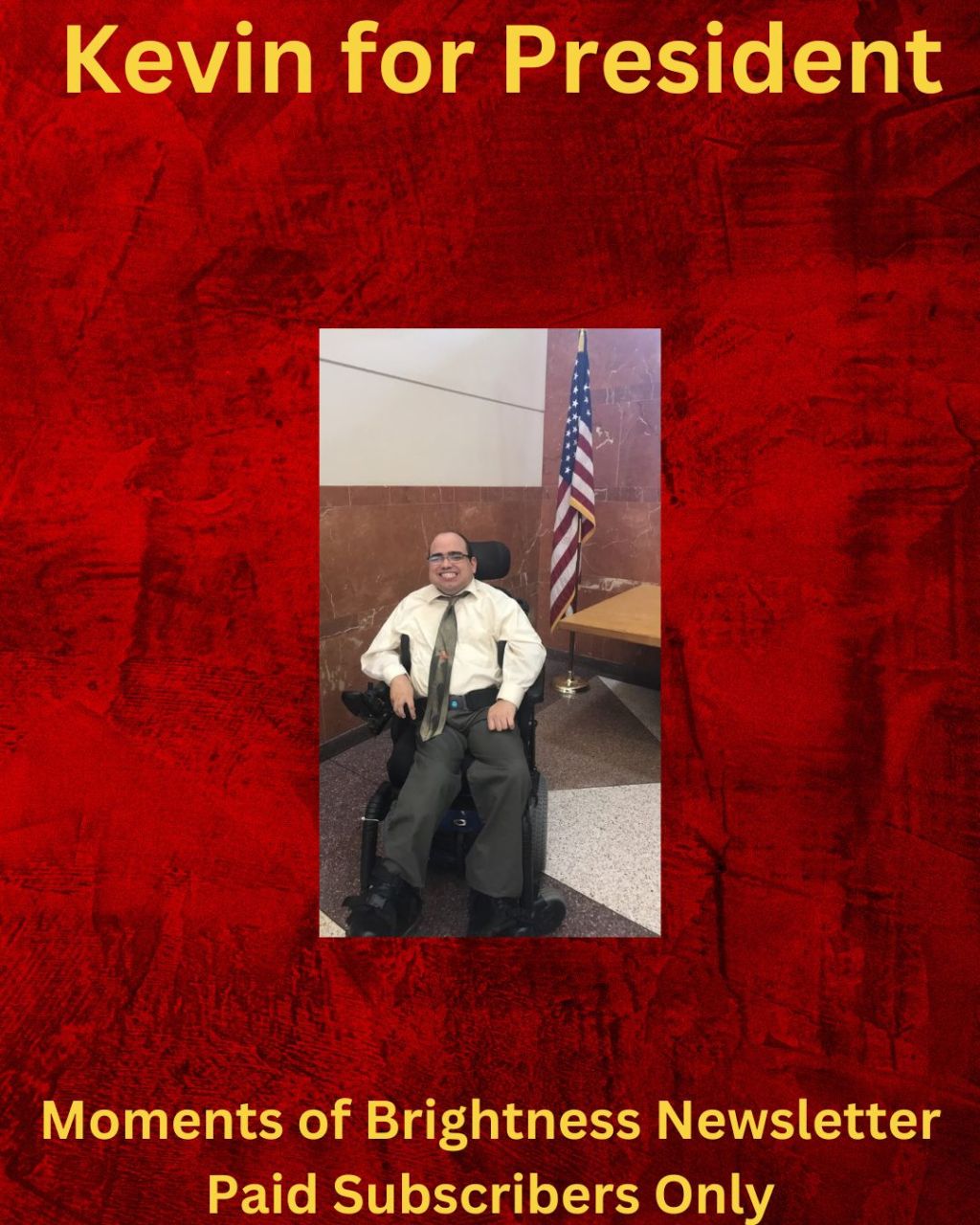
I relate to this because I am physically weak. I’m only 5 feet, and I weigh barely 135 lbs. I have Cerebral Palsy (CP) There are a million things I can’t do for myself. I am unqualified to do anything. Instead, I was called and then qualified. The other day, I was asked, “Why do you keep going? What are you fighting for?” I may occasionally have guest writers, but I have done the majority of the work on this website. I created every single social media post. It can be a little frustrating As a content creator, it is very difficult not to look at the numbers to see whether or not my website’s getting traffic. How many listens does my podcast get? I recently added a bonus newsletter for some paid subscribers. I thought this would add a more fun aspect to my writing. I thought people might enjoy this. As of now, I only have one subscriber. So how do I not get lost in the numbers?
I’ve just begun to learn that I was given this disability as a platform, not a weakness. Every podcast, blog, tweet, and keystroke is done with the help of the Holy Spirit. My new goal is just to help one person at a time. There are tons of podcasts, and anyone can make a blog. My hope is that anything I produce can make one person smile. I might not know who they are. I might not know their circumstances. I know they’re warriors like me.
1 Timothy 6:12 NIV 12 Fight the good fight of faith. Take hold of the eternal life to which you were called when you made your good confession in the presence of many witnesses.
The show scandal is famous for the tagline “gladiators in suits.” Well, this is to all my warriors in wheelchairs. My warriors use walkers. My Warriors, who don’t use words. My warriors may have invisible disabilities. our battle is long, and your battle is hard, but we can make a difference. we are the difference. The world sees your weaknesses, but you know your strengths. You grow stronger every day because you overcome more every day. Would God save his best warriors for the easy battles or save them for the ones he needs to win? Don’t give up. Keep going. Don’t look back; keep moving forward. Thank you for your time, and I hope to spend more time with you next Wednesday.
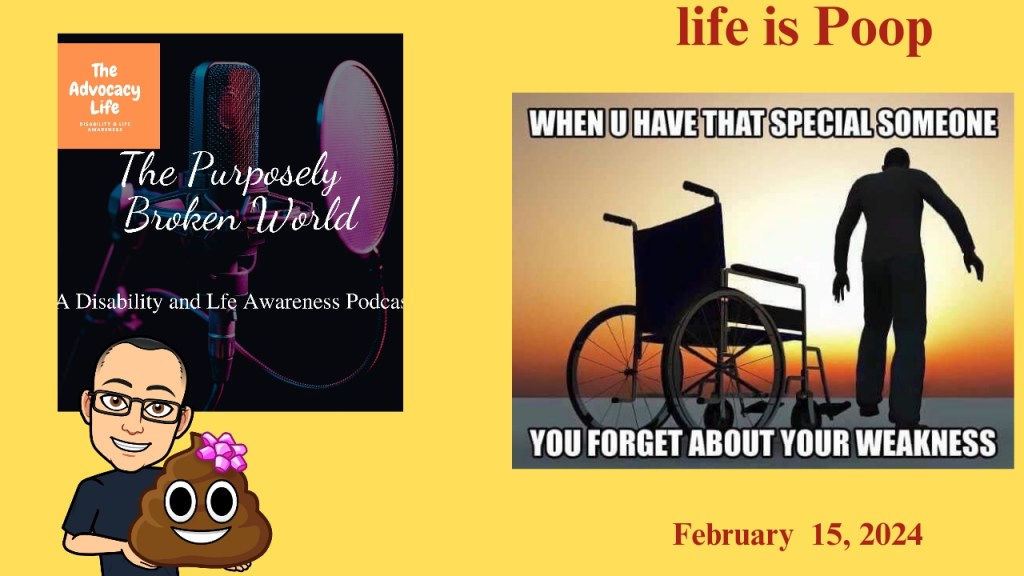
In the second episode of February, Kevin breaks down the physical attributes that people try to reach daily. versus his physical reality. In this particular episode, Kevin expresses how he finds hope in the darkest moments. Don’t give up. Look forward and look up. Don’t forget to look up the term “disability hierarchy.”
Happy Valentine’s Day! I hope this blog brings some joy to your day. Over the weekend, many couples celebrated Valentine’s Day, which is honestly my favorite holiday. Even though we should show love to our friends and family every day, it’s easy to forget in the hustle and bustle of life. That’s why having a special day dedicated to love is so important.
To me, Valentine’s Day isn’t about fancy gifts like flowers and chocolates. It’s more about showing genuine care and support for someone, even in small ways.
Now, let’s talk about something important: advocating for people with disabilities. Before we get into it, I want to be clear. Some people with disabilities may not be able to understand or consent to romantic relationships, and that’s okay. But for those who can, it’s important to challenge misconceptions about what they’re capable of.
1 Corinthians 13:4-5 NIV [4] Love is patient, love is kind. It does not envy, it does not boast, it is not proud. [5] It does not dishonor others, it is not self-seeking, it is not easily angered, it keeps no record of wrongs.
Years ago, people with disabilities were often kept out of sight in institutions. But things are changing, just like they did for the LGBTQ community. It takes time, but education and breaking down stereotypes are key.
Having a disability can make romantic relationships more challenging, but it’s not impossible. It just takes understanding and communication from both partners. There might be people who don’t understand or stare, but love knows no boundaries, whether one or both partners have a disability.
It’s important to see the person beyond their disability. I’ll share links to two couples who are in integrated relationships to show that it’s possible. I promise to keep talking about this topic regularly in my blog because awareness is important, just like having accessible facilities.
I’m sending love to everyone who needs it today, and I’ll see you next Wednesday!
You may have noticed that the title of this blog is “A Believer. No, it’s not a profile on Imagine Dragons. I’m certainly not going to sing the song for you. This post would get flagged for inappropriate content if I did. “I live by faith, not by sight.” I want to tell you three things that I believe will happen in my life. I have no logical reason to tell you why these things will happen; in fact, the odds are none of them ever will. However, as Han Solo once said, “Never tell me the odds!” I’ve learned that this life is a journey. The problem is that most people give up on their journeys because they don’t get immediate satisfaction. The greatest things take time and effort.
2 Corinthians 5:7 NIV For we live by faith, not by sight.
My dad is a gigantic Mets fan. To his disappointment, I grew up a Yankees fan because all my friends were Yankees fans growing up in the mid-to-late 90s. I wonder how many followers I just lost by admitting that. Anyway, when Mets catcher Mike Piazza was inducted into the Hall of Fame, I watched it with my father. I can’t remember a word of what Piazza’s speech was, but I remember his father crying like a baby just because he was so proud of his son. Obviously, there is no Hall of Fame for the work I do, but if one day I get some sort of award, I believe I will give a speech in Spanglish and make my whole family cry. Parents and grandparents, please bring your tissues. The day is coming.
“You will find someone one day.” I find it really annoying when people say this to me, presumably because I have heard it since I was 17, and since I am 36, I am running out of “some days.” It is difficult to hope for someone special because it gets harder and harder to put yourself out there every time. I know I’m not alone. I also know that it can happen. I’ve seen it with my own eyes and experienced it to some extent. If the Israelites can walk 40 years in the desert, then I can wait a little longer. I think I will spend the next 24 hours just talking and getting to know a kind woman. I do not care if she spends the entire evening in a hazmat suit while curled up on her bed, as long as she can see the true me. What matters is the connection, not the sex.
The final one is somewhat, but not truly, new. I envision myself and my brother living in a house that is more like a duplex, where we can be together but still have our own space, or at the very least, be close enough to one another to be able to see one another when necessary. Without a doubt, my brother is smarter than I am. He is capable of directing his own care, so in some ways he can take care of himself. He reminds me of things most of the time. The issue is that, with the amount of support and physical accommodations, it’s extremely expensive. People never realize how expensive it is to actually have a disability. Disability is big business.
I know some of you think after reading this that I’m nothing but an ignorant fool, and I fully understand if you believe that none of this will happen to me. I know most days it’s hard to believe, but that’s why we have to believe. I can’t get the award for my family if I don’t put in the years of work for others first. No girl is going to show up at my front door waiting for me to take her away to a magic castle. The Extreme Makeover Home Edition TV show will not show up on my front lawn to design a house for my brother and me. I have to take the journey through all the highs and lows. It will not be easy, but nothing worth doing ever is. Please tell me in the comments: What do you believe? Thanks for reading, and have a great day.