Category: Disability Awareness

  • Grdianship: A Slippery Slope

    Grdianship: A Slippery Slope

    In the world of disability advocacy, we often talk about “gaps”—the moments where the system fails to catch us. Recently, New Jersey took a step to close one of those gaps. As of April 1, 2026, a new law allows families to begin the guardianship petition process six months before a child turns 18. On the surface, this is a “commonsense and compassionate” reform. It aims to eliminate the terrifying period where a young adult with medically complex needs might be left legally unprotected because of court delays.For

    For many families, this isn’t just paperwork; it’s peace of mind. We need to have a real conversation about what guardianship actually is. As someone who has lived in the “disability limbo” of society, I know that equality is about status, rights, and opportunities. While I understand that some individuals require the support of a guardian for their safety, we must admit that guardianship is a slippery slope. When we talk about guardianship,

    We are talking about the legal removal of an individual’s right to make their own choices—where to live, how to spend their money, and even who to see. It is, in many ways, a “fancy name” for a loss of independence. If we aren’t careful, we risk turning a protective measure into a permanent ceiling on a person’s potential. Every person with a disability has a “different normal,” but we all have the same fundamental human needs. My needs are different from a peer on the autism spectrum or someone with Down syndrome—not better or worse, just different.

    This is why guardianship cannot be a one-size-fits-all solution. We must prioritize supported decision-making models that allow individuals to retain their rights while receiving the help they need. Just because someone needs help balancing a checkbook doesn’t mean they shouldn’t decide who they date or where they work.The ultimate objective should always be to help the individual “flourish and be triumphant” within their community, not to isolate them behind a legal barrier. I’m just trying to leave the world a little better than I found it. This new law in New Jersey is a win for efficiency and protection, but it’s also a reminder to all of us in the community to stay vigilant. We must ensure that “easier” access to guardianship doesn’t lead to “faster” erosion of our rights. Keep on rolling, keep on living.

    The Podcast

    Published Books

    Subscribe to Letter from Limbo

    Read more of this content when you subscribe today.

    One-Time
    Monthly
    Yearly

    Make a one-time donation

    Make a monthly donation

    Make a yearly donation

    Choose an amount

    $1.00
    $3.00
    $5.00
    $5.00
    $15.00
    $100.00
    $5.00
    $15.00
    $100.00

    Or enter a custom amount

    $

    Your contribution is appreciated.

    Your contribution is appreciated.

    Your contribution is appreciated.
    DonateDonate monthlyDonate yearly
  • Remembering Section 504

    Remembering Section 504

    First things first: I’m back. After taking time for reflection and renewal during the Lent season, I am energized and ready to dive back into the fight. As I shared in Confessions from Disability Limbo, life is a series of “limbo” moments, but we don’t have to stay stuck. We move forward.

    Today, we need to talk about the bedrock of our rights. While many know the Americans with Disabilities Act (ADA), we cannot forget its predecessor: Section 504 of the Rehabilitation Act of 1973.

    Section 504 was the first federal civil rights protection for us. It essentially says that if an entity gets federal money, it cannot shut us out. It’s why we have access to schools, hospitals, and community programs today.

    There is exciting news close to home. Lawmakers in Delaware are taking a massive stand by introducing legislation (like Senate Bill 198) to codify Section 504 protections directly into state law. Why does this matter? Because federal protections can sometimes feel like they’re on shifting sand. By putting these rights into state code, Delaware is ensuring that no matter what happens in Washington, disabled Delawareans have broad, enforceable protections for equal access. Perhaps our wonderful Garden State would consider such an initiative.

    We have to stay vigilant. There are currently several states renewing attacks on Section 504’s “integration mandate”—the very rule that keeps us out of institutions and in our communities.

    Section 504 isn’t just a “legal thing”—it’s about our dignity and our right to be “equal and contributing members of society”. Let’s keep building that stronger future together.

    Stay tuned for the next podcast episode! Keep on rolling. Keep on living

  • Rising up

    Rising up

    Subscribe to continue reading

    Become a paid subscriber to get access to the rest of this post and other exclusive content.

  • Returning to the Happy Place

    Returning to the Happy Place

    A community Blog

    It might not surprise those of you who follow my work regularly that I don’t get out into the physical world as much as I’d like. Since the pandemic in 2020, the rising cost of living and the complexities of coordinating care have made “getting out” a major operation.While 95% of my advocacy work happens virtually—which has certainly made things more accessible—I have to be honest: I miss the personal touch. There is no digital substitute for a firm handshake with a colleague, a hug from a friend, or seeing a meaningful smile in person rather than through a Zoom tile.

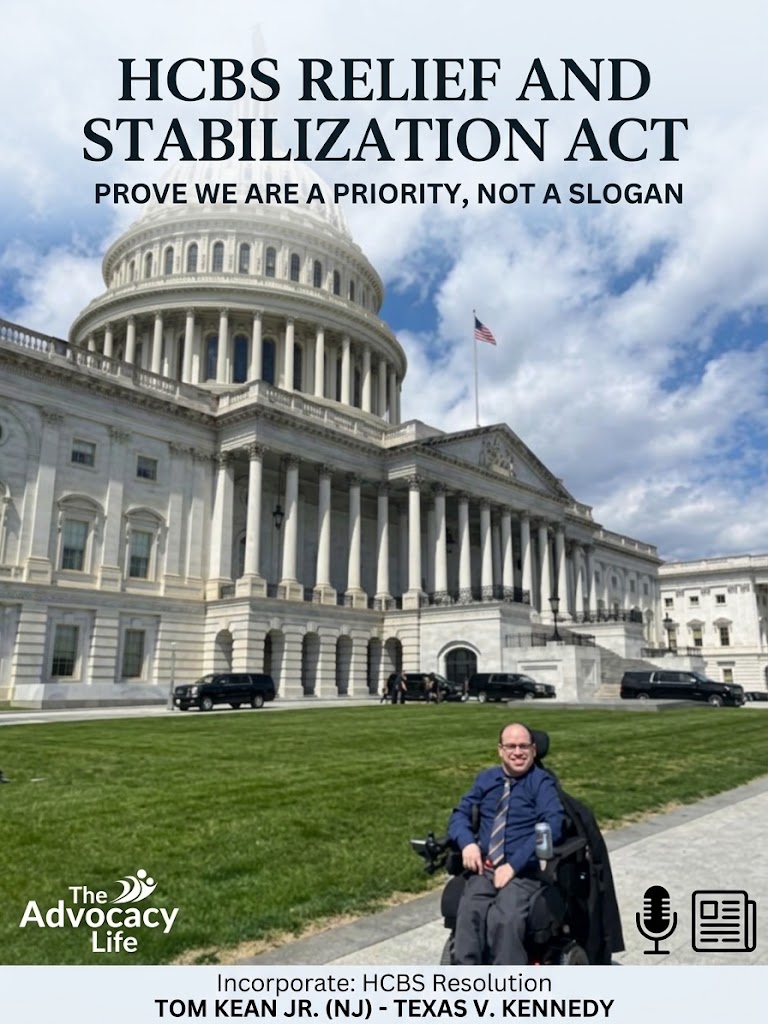
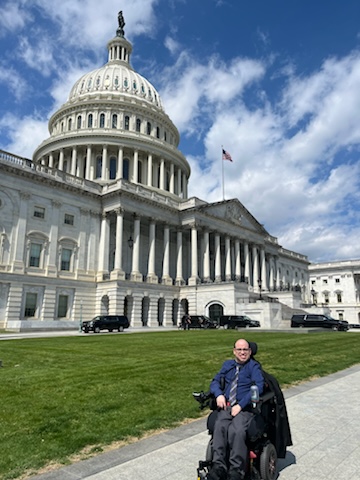
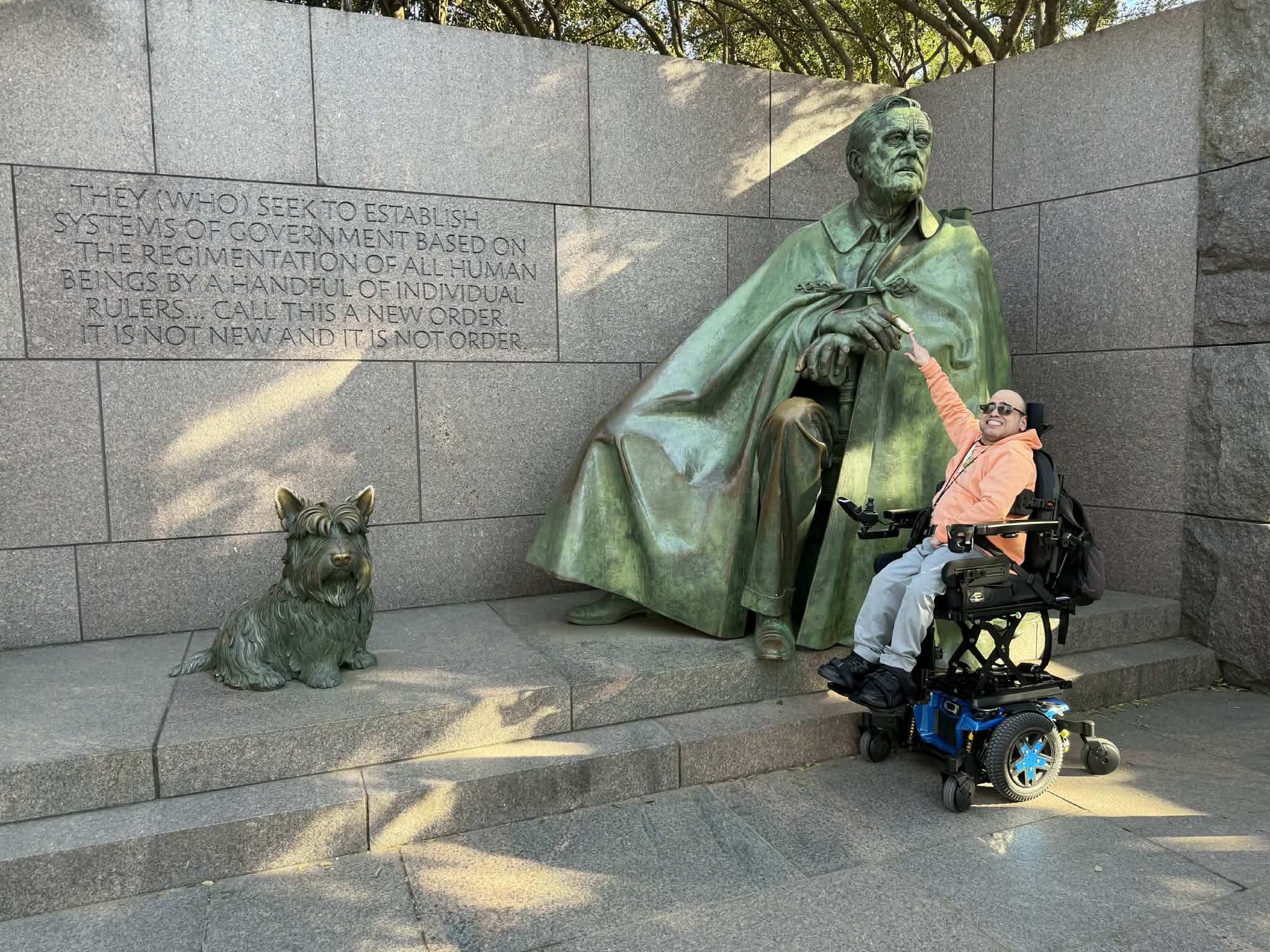
    That is why I am so energized to share that at the end of March, I am heading back to my “Happy Place”: Washington, D.C.To some, D.C. is just a place where politicians work. But as a child, I never wanted to be a baseball player or an astronaut. I wanted to be in Washington. I wanted to be where the laws are made, because I knew that was where someone like me could make the most difference.

    Rolling—my way through Capitol Hill is my dream job. Representing the state of New Jersey and the individuals with disabilities in our community is a privilege I do not take lightly. It humbles me every single time.Before I can get on the road, the real work happens here at home. I am currently spending my afternoons contacting legislative offices to schedule visits on behalf of the New Jersey Council on Developmental Disabilities (NJCDD).These meetings are where the “Exposure Method” meets the “Legislative Process.We

    We aren’t just going there to share stories; we are going there to ensure that when policy is written, our lives are not treated as an afterthought or a “survival math” equation.Some might say these seminars are just formalities and that nothing really gets done. I disagree. In advocacy, small things add up to big things. Every phone call to a staffer, every scheduled visit, and every face-to-face conversation on the Hill is a brick in the bridge between existence and a full life.

    At 39, I’ve learned that the natural rhythm of life can sometimes feel like things are being taken away. But my message to you today is this: Don’t ever stop trying. Don’t ever stop reaching. Don’t ever stop getting excited.What might feel like “nothing” to someone else is “everything” to us. I can’t wait to head to the nation’s capital to represent you, and I look forward to telling you all about the adventures when I return. Keep on rolling. Keep on living.

    The Podcast

    Published Books

    Subscribe to Letter from Limbo

    Read more of this content when you subscribe today.

    One-Time
    Monthly
    Yearly

    Make a one-time donation

    Make a monthly donation

    Make a yearly donation

    Choose an amount

    $1.00
    $3.00
    $5.00
    $5.00
    $15.00
    $100.00
    $5.00
    $15.00
    $100.00

    Or enter a custom amount

    $

    Your contribution is appreciated.

    Your contribution is appreciated.

    Your contribution is appreciated.
    DonateDonate monthlyDonate yearly
  • Naked for Valentine’s Day

    Naked for Valentine’s Day

    Community Blog

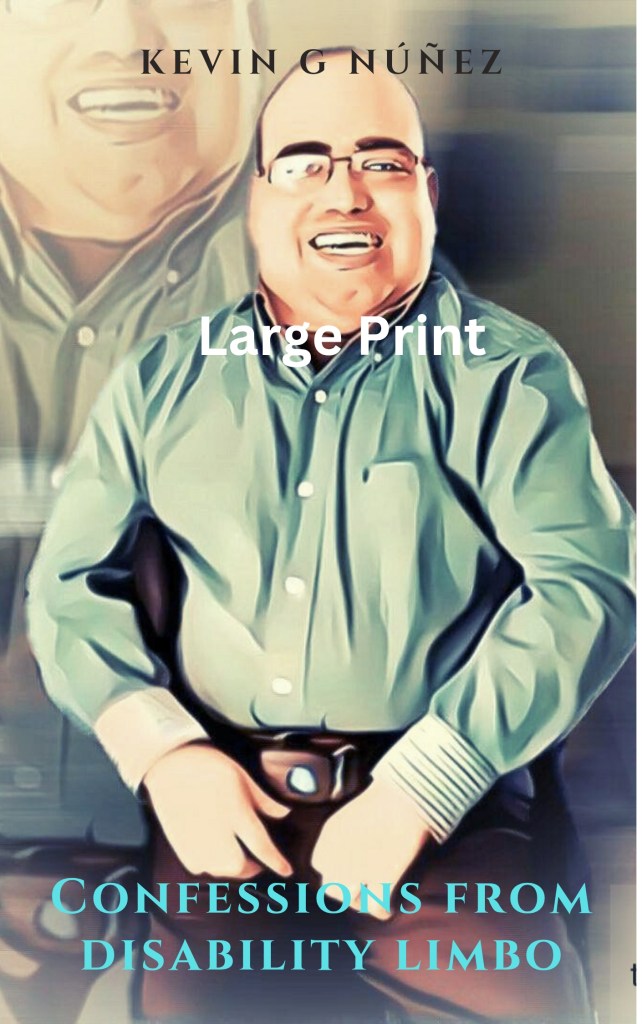
    Note: The following is an excerpt and refresh of a chapter from my book, “Confessions From Disability Limbo.” It is a raw, crude, and honest look at disability life. With Valentine’s Day just a few days away, everyone is talking about romance and intimacy. But today, I want to talk about a different kind of “getting naked”—the kind that has nothing to do with sex and everything to do with being human.I have a problem. I know some will find this controversial. I’m half-expecting an email from a legislative office removing me from my committees, and I’m fairly certain my mother and grandmother are already lining up to scold me. But I beg your indulgence. This is advocacy in its purest, most unfiltered form.I have to ask: Are you comfortable being naked

    A few years ago, I was on respite with my twin brother. The staff had undressed me and placed me on the bed when my brother suddenly had an urgent need for the restroom. The staff rushed to help him, leaving me like Adam in Paradise before he discovered the fig leaf.Did I panic? No. I rolled over, grabbed my phone, and started blasting music. A few minutes later, the staff walked back in to find me in my own little world, air-drumming with everything I had to the epic solo in Phil Collins’ “In the Air Tonight.”

    It was a ridiculous moment, but it highlighted a strange reality of my life: While I am often uncomfortable with my body, I have become incredibly comfortable being naked around strangers.I am a 38-year-old male, roughly 130pounds, exactly five feet tall, with hair everywhere but my head and a collection of scars from past surgeries that tell the story of my survival. I won’t be on the cover of GQ anytime soon.

    For me, being naked isn’t about romance; it’s about maintenance. Most people only show their bodies to those they love and trust. For those of us with disabilities, our bodies are often “public property.” We are poked, prodded, lifted, and cleaned by people we barely know. We have to trust a stranger to handle our most private needs with dignity.I am one of the lucky ones. For many in our history, being naked wasn’t a moment of Phil Collins air-drumming; it was a tool of torture. In the old institutions, cold showers were used for behavioral control. Vulnerability was met with violation.

    Even today, I think about the non-verbal members of our community. How do you communicate that the water is too hot? How do you maintain your soul when your body is being handled like a piece of equipment? This happens every single day.A Valentine’s Challenge: Get RealAs Valentine’s Day approaches, we are bombarded with images of “perfect” bodies. We are told that intimacy is about performance. I want to challenge that.True intimacy is the ability to be seen—fully seen—without a mask. I have a challenge for every person reading this, whether you are able-bodied or disabled:Talk to someone you love while you are nude. I don’t mean sex. I don’t mean it as a joke. I mean sit in that vulnerability and have a real, personal conversation about your life, your fears, or your dreams.

    The Rules:No “Post-Sex” Cheating: Don’t do it when the oxytocin is flowing and everything feels perfect.No Attention Seeking: This isn’t a “look at me” moment.No Distractions: Don’t ask, “Does this mole look weird?” Keep it real.The most important conversations of my life have happened in these moments of total exposure. When you take away the clothes, the suits, and the “Advocate Kevin” persona, all that is left is the man.I share these experiences because society often forgets that people with disabilities are people first. We deserve dignity in our vulnerability and respect in our nakedness.Thank you to anyone brave enough to try this. Happy Valentine’s Day.Keep on rolling. Keep on living.

    The Podcast

    Published Books

    Subscribe to Letter from Limbo

    Read more of this content when you subscribe today.

    One-Time
    Monthly
    Yearly

    Make a one-time donation

    Make a monthly donation

    Make a yearly donation

    Choose an amount

    $1.00
    $3.00
    $5.00
    $5.00
    $15.00
    $100.00
    $5.00
    $15.00
    $100.00

    Or enter a custom amount

    $

    Your contribution is appreciated.

    Your contribution is appreciated.

    Your contribution is appreciated.
    DonateDonate monthlyDonate yearly
  • The Legacy of the New Jersey Disability Ombudsman

    The Legacy of the New Jersey Disability Ombudsman

    Community Blog

    In the world of advocacy, we often talk about “the system.” We talk about it as if it’s a giant, immovable machine—something that operates at a distance from the people it’s meant to serve. But for the last several years in New Jersey, we had a leader who refused to look at the system from a distance. Instead, he got in his car and drove 148,000 miles to see the reality for himself. As Paul Aronsohn prepares to step down as the New Jersey Ombudsman for Individuals with Intellectual or Developmental Disabilities and Their Families, I want to take a moment to reflect on his legacy. I’ve had the distinct pleasure of working alongside Paul through my roles with the New Jersey Council on Developmental Disabilities (NJCDD) and Self-Advocates Becoming Empowered (SABE)

    In Paul, we didn’t just have an official; we had a witness. The Courage to Speak Truth to Power When Paul was first appointed by Governor Phil Murphy in 2018, he didn’t settle into a comfortable office in Trenton. As noted in the recent Star-Ledger profile, he submitted a report early on that described New Jersey as a “tale of two systems”—one that was functioning well and one that was failing.That kind of honesty is rare in government. It ruffled feathers. It made people in power uncomfortable.

    Paul noted, he wasn’t there to make people comfortable; he was there because “lives, frankly, depend upon it.”That is the heart of advocacy. It is the willingness to say the thing that needs to be said, even when the administration that appointed you isn’t happy to hear it. Paul understood that his loyalty wasn’t to a political office, but to the families who were struggling to find housing, the individuals waiting for services, and the people trapped in the “benefits trap” that I often talk about.In my work with NJCDD and SABE, I saw firsthand how Paul valued the voices of self-advocates. He didn’t just speak for us; he created space for us to speak for ourselves.

    He understood that the “Exposure Method”—the idea that people need to see the raw, unfiltered reality of disability to create change—was the only way forward. Whether he was visiting families in their living rooms or standing with us in Trenton, he was always listening. He took the “heartbreaking” stories he found on the road and turned them into actionable recommendations.He helped us navigate the “limbo” between existence and a full life.He

    He knew that for many in our community, the difference between the two is often a single phone call, a specific waiver, or a caregiver who actually shows up. Paul leaves behind an office that is more vital than ever. He fought for it to be independent, and he fought for it to be loud. He showed us that the government works best when it is empathetic, transparent, and—most importantly—willing to admit where it is failing.While Paul is moving on to his next chapter, the 148,000 miles he traveled have left a permanent map for the rest of us to follow. He showed us that you cannot fix a system you aren’t willing to see up close. Paul, on behalf of the entire disability community in New Jersey, thank you. Thank you for the miles, thank you for the honesty, and thank you for being a “fearless” leader who wasn’t afraid to show his own heart. You’ve taught us that while the system may be a machine, the people fighting for change must always be human.

    Paul’s departure shouldn’t mean a quiet period for the Ombudsman’s office. We must continue to support this office and ensure it remains a candid, independent voice for our community. Keep on rolling. Keep on living.

    sources

    The Podcast

    Published Books

    Subscribe to Letter from Limbo

    Read more of this content when you subscribe today.

    One-Time
    Monthly
    Yearly

    Make a one-time donation

    Make a monthly donation

    Make a yearly donation

    Choose an amount

    $1.00
    $3.00
    $5.00
    $5.00
    $15.00
    $100.00
    $5.00
    $15.00
    $100.00

    Or enter a custom amount

    $

    Your contribution is appreciated.

    Your contribution is appreciated.

    Your contribution is appreciated.
    DonateDonate monthlyDonate yearly
  • Unemployment First

    Unemployment First

    Community Blog

    In 2006, I was given my first job offer. To be a greeter at Walmart. I filled out the application online with tons of enthusiasm. I was in the final weeks of my senior year. This would have been a respectable first employment. I was hit with a horrid dilemma. Around their 18th birthday, there is a bizarre rite of passage that takes place for my community, and that is their initial enrollment for Social Security benefits: Supplemental Security Insurance (SSI)

    I rushed home to tell my dad, he was furious.

    “If you’re going to risk your life, don’t be a clown in people’s circus. You can’t grow there. Sooner or later, you will lose the benefits you need, and then what are you going to do? You’re going to go there with the best of intentions, saying hi to everyone, and people are just going to walk right by you. You could work there for 20 years, and you’ll be exactly where you are now. You don’t have a safety net in this life. Everything you do must be calculated. Do something where you can make a difference and make sure it’s worth it. “

    The summer before I went to college, I did an internship for my local mayor’s office. That was the right fit. Her office was right by the high school. The school bus would drop me off. I spent afternoons there twice a week. I put together all the packets for the new residents. Complete with a signed letter from the mayor. I was a good office clerk. After 2 weeks, I was featured in the town newsletter. My dad kept that for the longest time.As a parting gift, they gave me a small blue piggy bank for me to save my money.

    “I’ve always believed that, given the tools and equipment they need and on a level playing field, American workers can out compete and beat the pants off anybody, anywhere.”-Rnold Reagan.

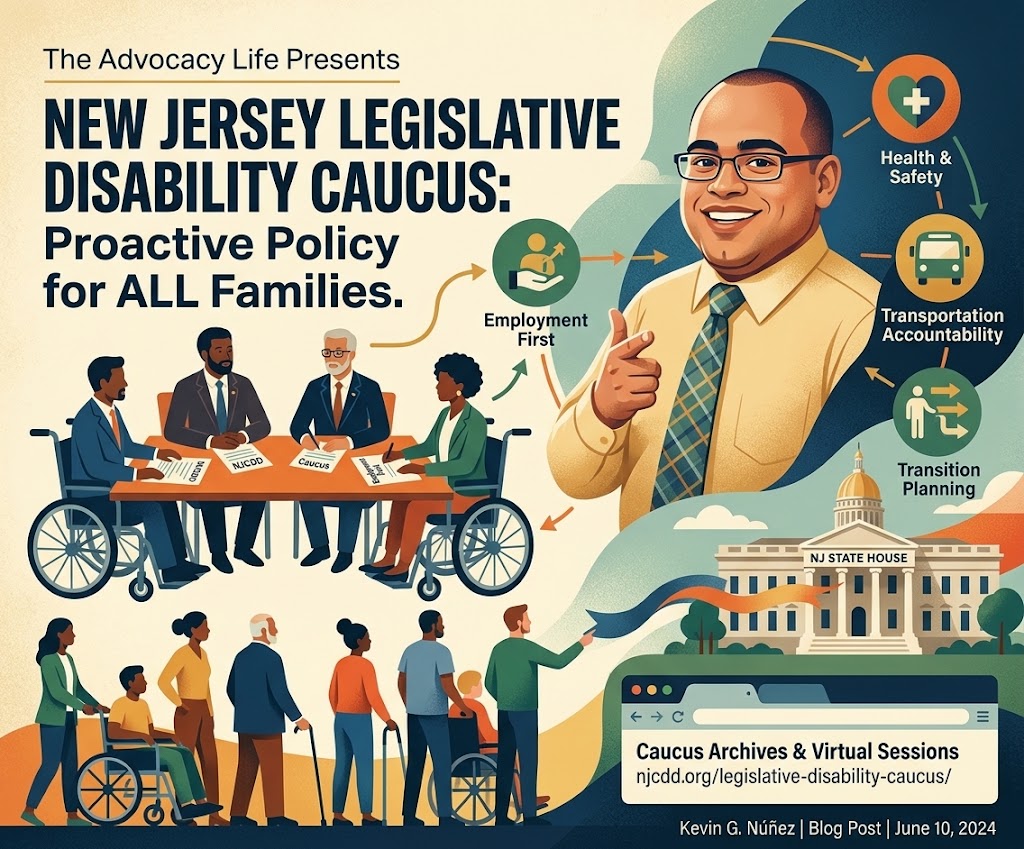
    In the midst of the pandemic, I worked with Assemblywoman Carroll Murphy to improve New Jersey’s Workability program. It required an update. It is not perfect by any means, but it’s a needed step in the right direction. While everyone was watching Netflix and gaining weight during the shutdown. I worked with the NJCDD to launch the disability legislative caucus across the Garden State. It is completely nonpartisan with leadership from both sides of the aisle. The goal is to foster conversations with legislators before bills are passed into law.

    The Podcast

    Published Books

    Subscribe to Letter from Limbo

    Read more of this content when you subscribe today.

    One-Time
    Monthly
    Yearly

    Make a one-time donation

    Make a monthly donation

    Make a yearly donation

    Choose an amount

    $1.00
    $3.00
    $5.00
    $5.00
    $15.00
    $100.00
    $5.00
    $15.00
    $100.00

    Or enter a custom amount

    $

    Your contribution is appreciated.

    Your contribution is appreciated.

    Your contribution is appreciated.
    DonateDonate monthlyDonate yearly
  • Vertical Embrace

    Vertical Embrace

    Refreshed Blog

    As I look ahead to everything we’re building this year, I’ve decided to go back to the beginning. Every now and again, alongside our new community posts, I’ll be refreshing some of my “classic” writings—pieces I wrote years ago that still speak to the core of the advocacy life today.We start with a question I get asked more than almost any other: “Can you stand up?”

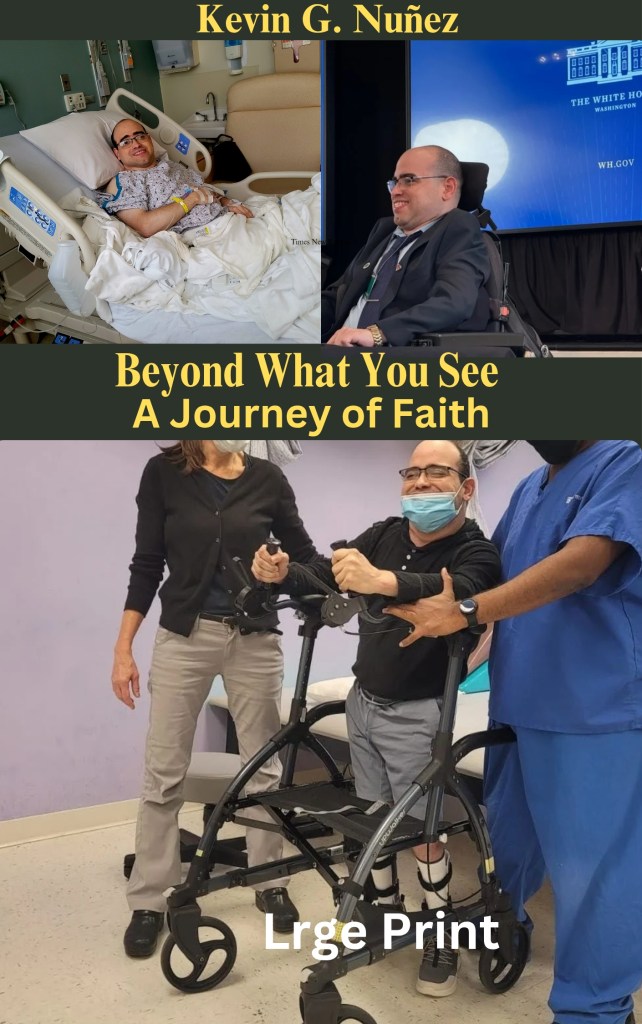
    It’s time to answer that once and for all. The answer is both “yes” and “no.”I can bear my own weight, which creates the illusion of standing. But in reality, I am a balance act; I can tip over the second I’m placed in that position. I can only stand semi-independently if I’m holding onto a grab bar or something similar. Eventually, my arms will give out, and I’ll be on the floor until someone picks me up.When I say I am “bearing my weight,” I mean my muscles are doing the work of sustaining my body mass. I just need someone there to stabilize the frame. It doesn’t take specialized medical skill to help me—it just takes practice and the confidence to realize that we aren’t going to drop each other.

    The ironic thing is that many people in my life have never seen me do this. I usually save it for transfers or therapy. But the most important reason I stand isn’t for exercise. It’s because it puts me in the perfect position to do something I can’t do from my chair: give a real hug.

    Finally, brothers and sisters, whatever is true, whatever is noble, whatever is right, whatever is pure, whatever is lovely, whatever is admirable—if anything is excellent or praiseworthy—think about such things. Philippians 4:Because

    I am always in a seated position, I can’t easily give the people I love a gentle, chest-to-chest embrace. I usually have to wait for them to come down to my level. Most people know me in two ways: either as the loudmouth, obnoxious joker, or the constant professional looking for the next advocacy opportunity. They are so used to the “Seated Kevin” that they don’t even consider the “Standing Kevin.”The look of shock—and sometimes horror—I get when I ask, “Can you stand me up so I can give you a hug?”

    Never gets old. Sometimes I don’t even ask because I can sense their discomfort.But I’m sharing this now because we live in a world where simple, human affection is often frowned upon or treated as something “wrong.” The truth is, so many people are starving for simple human contact. There are so many people I’ve wanted to hug over the years but never did because the world was too afraid of the mechanics to see the man.I’m done hiding the “trays” of my life. If you see me this year, don’t be afraid of standing. Be ready for the embrace.

    The Podcast

    Published Books

    Subscribe to Letter from Limbo

    Read more of this content when you subscribe today.

    One-Time
    Monthly
    Yearly

    Make a one-time donation

    Make a monthly donation

    Make a yearly donation

    Choose an amount

    $1.00
    $3.00
    $5.00
    $5.00
    $15.00
    $100.00
    $5.00
    $15.00
    $100.00

    Or enter a custom amount

    $

    Your contribution is appreciated.

    Your contribution is appreciated.

    Your contribution is appreciated.
    DonateDonate monthlyDonate yearly
  • Power of vulnerability vs Fear

    Power of vulnerability vs Fear

    What are you afraid of?”It’s a question that feels like it belongs on a high-stakes reality show, but for those of us navigating the advocacy world and the disability community, it’s a question we live with every single day. We often feel pressured to be the “fearless” leaders, the ones who always have the answers and never let the weight of our diagnosis or our circumstances pull us down.True strength isn’t about the absence of fear; it’s about the courage to be vulnerable despite it.I found myself watching the new season of Fear Factor. Watching people face physical challenges made me reflect on my own life and the things society expects me to be afraid of. People look at my life and assume I must be terrified of losing my job, my caregivers, or even my future.The truth? I’m not afraid of those things. I’ve been living on a budget since I was 18. I’ve had my fair share of bad caregivers and I know how to direct my own care. I’m not afraid of a world that’s afraid of me. I’ve spent my whole life adapting, and I know that if I get a chance at a real paid job, I’ll be the employee of the month in thirty days.I am no longer afraid of my diagnosis as I was when I was a kid. I’m no longer afraid to ask for help from my best friend, Jesus Christ.So, if I’m not afraid of the “big” things society points to, what am I afraid of?If I’m being perfectly honest—and completely vulnerable—I’m deathly afraid of dying alone. As I approach 40 in a few years, I think about the partnerships and relationships we all long for.In our world, people often focus so much on surface values and physical appearance that they never look beyond to the person underneath. Relationships often stall because society doesn’t always see the person with a disability as a partner to build a life with. I’m not afraid of trying to have a relationship; I’m afraid I won’t get the chance.Why Vulnerability is Your SuperpowerThis is the part of the “limbo” that we rarely discuss in public. We talk about policy, we talk about resources, and we talk about legislation. But we rarely talk about the human desire for connection and the fear of being left behind.I share this because I believe that showing our vulnerability is where our true strength lies. When we hide who we are or what our needs are—like I used to hide my school tray in the back of the class so other kids wouldn’t see it—we are living in fear. When we step out and say, “This is who I am, this is what I need, and this is what I hope for,” we reclaim our power.Advocacy is about more than just fighting for the “big” things; it’s about fighting for the right to live a full, human life—complete with all its fears and vulnerabilities.I’ve shown you my heart. Now, I want to hear yours. What are you afraid of? What are the barriers—internal or external—that you’re working to overcome this week?Let’s stop hiding in the back of the room. Let’s bridge those gaps together and show the world that we are not a community defined by fear, but a community defined by the courage to live authentically.Keep on rolling. Keep on living.

    The Podcast

    Published Books

    Subscribe to Letter from Limbo

    Read more of this content when you subscribe today.

    One-Time
    Monthly
    Yearly

    Make a one-time donation

    Make a monthly donation

    Make a yearly donation

    Choose an amount

    $1.00
    $3.00
    $5.00
    $5.00
    $15.00
    $100.00
    $5.00
    $15.00
    $100.00

    Or enter a custom amount

    $

    Your contribution is appreciated.

    Your contribution is appreciated.

    Your contribution is appreciated.

    DonateDonate monthlyDonate yearly
  • The Heart of an Advocate

    The Heart of an Advocate


    There’s no way around it: living with a disability is difficult. But choosing to be an advocate and a leader for the disability community? That is even harder.

    Welcome to our latest Community Blog installment. Here at The Advocacy Life, we believe in pulling back the curtain on what it truly means to represent a movement. Often, when people think of leadership, they think of “fame, fortune, and finish lines.” But in the world of disability advocacy, the reality looks a lot different.

    If you are looking for a get-rich-quick scheme, advocacy is not it. More often than not, there is no money involved. At best, you might be reimbursed for your expenses; realistically, you’ll likely lose more financially than you’ll ever gain.
    It isn’t about fame, either. I’ve been blogging for four years, and I haven’t hit 500 followers. On YouTube, I’m under 200. These aren’t the kind of metrics that make you a “social media influencer.” And let’s be honest—it doesn’t exactly help your dating life. There is nothing less “impressive” to a potential partner than saying you stayed up all night drafting bylaws for a non-profit organization.

    It isn’t even about job security or status. If I resigned tomorrow, the mission would continue. Someone else would step in to fill the seat. So, if there’s no money, no fame, and no status, it leads to one fundamental question:

    For the Ones Who Can’t Speak
    The reason I choose to dedicate my life to this work is simple: I do it for the ones who can’t speak for themselves.
    I have a profound love for my brothers and sisters who are non-verbal. I love the way they communicate their needs and desires through action, presence, and spirit, even when they can’t find the words. I consider it a sacred responsibility to be the interpreter for those who just need a little extra time to be understood.

    When leaders or policymakers call me for input, I don’t pick up the phone for credit. I pick it up because there is an unmet need in our community, and someone has to “man up” or “woman up” to address it.

    It infuriates me when I hear people say, “I can’t be an advocate  or “I’m just not the advocacy type.” When you live with a disability, this is your community. These are your people. Whether you like it or not, when you speak up, you aren’t just speaking for yourself—you are speaking on behalf of a community. Yes, your individual circumstances are unique, but your voice contributes to the collective volume of our movement.

    When you choose silence, or when you say you “can’t do it,” you aren’t just letting yourself down—you’re letting down the community you are a part of. You are letting down a vital part of the American story.

    To my fellow men and women with disabilities: we need you. The future of our rights and our resources depends on a collective effort. We cannot build a better future if only a few of us are willing to do the thankless work of drafting bylaws, attending meetings, and speaking truth to power.

    If you feel like you don’t know how to start, reach out to us. That is why this Community Blog exists—to provide the tools, the encouragement, and the platform for others to find their voice.
    We need to get together now, not later. Because when we speak together, we create a future where everyone is heard.

    Thank you for reading this week’s Community Blog. If this resonated with you, please share it with a fellow advocate who needs to hear that their hard work—even when unpaid and unnoticed—matters.Keep on rolling. Keep on living.

    Listen to the blog here

    The Podcast

    Published Books

    Subscribe to Letter from Limbo

    Read more of this content when you subscribe today.

    One-Time
    Monthly
    Yearly

    Make a one-time donation

    Make a monthly donation

    Make a yearly donation

    Choose an amount

    $1.00
    $3.00
    $5.00
    $5.00
    $15.00
    $100.00
    $5.00
    $15.00
    $100.00

    Or enter a custom amount

    $

    Your contribution is appreciated.

    Your contribution is appreciated.

    Your contribution is appreciated.
    DonateDonate monthlyDonate yearly