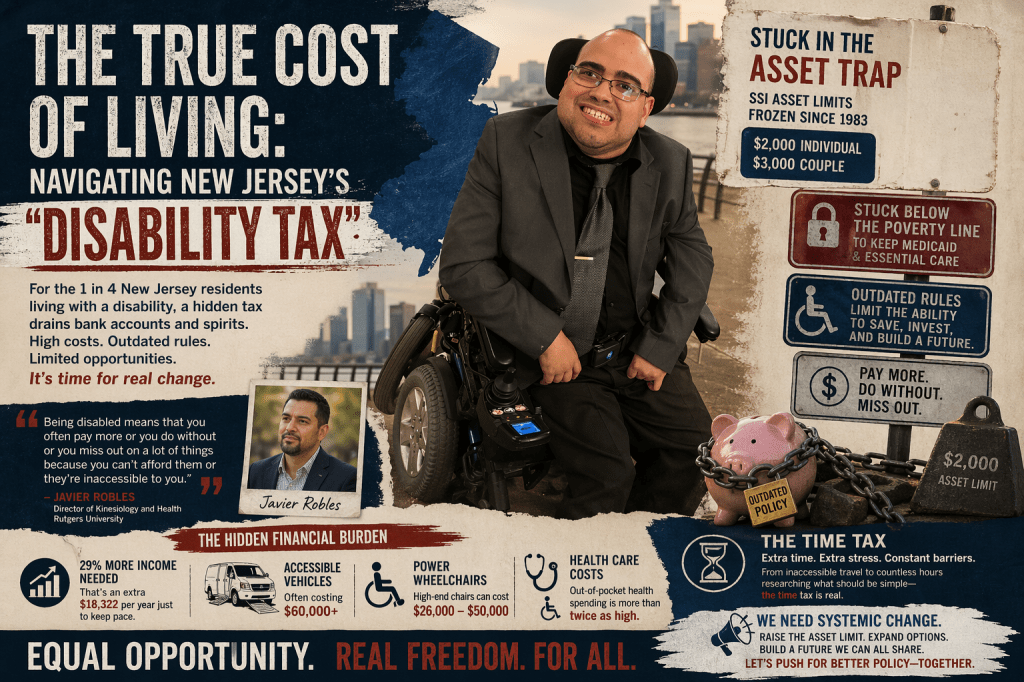
For many, the American Dream is built on a foundation of opportunity and the freedom to grow. But for the one in four New Jersey residents living with a disability, that dream is often deferred by a “hidden tax” that drains both bank accounts and spirits. I am a 38-year-old advocate with a developmental disability, and while I love this country and its potential, I often feel like I am financially suffocating.
Living with a disability means ordinary tasks—like grocery shopping or attending a doctor’s appointment—come with added economic burdens. Research shows that U.S. households with a disabled member need approximately 29% more income to maintain the same standard of living as those without. At a median income, that’s an extra $18,322 per year just to keep pace.
- Accessible Vehicles: Often costing upwards of $60,000.
- Power Wheelchairs: High-end, necessary chairs can cost as much as $26,000 to $50,000.
The most frustrating barrier to financial independence isn’t just the high cost of living; it’s the outdated policy that keeps us in poverty. To maintain essential Medicaid-funded personal care, many must stay below the poverty line.
For decades, the Supplemental Security Income (SSI) asset limits have been frozen. Since 1983, an individual is capped at $2,000 in their bank account, while a married couple is limited to $3,000. This “marriage penalty” and the inability to save for the future means we are effectively barred from the wealth-building tools—like stocks or significant savings—that other Americans rely on.
Beyond the dollars and cents, there is a heavy “time tax.” My colleague Javier Robles, Director of Kinesiology and Health at Rutgers University, highlights how this shapes every decision.
Whether it’s paying more for a guaranteed accessible hotel or the hours spent researching destinations only to find “accessible” promises aren’t met, the stress is constant. Javier famously recalled a trip to Italy where he had to be carried onto a boat by firefighters because the promised accessibility was non-existent.
As Javier puts it:
“Being disabled means that you often pay more or you do without or you miss out on a lot of things because you can’t afford them or they’re inaccessible to you.”
We need to move beyond complex workarounds like ABLE accounts or Special Needs Trusts, which can be restrictive. True advocacy means fighting for systemic change—like raising the individual asset limit to $10,000.
New Jersey has taken steps with updated Workability programs, but implementation remains slow. It is time to ensure that all Americans, regardless of ability, have the freedom to contribute to the economy and build a secure future. Without financial freedom, the “Land of Opportunity” remains out of reach for millions. Keep on rolling. Keep on Living.
Sources for this blog

The Advocacy Podcast
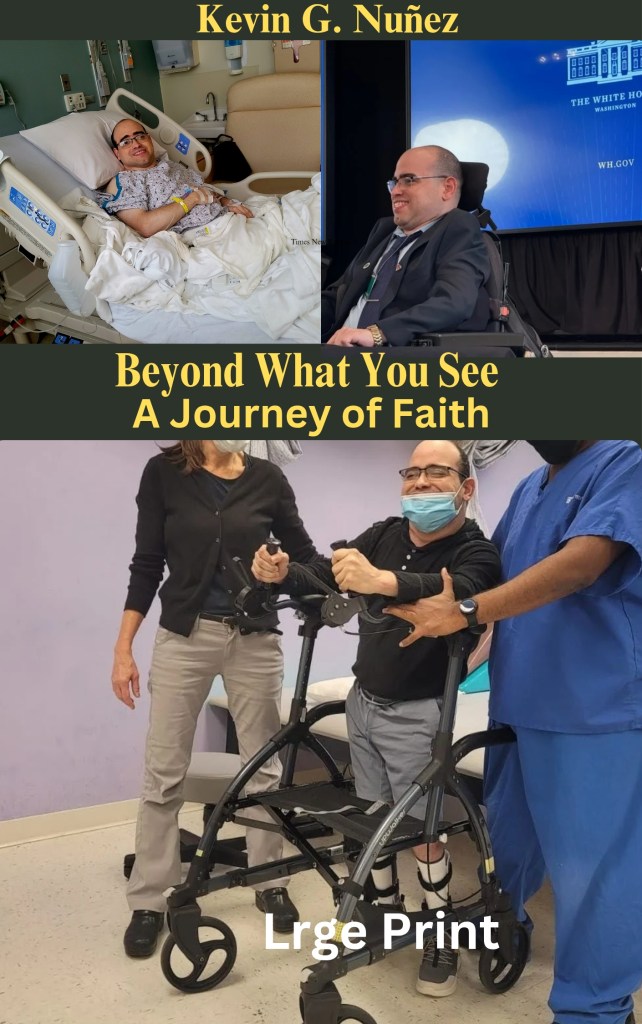
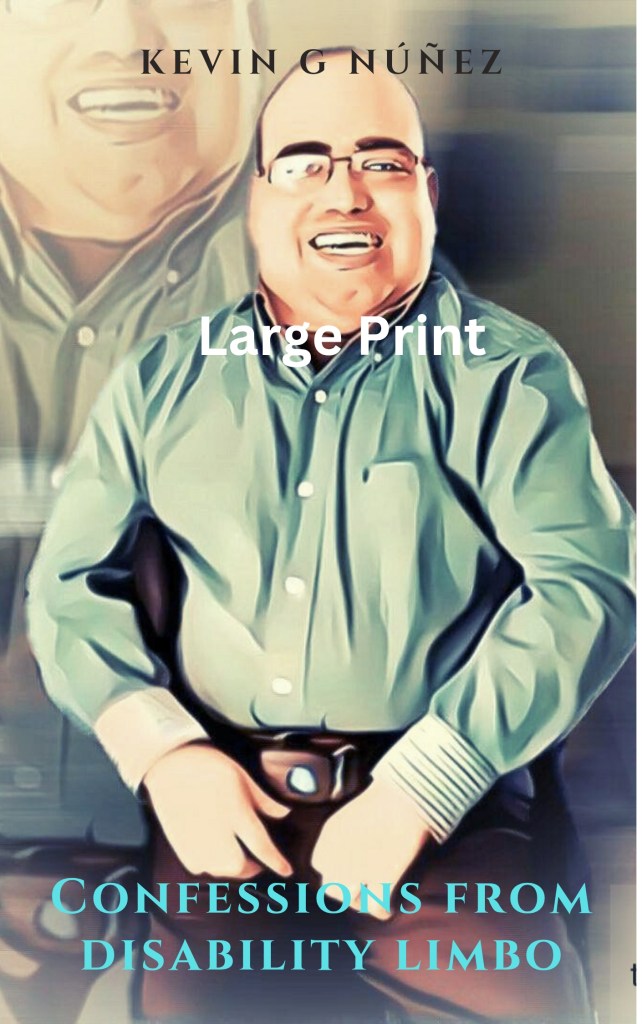
Living Beyond Disability Books
Both books are available exclusively on Amazon.
Subscribe to Letters From Limb. Newsletter

This is an exclusive weekly blog on the more fun and creative side of Kevin and his colleagues..
Where the Ramp Ends

This is an affiliated podcast that the advocacy life often collaborates with on Check it out today available on all podcast platforms and YouTube..
Donate to the Advocacy Life Podcast & Blog
Make a one-time donation
Make a monthly donation
Make a yearly donation
Choose an amount
Or enter a custom amounts
Your contribution is appreciated.
Your contribution is appreciated.
Your contribution is appreciated.


Leave a Reply