Tag: Disability Awareness

  • Goals & Gratitude

    Goals & Gratitude

    Podcast Episodes

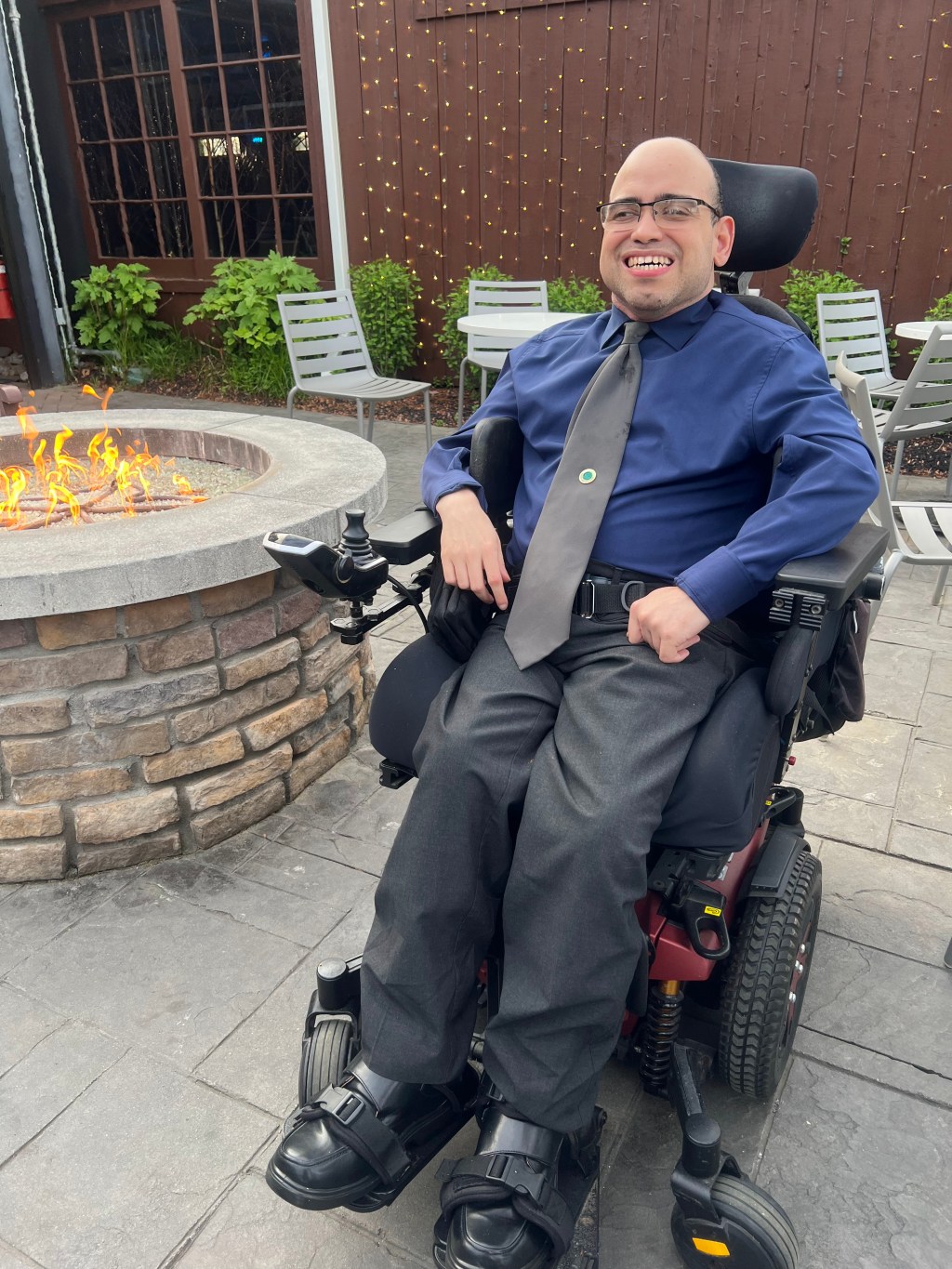
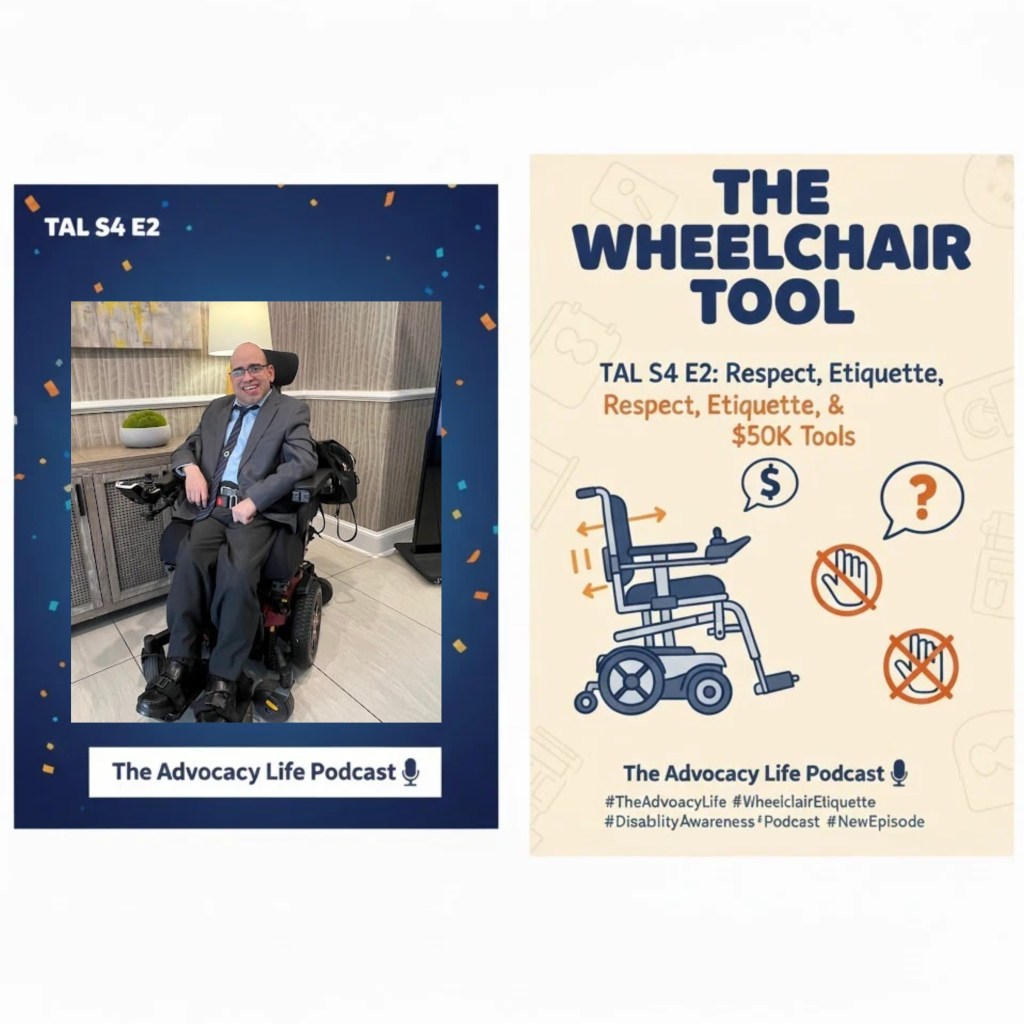
    Welcome back to The Advocacy Life Podcast and Vlog! We are kicking off 2026 with a brand new season of episodes, focusing on what truly matters: Gratitude and Goals! Host Kevin Nunez is back after missing November and December (life happened, including a kitchen remodel and he’s bringing quality over quantity by switching to two high-quality episodes a month.In this episode, Kevin gets personal, sharing what he’s deeply thankful for:Family and Friends: A huge shout out to the family (Dad, Mom, Stepdad, etc.) who help set up the podcast equipment, and to friends—the initial reason he started podcasting. Growth: Being thankful for the podcast evolving from sketchy cell phone recordings to a fully-developed show, and for hitting 200 subscribers on theadvocacylife.com alone! Health Victories: Celebrating a major victory in 2025: the first year in about five years without any surgeries or major hospitalizations. Small Connections: Sharing a major connection made at a state function that led to sending in a resume for a potential staff position with Governor-Elect Mikey Sherrill. Then, he lays out his ambitious goals for 2026:Writing: Finishing his third book, the conclusion to the Living Beyond Disability series, which focuses on Disability Policy 101 for self-advocates. Personal Victory: Buying new clothes and new accessible Billy Shoes—a huge deal after losing weight and dealing with the constant battle of finding shoes that fit orthotics.

    Social Life: The deeply personal goal of making a real, close friend to talk to more regularly.

    Episode Transcripts

    https://turboscribe.ai/transcript/share/4836865999870251777/-RSP64PDdqblEDJmK-nf3q09PHSVtyz6ZQFpKGTXb4w/tal-s4-e1-goals-and-gratitude

    The Podcast

    Published Books

    Subscribe to Letter from Limbo

    Read more of this content when you subscribe today.

    One-Time
    Monthly
    Yearly

    Make a one-time donation

    Make a monthly donation

    Make a yearly donation

    Choose an amount

    $1.00
    $3.00
    $5.00
    $5.00
    $15.00
    $100.00
    $5.00
    $15.00
    $100.00

    Or enter a custom amount

    $

    Your contribution is appreciated.

    Your contribution is appreciated.

    Your contribution is appreciated.

    DonateDonate monthlyDonate yearly
  • 10 Core Principles For Life

    10 Core Principles For Life

    Subscribe to continue reading

    Become a paid subscriber to get access to the rest of this post and other exclusive content.

  • Principles for Advocacy Groups

    Principles for Advocacy Groups

    A Community Blog

    Following up on our conversation last week about the state of disability advocacy, I want to drill down into a crucial, and often painful, question: Why do so many advocacy organizations, even those founded with fire and passion by disabled individuals, stray from their mission and devolve into nothing more than a social club.

    The answer isn’t a lack of passion; it’s a lack of professional structure. For an organization to last beyond its first two years, it must establish a proper foundation. First, there must be a clear mission or purpose. Ideas are plentiful, but without a singular, defined goal, energy dissipates into general activities that accomplish little. This is quickly followed by the necessity of a clear Leadership structure. A plan for decision-making must be ironed out within the first six months; without it, the organization becomes directionless.Mission and leadership mean little without accountability. Proven accountability must be figured out from the very beginning.

    Stakeholders—from staff to community members—need to know how serious issues will be addressed. Furthermore, advocacy requires resources, so a clear financial structure and plan must be in place before you begin. Make your financial proposal accessible and transparent to all interested parties; professional integrity starts with financial transparency.To avoid simply becoming a complaint factory, we must think outside the box. Advocacy organizations must propose solutions and not just complain about problems. This is where we show our mettle. We must also cultivate an organization of advocates willing to do the work, not just talk about doing the work. The dignity of the advocacy movement demands that the organization also take on the dignity of risk—meaning we are willing to take bold action and accept the professional risks that come with true, game-changing efforts.As an organization matures, it must define its lane. What is your competitive Advantage.

    to make your organization different from all the others? Simply advocating for “disabled people” is too broad. You must pull the resources and strength of your membership, recognizing that everyone has a story and a different set of skills. That difference is a strength, not a liability, but it means that not everyone can perform the same tasks.This brings us to mission clarity: If your organization is designed for teaching, then teach. If your organization is for change, then focus on change; you can’t effectively do both without splitting your efforts and diminishing your impact. The advocacy movement is not new, but we are undeniably in a new era, and we need to find new ways to deliver our message.This

    This new era demands structure, specialization, and professional accountability.The time for passion alone to drive advocacy is over. We must match the intensity of our commitment with the clarity of our organizational design. Only then can we guarantee that our organizations last, grow, and truly fulfill their vital mission. For my incredible community.

    Note

    be sharing an additional Community Blog this week to keep our conversations flowing! Until I get my podcast back up and running, you can expect these bonus Community Blogs every Wednesday. Thank you for your understanding and continued engagement!

    The Podcast

    Published Books

    Subscribe to Letter from Limbo

    Read more of this content when you subscribe today.

    One-Time
    Monthly
    Yearly

    Make a one-time donation

    Make a monthly donation

    Make a yearly donation

    Choose an amount

    $1.00
    $3.00
    $5.00
    $5.00
    $15.00
    $100.00
    $5.00
    $15.00
    $100.00

    Or enter a custom amount

    $

    Your contribution is appreciated.

    Your contribution is appreciated.

    Your contribution is appreciated.

    DonateDonate monthlyDonate yearly
  • The League Of Disabled Americans ( The Big Idea)

    The League Of Disabled Americans ( The Big Idea)

    A Community Blog

    For years, I’ve observed and participated in the vital work of disability advocacy. We have incredible organizations, passionate individuals, and powerful stories. Yet, despite our collective strength, there remains a persistent sense that we often react rather than truly shape the national agenda. We fight battles, win some, lose some, but the systemic shift that many of us yearn for feels perpetually just out of reach.

    It’s time for a new approach. It’s time to think bigger, to act more strategically, and to consolidate our power where it matters most: influencing policy at the highest levels. My vision is for a new advocacy organization, unlike any other, dedicated solely to influencing policy in America. I call it: The League of Disabled Americans.

    This League would be comprised exclusively of individuals with disabilities – a powerful testament to our lived experience and expertise. Imagine: two representatives from each of the 50 states, plus two from each of the U.S. territories, for a total of 112 dedicated advocates. Each member would be directly nominated by the disability community within their respective state or territory, ensuring true grassroots representation and accountability.

    From day one, this body would operate with a clear, decisive purpose. A steering committee, formed from these initial representatives, would immediately begin drafting a concise list of goals and objectives. These wouldn’t be vague aspirations, but concrete policy targets. Well-organized instructions and bylaws would govern its operation, ensuring transparency, efficiency, and a unified voice. This is about precision, not popularity contests.

    One of the greatest pitfalls for many advocacy organizations is thinking too small and attempting to grow organically without a clear, scaled strategy. The League of Disabled Americans would reverse this paradigm. Instead of building from the bottom up, hoping to gain traction, we would think backwards. What is the ultimate, audacious goal – a truly inclusive America, fully represented in policy? Now, how do we break that down into smaller, achievable objectives that culminate in that vision? This means setting a high bar from the outset, focusing on impact, and building a structure designed for influence.

    Crucially, this organization needs to start with well-recognized advocates. This isn’t to exclude anyone, but to establish immediate credibility and leverage. We need figures who command respect, who understand the political landscape, and who can walk into a room and be heard. The goal is to establish a presence so undeniable that organizations, legislative bodies, and policymakers come to us for insight and partnership, rather than us constantly having to beg for funds and support. We must shift from being supplicants to being indispensable partners in policy development.

    Finally, and perhaps most importantly, The League of Disabled Americans would exist to help break down the silos within the broader disability advocacy community. We are too often fragmented, each fighting our own specific battle. While vital, this fragmentation can diminish our collective power. The League would serve as a unifying force, identifying cross-disability issues, sharing best practices, and presenting a cohesive, national front on policy matters that affect us all. It would be a hub of knowledge, strategy, and power, ensuring that the diverse voices of the disabled community speak with a singular, unignorable purpose in the halls of power.

    This is an ambitious vision, yes. But the time for timid advocacy is over. The time for a truly independent, disabled-led, policy-focused force is now. Let’s build the League of Disabled Americans and demand our seat at every table where decisions are made.

    The Podcast

    Published Books

    Subscribe to Letter from Limbo

    Read more of this content when you subscribe today.

    One-Time
    Monthly
    Yearly

    Make a one-time donation

    Make a monthly donation

    Make a yearly donation

    Choose an amount

    $1.00
    $3.00
    $5.00
    $5.00
    $15.00
    $100.00
    $5.00
    $15.00
    $100.00

    Or enter a custom amount

    $

    Your contribution is appreciated.

    Your contribution is appreciated.

    Your contribution is appreciated.

    DonateDonate monthlyDonate yearly

  • November 10,, 2025 Disability Limbo Newsletter

    November 10,, 2025 Disability Limbo Newsletter

    Subscribe to continue reading

    Become a paid subscriber to get access to the rest of this post and other exclusive content.

  • Disability Limbo Newsletter November 3, 2025

    Disability Limbo Newsletter November 3, 2025

    Subscribe to continue reading

    Become a paid subscriber to get access to the rest of this post and other exclusive content.

  • Beyond the Sandbox

    Beyond the Sandbox

    Community blog

    “Being all equal and independent, no one ought to harm another in his life, health, liberty, or possessions.”

    These words, penned by John Locke in his Second Treatise of Government, form a cornerstone of the philosophy. That speaks to a fundamental understanding of human dignity and mutual respect. Yet, as I watch the political theater unfold in Washington, with the government shutdown extending beyond six weeks and critical aid hanging in the balance, I can’t help but feel a profound disappointment between these foundational ideals and the harsh reality facing millions of Americans.

    The job of the legislative branch, in its most basic form, is to look after the interests of the people. “The voice of the populace” is the protector of our collective well-being. Right now, while our elected officials bicker, real people are staring down the barrel of unimaginable hardship. Mothers, individuals with disabilities, and teachers—some of the most vital threads in our societal fabric—are in danger of losing their food stamps after November 1st. The SNAP deadline looms, threatening to strip away essential support from those who depend on it most to put food on their tables. Meanwhile, those who are supposed to be serving us are still getting paid, seemingly for not doing their jobs.

    “We the People of the United States, to form a more perfect Union, establish Justice, insure domestic Tranquility, provide for the common defence, promote the general Welfare, and secure the Blessings of Liberty to ourselves and our Posterity, do ordain and establish this Constitution for the United States of America.”- Preamble of the United States Constitution.

    This isn’t the fault of one side alone. This crippling gridlock is a failure shared by both Democrats and Republicans. Instead of focusing on the big picture – the welfare of the citizens they swore to represent – they’ve become like children refusing to play in the sandbox. Each side digs in, unwilling to concede an inch, while the very people they serve suffer the consequences.

    “Both sides must part from some of their demands in order that they may join in some accommodating proposition.”-Benjamin Franklin

    This isn’t weakness; it’s the essence of effective governance. It’s the recognition that the greater good often requires compromise, a willingness to find common ground for the sake of the nation. Ensuring access to healthcare, or providing stability for those who depend on government programs to have a semblance of a quality of life.

    A government shutdown of this duration is not a mere inconvenience; it’s a national crisis in slow motion. People will suffer. Those already living on the margins will be pushed further into despair. The fragile lifelines so hard-won and essential for survival, are being torn apart by political posturing. The consequences are real, immediate, and devastating.

    We, as citizens, must demand better. We must remind our representatives of their fundamental duty: to protect the life, health, liberty, and possessions of all their constituents. This isn’t about choosing a side; it’s about choosing humanity. It’s about insisting that our leaders move beyond the partisan sandbox and fulfill the promise of a government that actually works for its people.

    Let us hold them accountable, not for their party affiliation, but for their commitment to compromise, to service, and to the basic principles of equality and mutual respect upon which this nation was founded. Our most vulnerable cannot afford their games.

    The Podcast

    Published Books

    Subscribe to Letter from Limbo

    Read more of this content when you subscribe today.

    One-Time
    Monthly
    Yearly

    Make a one-time donation

    Make a monthly donation

    Make a yearly donation

    Choose an amount

    $1.00
    $3.00
    $5.00
    $5.00
    $15.00
    $100.00
    $5.00
    $15.00
    $100.00

    Or enter a custom amount

    $

    Your contribution is appreciated.

    Your contribution is appreciated.

    Your contribution is appreciated.

    DonateDonate monthlyDonate yearly
  • The church’s Disability

    The church’s Disability

    A Community Blog

    For many of us in the disability community, our relationship with faith can be incredibly complex. We love the Lord, we crave spiritual connection, but too often, the very places meant to offer solace—churches—become spaces of discomfort and judgment. It’s a paradox that weighs heavily on the soul.

    Who wants to go to church and be constantly stared at? Who wants to attend a funeral, already a time of immense grief, only to hear the pastor speak about the deceased as if they were a stranger, completely unaware of the rich life lived by the person with a disability they are meant to be celebrating? These aren’t isolated incidents; they’re common experiences that chip away at a sense of belonging.

    That’s precisely what so many well-meaning congregations don’t quite grasp. As a disabled person, when you feel that energy – the pity, the awkward glances, the unspoken questions – it actively pushes you away, no matter how much you yearn for spiritual connection. You feel like an outsider, an anomaly, rather than a cherished member of the flock. It makes you want to retreat, to seek God in the quiet solitude of your own home, far from the subtle rationalization.

    What truly frustrates me is the disconnect. People gather to praise and worship, singing about love and community, yet many remain firmly entrenched in their own safety bubbles. They’ll lift their hands in adoration but won’t extend one to say hello at fellowship. They’ll preach inclusivity but practice exclusivity, often unconsciously. The truth is, you’ll never be able to reach everyone, but that doesn’t mean we stop trying to bridge the gap between professed faith and lived acceptance. This isn’t about malice; it’s about a lack of understanding, a failure to truly see and welcome.

    My dream? I would love to walk into a congregation—or roll into it, as the case may be—and see it bustling with wheelchairs and walkers, with people of all abilities steaming with joy for God. Too often, I’ve been the only person with a disability in the church. Or, if there are others, they’re tucked away in a corner, out of sight, out of mind, so as not to “bother” the rest of the folks. This isn’t what true community looks like. This isn’t what radical love looks like.

    Matthew 18:20 NIV “ For where two or three gather in my name, there am I with them.”

    We need spaces where our presence isn’t an inconvenience, our bodies aren’t a spectacle, and our faith is celebrated just as vibrantly as anyone else’s. It’s about creating an environment where the spirit can truly soar, free from the burdens of judgment and isolation. We need churches willing to step out of their comfort zones, not just physically accessible buildings, but truly accessible hearts.

    A quick note for my incredible community:

    I’m currently traveling and, unfortunately, don’t have access to my podcast equipment right now. Because of this, I’ll be sharing an additional Community Blog this week to keep our conversations flowing! Until I get my podcast back up and running, you can expect these bonus Community Blogs every Wednesday. Thank you for your understanding and continued engagement!

    The Podcast

    Published Books

    Subscribe to Letter from Limbo

    Read more of this content when you subscribe today.

    One-Time
    Monthly
    Yearly

    Make a one-time donation

    Make a monthly donation

    Make a yearly donation

    Choose an amount

    $1.00
    $3.00
    $5.00
    $5.00
    $15.00
    $100.00
    $5.00
    $15.00
    $100.00

    Or enter a custom amount

    $

    Your contribution is appreciated.

    Your contribution is appreciated.

    Your contribution is appreciated.

    DonateDonate monthlyDonate yearly
  • Unknown Future for Disabled Students

    Unknown Future for Disabled Students

    October community Blog

    An executive order aimed at “reorganizing the executive branch” has initiated a restructuring within the Department of Education so sweeping that an estimated 90% of the Department of Special Education has been cut. This is not mere bureaucratic shuffling; it is a profound threat to the educational lifeline of millions of students with disabilities and their families across America.

    The Office of Special Education Programs (OSEP) and the Rehabilitation Services Administration (RSA)—two pillars of federal support for disability education and vocational services—are being consolidated into a new “Office of Disability Programs.” While presented as an efficiency measure, this move risks diluting specialized expertise and advocacy under a broader, less focused umbrella.

    It suggests a fundamental misunderstanding of the intricate needs of students with disabilities, whose educational journeys require dedicated attention. We are not just “people with disabilities”; we are students with IEPs, individuals requiring specific accommodations, and citizens entitled to tailored pathways to independence.

    The countless parents who have fought tooth and nail for their children’s rights under the Individuals with Disabilities Education Act (IDEA). They’ve navigated complex systems, battled for resources, and advocated for individualized plans that are often the only guarantee of a meaningful education. Now, with the federal offices designed to uphold these rights being drastically downsized, what does this mean for the future of compliance, oversight, and—most critically—access?

    This prospect could leave families isolated, battling under-resourced schools, and facing an even more daunting bureaucracy. This isn’t an abstract policy change; it’s a direct assault on the promise of an equitable education for our most vulnerable students.

    This cannot and must not be allowed to become a partisan issue. Disability rights are human rights. They transcend political ideology because they speak to the fundamental dignity and potential of every individual. Every community, every family, regardless of political affiliation, is touched by disability. Access to education, vocational support, and a life of self-determination are not negotiable political bargaining chips; they are universal entitlements in a just society. When we diminish these protections for people with disabilities, we don’t just harm a segment of our population; we diminish the moral standing and strength of our entire nation. A powerful society uplifts all its members, recognizing the inherent value and contribution of all citizens.

    Therefore, we must move beyond fear and into urgent action. The immediate and paramount call to action is to educate and empower families with disabilities to navigate this perilous new landscape of disability services.

    • Stay informed, double-check all sources, and share what you’ve learned.
    • Engage with your local school boards, state disability councils, and advocacy organizations. These local entities will be on the front lines, and they need reinforced support and active participation.
    • Build new connections by reaching out to others who have not been reached before, and collective strength is the key.

    The foundation of disability education in America is under threat. By uniting, informing ourselves, and advocating tirelessly, we can protect the rights and futures of millions. This fight requires every voice.

    The Podcast

    Published Books

    Subscribe to Letter from Limbo

    Read more of this content when you subscribe today.

    One-Time
    Monthly
    Yearly

    Make a one-time donation

    Make a monthly donation

    Make a yearly donation

    Choose an amount

    $1.00
    $3.00
    $5.00
    $5.00
    $15.00
    $100.00
    $5.00
    $15.00
    $100.00

    Or enter a custom amount

    $

    Your contribution is appreciated.

    Your contribution is appreciated.

    Your contribution is appreciated.

    DonateDonate monthlyDonate yearly
  • Disability & Parenting Podcast

    Disability & Parenting Podcast

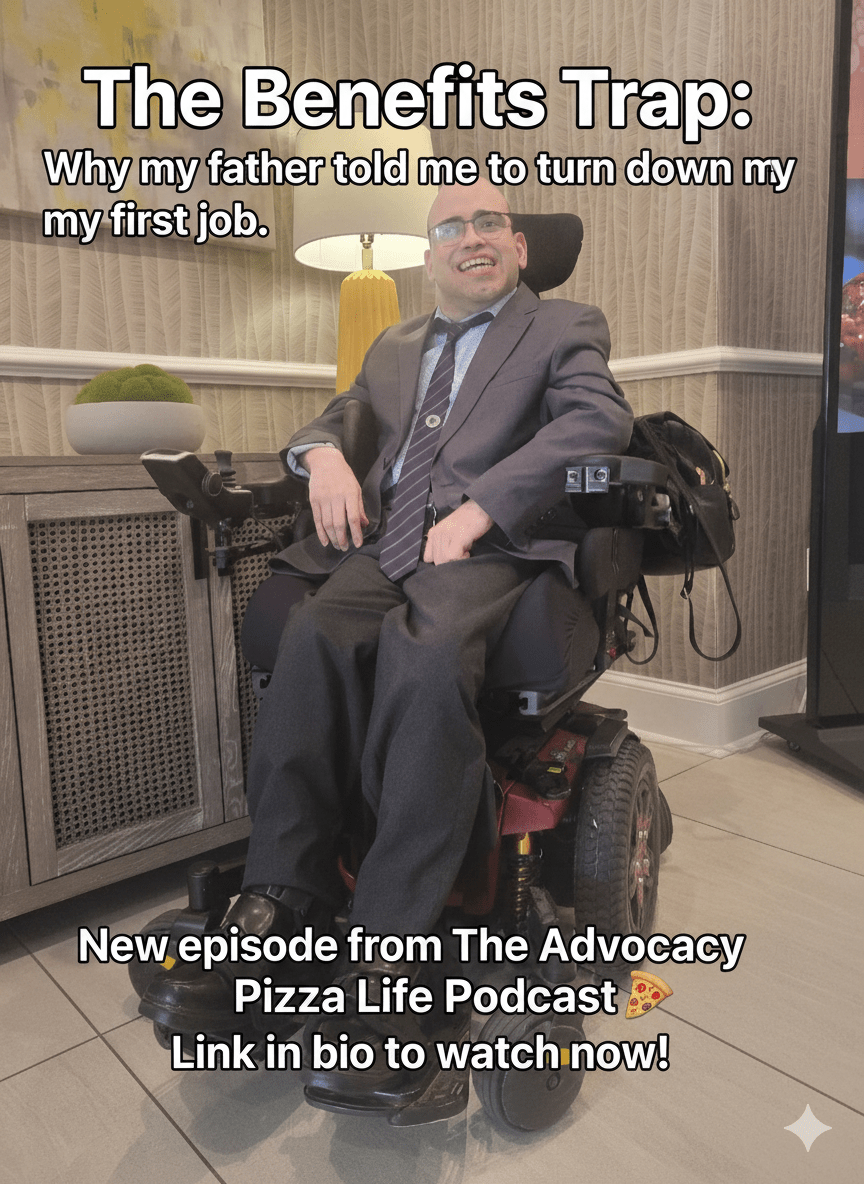
    False hope can be a comforting lie, but it often leads to greater disappointment. In this powerful and incredibly honest episode, Kevin Nuñez tackles the sensitive topic of false hope within the disability community, sharing his personal experiences and why he believes brutal honesty, paired with empathy, is essential.

    Evin recounts his own childhood experiences with doctors and therapists who gave his family false expectations about “walking again,” only to face repeated letdowns He argues that this practice, often well-intentioned, can be more damaging than helpful, especially for children who internalize these unfulfilled promises as personal failures This isn’t just about physical rehabilitation; it extends to broader societal interactions where people offer empty reassurances about things they don’t understand

    This episode challenges us to rethink how we support and communicate with individuals with disabilities[cite: Kevin advocates for a balance of empathy and realism, pushing for genuine understanding over platitudes He asks why we celebrate minimal progress instead of recognizing the full, complex lives people with disabilities lead, and stresses the importance of fostering self-love and self-respect in a world that often measures worth by physical ability.

    Show Notes

    The Podcast

    Published Books

    Subscribe to Letter from Limbo

    Read more of this content when you subscribe today.

    One-Time
    Monthly
    Yearly

    Make a one-time donation

    Make a monthly donation

    Make a yearly donation

    Choose an amount

    $1.00
    $3.00
    $5.00
    $5.00
    $15.00
    $100.00
    $5.00
    $15.00
    $100.00

    Or enter a custom amount

    $

    Your contribution is appreciated.

    Your contribution is appreciated.

    Your contribution is appreciated.

    DonateDonate monthlyDonate yearly