This episode is for the guys. In “Man Talk,” Kevin gets real about the unique and often unaddressed challenges of being a disabled man in America today.
In a society that holds a narrow view of masculinity, many disabled men feel emasculated by simple acts, like having a door opened for them. The conversation goes beyond the superficial, diving into deeper fears that are rarely discussed openly—fears about being helpless around a partner, and the anxieties that come with financial disparities in a relationship
Kevin also tackles the ableist idea that people with disabilities should only date other people with disabilities, comparing it to an “ableistic” version of racial segregation
He offers an honest perspective on how dating a non-disabled person means your “honeymoon phase” as a couple will be burst almost immediately when you are in public and have to face the world together.
This episode is a confidence boost for all men with disabilities, a reminder that you are valuable and you can go after what you want. Listen to the full episode! Ready for a raw, honest conversation that doesn’t shy away from the hard questions?
In the 8th episode of season 3 Kevin gives an impassioned argument for why the disability community cannot give up. Our voices need to be heard more than ever. We may be knocked down but we are not out. It’s time for us to show our value to the rest of America. We will not go back! As always all comments are welcome.
In the 7th episode of Season 3, Kevin provides a list of tips on how to thrive in official meetings as a disability advocate. Develop soft skills so you can thrive in uncomfortable situations.
Find a good state has a disability legislative caucuses Disability Caucuses in State Legislatures – Disability Employment Policy https://share.google/zDSetCzqlGvwiUmjE
Do you want anything on your pizza? What toppings do you want on your pizza? What toppings do you not want on your pizza? Let’s assume you’re hosting a party for 10 people, and everyone wants pizza. A typical pizza usually has eight slices. Some people want pineapple, others want meat lovers, a few only eat vegetables on their pizza, and one person will only eat plain pizza. How do you raise money for the needed second pizza? Is it fair to ask people to pay for a pizza they are not planning to eat? Do you vote, and does the majority get what they want? What about everyone else? Should they go hungry? This crude scenario is an illustration of politics.
“The art or science concerned with guiding or influencing governmental policy.” -Merriam-Webster dictionary
Disability is a great way to understand politics. Politics will affect you at some point in your life, and so will disability. An Inconvenient truth is that these two are linked. How much should a wheelchair cost? How much should a person be allowed to make to maintain their Medicaid eligibility? At some point, everyone uses a Walker or a wheelchair. If your loved one requires any sort of extensive rehab or care, they will need Medicaid. One in three children in New Jersey receives some sort of Medicaid benefit. There is an illusion that disability will only affect the elderly or those diagnosed early in life. Disability can affect anyone at any time. 16-year-olds can have brain aneurysms and be changed forever. Eric LeGrand was only 20 years old when he became paralyzed on a football field.
Mark 12:31 NIV The second is this: ‘Love your neighbor as yourself.’ There is no commandment greater than these.”
Disability must be part of the political discussion when children are taught civics in their social studies classrooms. Disability is a great representation of the human race. It goes beyond political parties. Don’t be so focused on the toppings on your slice of pizza that you forget about all those who need to eat from the same pie. In America, we all eat from the same pie. Political parties are not sports teams. Winning the White House should never feel like winning a World Series; it should feel like a new chapter in the great book of American history. Political parties play a vital role in the political process. However, over-reliance is dangerous. Our elected officials must always remember that they serve their constituents and not their parties. The American people must vote to hold those who are elected accountable. Casting a vote is not a decision that should be made lightly.
“Alternate domination” of one party over another, and the associated desire for revenge, could lead to horrible atrocities and ultimately, a “frightful despotism”- George Washington.
We need new disability advocates to enter the political arena and provide a fresh perspective. To remind all of us what the ideals of America should be. Disabled Americans are Republicans. Disabled Americans are Democrats. By getting a new perspective, Americans can see their boundless potential.
For the fourth episode of season 3, Kevin describes how he sees the state of the disability movement in America today. This is not factual. This is my opinion. The point is to motivate people to act. If you like this content, please subscribe for more details in the show notes.
Show Notes
Rosemary, one of the sisters of JFK & RFK Sr., was lobotomized in early adulthood. The procedure was too heavy-handed & left her significantly disabled for the rest of her life, which she spent at an institution in Wisconsin.
JFK initiated the President’s Committee for People with Intellectual Disabilities, an advisory panel tasked to provide the governing administration with recommendations & advice related to the needs & experiences of people with intellectual disabilities: https://acl.gov/programs/empowering-advocacy/presidents-committee-people.
Eunice, another sister, founded Special Olympics, which is now run by her son, Tim. Her other son, Anthony, founded & runs Best Buddies International.
The other day I was going past some old writings something I do from time to time to see how I have improved. This was one of the first pieces i ever wrote as a blog almost 10 years ago. The subject matter is still relevant today. Hope you enjoy please share.
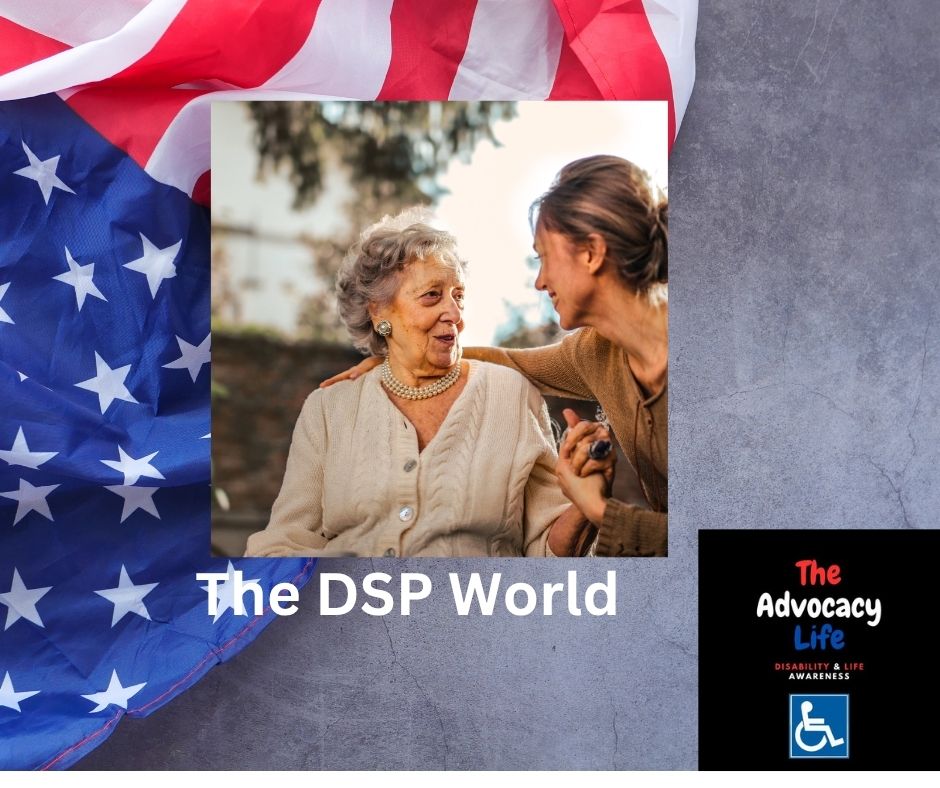
I wanted to raise awareness to a very big problem in our world today. It rarely gets any publicity; the average person doesn’t even know about it. The truth is unless you are affected by this problem, you don’t even know it exists. The problem is the lack of pay and benefits for direct support professionals (DSPs). What is a DSP? A direct support professional is someone who is paid through a provider agency or an individual to provide support and care to a person with a disability. As long as there are people who need assistance in their lives there will always be need for these professionals. There are four groups of people who are affected by this issue. They are: the individuals receiving the care, the family of the individual, the providers, and the professionals themselves.
Let me begin by addressing the individuals receiving the care. People that have a disability will learn that they often must depend on others to assist them in one way or another. They depend on the kindness of others to help them live their day-to-day lives. Could you trust someone with your most intimate tasks if you knew they would leave in six months? Just imagine knowing you’re going to lose the person you most confide in, even before they start. People with disabilities can tell almost immediately if the person is going to be good at their job. Most of all they can tell if the person will last.
Use your imagination for this next part please. You meet a person named Matt. After meeting him for only four hours, you need a shower. He must first undress you completely. Then he puts you in a shower chair. He then proceeds to give you a shower. Matt does his best to wash your private areas. After finishing and drying you off, he begins to dress you. If the individual is so fortunate, he can direct Matt on how and what to do. The truth is there are many individuals in the disability community that cannot speak for themselves. Therefore, Matt must try to interpret what they are trying to communicate. This is just one of the many duties of a DSP. I hope this brief example can illustrate the need for these very special people.
Next, I would like to talk about the direct support professionals themselves. These professionals receive about 10 to 11 dollars an hour with no promise of growth in their career. Most providers offer little to no benefits at all (this includes sick time or health insurance). As a result if DSPs don’t work, they aren’t paid. This leads to severe burnout. Many times, they sacrifice their own health and well-being to make sure they can provide for their family and/or pay their bills. It’s ironic that they are responsible for the health and well-being of another human when, due to the lack of health benefits such as sick days, they cannot take care of their own health needs. What inevitably happens is the person leaves to another company in hopes of a dollar more. People believe they can use this job as a steppingstone toward a larger career goal. The other misconception is this job will only be a temporary solution until another opportunity opens up. They end up living paycheck to paycheck. The professional waits in limbo until they burn out or they get another job.
So why would someone do this job at all? These wonderful people do it because they care for others. They look forward to the moments when their individual lights up when they arrive in the morning for their shift. The relationship between an individual and the professional is truly symbiotic if done correctly. The individual gets a companion to help them with their wants and needs. In turn the professional should receive joy in the knowledge they are doing something to help someone live their life. Some things are worth more than money. It is truly heartbreaking when it is time for the professional to move on. The best way I know to describe this feeling for an individual, it’s like losing a loved one. For the professional, they are left with the memories of a person that has worked their way into their hearts.
The family and/or parents of an individual can also be affected by the DSP issue. Try to imagine having a 25-year-old son that you have cared for his entire life. One day someone shows up at your door ready to take him out to the park for the day. You as the parent are told almost nothing about the person who will be supporting your child for the rest of the day. By the same token, the professional knows almost nothing about the individual and the family they will be supporting. Most times both parties are just given a name with a brief description. A relationship of trust has to be formed out of thin air. This sadly is one of the best-case scenarios. Most individuals as they get older lose their family and the professional becomes, by default, their brother, mother, etc. Depending on the individual’s disability, they will rely on their “families” in almost every way. They need an advocate, a caregiver, and a friend. Could you imagine learning to give your complete trust to a stranger every six months?
The final group of people that are affected by the DSP issue are the provider agencies. The turnover rate in this industry is incredibly high. Providers cannot keep their staff. They spend money training these professionals and then they quit a few months later. The money is lost. The rates for these staff and providers have not been increased in approximately 10 years. For example if the state allows $15 per hour to a provider, and $10 goes towards the DSP, that leaves the provider with only five dollars to spend subsequent overhead, including important items like gloves and vehicle maintenance. The providers cannot give their staff benefits or raises if they are barely able to keep themselves above water.
The direct support professional problem in my humble opinion has reached crisis levels not just statewide but nationally as well. As long as there are people, people will always need care. This industry is not going away any time soon. The system will never be perfect but something needs to be done now. This needs to be a call to action. We need to contact our state and federal officials to educate them on this very real problem. If we don’t act now people with disabilities may not have people around us to help us live our lives.
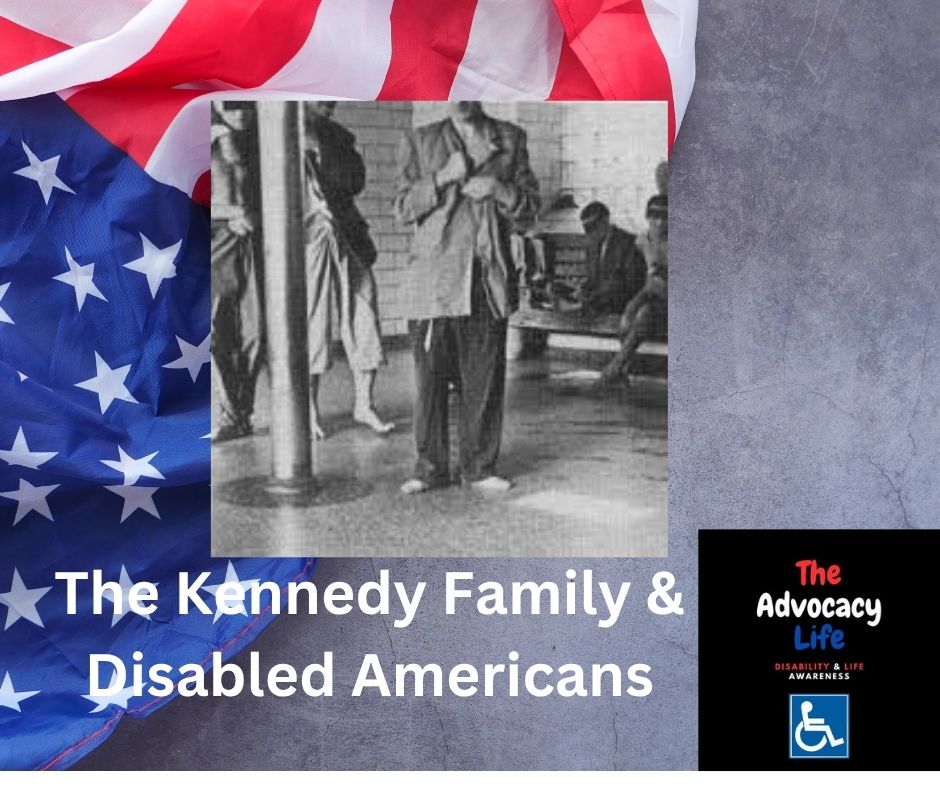
“A snake pit, where they live in filth and dirt, their clothing in rags, in rooms less comfortable and cheerful than the cages in which we put animals in a zoo.”
Robert Kennedy Senior made this statement when he was visiting Willowbrook in 1965.
Willowbrook State School was a state-supported institution for children with intellectual disabilities. Designed to accommodate 4,000 children, by 1965, Willowbrook had a population of 6,000, and a scandal soon erupted over news of the institution’s horrendous conditions and questionable medical practices. It was not closed for another 2 years despite all the outrage. Would you want your child to live in these conditions?
Disability does not have a political party. A disability does not have a skin color or a specific ethnic race. Disability is America. The only two things certain in this world are death and disability. What makes America great is that we learn from our past so we don’t repeat the mistakes we have made. Disability is not waste, fraud, or abuse. Disability is an example of Hope and prosperity in the American dream. The American Disability community is an example of living prosperity and endurance.
It’s hard to pinpoint the exact birth of the disability rights movement because disability has been around since the beginning of time, and it will be there until the end of days. America was introduced to the harsh reality of abuse through Robert Kennedy Sr.’s poignant account. Devoid of proper respect and support. Our community faces suffering and death. An autism diagnosis is not evil or a death sentence. A wheelchair is not a confinement, but a tool for opulence.
This is the current battle that disabled America is facing. We won’t stand for our brothers and sisters being locked up. We aim to help people live fulfilling lives. In the land of the free and the brave, we uphold truth, justice, and the American way as a testament to our identity. Living with a disability presents many challenges. While that’s a fact, things worth pursuing are rarely simple.
“We choose to do these things not because they’re easy, but because they’re hard.”
President John F Kennedy made this statement when referring to reaching the Moon in a decade. We have the same privilege to reach for the same stars as anyone else. In America, we do not fear challenges; we embrace them so we can grow. America today is making choices out of fear and misunderstanding. I believe in America, I believe in its people. We still have time to change course. To see value in all of us. Our chosen elected officials need to listen to us.
'“ Do not seek revenge or bear a grudge against anyone among your people, but love your neighbor as yourself. I am the Lord. 'Leviticus 19:18
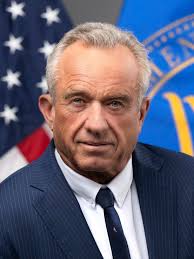
“I don’t think people should take medical advice from me.’
This statement was made by Robert Kennedy Jr. The current Secretary of Health and Human Services. There will always be misconceptions around disability and our healthcare. However, if we are left out of the conversation, we cannot help the country move forward. The current administration and the disability community cannot be enemies, we must be allies to achieve tomorrow’s victories. Without disability, America will fail because we are America.
When I’m writing, a debate is going on at 1:00 in the morning on the current administration’s reconciliation bill. This is America’s future.. I am not a liberal. I love the Democratic process. Where the people we elect, those whom we choose to trust, are supposed to have our best interests in mind. I will not post this until Thursday afternoon. By then, we will know what happened. I want people to understand how those with disabilities will be affected, at least one person.
The Medicaid program will receive drastic cuts. I’m going to tell you exactly how these cuts would affect my family directly. I acknowledge and understand that I am blessed and fortunate because of my efforts in the advocacy world. I want you to think about others who are not so fortunate. I’ve seen the models that are predicted, at a minimum of 10%. These cuts are like a square peg in a round hole. It doesn’t work! I receive Home and Community-Based Services (HCBS) under a waiver program in New Jersey State Medicaid. This program is legally optional in every state, meaning this will be the first thing to go.
Matthew 25:40 NIV “The King will reply, ‘Truly I tell you, whatever you did for one of the least of these brothers and sisters of mine, you did for me.’
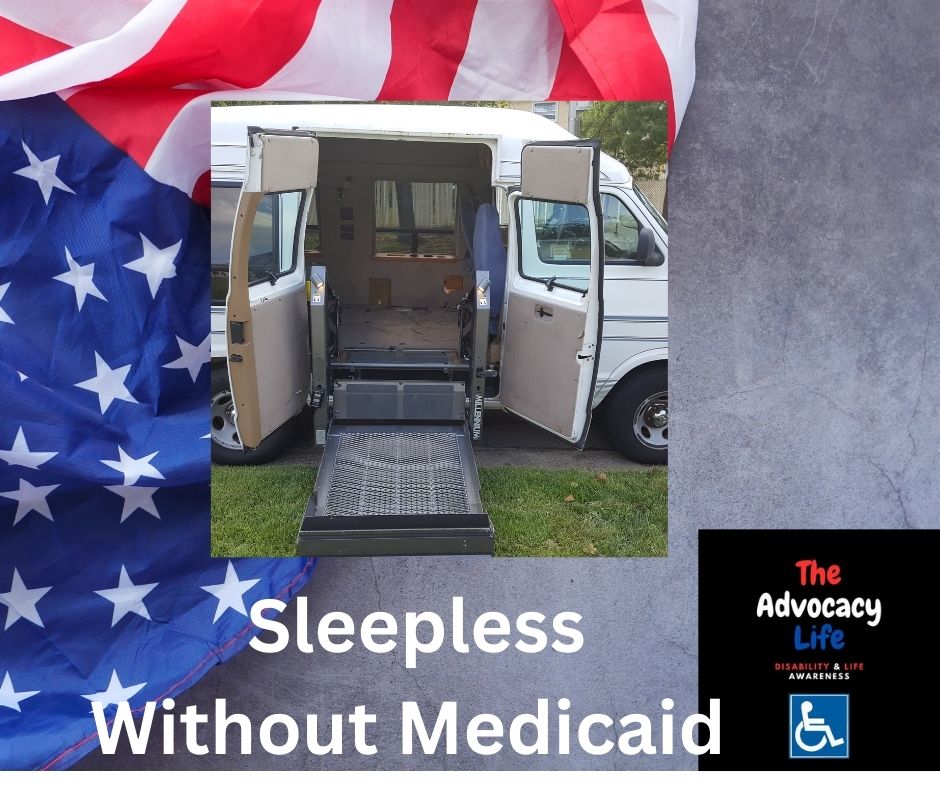
My $60,000 accessible vehicle receives annual servicing to ensure optimal performance. I primarily use this for transportation. For doctor’s appointments and other important engagements. It also helps me avoid becoming a social isolate. The mechanic can fix the motor, but not the lift for the van. This is factual, not fraudulent.
I’m currently allowed to go on respites, which gives my father and other family members who assist with my daily care a necessary break so they don’t become burned out or heal if they’re sick. Keeping people in the community is demonstrably cheaper than institutional care. This is how you can prevent waste.
Once a week, I receive physical therapy at home to make sure my body does not deteriorate. I could get a prescription from my doctor, it covers approximately 8 weeks of physical therapy. What would happen to your body if you only exercised 8 weeks out of the 52-week year? Not to mention that my father would have to drive me to a facility to do this, putting more mileage on our vehicle.
My $50,000 wheelchair is due to be replaced. How much is it going to cost the taxpayers now? This is not abuse, this is necessary accommodation. Should I stay in bed and waste away? If people want those with disabilities dead, why don’t they have the guts to say it?
If there’s no oversight, each state will have its own unique Medicaid and Medicare program. I come from a great family, although geographically dispersed. If I have to move, my systemic quality of life would be very different. If I didn’t have a family, I would go into a facility and slowly die. We saw this happen in the mid-80s when Geraldo Rivera first exposed it, and we saw it happen again during the outbreak of the pandemic. It was my understanding did America was supposed to be great for all.
With Medicaid, I can entertain job offers and job coaching services. I guess my money is not good enough for the economy.
My fellow Americans, individuals with disabilities, we are not a terrorist organization. We want to help our nation grow, not hurt it. Is this what you want to hurt your neighbors, your family, and your friends? How will you be able to sleep when all these changes roll out? Have a good night, and may God bless America.


 The Advocacy Life Podcast & Blog