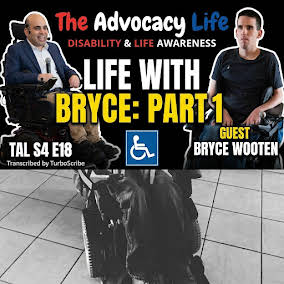
In Part 1 of this special episode of The Advocacy Life Podcast, host Kevin G. Núñez welcomes public speaker, podcast host, and certified life coach Bryce Wooden to the show. Bryce brings humor, honesty, and deep wisdom as he shares his accidental entry into the disability advocacy space—from training as an Ironman triathlete to finding his voice through Toastmasters.
Tune in as Kevin and Bryce tackle some of the most pressing conversations in the community today, including:
Navigating life with Cerebral Palsy and the reality that disability is a shared human experience.
Breaking down the “disability hierarchy” and moving past the misconception that everyone’s needs are identical.
Defining true independence: finding freedom, leisure, and community connection both inside and outside the disability space.
Overcoming imposter syndrome and advocating for legislative changes in employment and accessibility.
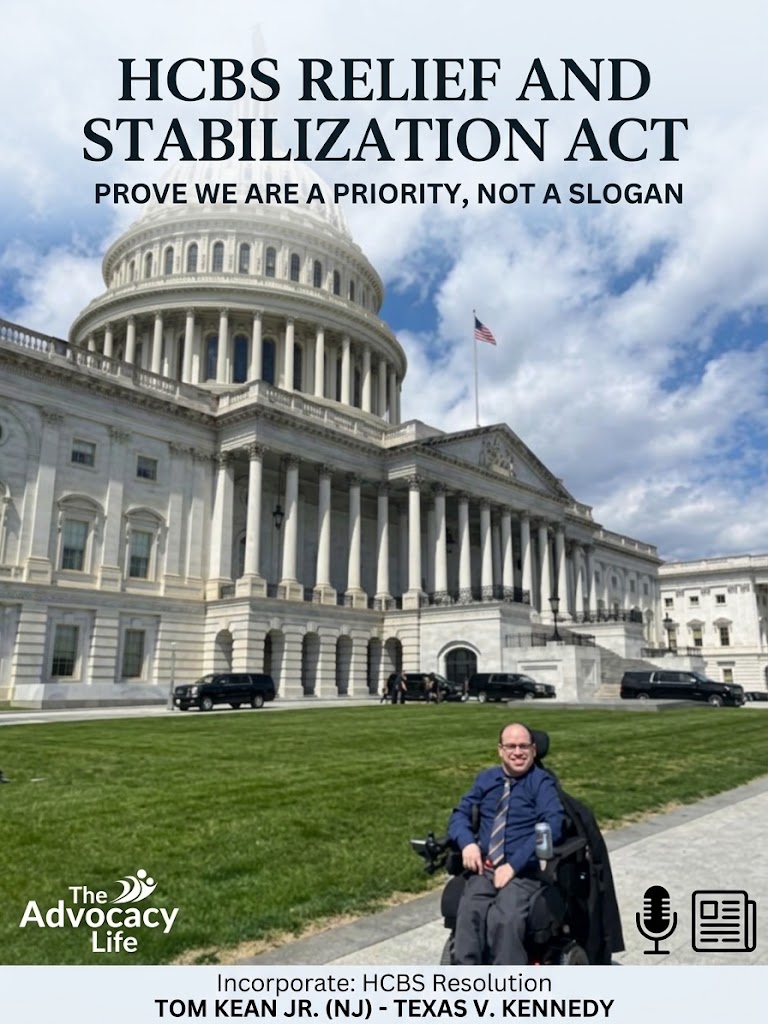
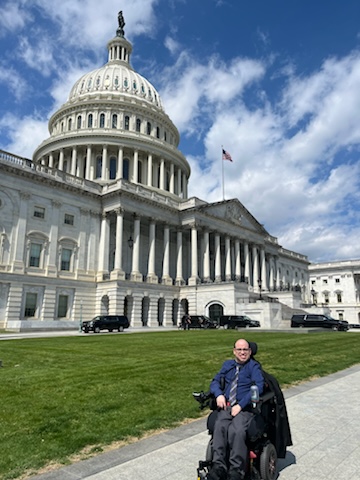
Have you heard of the HCBS Relief and Stabilization Act? Probably not.
For this week’s community blog, I want to focus on a specific piece of legislation—or rather, a resolution—that offers a big-picture view of the disability movement and examines where we truly rank in America.
For those unfamiliar, HCBS stands for Home and Community-Based Services. To oversimplify it, HCBS is a waiver care system funded by Medicaid and Medicare dollars that allows people with disabilities to stay in their homes and local neighborhoods. Regardless of age or level of need, it is always cheaper, more beneficial, and more humane for a person to thrive and function directly within their local community.
This resolution seeks to uphold and expand Home and Community-Based Services while establishing more significant safeguards for our direct support professionals (DSPs). It directly responds to legal uncertainties following filings like Texas v. Kennedy, which left critical disability care frameworks at a stalemate.
Through this resolution, members of Congress are attempting to signal to disabled voters and our population as a whole just how much we mean to them.
While this bipartisan effort is a welcome sight—notably supported by primary sponsors like New Jersey’s own Congressman Tom Kean Jr.—we cannot allow ourselves to be misled.
It is no coincidence that a resolution like this gains momentum right around election time, or that key co-sponsors are currently running for re-election. So, to politicians on both sides of the political aisle asking for our votes: prove it.
Show us that we matter. Show us that disabled Americans are a priority. Show us that we are a vital, indispensable part of this nation.
Lately, there has been a massive push in legislative halls for data centers, infrastructure developments, and commercial housing initiatives. While infrastructure is important, people come first in America. America is funded and run by the people, and people with disabilities are people first.
To Congressman Kean and all leaders stepping up: thank you for your leadership on this resolution. But to the rest of Congress: it’s time to put your priorities in order and prove that disabled America is a permanent priority, not a seasonal campaign slogan.
What happens when you’ve given everything you have to an advocacy role, but you feel yourself stalling?
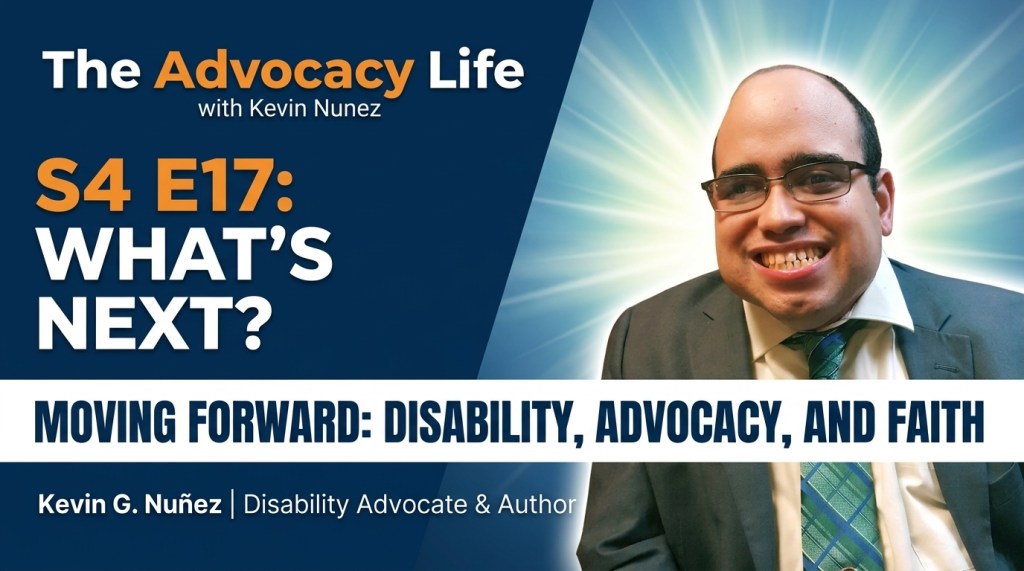
In Season 4, Episode 17 of The Advocacy Life, host Kevin Nunez takes us through his decade-long journey as a disability advocate. He discusses the realities of working within day programs, the challenge of institutional transitions, dealing with advocacy burnout, and his transition to national board leadership with the NACDD.
Key Topics:
Where We’ve Been: Reflections on entering the advocacy space in 2016.
Day Program Dynamics: Supporting individuals leaving institutions and training DSP staff.
Navigating Burnout: Recognizing when you’ve reached your limit and need a new challenge.
Council Service: Serving nearly a decade on the NJCDD and expanding to national work.
The Future: Building positive male representation in disability
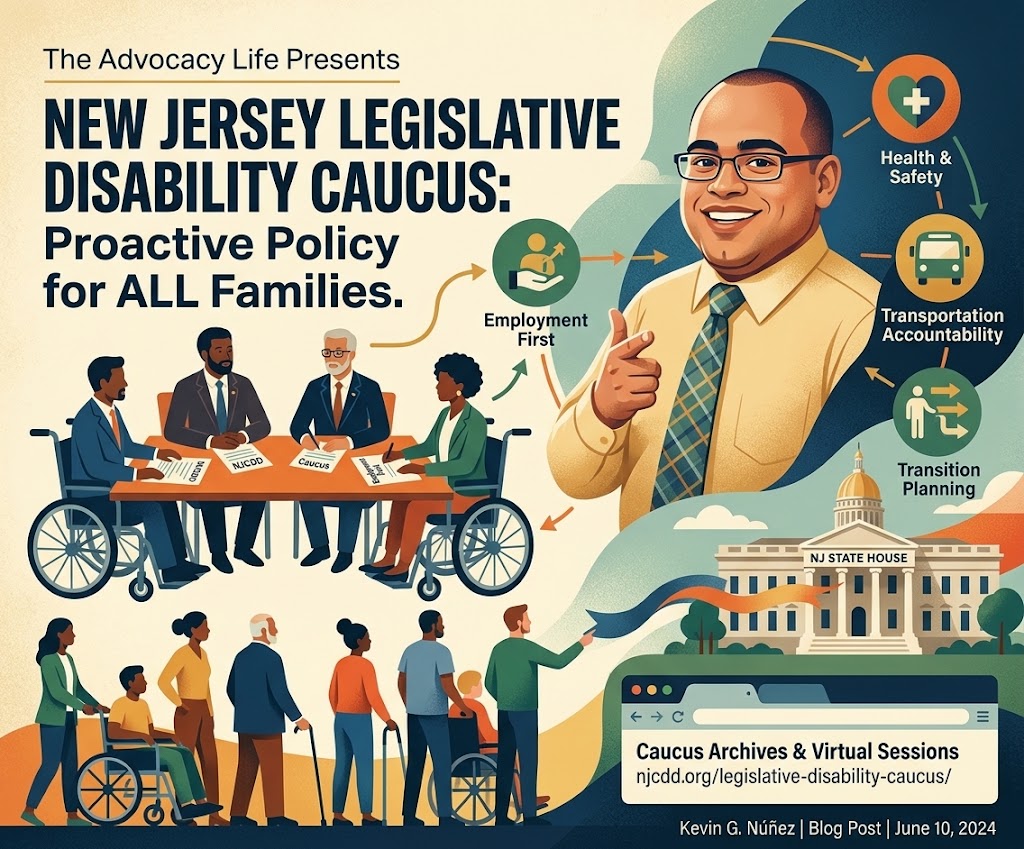
This week, I’m sharing something close to my heart. It’s an initiative I’m deeply proud of, but I can’t take full credit for it—it was truly a collective effort. I want to talk about the New Jersey Legislative Disability Caucus, which we launched in December 2020.
Think back to December 2020. The nation was locked in relentless political debate—red vs. blue, election arguments, constant noise. But while politicians argued, people with disabilities still needed services, healthcare, and baseline access to live healthy, productive lives.
I’ve often said the biggest flaw in our political system is that elected leaders don’t talk to each other. So, alongside dedicated partners—most notably the New Jersey Council on Developmental Disabilities—we built a space to fix that.
The New Jersey Legislative Disability Caucus was created as a bipartisan effort to shape proactive policy. Our goal was simple: get lawmakers at the same table before legislation is written, ensuring disability is never treated as an afterthought. The reality is that disability touches every single family at some point. When we design laws proactively with accessibility in mind, we create a country that works better for everyone.
Since we started, this state initiative has driven meaningful policy forward across New Jersey:
Employment First: Incentivizing competitive, meaningful employment for disabled individuals.
Health & Safety: Policy targeted at preventing abuse and neglect of people with disabilities.
Transportation Accountability: Legislation to improve safety and accountability on school buses.
Transition Planning: Dedicated sessions helping young adults with disabilities transition out of the school system into independent adulthood.
Because we launched during the pandemic, the Caucus started on Zoom—and that virtual format remains one of its greatest strengths. Quarterly sessions are archived online so constituents can watch their elected officials work in real time.
I encourage you to look into your own state leadership. Other states have caucuses like this too, so search for your local legislative disability caucus and get involved. Keep on rolling, keep on living!
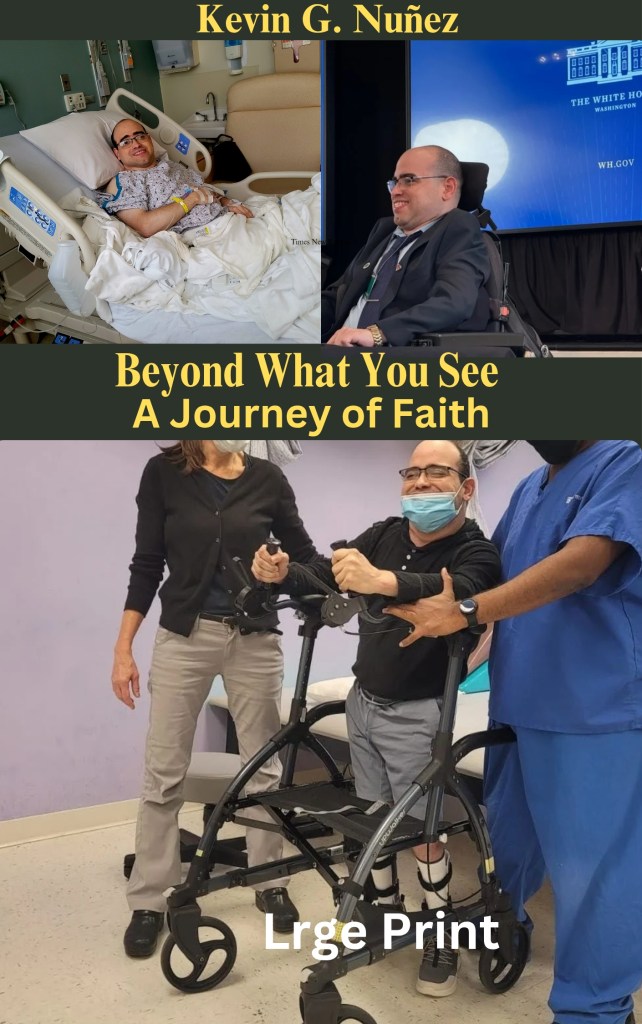
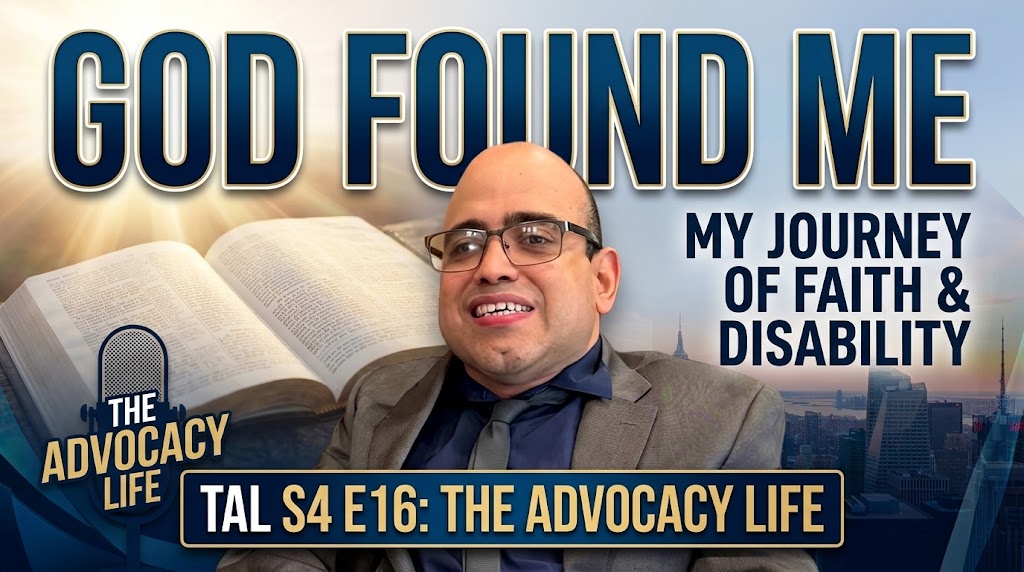
In this deeply personal and special episode of The Advocacy Life Podcast, host Kevin Nunez shares his personal testimony as a follower of Jesus Christ. Living with quadriplegic spastic cerebral palsy, Kevin opens up about his journey—from navigating life’s physical limitations and isolation to the pivotal moment in 2020 when God met him right where he was.
This isn’t about preaching or converting anyone; it’s an honest, judgment-free story about surrender, finding purpose through grace, and realizing that God’s plans are always bigger than our own. Whether you are a person of faith or simply looking for an encouraging perspective on overcoming life’s struggles, this story is for you.
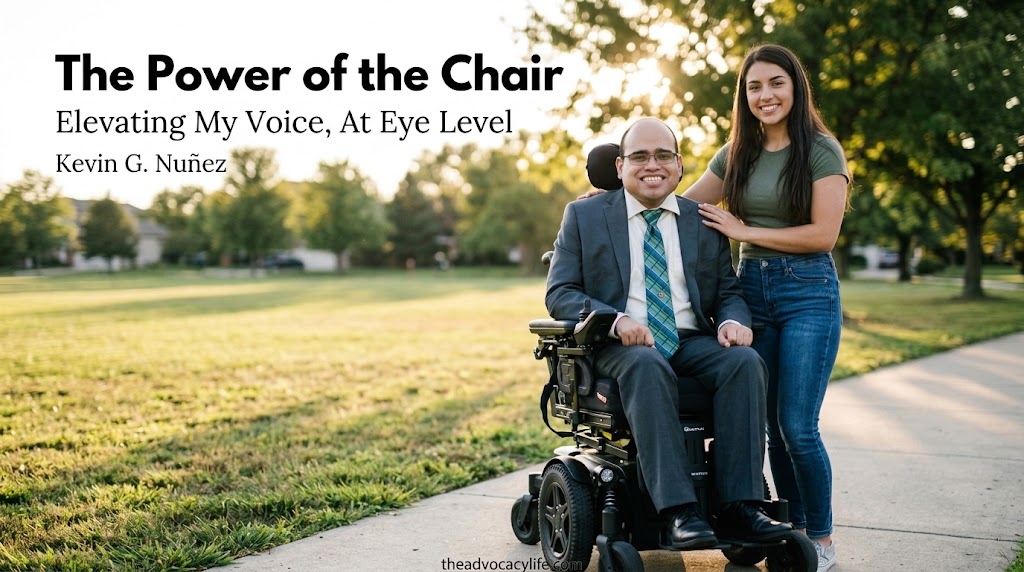
School starts after Labor Day in New Jersey, and as a kid, that always meant new clothes, new school supplies, and a brand-new wheelchair. This year was different. My new chair didn’t arrive until March.
The price tag on the chair I’m sitting in to write this? Nearly $60,000.
When you hear a number like that, it’s easy to do some dark math. Is $60,000 the price tag on my independence? Am I worth $60,000? Why does basic human mobility cost as much as a luxury sedan? That’s an algorithm for insurance companies and policymakers—a topic that usually sits above my advocacy pay grade. But here’s what I can tell you: this technology keeps me from being confined to a bed. It would feel unlivable. With it, I can roll out into the world, make my voice heard, and face life head-on.
For years, living in a wheelchair meant existing in a world built for vertical people. Everyone else’s chest or waist was where I always saw the world from. But this new chair comes with hydraulic elevation.
Not long ago, I was at a bar with high-top tables where everyone was standing. Typically, I’d be at a huge disadvantage, craning my neck up just to participate in the conversation. This time, I hit a button on my joystick, elevated my seat, and held a conversation at true eye level. For the first time, I wasn’t being talked down to—literally or figuratively. That single moment alone was worth the price of admission.
Since I spend at least six to eight hours a day in this chair, I’ve learned a thing or two about how the rest of the world interacts with mobility devices. For those of us who use them—and for the non-disabled allies reading this—here are a few basic ground rules:
Running someone over with a wheelchair isn’t a funny prank like in the movies; it’s the exact equivalent of hitting someone with your fist. Treat a person’s mobility equipment with the same respect you’d treat their personal space.
Wheelchairs are highly technical, custom-built, and absurdly expensive. Well-meaning people often try to grab the handles or push without asking. You could easily damage the chair or throw off the user’s balance. Always ask first.
Bodies break down, and chairs break down. They collect dust, weather, and yes, the occasional stray French fry in the cushions. Keeping a chair clean is part of the routine of staying functional.
A chair can feel restrictive at times, but so can any human body. Ultimately, it isn’t a cage; it’s a platform. It’s the tool that lets me show up to council meetings, write books, host my podcast, and advocate for our community.
Your mobility device doesn’t define your worth, but it can certainly amplify your power. Take care of your gear, demand respect for your space, and never let anyone talk down to you—no matter what height you’re sitting at. Keep on rolling. Keep on living.
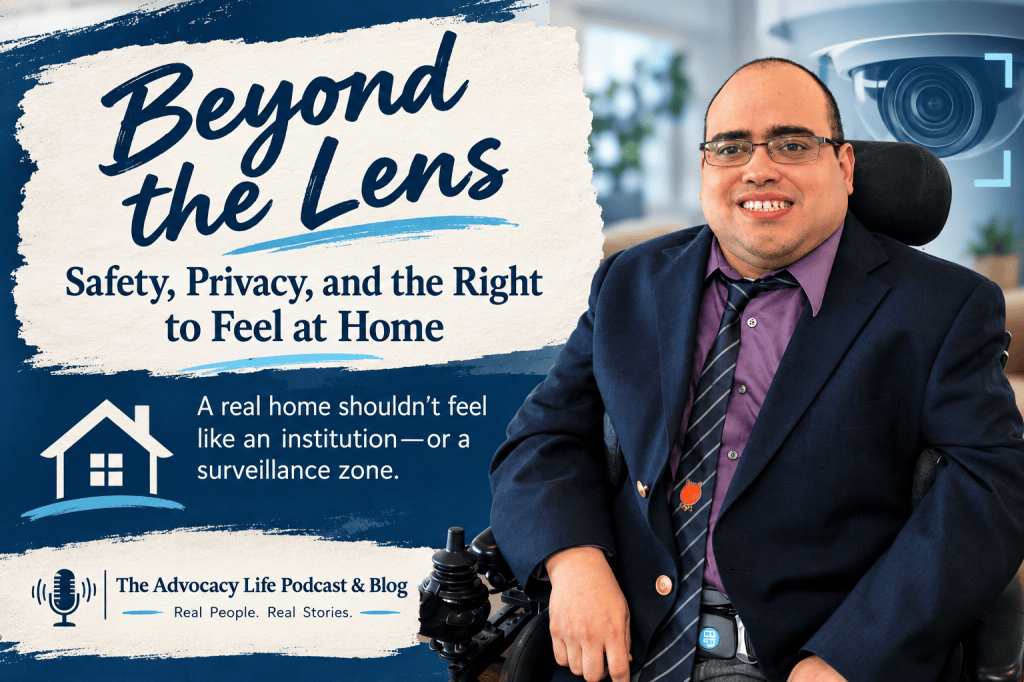
Welcome to the first community vlog entry of fall! I hope you all had a great summer. Today, I want to talk about group homes—specifically, how many of them have gradually turned into smaller, satellite institutions rather than true community homes.
The fundamental problem with most group homes is that they rarely feel like an actual home to the people living in them. For individuals in their mid-to-late 30s or 40s—the average age of most residents—a constant stream of shift staff comes through the door every day, working eight hours at a time. You constantly adjust to new people entering your personal space. Having conducted state program investigations in group home facilities years ago, I’ve seen this reality firsthand. I’ve watched how hard it is for residents who don’t just want to reside in a neighborhood, but actually want to be an active part of their community.
Recently, in New Jersey, there has been a major legislative push driven by concerned parent groups to mandate cameras in all major group home facilities. (S1172 / A2705)
While safety, abuse prevention, and neglect prevention are the primary arguments for this bill, mandating cameras is a dangerous idea and a slippery slope.
Here is why this approach misses the mark:
In a typical household, you do not have cameras capturing your every move in the living room 24/7. Proponents argue that schools and buses have surveillance, but you don’t live at a school or on a bus. In your own home, you should have the right to privacy in your most personal moments without constant surveillance.
Surveillance footage does not stop abuse or neglect as it happens; proper staff training and accountability do. Cameras only offer distressing images after a tragic event or death has already occurred. In New Jersey alone, there are roughly 150 unexplained deaths in facilities a year. A camera recording after the fact does not save a life; it only leaves families with unsettling images and more questions.
The current bill in the New Jersey legislature does not mandate audio recording. Key context becomes completely lost without audio. Furthermore, under the proposed language, the group home provider retains control of the footage before any family member can access it, leaving room for footage manipulation.
In its current form, this legislation is a dangerous precedent that fails to protect residents while stripping away their fundamental right to privacy in their own homes. What are your thoughts on this bill and the distinction between safety and privacy in community settings? Let’s keep the conversation going in the comments below, and I’ll see you next week!
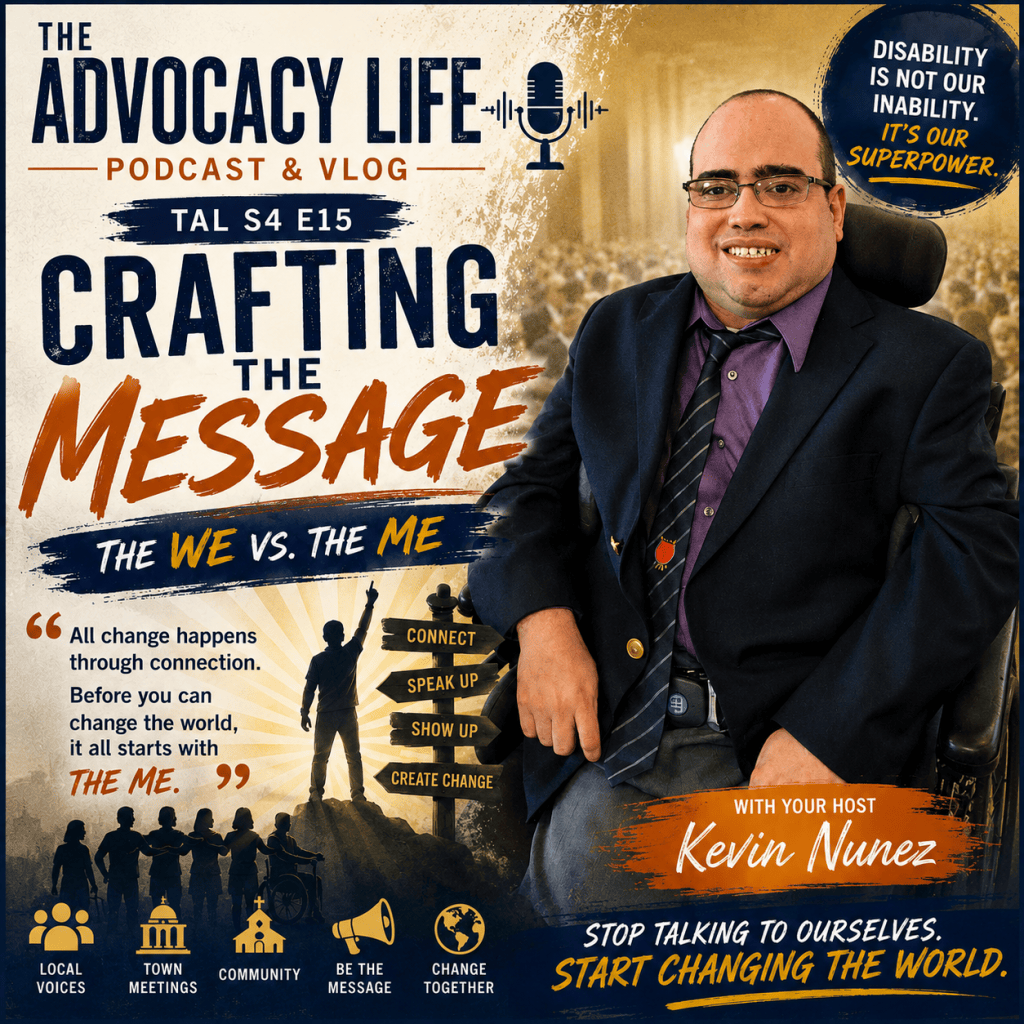
When we advocate, are we standing up for ourselves or fighting for the collective community? In Season 4, Episode 15 of The Advocacy Life, host Kevin Nunez dives into the controversial line between “me” and “we.”
While real policy change takes a community, effective advocacy starts with someone brave enough to step in front of the camera, put their name out there, and show up where decisions are made. Kevin breaks down why social media is only the springboard for advocacy—not the end game—and shares practical, grounded strategies for making your voice heard.
episode transfer below
In this episode, we talk about:
Moving beyond social media algorithms and showing up at local town meetings.
How to balance personal needs with community-wide legislative goals.
Practical tips for presenting your case to elected officials with data, impact, and respect.
Using human connection—from small talk to common interests—to build real bridges with policymakers.
🔔 Subscribe to The Advocacy Life for more unfiltered conversations on disability policy, faith, and authentic advocacy!
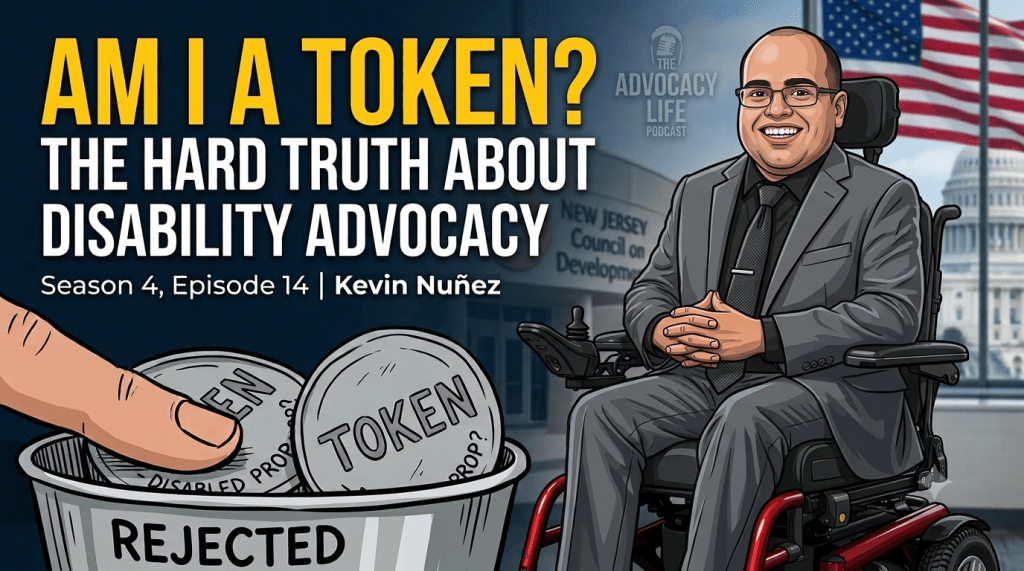
Hello friends, and welcome back to The Advocacy Life podcast with Kevin Nuñez! Disability and death are the only two certainties in life, yet society continues to treat disability like an invisible anomaly or a feel-good inspiration reel. In today’s episode, Kevin addresses a heavy, deeply personal question: Are disability advocates tokens for someone else’s products or political agendas?Kevin candidly discusses his time inside New Jersey’s habilitation day programs, the reality of adult daycare, and his personal perspective on the current New Jersey group home camera legislation. He challenges us to “put our shoes on the wrong feet” to understand the discomfort and lack of control that many nonverbal individuals face daily. If you see a token, you project a token. It’s time to break the mold.Highlights:00:00 – Are disability advocates just props?02:15 – The reality of advocacy: No money, no mansions, just purpose.03:30 – Guest of Senator Andy Kim at the State of the Union.04:45 – What “adult daycare” taught me about communication and “behaviors.”07:30 – The problem with the NJ Group Home Camera Bill.09:15 – Trained staffing vs. surveillance cameras.11:00 – Why I keep rolling.
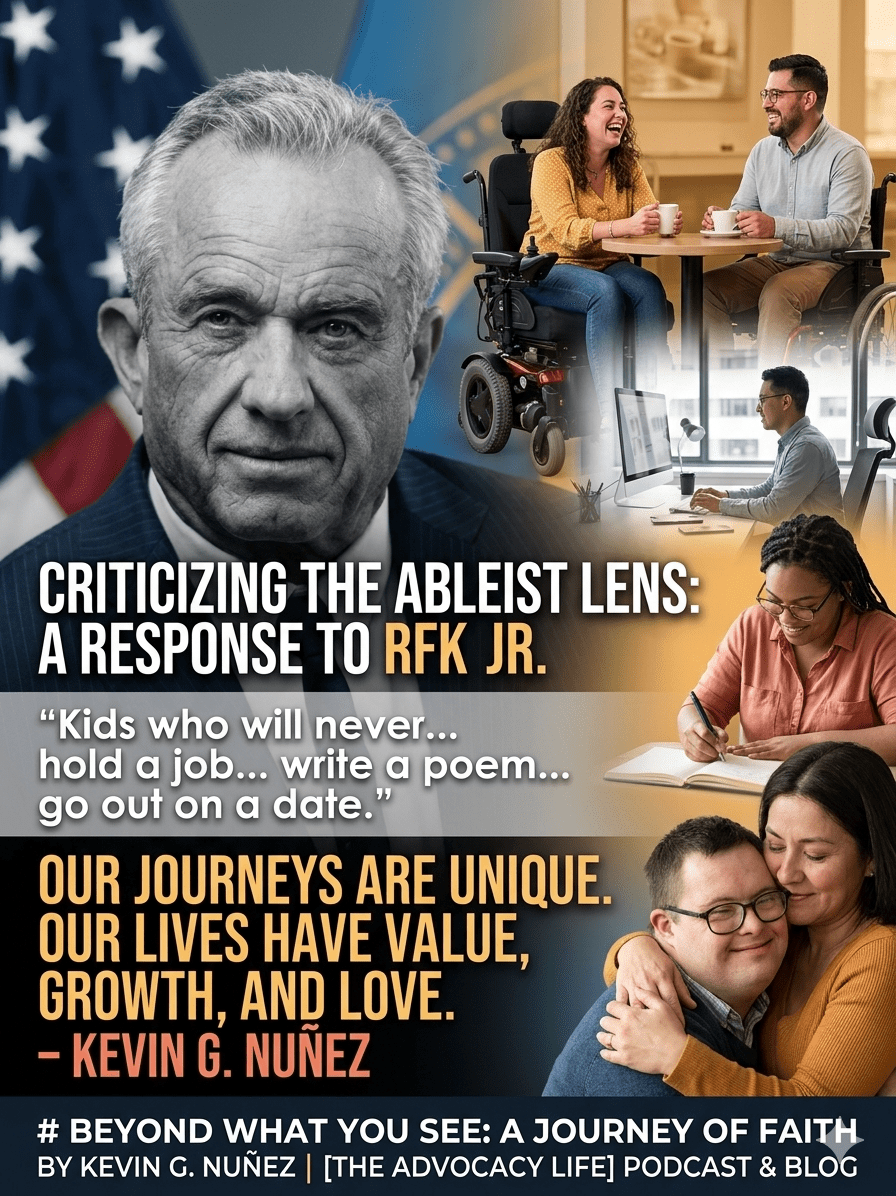
“These are kids who will never pay taxes. They’ll never hold a job. They’ll never play baseball. They’ll never write a poem. They’ll never go out on a date. Many of them will never use a toilet unassisted.” Robert F. Kennedy Jr.
I want to state from the outset: I don’t hate RFK Jr. I respect and love him as a fellow human walking this earth, despite disagreeing on several key issues. Quotes like these are particularly damaging. They embody the ableism and fear that permeate modern American culture.
The problem with this perspective is that it ignores the fundamental truth that every person with a disability has their own unique journey, their own growth process, their own setbacks, and their own successes.
So often, people with disabilities are lumped into boxes by a system that refuses to let them out. We are treated as if our lives are a “nice, comfortable jail cell.” We don’t realize that the door is a cell door until it gets slammed in our faces—and by then, it’s too late to get out.
RFK Jr.’s comments about dating are a prime example of the dehumanization we face. Just because someone may be non-verbal or have different physical needs does not mean they are unable to consent to or enjoy a loving, caring relationship. There are plenty of non-verbal individuals who have had rich, complex romantic lives—some of them having had more sexual encounters than I will ever have!
Society often measures our value by our productivity—by whether we pay taxes or hold a traditional job. With the new “Home and Community Based services HCBS” cuts coming to the nation in October 2026, many of us will be forced to choose between our health insurance and our ability to work.
We are forced to disclose our limitations and decide: Do we stay in poverty to keep our benefits, or do we risk it to earn a little bit of money? It is these societal norms that are damaging us, not our wants or our wills. We want to work—we want to work harder than most other Americans. We just need the real opportunities to do so.
Quotes like these don’t help anyone; they just hurt. If you want to help someone with a disability, don’t look for what you think they “can’t” do. Make them stronger, and they will make you better.
Don’t be afraid of us. Thrive with us. Push us. Educate us—because we can educate you in the same way. Together, we can learn from each other. That is what a good society does. That is what a good America does.