Tag: stories of faith

  • The church’s Disability

    The church’s Disability

    A Community Blog

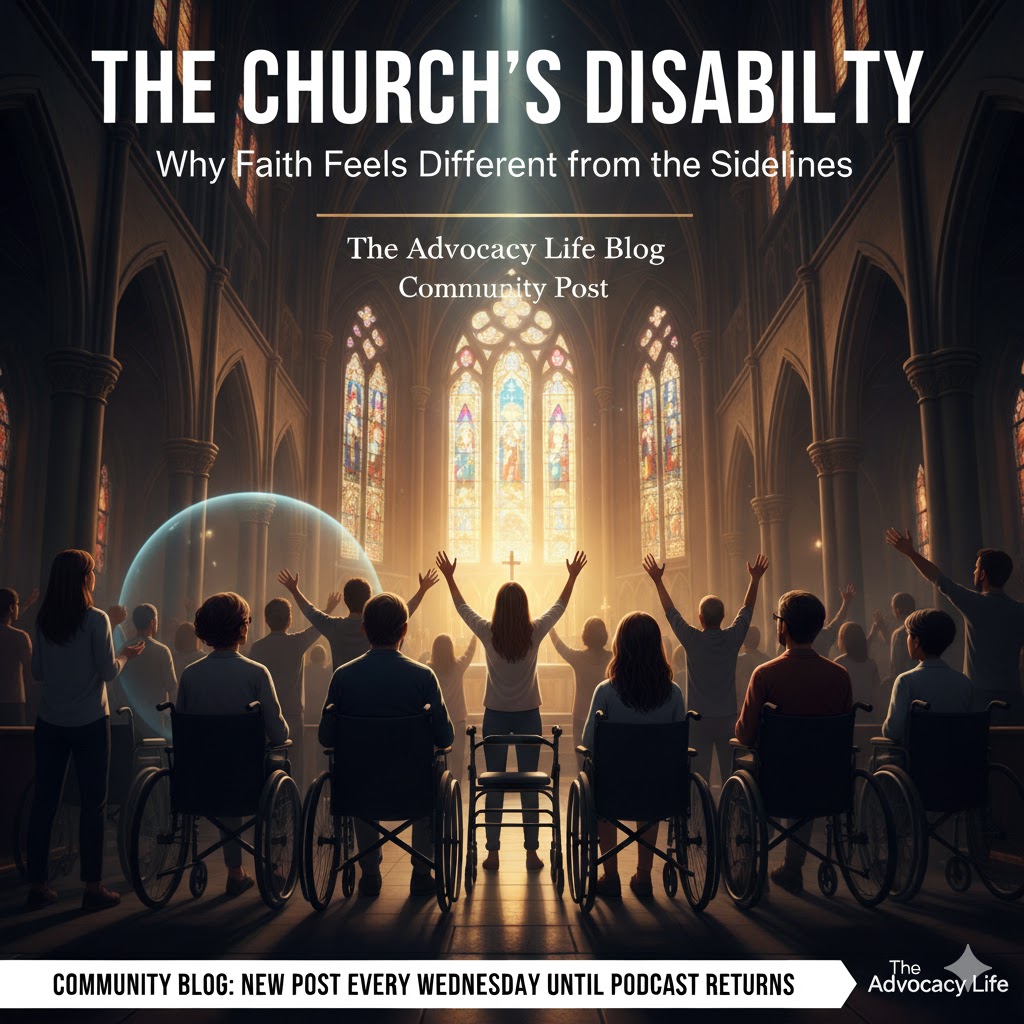
    For many of us in the disability community, our relationship with faith can be incredibly complex. We love the Lord, we crave spiritual connection, but too often, the very places meant to offer solace—churches—become spaces of discomfort and judgment. It’s a paradox that weighs heavily on the soul.

    Who wants to go to church and be constantly stared at? Who wants to attend a funeral, already a time of immense grief, only to hear the pastor speak about the deceased as if they were a stranger, completely unaware of the rich life lived by the person with a disability they are meant to be celebrating? These aren’t isolated incidents; they’re common experiences that chip away at a sense of belonging.

    That’s precisely what so many well-meaning congregations don’t quite grasp. As a disabled person, when you feel that energy – the pity, the awkward glances, the unspoken questions – it actively pushes you away, no matter how much you yearn for spiritual connection. You feel like an outsider, an anomaly, rather than a cherished member of the flock. It makes you want to retreat, to seek God in the quiet solitude of your own home, far from the subtle rationalization.

    What truly frustrates me is the disconnect. People gather to praise and worship, singing about love and community, yet many remain firmly entrenched in their own safety bubbles. They’ll lift their hands in adoration but won’t extend one to say hello at fellowship. They’ll preach inclusivity but practice exclusivity, often unconsciously. The truth is, you’ll never be able to reach everyone, but that doesn’t mean we stop trying to bridge the gap between professed faith and lived acceptance. This isn’t about malice; it’s about a lack of understanding, a failure to truly see and welcome.

    My dream? I would love to walk into a congregation—or roll into it, as the case may be—and see it bustling with wheelchairs and walkers, with people of all abilities steaming with joy for God. Too often, I’ve been the only person with a disability in the church. Or, if there are others, they’re tucked away in a corner, out of sight, out of mind, so as not to “bother” the rest of the folks. This isn’t what true community looks like. This isn’t what radical love looks like.

    Matthew 18:20 NIV “ For where two or three gather in my name, there am I with them.”

    We need spaces where our presence isn’t an inconvenience, our bodies aren’t a spectacle, and our faith is celebrated just as vibrantly as anyone else’s. It’s about creating an environment where the spirit can truly soar, free from the burdens of judgment and isolation. We need churches willing to step out of their comfort zones, not just physically accessible buildings, but truly accessible hearts.

    A quick note for my incredible community:

    I’m currently traveling and, unfortunately, don’t have access to my podcast equipment right now. Because of this, I’ll be sharing an additional Community Blog this week to keep our conversations flowing! Until I get my podcast back up and running, you can expect these bonus Community Blogs every Wednesday. Thank you for your understanding and continued engagement!

    The Podcast

    Published Books

    Subscribe to Letter from Limbo

    Read more of this content when you subscribe today.

    One-Time
    Monthly
    Yearly

    Make a one-time donation

    Make a monthly donation

    Make a yearly donation

    Choose an amount

    $1.00
    $3.00
    $5.00
    $5.00
    $15.00
    $100.00
    $5.00
    $15.00
    $100.00

    Or enter a custom amount

    $

    Your contribution is appreciated.

    Your contribution is appreciated.

    Your contribution is appreciated.

    DonateDonate monthlyDonate yearly
  • Open Doors Podcast Episode

    Open Doors Podcast Episode

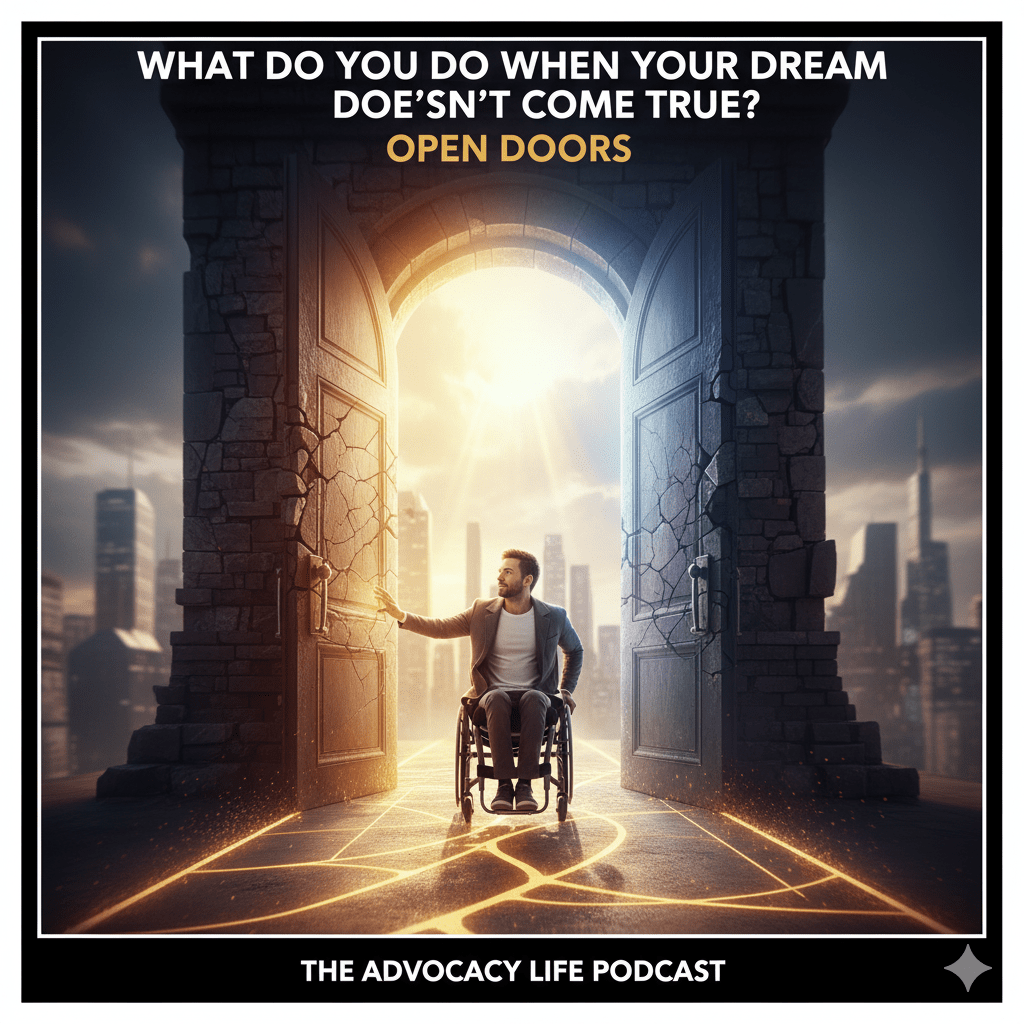
    We all have them, don’t we? Those big, audacious dreams we’ve held onto since childhood. For me, it was a dream of civic engagement, of being a voice for change. From a young age, I pictured myself in politics, influencing policy, and making a difference. That dream evolved into a very specific goal: to serve on a national advocacy board, to contribute at the highest level to the very movement that defines my life.

    I poured my heart into the application process. I spent countless hours writing, refining, and preparing. I felt confident, invigorated by the thought of this “dream job.” When the rejection email landed in my inbox, it was a punch to the gut. The dream, the vision I had held for so long, seemed to evaporate. It was a stark reminder that even with passion and purpose, some doors just don’t open the way we expect.

    But here’s where the story takes an unexpected turn, a turn that became the inspiration for my latest podcast episode. Just two hours after receiving that devastating “no,” my phone rang. It was an offer to serve on a different national board—an opportunity I hadn’t even considered, a door I didn’t even know existed.

    This experience brought a profound realization: advocacy isn’t about the title, the recognition, or the specific platform. It’s about being a voice for the voiceless. It’s about “planting the seed for a tree that someone else will sit under.” It’s about the relentless pursuit of a more just and inclusive world, regardless of the path we take to get there.

    This episode is a raw, honest look at the emotional rollercoaster of pursuing a dream, facing rejection, and finding unexpected redirection. It’s a vital reminder for all of us to be aware of the “windows and doors that are open,” even when they’re not the ones we initially envisioned. A “no” isn’t always a dead end; sometimes, it’s the universe nudging you toward an even better, more impactful journey.

    So, if you’ve ever felt the sting of a dream deferred, if you’re wondering what your next step should be, or if you simply need a dose of inspiration to keep fighting for what you believe in, this episode is for you.

    Are you ready to see how a “no” can lead to your next “yes”?

    Episode Transcript

    The Podcast

    Published Books

    Subscribe to Letter from Limbo

    Read more of this content when you subscribe today.

    One-Time
    Monthly
    Yearly

    Make a one-time donation

    Make a monthly donation

    Make a yearly donation

    Choose an amount

    $1.00
    $3.00
    $5.00
    $5.00
    $15.00
    $100.00
    $5.00
    $15.00
    $100.00

    Or enter a custom amount

    $

    Your contribution is appreciated.

    Your contribution is appreciated.

    Your contribution is appreciated.

    DonateDonate monthlyDonate yearly
  • Down but Never Out

    Down but Never Out

    Subscribe to continue reading

    Become a paid subscriber to get access to the rest of this post and other exclusive content.

  • Disabled & Grateful

    Disabled & Grateful

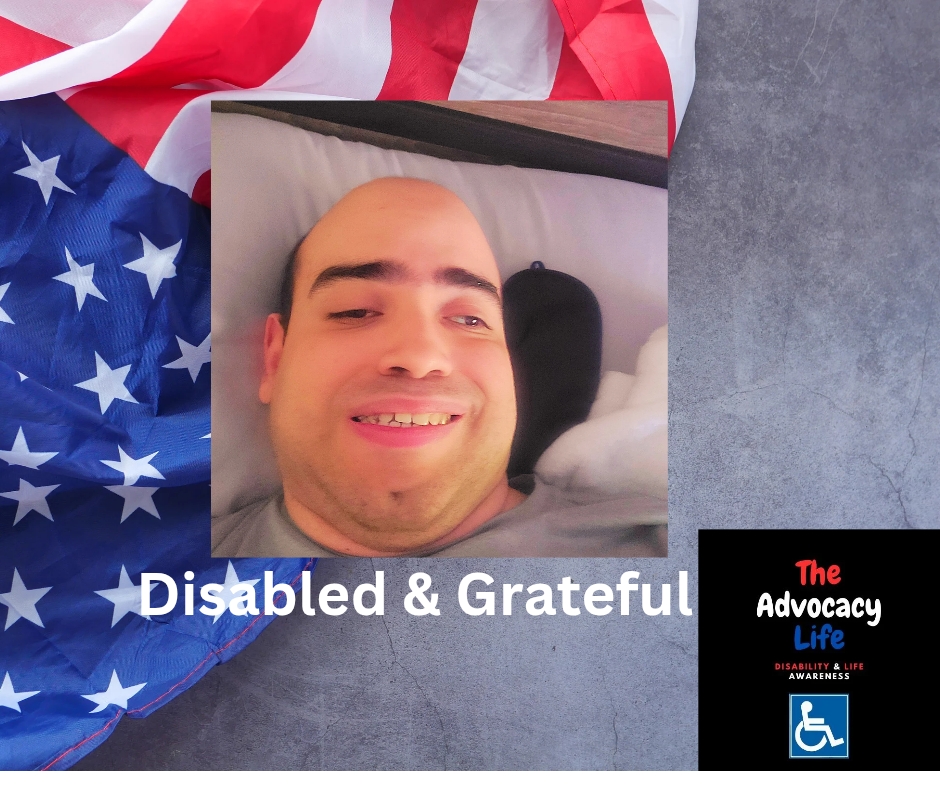
    “I’m thankful for my struggles because they revealed my gifts.”

    Hey friends, I hope you’re having an outstanding day.

    The quote above is from a meme I posted years ago on a random Friday night. I completely forgot about it—until it popped up in my memories recently. When I saw it, I paused. It hit me differently this time. And what I’m about to say next might annoy some people. I might even lose a few followers over it. But I have to be honest. I’ve never actually said this out loud—so I’m using voice dictation just to get it out:

    “Thank you, Father God, for giving me Cerebral Palsy.”

    1 Thessalonians 5:18 NIV [18] give thanks in all circumstances; for this is God’s will for you in Christ Jesus.

    Still reading? If you think I’ve lost it, give me a minute to explain.

    Like most people, I spend too much time on social media, especially since I started this blog. I haven’t made a single dollar from anything I’ve posted (as I promised myself from day one), but let’s be real: if you want people besides your grandma, cousins, and a few loyal friends to read your content, this is one of the few ways.

    I know social media is a battleground now—red team vs. blue team, constant opinions, arguments, and sides. But that’s not what bothers me. Everyone’s entitled to their perspective. I’m not going to stop being friends with someone just because we disagree.

    What does hit hard, though, are the subtle (and not-so-subtle) reminders of the expectations society places on us. At 37, I’m not young anymore—but I’m not old either. I’m not even considered middle-aged. It’s this strange in-between stage, this unspoken limbo.

    When you scroll past all the politics and noise, you’ll find the beautiful things: baby announcements, first day of school photos, wedding pictures, memes about hating jobs and loving new homes.

    And then… there’s me.

    No kids. No house. No wedding photos to share.

    But please—don’t pity me. And don’t call me a martyr.

    It took me a long time to understand that I was created on purpose for a specific purpose. Yes, there are hard days. Life isn’t fair. And a lot of people just don’t get me. But here’s the truth: if I didn’t have this disability, I wouldn’t be writing this blog.

    There are plenty of writers—disabled and able-bodied—but none of them have my story. My perspective. And that makes this blog uniquely mine.

    I don’t waste time playing the “what if” game. I focus on what is and what can be. The closest I’ve come to “what if” is something my brother and I once agreed on: without our disability, we probably wouldn’t be as humble, patient, or grounded as we are today.

    Disability changes how you see the world. It gives you strength you can’t explain. Honestly, I can only call it what it is: God’s grace.

    Because of it, I’ve seen the best—and the worst—in people.

    When I first started this blog, I thought it would be strictly about disability policy. But sometimes, you can’t ignore when something bigger is working through you. If it weren’t for one of my transition coordinators, I would’ve never joined that leadership training series that launched me into disability advocacy.

    I ended up in a day program for the majority of my twenties I did not like it. I thought it was for those who are forgotten. I was so determined to go to college, just to prove everyone wrong. Fast forward, and now I have parents thanking me for bringing their concerns to legislators, on behalf of the children and adults who can’t speak for themselves.

    Do I still have things I want? Of course. That’s what it means to be human. But growing, learning, and discovering new strengths is also part of the human journey.

    I pray these words reach you in whatever way you need them to.

    I thank God for creating you—and for all the gifts He’s given you, whether you’ve discovered them yet or not.

    Have a great day, and I hope to see you next time.

    The Podcast

    Published Books

    Subscribe to Letter from Limbo

    Read more of this content when you subscribe today.

    One-Time
    Monthly
    Yearly

    Make a one-time donation

    Make a monthly donation

    Make a yearly donation

    Choose an amount

    $1.00
    $3.00
    $5.00
    $5.00
    $15.00
    $100.00
    $5.00
    $15.00
    $100.00

    Or enter a custom amount

    $

    Your contribution is appreciated.

    Your contribution is appreciated.

    Your contribution is appreciated.

    DonateDonate monthlyDonate yearly
  • Brain Dump

    Brain Dump

    Subscribe to continue reading

    Become a paid subscriber to get access to the rest of this post and other exclusive content.

  • False Expectation

    False Expectation

    Subscribe to continue reading

    Become a paid subscriber to get access to the rest of this post and other exclusive content.

  • A Spiritual Anecdote

    A Spiritual Anecdote

    One day a few years ago, I was walking down the Atlantic City Boardwalk with one of my caregivers. Sadly, that person is no longer with us. We had just lost a few dollars at a casino (don’t worry, it wasn’t much). Afterward, we sat on a bench, talking and enjoying the day. Then, out of nowhere, two strangers walked up to us. They asked if they could pray with us. It was an unusual request for 2 in the afternoon, but I figured, why not?

    Photo by ALTEREDSNAPS on Pexels.com

    So, I gave them my hands and closed my eyes. The man prayed out loud, saying, “Dear Lord, please bless this man so that the demons leave his body and he may walk.”

    Hi, my friend! I hope you’re doing well. What would you do if something like this happened to you? After it was over, I just said thank you, and we exchanged a few nice words. But my first instinct was to laugh! I pray all the time, but I wasn’t expecting that.

    Some people might say I’m being punished and that only God’s grace can take me out of this wheelchair. But I don’t believe that.

    I don’t want to make anyone uncomfortable. This isn’t a religious blog. It’s about advocacy and awareness. Talking about God shouldn’t be controversial, but I understand why it is for some people. Just like with disability, not everyone will understand.

    Here’s the thing: I couldn’t write this blog or live my life without my disability. People like me, in the disability community, have made a difference in the world—one day at a time. And no matter your faith or beliefs, we can all agree on one thing: God is perfect, and He doesn’t make mistakes.

    John 9:3 NIV [3] “Neither this man nor his parents sinned,” said Jesus, “but this happened so that the works of God might be displayed in him.

    Some people ask me, “How can you say that when you’re in a wheelchair every day?”

    Photo by Pixabay on Pexels.com

    This is what I know to be true: Without my cerebral palsy, my family wouldn’t be as close as we are. My disability didn’t just affect me—it took all my family members, by blood and by choice, to help get me where I am today. And I think that’s true for most people with disabilities. Having a disability like mine makes you see the world differently, no matter how much you wish you could be like everyone else.

    Here’s something many people don’t realize: You will suffer in life, but you aren’t given life just to suffer. My life hasn’t been easy. I’ve had plenty of days where I’ve been frustrated with myself—and with God. It does hurt to miss out on some experiences that others get to have.

    But here’s what I’ve learned: A lot of the experiences I’ve had, and many others with disabilities have had, are things most people can’t even imagine. We aren’t given anything we can’t handle. Giving up on ourselves and others is easy. But the mission is to find the good. Living with a disability, it’s easy to focus on the bad. But we spend our lives finding the good in the darkness.

  • Joyful Discomfort

    Joyful Discomfort

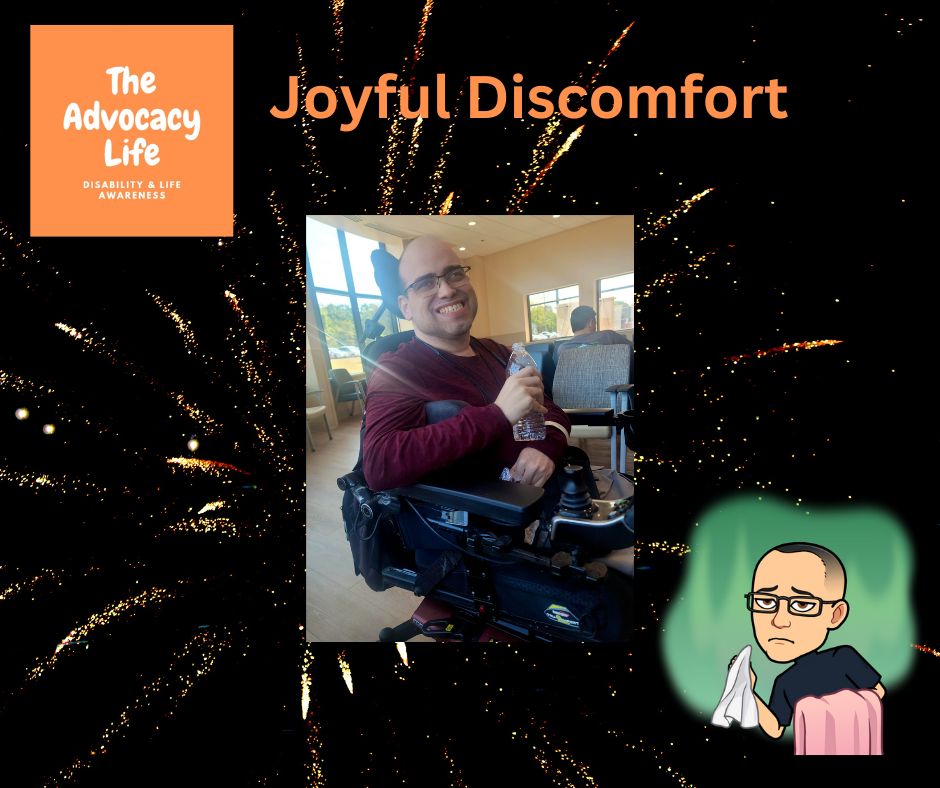
    As I write this blog in late September, I feel the evening chill getting crisp. When you cannot leave the house without a late jacket or hoodie. One or two leaves have already started to change color. This kind of weather usually affects our bodies in some way. Whether that be arthritis for older folks or runny noses adjusting to the cold. My body will feel a little bit stiff for the next week or so. This week I want to try to answer a question that I get asked now and again.

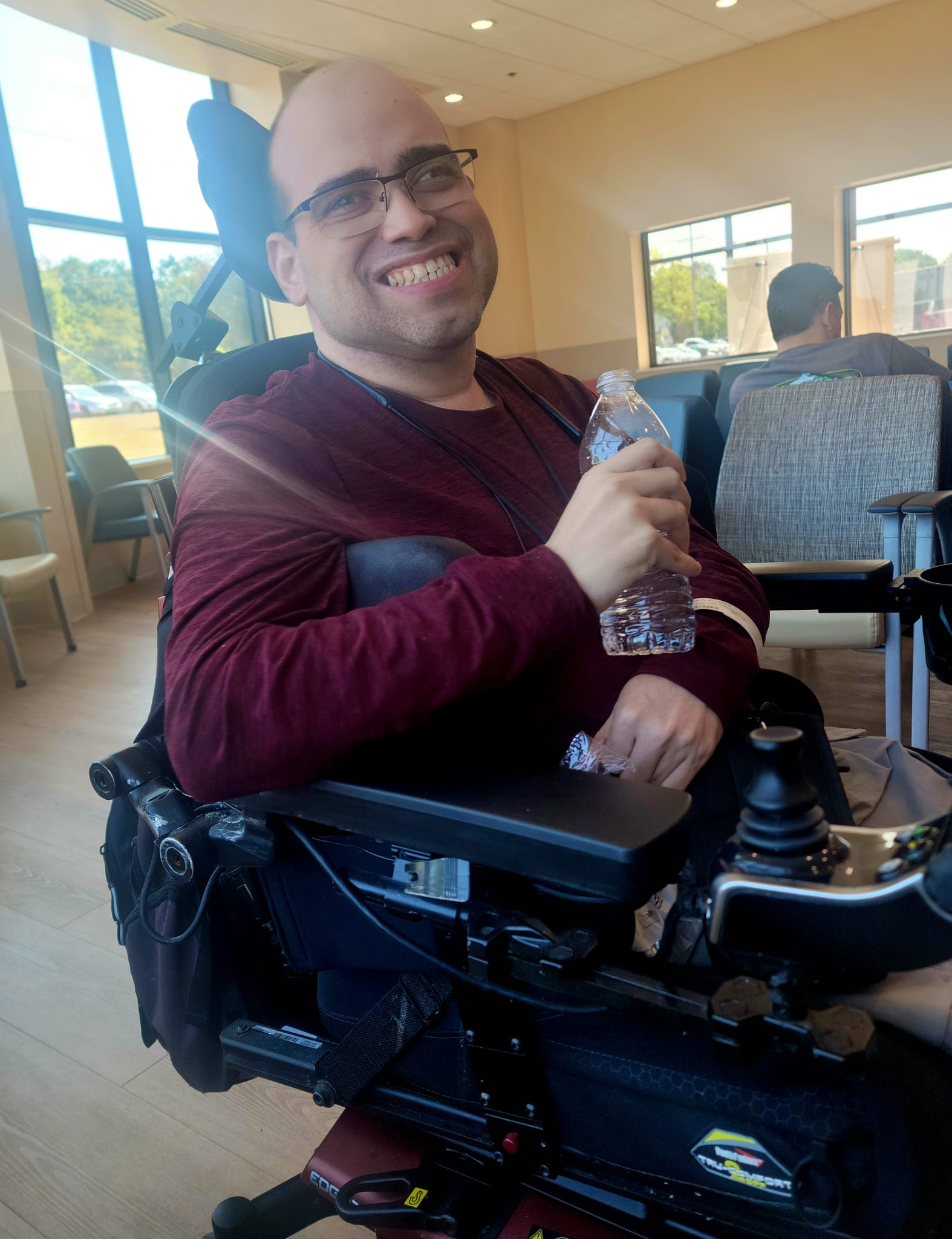
    On the way into the hospital.

    “What does it feel like to have a disability?”

    I love pondering on inquiries like this because it’s a challenge both as an individual and as a writer. My short answer is I don’t know; this is my “normal.” I was born with this, Neurological condition, I will die with it. For comparison, imagine if I asked you “What it’s like being an astronaut?

    For the record, I was diagnosed at birth with Cerebral Palsy (CP). It is important to note that every person is affected differently by their disability. I can line up individuals with the diagnosis of CP and they will all have different strengths and weaknesses. A disability is like a person no two are equal.

    When you look at me it is easy to feel pity and sadness because you picture the things I can’t do. Depending on how you measure success I am a failure. I don’t have a job, I’ve never walked more than a few steps in a therapeutic setting. I need help with most personal tasks. I have not had a real kiss since before Facebook and TikTok became household names. Society has locked me into a systemic financial prison. I know this is a small blog, and a lot of people don’t read it, but I hope this post gets shared. What I’m going to say next is not going to make sense to a lot of people.

    Romans 8:18 NIV [18] I consider that our present sufferings are not worth comparing with the glory that will be revealed in us. 
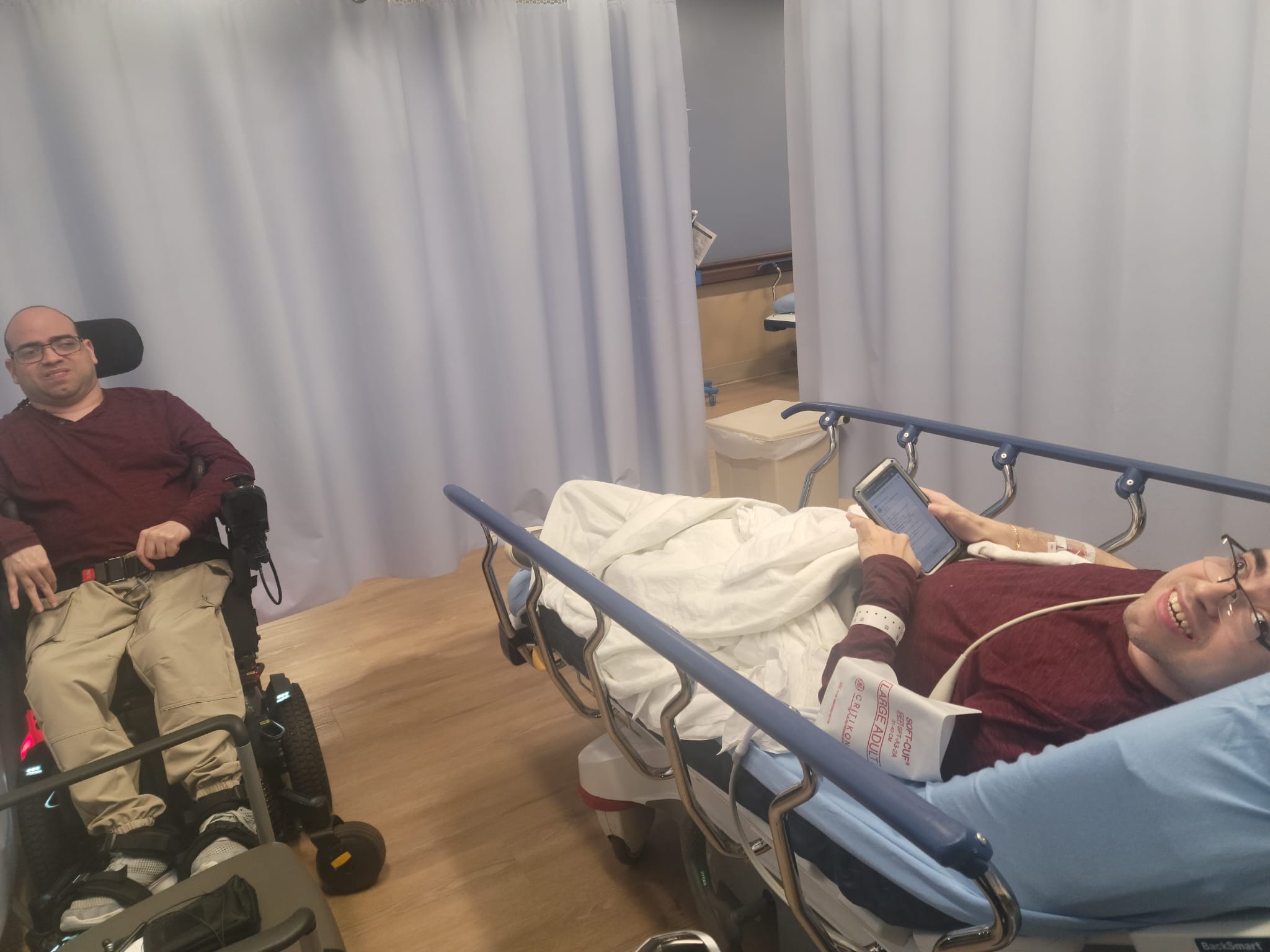
    My brother Abner and I are waiting on test results.

    “I am thankful for my disability!”

    A few weeks back I found myself in the hospital for the fourth time in 4 months. This time with a kidney stone. Fortunately, it was small and able to pass quickly and without infection. I will not deny that it was painful and not fun at the moment. There was one moment, in the hospital when it was quiet. I was able to reflect on how blessed I was and how I’ve been a blessing to others without realizing it. I’ve never cashed the paycheck, and that’s not fair, but I have made a difference with my advocacy work. I realize that my job is to plant seeds of trees that others will sit under one day. I’ve had plenty of awkward moments with new staff, trusting them with my most intimate needs, but still, there are currently two wars going on in this world, and people have forgotten all about it. Not even giving a second thought to the widows and the children affected by these global conflicts.

    I’ll be the first to admit that some days I get lonely, but isn’t it better to wait for the right person than knowing a partner is cheating on me? It is wrong that I can only have no more than $2,000 in my bank account at any one time, but if you go to your local Walmart, you can see both the mentally obese and the malnourished. I will always fight for the rights of those with disabilities, but tell me how in the richest, most powerful nation on Earth, we have veterans who have served this country openly, choosing to live homeless because they don’t want to scare their families due to their mental illness.

    Life is a matter of perspective. I know I don’t live for this world; I live for the next one, where I will openly walk and dance. I feel sadness for those so stuck in this world that they don’t realize a glorious World is waiting for them.

  • White House Question

    White House Question

    Hello Friends,

    Hope you guys are having a great day. You guys will be seeing this the day after I have spoken at the White House in Washington DC. Yes, the Little old man got to speak at  1600 Pennsylvania. As part of a panel celebrating the 25th anniversary of the Olmstead decision. Avenue! Glory be to God. Here are the two questions I was asked and my responses. You will find the link to the entire event HERE

    ‭Colossians 4:6 NIV‬ [6] Let your conversation be always full of grace, seasoned with salt, so that you may know how to answer everyone. 

    Question 1

    1. [All – 2 minutes/panelist]: Thank you all for being here. I’d like to begin today’s discussion with a two-fold question. Can each of you talk about your journey: what barriers have you encountered throughout your life and how has that shaped you as an advocate today?

    Thank you Anna and thank you to the Biden-Harris administration for this opportunity to mark the 25th Anniversary of the Olmstead Decision. There is a saying in the disability community, “If you know one person with a disability, then you ONLY know one person with the disability”. Like a few of my fellow panelists today I was diagnosed at birth with Cerebral Palsy (CP.) If you examine our day-to-day lives you will find some similarities. We use wheelchairs. We all came here with our Direct Support Professionals (DSP). We need help with transfers, bathing, and other daily tasks. Those are the kinds of things people imagine when they think of those with disabilities. Some people believe that we are helpless. I began my advocacy journey because I wanted to change misconceptions. Ladies and gentlemen, I am Puerto Rican. I immigrated here with my family in 1991. You may be thinking of the same story “We came here for a better life.”  My story comes with a bit of a twist, my twin brother Abner and I live with the same diagnosis. As with most twins, we are opposite, I am right-side dominant and he is left-side dominant. We both have different personalities, different goals, and most importantly, different needs. 

    As I got older, I had to balance the big picture and what obstacles were directly in front of us. Every day presents its share of obstacles, that’s what the mission is. That is the duty of a disability advocate to face each day and push through the challenges in hopes that you are paving a smoother road for someone else. 

    Getting active and involved as a self-advocate has been a game-changer for me.  I currently serve as the Vice Chair of the New Jersey Council on Developmental Disabilities (NJCDD) and the chair of our Council’s Grants Committee. This is another opportunity for paving the road ahead. 

    We must keep in mind that according to the Centers for Disease Control (CDC), one in four Americans is diagnosed with at least one disability. That is a quarter of the population.  We are your neighbors, we are your family, we are your friends.  Our opinions matter, our stories matter, and our voices matter.  Ultimately, I became an advocate because I was tired of seeing people I know feel stuck and isolated because they didn’t have a chance to be heard. I traveled here today to be heard and I appreciate your listening.

    Question 2

    [Kevin Nuñez – 4 minutes each]: For people with disabilities watching this live stream, the idea of being a disability advocate can be a little intimidating. How did you get started in advocacy? What closing words of advice can you offer?

    • Kevin will talk about his advocacy through the New Jersey Developmental Disabilities Council, and the power that people with disabilities and other allies can have by working together to challenge ableism, hold elected officials at every level of government accountable, and advocate for budgets and policies that advance the rights of the community. 

    As a person with a disability, there are certain aspects of life I have to accept. I cannot get out of bed alone unless someone physically gets me out of bed. I know there are many things in my life I cannot do for myself. The term “learned helplessness” is real. Thankfully I found my way to learn how to help myself and others by writing a book, hosting a blog, and in my role as Vice Chair of the New Jersey Council on Developmental Disabilities.  At NJCDD, we are paving the way with advocacy, systems change, and capacity-building activities.  There are many examples to share, but I will focus on a few that have had an impact on meeting our Council’s goals and challenging ableism.

    Six years ago, NJCDD funded a project to educate state officials and the NJ legislature about the significant role and responsibilities of Direct Support Professionals (DSPs).  Providing education about DSP’s critical job functions paved the way for DSP recognition and the legislature included direct support professional wage increases in the state’s budget for the past six years. As a Council, we advocated, changed perspectives about the vital work of DSPs, and lifted some of the societal biases and discrimination against people with disabilities in the process.  

    Just before the COVID-19 pandemic that shuttered the disability community and locked most of us in our homes, the Council spearheaded and launched a bipartisan NJ Legislative Disability Caucus along with almost 40 members of our Senate and Assembly and an additional 45 supporting organizations.  The main goal of the Caucus is that lawmakers form relationships with the people impacted by their work and consider the needs of people with disabilities before making laws. We were successful as a state in extending school for up to three years for graduating special education students who could not meet their educational goals due to COVID-19.  Legislative Caucus members heard us and passed a bill allowing students to extend their educational entitlements.  Around the same time, I participated in interviews and met with members of the legislature to address my experiences as a student with disabilities and the lack of proper planning to have me safely evacuate during school emergencies.  Well, I can tell you today that because of advocacy and educating lawmakers, our state has a law that now requires school district emergency planning to better ensure the safety and security of students with disabilities. 

    Today we commemorate the 25th Anniversary of The Olmstead Decision.  Two women used their experiences and voices to make a difference for others before judges and lawyers. 

    We must help each other and pave the way. 

    In closing, don’t live in fear because of your disability… find your abilities. Get involved with your Council on Developmental Disabilities because years ago, someone took a chance on a kid who had given up on college. Now, I sit here today in the White House! It is time for others to make a difference for the next generation.  Don’t just sit at the table where the decisions are made but lead the discussion. Dream big and be great. Don’t be afraid!  Never give up!

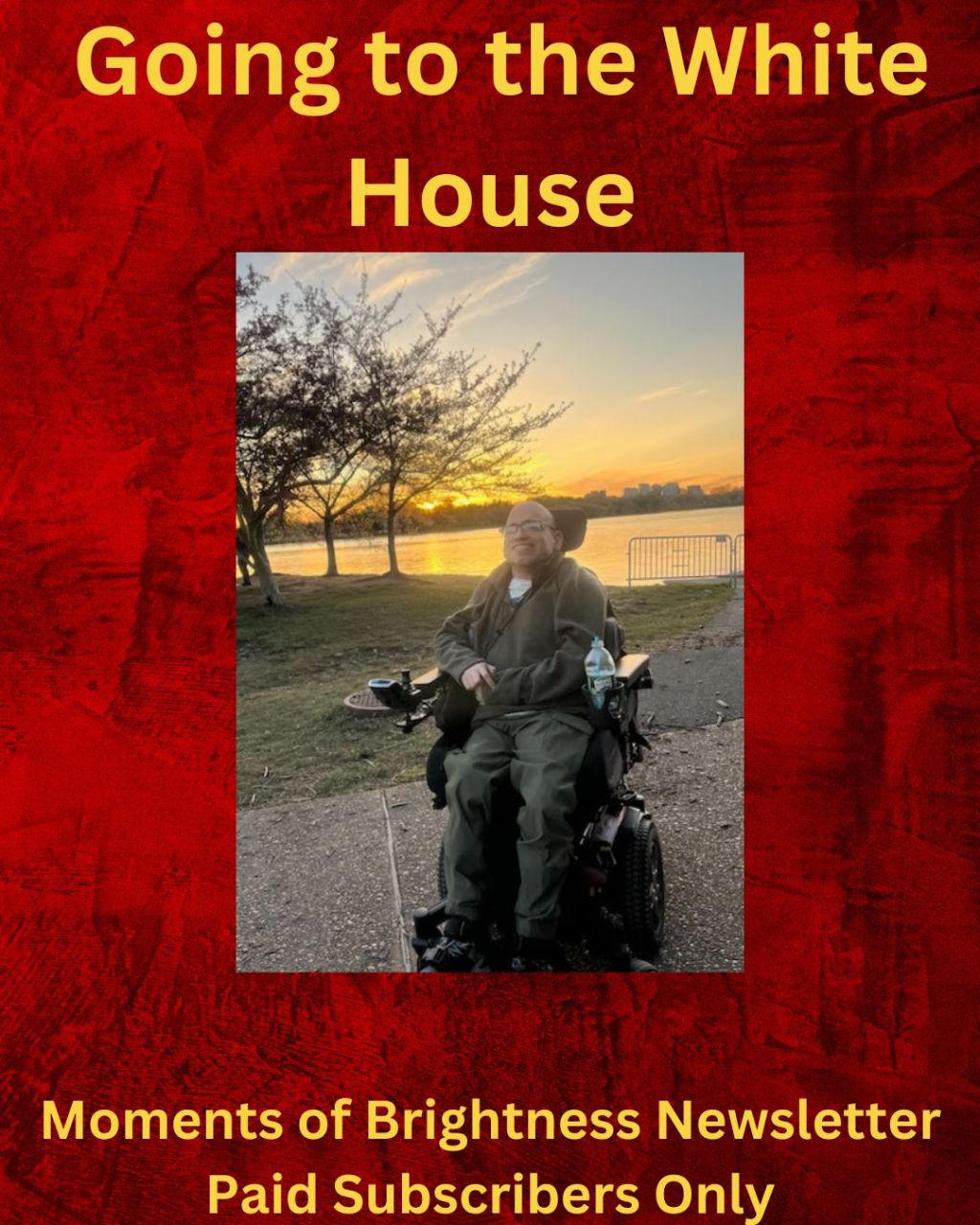
  • Going to the White House

    Going to the White House

    Subscribe to continue reading

    Become a paid subscriber to get access to the rest of this post and other exclusive content.