
Subscribe to continue reading
Become a paid subscriber to get access to the rest of this post and other exclusive content.
Become a paid subscriber to get access to the rest of this post and other exclusive content.
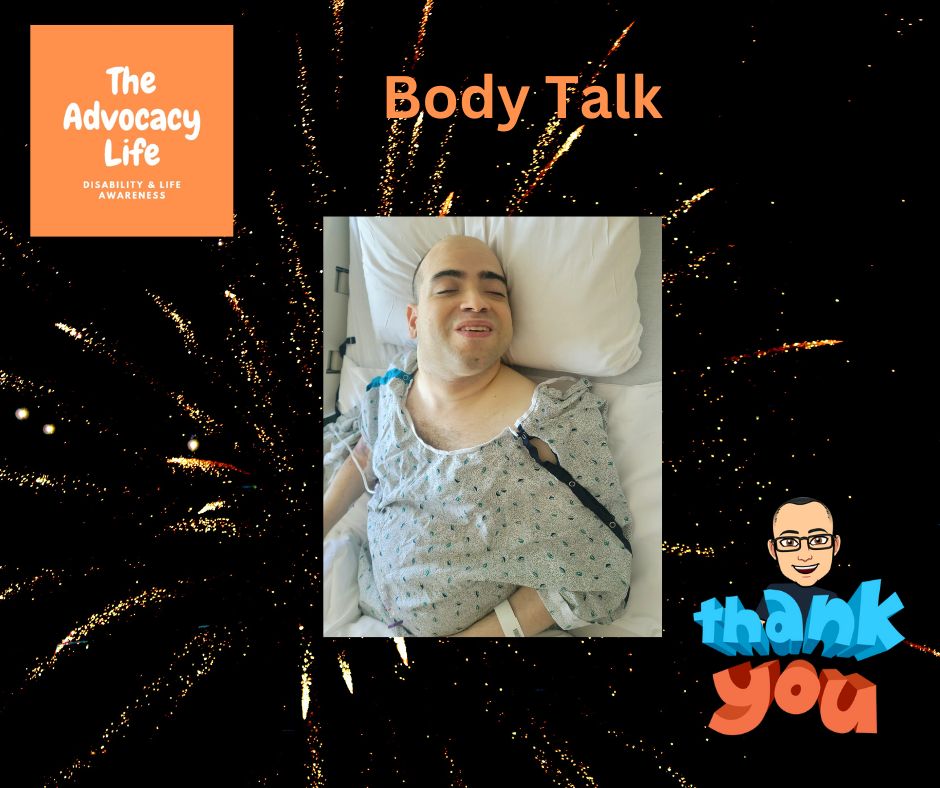
Greetings once again to all my readers. I don’t just enjoy writing blogs; I love reading them, too. Recently, I came across an inspiring post by Lily Pierce, a remarkable woman who lives with a disability. She wrote a powerful piece on how we perceive our physical appearance, and her words deeply resonated with me. I’ll include a link to the post for those interested. Lily’s post sparked an idea within me—one that I want to share today: a letter to thank my body for everything it has done for me, even when I’ve taken it for granted.
When people first see me, they may notice someone standing no taller than five feet, with little hair on my head since my twenties—but plenty elsewhere! Grooming can be awkward for anyone, but imagine having to ask for help to do it. That’s my reality. Some people may focus on the scars I carry from countless surgeries, or how no matter how much time I spend at the gym, I’ll never regain the six-pack I lost at sixteen.
I often joke that it’s only my body that’s broken—not my mind or heart. Of course, I know that’s not entirely true. But humor has always been a way for me to embrace my situation and make light of things. In a world that often values outward appearances, I can’t change societal standards—but perhaps, with this letter to my body, I can inspire a shift in how we view ourselves.
Galatians 5:17 NIV [17] For the flesh desires what is contrary to the Spirit, and the Spirit what is contrary to the flesh. They are in conflict with each other, so that you are not to do whatever you want.
Dear Body,
Many hands have helped care for you—not just mine. So many doctors, nurses, friends, family, and caregivers have played a role in keeping you strong, and I thank you for accepting all of them. Thank you for enduring years of medication and surgeries, and for allowing me to stay as healthy as I am today. I’m grateful that those medical interventions have lessened as we’ve aged.
Thank you to my eyes for showing me the beauty in the world, even when others focus on its negatives. Thank you to my nose for savoring the smells of home-cooked meals, and to my ears for absorbing laughter, wisdom, and the sounds that make life rich. Thank you to my voice and lips for helping me speak up for others and advocate for those in need.
To my arms and legs, thank you for always trying—despite the pain you endure. Even when walking or standing isn’t easy, you never give up. And as personal as this may sound, I want to thank my “male organ”—for reminding me that no matter how the world sees me, I am a man, whole and complete.
Lastly, thank you to my feet. Though I’ve never stood fully on you, I know I would have no foundation without you.
Our bodies may not always look or function as we wish, but they carry us through life nonetheless. For that, I am deeply thankful. Thank you for reading, and I hope you have a wonderful day.
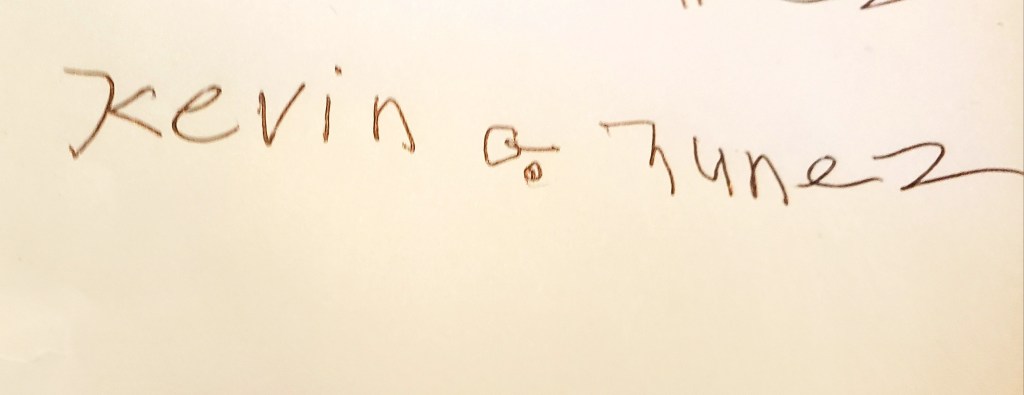
This is a Rewritten exert for my first book Confessions From Disability Limbo. Exclusively on Amazon.
As an individual living with Cerebral Palsy (CP), I take pride in being nonpartisan. My disability does not care if I support the elephants or the donkeys in November. Most likely, I will not walk in January regardless of who is sitting in the Oval Office. I may have been born disabled but everyone else is temporarily abled. Your body will fail, and you will need help from someone else to help you live your life. I can see both sides of most hot-button issues if you want to balance the economy ask someone who has a balanced budget on a fixed income for the majority of their life.
I would never impede anyone’s opinions or beliefs, Please be a patriot and go vote in November. Many suggest that eliminating the Department of Education would help balance the budget and bring money back to the states. This is not an efficient way to cut down on wasteful spending. This would be wrong and dangerous for individuals and families with disabilities.
Most Americans have never heard of the Individuals with disabilities education Act (IDEA). The legislation was revised in 1990 under a republican administration. Here is a quick overview of the law. According to Access for Special KidsResource Center (ASK)
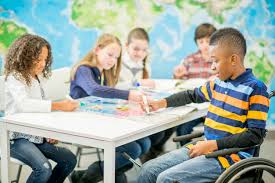
I am not ashamed to admit that I had an IEP meeting every year since I can remember. It ensured I had the proper support I needed to thrive as a student. I had a paraprofessional accompany me to every class who took my notes, helped me review materials after class, and helped me with my personal takes. I attended mainstream classes. I was not locked away in the special ed classroom. Every year some of the teachers f thought that’s where I belonged because I was a wheelchair user. I loved proving them wrong. The other students had to see me as a person not just a disability. I was a student just like them with goals, dreams, and embarrassing moments to overcome.
Psalms 41:1 NIV [1] Blessed are those who have regard for the weak; the Lord delivers them in times of trouble.
Disability should not be a burden on society, it should be an asset to their communities. Students without disabilities should not be afraid to approach those who are different. All children should be able to learn and help each other. That is how we build a prosperous future for America The reporter Geraldo Rivera exposed the horrors of Institutional living in the mid-80s. All these years later our population is still being Isolated. What makes one student less than another? Disabled students are placed in out-of-district schools that “specialize in disabilities.” They need to be allowed to see if they can adapt and grow with non-disabled peers before being segregated. The easiest solution is not always the best solution. There should not be a disabled population, versus a non-disabled population, but Americans. We need to move forward not backward.
Become a paid subscriber to get access to the rest of this post and other exclusive content.
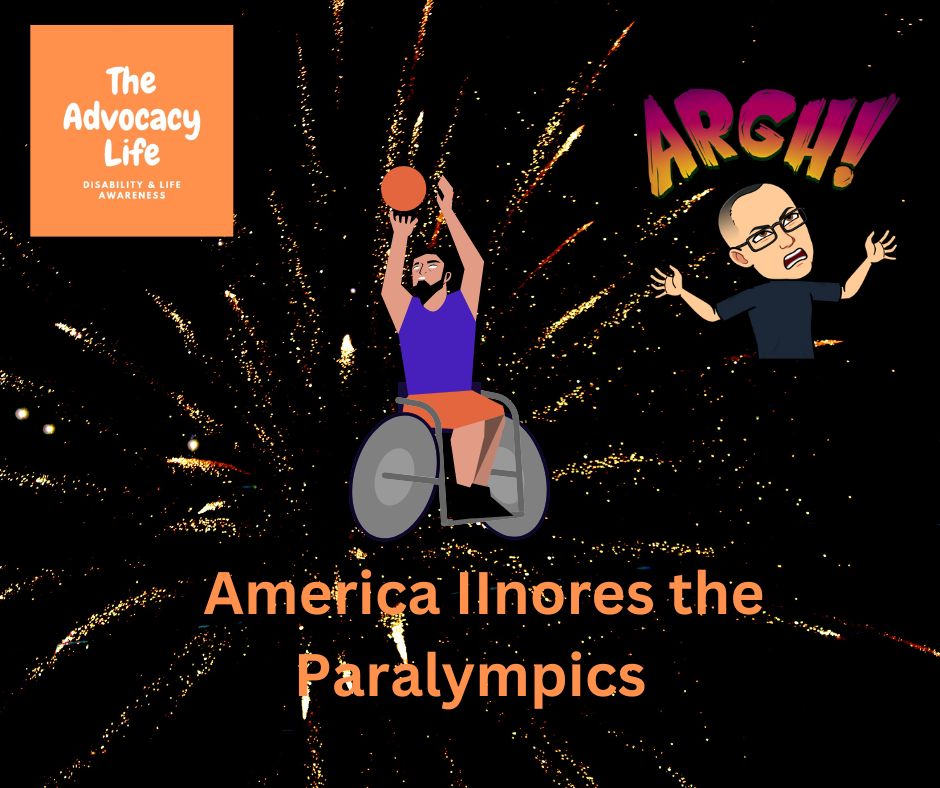
I’ve spent the last week and a half watching the Paralympics, have you? I am a proud American and love this country with all my heart. I would have enlisted to defend this nation long ago. Since I turned 18 I made sure to vote in every election, including the primaries. Most people don’t even know who sits on their School boards but I do. I always do my due diligence to research the candidates. That’s what you’re supposed to do. I am part of the American population that has been ignored, and I finally have a way to prove it. There is a sad truth in America. Unless disability affects your life in some way people don’t care about you. A few weeks ago there was non-stop coverage of the 2024 Paris Olympics. Everyone knew that LeBron James carried the flag at the opening ceremonies. Does anyone know who carried the flag for the USA in the Paralympic games?
Steve Serio has participated in several Paralympic games; he is the captain of the US wheelchair basketball team. All the sports channels went crazy when the US rugby team won a medal. Does anyone know what the Paralympic rugby team won? For years Michael Phelps and Simone Biles were on in primetime. The Paralympics have never been in primetime. Is it because the girls who play seated volleyball don’t wear revealing outfits like the ones in beach volleyball? I never saw any tick-tock with Snoop Dogg next to a paralympic athlete. For 17 days there were recaps every night of all the events if you didn’t have the peacock app they don’t televise 99% of the events. Channels in other languagesPromoted the Olympics for months, not this time

Does anybody care? We have all moved on to our fantasy football leagues and pumpkin spice lattes. America likes to preach equality and equity, but when it comes to the disabled we are hypocrites. I feel it is because America has this misguided belief that individuals with disabilities no matter what the diagnosis only serve to inspire and encourage the rest of the population. We cannot be seen as equals because otherwise the rest of America would have to see their mistakes and see their weaknesses. Americans like to pretend we are invincible. Besides liking a real on Instagram that lasts 3 minutes long we cannot be bothered to be moved outside of our comfort zone.
Leviticus 19:18 NIV “ ‘Do not seek revenge or bear a grudge against anyone among your people, but love your neighbor as yourself. I am the Lord.
Paralympic athletes are athletes. Instead of asking Alexa some dumb question ask it to give you a list of all the paralympic records that have been shattered over the last week and a half! Instead of complaining that there’s nothing on Netflix to watch. I dare you to look at a game of Goalball, paralympic bench pressing, or Blindsoccer. Everyone has their struggles but the disability population was not created just to make you feel good about your tribulations. We are your friends, we are your neighbors, and we should be treated as such we should be respected like every American!
i am hosting the Region 7 for SABE Click Here to register before September 6, 2024.
Become a paid subscriber to get access to the rest of this post and other exclusive content.
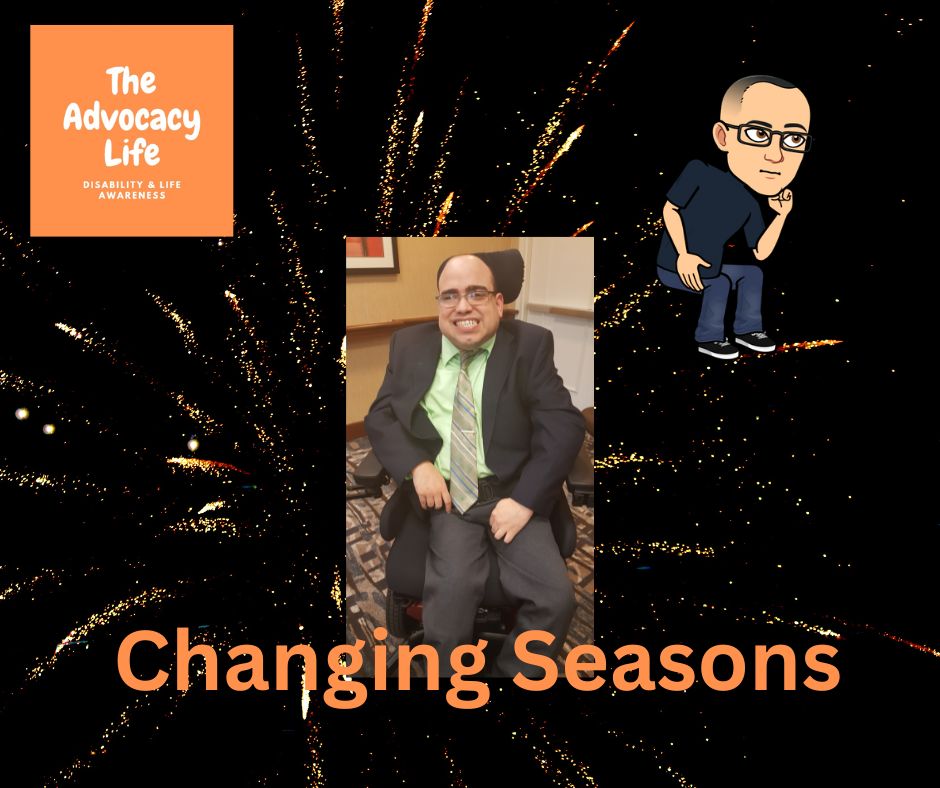
Hello readers, I want to wish you the best day ever. I know I’ve been absent for a few months. I’ve been dealing with severe respiratory issues. I was short of breath and without a voice for most of the summer, instead of spending my days at the beach or a park. I spent my days with a neti pot and a series of nebulizer treatments. My birthday was not spent with a cute girl, I spent it in Urgent Care trying to breathe. Honestly, I’m still not 100%. I Have something in my heart that I know someone needs to hear. I decided to move my weekly blogs to Thursdays and my next podcast will be released on September 15, 2024. My bonus newsletter will be released every Sunday As usual. I thank you all for your patience.
The word tokenism, according to Google, the word tokenism is defined as ” The practice of making only a perfunctory or symbolic effort to do a particular thing, especially by recruiting a small number of people from underrepresented groups to give the appearance of sexual or racial equality within a workforce.”
Expressions such as these are why I started this blog in the first place because so often people with disabilities are used as “tokens” to make us feel empowered while we are viewed as less than. When I joined the New Jersey Council on Developmental Disabilities and gave my oath of office I specifically asked God for the wisdom and strength to carry out all the duties asked of me. It was important to me to earn the spot I was appointed by the governor’s office. From 2017-2024 I served as the Vice-Chairman Of this organization. In a summer filled with disappointments and broken plans because of my illness this hurt.
Did they not know I was up until 11:30 The night before going through emails? Did I lose value to my colleagues? Was I just a token? I didn’t like to lose. I felt like I had earned that position with all the work I’ve done. After the meeting, I called the man who won the election. I was not upset with him Just the situation. I did it to help me move on. He didn’t answer so I left a message. I thought that would be the end of it.
Ecclesiastes 3:1 NIV [1] There is a time for everything, and a season for every activity under the heavens:
When I woke up the next morning he left a message on my phone. He was so overjoyed. I feel he needed this victory more than I did. I learned a lesson that day. I saved the message on my phone to make sure I remember it for years to come. If my dream is to become a public servant, I must be selfless instead of selfish. Maybe I’ll get elected again next cycle, maybe I won’t. It’s not up to me it’s up to the people. Maybe another opportunity will open up. I cannot give up and can not be the honored guest at my pity party.
So often people lose their lives because they’re so busy worried about the things they don’t have anymore. Don’t close yourself off the new opportunities. As always thank you for reading. Please leave a comment.
Hello Friends,
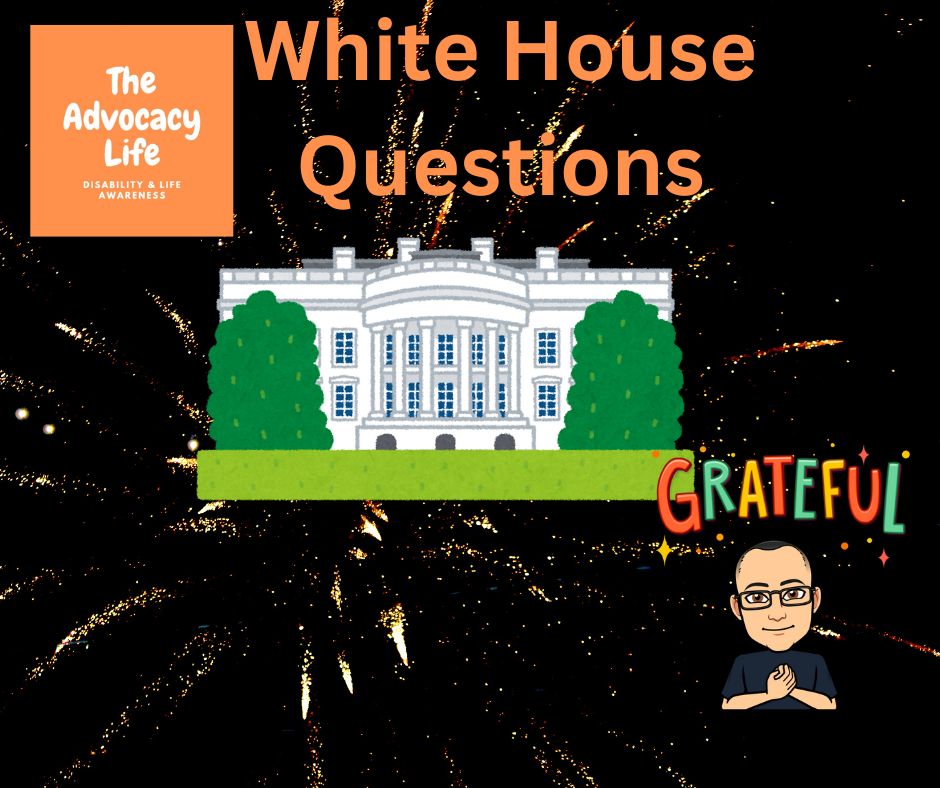
Hope you guys are having a great day. You guys will be seeing this the day after I have spoken at the White House in Washington DC. Yes, the Little old man got to speak at 1600 Pennsylvania. As part of a panel celebrating the 25th anniversary of the Olmstead decision. Avenue! Glory be to God. Here are the two questions I was asked and my responses. You will find the link to the entire event HERE
Colossians 4:6 NIV [6] Let your conversation be always full of grace, seasoned with salt, so that you may know how to answer everyone.
1. [All – 2 minutes/panelist]: Thank you all for being here. I’d like to begin today’s discussion with a two-fold question. Can each of you talk about your journey: what barriers have you encountered throughout your life and how has that shaped you as an advocate today?
Thank you Anna and thank you to the Biden-Harris administration for this opportunity to mark the 25th Anniversary of the Olmstead Decision. There is a saying in the disability community, “If you know one person with a disability, then you ONLY know one person with the disability”. Like a few of my fellow panelists today I was diagnosed at birth with Cerebral Palsy (CP.) If you examine our day-to-day lives you will find some similarities. We use wheelchairs. We all came here with our Direct Support Professionals (DSP). We need help with transfers, bathing, and other daily tasks. Those are the kinds of things people imagine when they think of those with disabilities. Some people believe that we are helpless. I began my advocacy journey because I wanted to change misconceptions. Ladies and gentlemen, I am Puerto Rican. I immigrated here with my family in 1991. You may be thinking of the same story “We came here for a better life.” My story comes with a bit of a twist, my twin brother Abner and I live with the same diagnosis. As with most twins, we are opposite, I am right-side dominant and he is left-side dominant. We both have different personalities, different goals, and most importantly, different needs.
As I got older, I had to balance the big picture and what obstacles were directly in front of us. Every day presents its share of obstacles, that’s what the mission is. That is the duty of a disability advocate to face each day and push through the challenges in hopes that you are paving a smoother road for someone else.
Getting active and involved as a self-advocate has been a game-changer for me. I currently serve as the Vice Chair of the New Jersey Council on Developmental Disabilities (NJCDD) and the chair of our Council’s Grants Committee. This is another opportunity for paving the road ahead.
We must keep in mind that according to the Centers for Disease Control (CDC), one in four Americans is diagnosed with at least one disability. That is a quarter of the population. We are your neighbors, we are your family, we are your friends. Our opinions matter, our stories matter, and our voices matter. Ultimately, I became an advocate because I was tired of seeing people I know feel stuck and isolated because they didn’t have a chance to be heard. I traveled here today to be heard and I appreciate your listening.
[Kevin Nuñez – 4 minutes each]: For people with disabilities watching this live stream, the idea of being a disability advocate can be a little intimidating. How did you get started in advocacy? What closing words of advice can you offer?
As a person with a disability, there are certain aspects of life I have to accept. I cannot get out of bed alone unless someone physically gets me out of bed. I know there are many things in my life I cannot do for myself. The term “learned helplessness” is real. Thankfully I found my way to learn how to help myself and others by writing a book, hosting a blog, and in my role as Vice Chair of the New Jersey Council on Developmental Disabilities. At NJCDD, we are paving the way with advocacy, systems change, and capacity-building activities. There are many examples to share, but I will focus on a few that have had an impact on meeting our Council’s goals and challenging ableism.
Six years ago, NJCDD funded a project to educate state officials and the NJ legislature about the significant role and responsibilities of Direct Support Professionals (DSPs). Providing education about DSP’s critical job functions paved the way for DSP recognition and the legislature included direct support professional wage increases in the state’s budget for the past six years. As a Council, we advocated, changed perspectives about the vital work of DSPs, and lifted some of the societal biases and discrimination against people with disabilities in the process.
Just before the COVID-19 pandemic that shuttered the disability community and locked most of us in our homes, the Council spearheaded and launched a bipartisan NJ Legislative Disability Caucus along with almost 40 members of our Senate and Assembly and an additional 45 supporting organizations. The main goal of the Caucus is that lawmakers form relationships with the people impacted by their work and consider the needs of people with disabilities before making laws. We were successful as a state in extending school for up to three years for graduating special education students who could not meet their educational goals due to COVID-19. Legislative Caucus members heard us and passed a bill allowing students to extend their educational entitlements. Around the same time, I participated in interviews and met with members of the legislature to address my experiences as a student with disabilities and the lack of proper planning to have me safely evacuate during school emergencies. Well, I can tell you today that because of advocacy and educating lawmakers, our state has a law that now requires school district emergency planning to better ensure the safety and security of students with disabilities.
Today we commemorate the 25th Anniversary of The Olmstead Decision. Two women used their experiences and voices to make a difference for others before judges and lawyers.
We must help each other and pave the way.
In closing, don’t live in fear because of your disability… find your abilities. Get involved with your Council on Developmental Disabilities because years ago, someone took a chance on a kid who had given up on college. Now, I sit here today in the White House! It is time for others to make a difference for the next generation. Don’t just sit at the table where the decisions are made but lead the discussion. Dream big and be great. Don’t be afraid! Never give up!
On the summer finale of The Purposely Broken World. Kevin breaks down ableism and fear with disabilities. thank you all for all the support this year I will be back with more episodes in September click on this link for more information. if you want to support the podcast.
As a child with a disability, I attended mainstream classes all my life. One memorable class was DARE (Drug Awareness Resistance Education), aimed at preventing drug addiction—a fear shared by all parents. This program made me realize the importance of early education on critical issues. Just as children learn about the dangers of drugs, they should also be taught about disability etiquette and inclusion from a young age.
Children’s natural curiosity about differences should be nurtured, not stifled. When a child asks about someone with a disability, parents often shush them out of discomfort. This only perpetuates ignorance. Instead, open discussions can foster understanding and empathy. I recall a time at a mall with my brother Abner and our caregivers. We exited an elevator and overheard a father tell his son, “Thank God you’re not like them.” This comment stung, but more than that, it made me pity the man for his ignorance—a product of likely never having been exposed to individuals with disabilities.
The disability community is the largest underrepresented and underserved group in the U.S., encompassing every body shape, skin color, sexual orientation, and gender. Despite this, society often ignores us to avoid disrupting their busy lives. Disability is not going away; it’s a natural part of the human experience. Everyone is only “temporarily able” and might need help eventually.
Living with a disability means no days off; it’s a constant presence. Every day, I face frustrations and struggles. In school, I wasn’t just the last picked for dodgeball—I was excluded entirely because it was deemed “too dangerous.” In home economics, while others learned to sew, I was switched to a different elective because the teacher assumed I couldn’t use the sewing machine pedal. I was never given a chance to adapt or prove my abilities.
Ableism limits growth for societal convenience, imposing barriers that exclude rather than include. Consider the story of Judy Heumann and the 504 sit-in—a pivotal moment in American history that highlights the fight for disability rights. Stories like hers should be part of our collective knowledge, teaching us about resilience and the importance of inclusivity.
Exposure to disability issues from a young age can normalize differences and reduce stigma. Integrating disability awareness into education can help children grow into empathetic, informed adults. The more we see and understand people with disabilities, the less “other” they become.
Our society must recognize that disability is part of the human condition and that inclusivity benefits everyone. By breaking down barriers and challenging ableist attitudes, we create a world where everyone has the opportunity to thrive. We must move beyond fear and ignorance to embrace a future where all individuals are valued for their unique contributions.

 The Advocacy Life Podcast & Blog
