Subscribe to continue reading
Become a paid subscriber to get access to the rest of this post and other exclusive content.

Happy Wednesday friends! I hope everything is going well. As you are reading this, I am currently on the way back from the disability policy seminar, and I’m excited to be in our nation’s capital, Washington, DC. I do not consider myself an influencer In this age of digital consumption, it is hard to get people’s attention, let alone keep it for any length of time. I’m just someone who tries to make a small difference in someone’s day. At first, I promised myself I would never charge anything for my creations. It started as a hobby. I don’t expect to have 100,000 followers anytime soon. I have 150 subscribers to the website. Less than a thousand followers on all social media platforms. I started this blog about 4 years ago, and the current version is about 2 years old. The same is true with the podcast. I am proud to say that I have a small but loyal following.
1 Corinthians 12:8 NIV [8] To one there is given through the Spirit a message of wisdom, to another a message of knowledge by means of the same Spirit,
Here’s something most creators will not admit: it takes a lot of time and energy to produce anything video, audio, or written. For a 20-minute podcast episode, it takes about an hour to record and about 3 hours to edit. My first book took about 10 years to write. My second book, which I hope to have out by the end of September, took about 3 years. Blogs are more fun to write because they’re less time-consuming,are the ones people focus on the least because people don’t like to read. For most people, this would be considered “disposable income” if they charged for their content. For someone like me, this is my income. A few months ago, I decided to start a bonus newsletter for subscribers for a small fee. I have a cash app and PayPal if anyone wants to give me a few dollars. Why does this matter so much to me?
Since I’m on social security, I can only earn so much. I live below the poverty line. Did you know that the term “handicapped” comes from the 1600s in London, when people with disabilities used to walk around with a cap, playing games and doing tricks for spare change? As a disabled American in 2024. I kind of feel the same way. Don’t get me wrong I love what I do, and I do what I love. It sucks just because I was born a certain way and was never given a shot at a real career or a real job. I love helping others with all my heart, but part of me feels like a very handsome, well-intention Oliver Twist, saying, “Please, sir, may I have some more?”
Most of my writings are written well in advance. So when I go to Washington, DC, even though I will always advocate for others first, This year I’m going to advocate to raise the asset limit for individuals with disabilities so I can earn a real living without having to stuff money under the mattress like I’m a criminal. Just because I was born a certain way doesn’t mean I should be in a second class. I should have the opportunity to make a living doing what I love. I will never ask for money, but if you’re interested, all the links are above. If you don’t like my content, that’s fine, but I guarantee you that you do follow some other small content creators, so please support them. Thanks for reading this, and I hope to see you guys next week.

Hey there, Today, I want to share some advice with you, even though I’m not an expert on anything specific. I thought it might be helpful to talk about something we’ve all experienced at some point: dating. But before we dive in, I want to make a couple of things clear.
Firstly, some individuals might not fully understand or grasp the concept of relationships due to their disabilities. It’s important to be mindful of this and ensure their protection. This post isn’t aimed at them.
Secondly, I didn’t start this blog to find dates. My goal is to break down barriers related to disabilities, and dating is a topic that often sparks controversy. Lastly, disabilities affect each person differently, so not everything I say may apply to everyone. With that said, let’s jump into some tips for starting a relationship when one or both partners have a disability.
Ephesians 6:12 NIV [12] For our struggle is not against flesh and blood, but against the rulers, against the authorities, against the powers of this dark world and against the spiritual forces of evil in the heavenly realms.

Hello friends,
Happy Wednesday to you all! Thank you once again for spending a little time with me. There’s been something on my mind lately, and I want to share it with you guys. This is going to be a bit of a controversial blog. A lot of people will not agree with this. Some people will call me an ableist. Ableism is defined as
“discrimination in favor of able-bodied people.“discrimination in favor of able-bodied people”.
Last week, I wrote a blog entitled The Disability Paradox. This is a very complicated sequel. There’s no nice way to say this; romantic relationships are complicated. Having a disability is also complicated. Mixing those two things is not easy. I need to say from the outset that there are individuals with such complex needs that they are not able to have a romantic relationship. That does not mean that they’re not allowed to feel their feelings and try to process them the best way they can. Remember that no two individuals living with a disability are the same, despite whatever the diagnosis says.
Reality television has done a much better job of including individuals with disabilities in its programming. There was a man on the spectrum who won a season of Big Brother. Years later, there was another female who won the Favorite House Guest award on another season of Big Brother without disclosing her autism diagnosis until the very end of the season. In addition, there was a deaf contestant on the competition series The Circle.
There is another reality show called Love on the Spectrum that features individuals trying to date with various intellectual disabilities. These are very real people with real feelings I don’t know if it’s the production and editing of the show, but the show comes across as very “inspirational and safe.” They want the individuals to be seen as happy and overcome all kinds of obstacles in their way. Yes, people with disabilities need more support, but the show does not focus on the long-term issues of the relationship, and how they handle those is scarcely shown. This show is designed to make the viewer feel happy. This show doesn’t feel real.
1 Corinthians 13:4-5 NIV [4] Love is patient, love is kind. It does not envy, it does not boast, it is not proud. [5] It does not dishonor others, it is not self-seeking, it is not easily angered, it keeps no record of wrongs.
As a person with a physical disability, I feel left out. There is another show I want to focus on called Love is Blind. For those of you unfamiliar with this show, able-bodied folks meet without seeing each other; they date for a few weeks before deciding to get married. This is appealing to me because this is the only scenario where someone would get to know me and not see me as someone in a wheelchair first. I cannot hide, nor do I want to be part of myself. I just want people to learn to look past the disability first.
I want to have a real conversation about faith, finances, long-term goals with a partner, sex, etc. Why are people with disabilities always segregated amongst ourselves? Everyone on Love is Blind is physically fit and has solid careers. The casting department was able to cover all ethnic backgrounds, but they forgot about the largest minority in the United States. It is important to show that individuals with disabilities should have romantic relationships. However, they are insinuating that they can only date others with disabilities This is not an example of inclusion but rather of exclusion. We are all part of the same human race, and we will have obstacles to overcome, regardless of ability. Real love should be what’s on the inside, not the outside. I know this is the beginning of a much deeper conversation Hopefully, someone will continue around the dinner table tonight.


Hey everyone! How are you doing today? I have something to share with you: I wasn’t always into advocacy. When I was growing up, I thought advocacy was just something my parents did to make sure I had what I needed from my school. To me, people who did advocacy seemed like they were just loud and not really helpful. My parents did a great job treating me like any other kid. They celebrated when I did well and corrected me when I made mistakes. They made sure everything at home and everywhere else was set up so I could do things on my own, like having a low bed I could easily get in and out of.
My family accepted my disability because it was all they knew about me. I even played baseball with other kids who had disabilities. But my family also knew that the world wouldn’t always make things easy for me. They enrolled me in regular classes at a public school. That’s when I learned about what I call “the Disability Paradox.”
Advocacy is about teaching people and changing their minds about things they’re not used to. Even though we have laws like the Americans with Disabilities Act (ADA), it doesn’t mean everyone with a disability is treated equally. Think about it: When a mom is expecting a baby, she hopes the baby will be “healthy.” But what does that mean? Why should having a disability be seen as a bad thing?
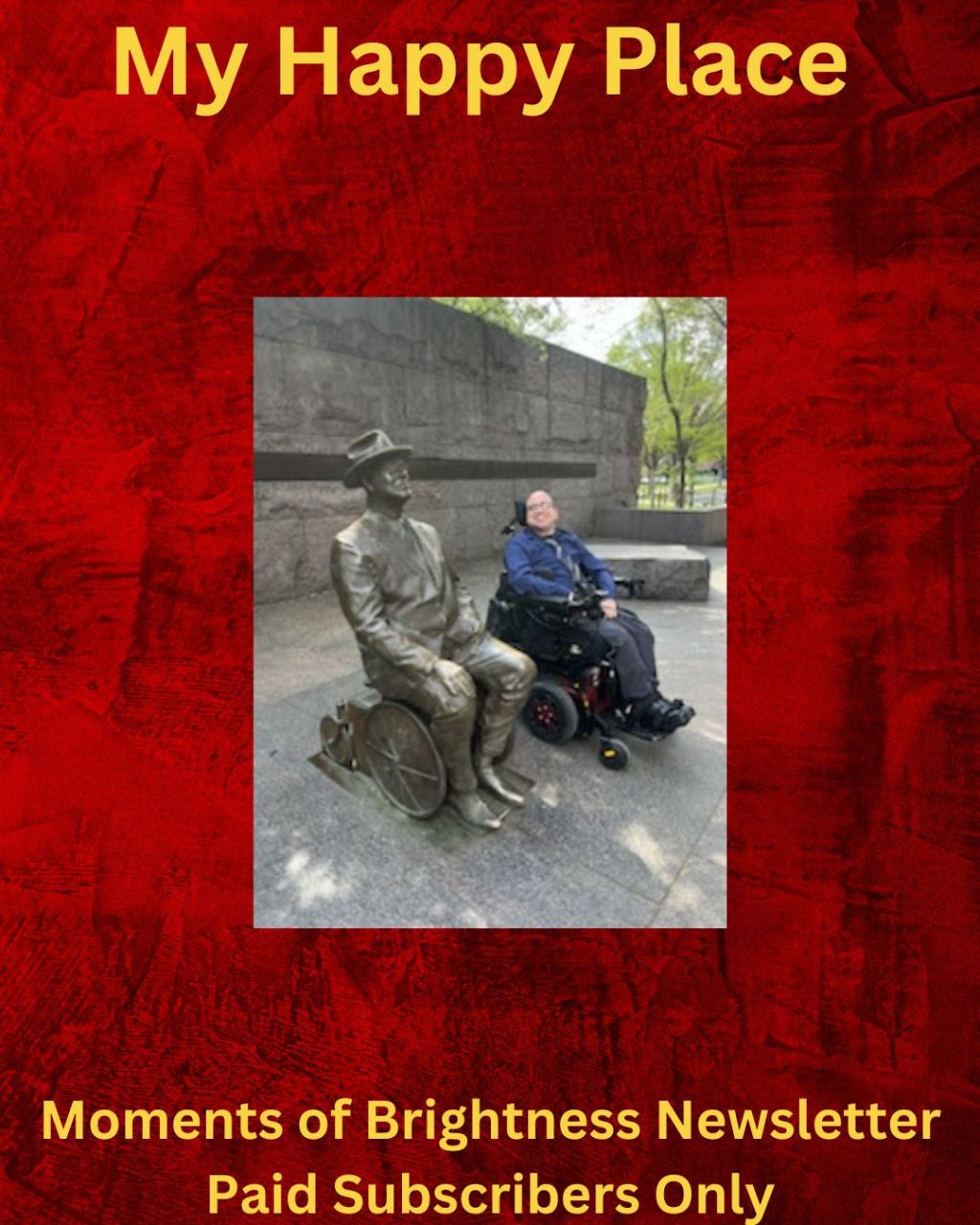
Did you know that Franklin D. Roosevelt used a wheelchair because he had polio? He hid it by using special braces on his legs, even though it was really painful. But even now, many people with disabilities still feel like they have to hide who they are. People have done amazing things like going to the moon and building tall buildings, but there are still a lot of people with disabilities who don’t get the help they need.
We talk about big issues like climate change, but sometimes the solutions don’t work for everyone. Imagine not being able to drink a lemonade on a hot day because of a ban on plastic straws. This is something that could’ve been avoided if people with disabilities were included in the decision-making process.
We’re not just here to inspire or be pitied. We’re part of society just like everyone else. But why don’t we see more people with disabilities in positions of power? We’re more than just a feel-good story during prom season.
Lots of people have disabilities, but society often sees us as broken and needing to be fixed. But we’re not broken. We just need the same chances as everyone else.
This is just the beginning of many conversations we need to have. It’s okay if you don’t understand at first. Just listen and learn. Once we all know better, we can all do better.

Greetings readers, are you ready for spring? I know it seems kind of far away. I’m writing this with only a few days left in February. There is still a cold chill in the air. Although spring training games have officially begun, warmer weather must be on the way. I have observed several bloggers doing this by providing their followers with updates on their activities. I wanted to share my exciting upcoming projects with everyone to encourage them that anything is possible, even though it always seemed a bit silly to me. Hey, every few months, the president gives a State of the Union. I may not be the best writer in the world, but I can promise it’ll be better than that.
Mark 9:23 NIV “ ‘If you can’?” said Jesus. “Everything is possible for one who believes.”
Let’s start with the health stuff. As of now, I have no major health concerns or upcoming medical procedures. This is really cool because last year I had two surgeries: a hiatal hernia removal and an endoscopy. The hernia revealed a whole bunch of polyps in my upper stomach that were noncancerous. When you have a disability, it always seems like there’s some weird medical thing on the horizon, so it’s nice for now to just enjoy the sunset.
Next update on my advocacy career. I now represent seven states on a national board of directors run by and for people with disabilities. The organization is called Self Advocates Becoming Empowered or SABE click here to read about my initial reactions to joining this organization. For now, I can say it is the most challenging but thrilling adventure of my life. Helping others is what I was made for. I don’t even care about traveling across the country. Truth be told, some days I’d rather be home in bed. I don’t do this for prestige. The day it becomes about that is the day I leave people with disabilities. They should need to be at the table to make a difference.
Finally, I want to recommend something that has nothing to do with disability at all. It’s a very fun and entertaining book called Mox. It is the personal memoir of professional wrestler and sports entertainer John Moxley. Yes, wrestling is partly staged, but they’re still real athletes trying to entertain you. This book teaches you about life in a very different way. You can turn your brain off, but some important nuggets will sneak in there.
I know this is a different kind of blog. I hope you guys still enjoyed it. Thanks for your time, and have a great day. I will see you guys next week.


Whether we like it or not, 2024 is a presidential election year. Now that we are most likely faced with a rematch, Americans will have to make a choice. It’s fair to say that President Biden has had his share of critics. His first term is not even over, but I don’t think many historians are going to put him in their top five of the best US presidents. I know I’m a few months early, but as a disability advocate, I have a different perspective. There are issues that matter to me that most people don’t think about. Most people don’t recognize disabilities until they’re affected by them. We finally have a president who has seen this underrepresented community.
“provide for the common defence, promote the general Welfare, and secure the Blessings of liberty.”
free and both of the US Constitution
Biden became the first president to improve the lives of people and families with disabilities when he vowed to support Home and Community Based Services (HCBS), which includes long-term services and supports. (LTSS) People with disabilities should live in their communities in the least restrictive environment. For some people with disabilities, they are locked away and forgotten. We must serve and protect those who are most vulnerable. Some may want us dead. We all have the same right to live.
Exodus 14:14 NIV [14] The Lord will fight for you; you need only to be still.”
I am a capitalist. It is maddening to me that just because I was born with a disability, I am forced into a system of poverty. There is nothing wrong with being broke. What is wrong is that I, as an American, don’t have a chance to change that. The social security asset limit set in the mid-1980s has not changed. Under this administration, there has been serious discussion about raising it. I cannot have more than $2,000 in a bank account, so someone else can pay for my $50,000 wheelchair. How does that make sense? I want to live my American Dream, not exist off of the backs of others. There is nothing like going home knowing you earned that money.
Emily Voorde probably won’t be studied in history books like Kamala Harris. Voorde was the associate director of public engagement for just under 500 days. For the first time in my life, I saw someone who looked like me in a real position of power. She was not there just to be a token, but to actually make change.
Most Americans don’t realize that we still don’t have marriage equality in this country. There is still a marriage penalty for those with disabilities. This president may stumble with his words from time to time, but I’m confident he would support eliminating this obscene restriction so people can love regardless of their abilities.
I certainly don’t agree with all of the Biden administration’s policies. He still has more proof. The work is still not done. However, he is the first president to give me, as a disabled American, hope for my American Dream.

Check out the latest on the bonus content for just $5 a month

Hello, my friends, I hope you guys are having an excellent day. We all have dreams. Cinderella said it best: “A dream is a wish your heart makes.” Without a dream, we cannot have goals. Every goal starts out as a dream or idea. There are so many people out there who are “dreamers,” but there are very few who do anything about it.
I’ve never wanted to be an NBA star or an astronaut. One of the restrictions of my disability is that I cannot have a ”dream job.”. To be specific, I do not have a job. Anyone can dream. Now that it is January 2024, it is officially election season.
Regardless of which side of the political spectrum you fall on, there will be an election in a few months.
Colossians 3:17 NIV
And whatever you do, whether in word or deed, do it all in the name of the Lord Jesus, giving thanks to God the Father through him.
My dream job is to have a job working for an elected official. Disability should not be a partisan issue. Every American should have the right to work and earn a living. Why do my circumstances automatically put me in a system of poverty? The disability asset limit sits at $2,000 at any one time. That limit has not been raised since the mid-1980s. The cost of raising a disabled child is 20 to 25% more. There is no official disability tax, but I certainly feel it.
No matter how significant the medical diagnosis is, everyone should feel like they have a purpose. Everyone should be able to dream. There is currently legislation to have the asset limit raised to $10,000, but it hasn’t gotten much public attention, so it really hasn’t gotten anywhere. My population just wants to do their part,pay their taxes, and contribute to our society.
America is the land of opportunity. America is the land of dreams. America started out as a dream. Whoever sits in the overall office come January 2025, don’t forget the American citizens with disabilities. We just want the chance to turn our dreams into reality, like anyone else in the land of the free.

$5 a month there is a additional newsletter that will be released every Sunday. It’s more of a fun side about Kevin’s life and anecdotes from all his adventures subscribe today. Click on the button on the top of every post
I started Letters from the Limbo as a way to connect with you on a deeper level. Twice a month, I send out an email filled with personal anecdotes, professional updates (like my recent reelection as Vice Chair of the NJCDD), and the policy insights I don’t share anywhere else. This isn’t just another email—it’s an unfiltered look at the life of a disability advocate. Join my community and get an exclusive, honest look at the work that matters

Imagine someone proposing to install cameras in your home without your consent. You’d likely object strongly, and rightly so. Now, consider a piece of legislation, S1897/A2483, known as Billy Cray’s Law. The New Jersey legislature is aiming to introduce monitoring devices in group homes and community-based settings for people with disabilities. As Kevin Nuñez, I want to clarify that my opinions are my own, shared to shed light on an often overlooked issue.
The origin of this legislation lies in the tragic passing of Billy Cray, who was found dead in a group home closet. Recent articles, such as the one highlighting the push for cameras in group homes, add a layer of complexity to an already contentious debate. Another piece examines the ongoing discourse surrounding whether cameras would genuinely make group homes safer or if they compromise residents’ privacy.
Financially, the burden on providers is immense. The strain on the disability care system has been building for a while and has reached a breaking point, made worse by current issues. Caregivers, the backbone of the system, already face difficulties. Constant scrutiny undermines the trust crucial for effective care.
Proverbs 28:6 NIV Better the poor whose walk is blameless than the rich whose ways are perverse.
Particularly troubling is the provision allowing monitoring devices in bedrooms and at the entrance to bathrooms. If any individual or their family does not wish to be recorded, they must move. This is a forest evacuation. This “choice” is more illusion than empowerment. This bill aims to protect the most vulnerable, but instead, it takes away freedom for all individuals. The disability population is made up of people. Please stop trying to fix the system with a one-size-fits-all solution.
In a time where awareness is crucial, I encourage everyone to conduct their research, form their opinions, and engage in discussions about the potential repercussions of Billy Cray’s Law. It’s not just a matter of legislation; it’s about the well-being and rights of an often marginalized community. The recent push for cameras in group homes, coupled with the ongoing privacy debate as explored in the linked articles, underscores the need for a nuanced approach that balances security with respect for personal privacy.

Sources:
https://nj1015.com/after-man-was-found-dead-in-closet-a-push-in-nj-for-cameras-in-group-homes/
I started Letters from the Limbo as a way to connect with you on a deeper level. Twice a month, I send out an email filled with personal anecdotes, professional updates (like my recent reelection as Vice Chair of the NJCDD), and the policy insights I don’t share anywhere else. This isn’t just another email—it’s an unfiltered look at the life of a disability advocate. Join my community and get an exclusive, honest look at the work that matters