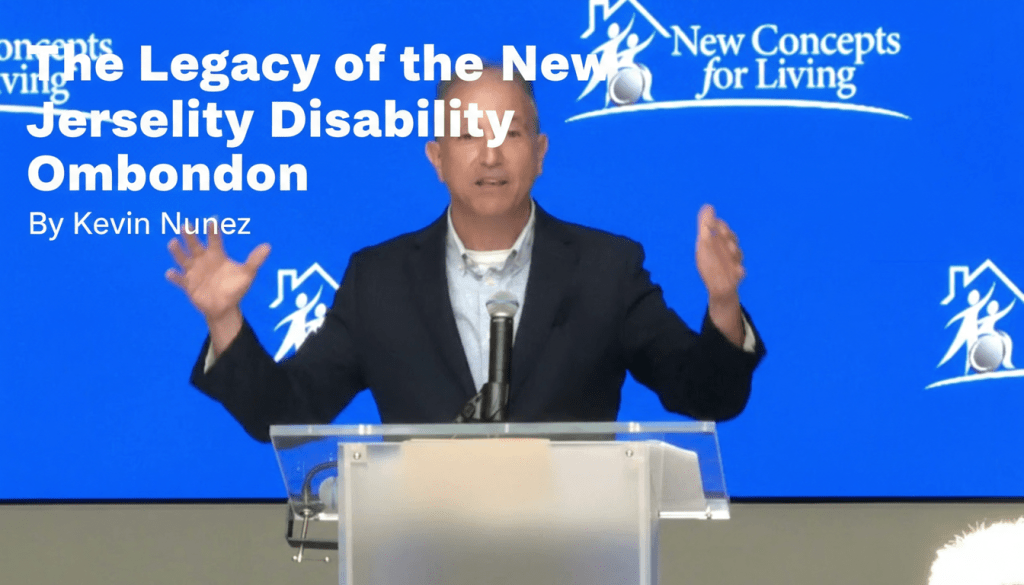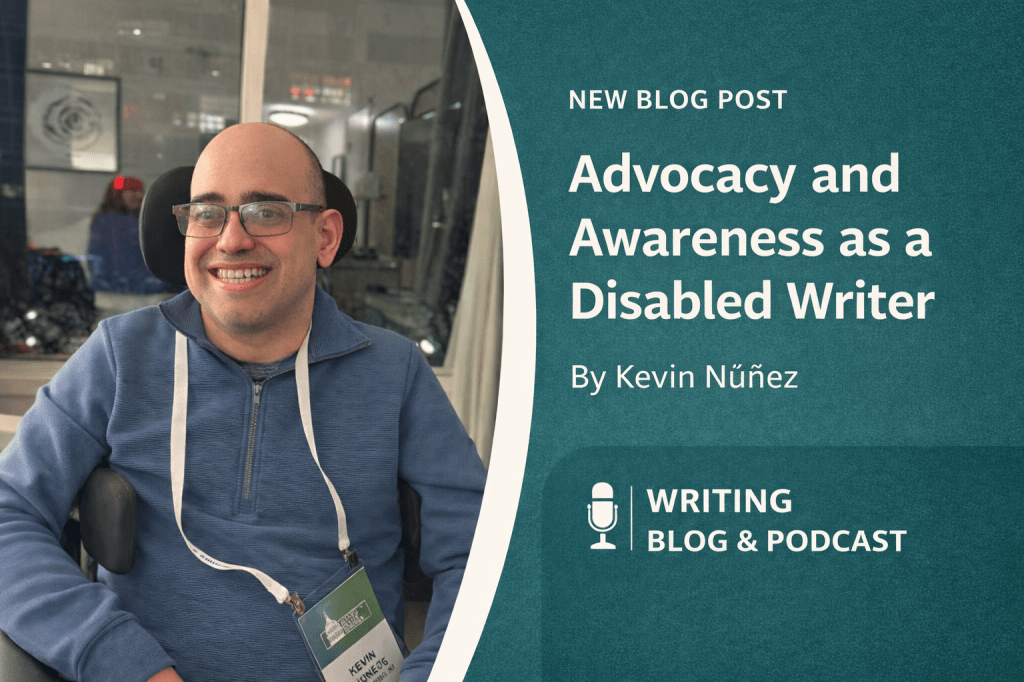
Tag: disability blogger

  • A Message to the New Governor

    A Message to the New Governor

    “The price of freedom is eternal vigilance,” Thomas Jefferson famously declared.

    I’m writing this blog just hours before the election results roll in here in New Jersey. By the time many of you read this, our state will probably have a new governor-elect. If I could address the incoming governor, I would start with this: Do not forget us.

    The disability population is the largest, most underserved, and most underrepresented community in America. We are voters. We are taxpayers. We are citizens. Yet, we are an afterthought, if thought of at all. Our needs are frequently sidelined in policy debates, treated as niche issues rather than fundamental human rights. This needs to change.

    Our community is incredibly diverse. Disability comes in every skin color, every background, every walk of life. It touches families across all demographics, socio-economic statuses, and geographic locations. This means that disability rights are unequivocally human rights. They do not subscribe to any single political party, and our allegiance isn’t to a red or blue banner, but to the dignity of every person.

    We stand for policies that genuinely support independence and self-determination, not those that inadvertently trap individuals in poverty or limit their potential. The disability experience is unique to the individual; a “one size fits all” approach simply does not work. We need policies crafted with nuance, understanding that what empowers one person may not work for another. We need legislation that respects the dignity of risk, allowing individuals to make choices, to learn, to contribute, and to live full, meaningful lives without fear of losing essential supports.

    Many people with disabilities can and want to work. We want to contribute to our communities, to pay taxes, and to be active participants in the economy. Yet, current systems often create perverse disincentives, penalizing individuals who earn above a certain threshold by stripping away vital benefits like healthcare or personal care assistance. This traps people in a cycle of dependence when they desire nothing more than to be independent. Help us break these barriers. Help us contribute without fearing penalty. Help us be taxpayers, not perceived burdens.

    Our community wants to contribute, not just consume resources. We seek opportunities, not charity. We demand respect, not pity. We are a vital part of New Jersey, and our voices deserve to be heard, our needs addressed, and our rights protected.

    As the new administration takes shape, I urge them to remember Thomas Jefferson’s warning. The freedom and well-being of the disability community depend on constant vigilance from our leaders. We will be watching, advocating, and striving for a New Jersey where every citizen can thrive.

  • Disability Limbo Newsletter November 3, 2025

    Disability Limbo Newsletter November 3, 2025

    Subscribe to continue reading

    Become a paid subscriber to get access to the rest of this post and other exclusive content.

  • Beyond the Sandbox

    Beyond the Sandbox

    Community blog

    “Being all equal and independent, no one ought to harm another in his life, health, liberty, or possessions.”

    These words, penned by John Locke in his Second Treatise of Government, form a cornerstone of the philosophy. That speaks to a fundamental understanding of human dignity and mutual respect. Yet, as I watch the political theater unfold in Washington, with the government shutdown extending beyond six weeks and critical aid hanging in the balance, I can’t help but feel a profound disappointment between these foundational ideals and the harsh reality facing millions of Americans.

    The job of the legislative branch, in its most basic form, is to look after the interests of the people. “The voice of the populace” is the protector of our collective well-being. Right now, while our elected officials bicker, real people are staring down the barrel of unimaginable hardship. Mothers, individuals with disabilities, and teachers—some of the most vital threads in our societal fabric—are in danger of losing their food stamps after November 1st. The SNAP deadline looms, threatening to strip away essential support from those who depend on it most to put food on their tables. Meanwhile, those who are supposed to be serving us are still getting paid, seemingly for not doing their jobs.

    “We the People of the United States, to form a more perfect Union, establish Justice, insure domestic Tranquility, provide for the common defence, promote the general Welfare, and secure the Blessings of Liberty to ourselves and our Posterity, do ordain and establish this Constitution for the United States of America.”- Preamble of the United States Constitution.

    This isn’t the fault of one side alone. This crippling gridlock is a failure shared by both Democrats and Republicans. Instead of focusing on the big picture – the welfare of the citizens they swore to represent – they’ve become like children refusing to play in the sandbox. Each side digs in, unwilling to concede an inch, while the very people they serve suffer the consequences.

    “Both sides must part from some of their demands in order that they may join in some accommodating proposition.”-Benjamin Franklin

    This isn’t weakness; it’s the essence of effective governance. It’s the recognition that the greater good often requires compromise, a willingness to find common ground for the sake of the nation. Ensuring access to healthcare, or providing stability for those who depend on government programs to have a semblance of a quality of life.

    A government shutdown of this duration is not a mere inconvenience; it’s a national crisis in slow motion. People will suffer. Those already living on the margins will be pushed further into despair. The fragile lifelines so hard-won and essential for survival, are being torn apart by political posturing. The consequences are real, immediate, and devastating.

    We, as citizens, must demand better. We must remind our representatives of their fundamental duty: to protect the life, health, liberty, and possessions of all their constituents. This isn’t about choosing a side; it’s about choosing humanity. It’s about insisting that our leaders move beyond the partisan sandbox and fulfill the promise of a government that actually works for its people.

    Let us hold them accountable, not for their party affiliation, but for their commitment to compromise, to service, and to the basic principles of equality and mutual respect upon which this nation was founded. Our most vulnerable cannot afford their games.

    The Podcast

    Published Books

    Subscribe to Letter from Limbo

    Read more of this content when you subscribe today.

    One-Time
    Monthly
    Yearly

    Make a one-time donation

    Make a monthly donation

    Make a yearly donation

    Choose an amount

    $1.00
    $3.00
    $5.00
    $5.00
    $15.00
    $100.00
    $5.00
    $15.00
    $100.00

    Or enter a custom amount

    $

    Your contribution is appreciated.

    Your contribution is appreciated.

    Your contribution is appreciated.
    DonateDonate monthlyDonate yearly
  • The church’s Disability

    The church’s Disability

    A Community Blog

    For many of us in the disability community, our relationship with faith can be incredibly complex. We love the Lord, we crave spiritual connection, but too often, the very places meant to offer solace—churches—become spaces of discomfort and judgment. It’s a paradox that weighs heavily on the soul.

    Who wants to go to church and be constantly stared at? Who wants to attend a funeral, already a time of immense grief, only to hear the pastor speak about the deceased as if they were a stranger, completely unaware of the rich life lived by the person with a disability they are meant to be celebrating? These aren’t isolated incidents; they’re common experiences that chip away at a sense of belonging.

    That’s precisely what so many well-meaning congregations don’t quite grasp. As a disabled person, when you feel that energy – the pity, the awkward glances, the unspoken questions – it actively pushes you away, no matter how much you yearn for spiritual connection. You feel like an outsider, an anomaly, rather than a cherished member of the flock. It makes you want to retreat, to seek God in the quiet solitude of your own home, far from the subtle rationalization.

    What truly frustrates me is the disconnect. People gather to praise and worship, singing about love and community, yet many remain firmly entrenched in their own safety bubbles. They’ll lift their hands in adoration but won’t extend one to say hello at fellowship. They’ll preach inclusivity but practice exclusivity, often unconsciously. The truth is, you’ll never be able to reach everyone, but that doesn’t mean we stop trying to bridge the gap between professed faith and lived acceptance. This isn’t about malice; it’s about a lack of understanding, a failure to truly see and welcome.

    My dream? I would love to walk into a congregation—or roll into it, as the case may be—and see it bustling with wheelchairs and walkers, with people of all abilities steaming with joy for God. Too often, I’ve been the only person with a disability in the church. Or, if there are others, they’re tucked away in a corner, out of sight, out of mind, so as not to “bother” the rest of the folks. This isn’t what true community looks like. This isn’t what radical love looks like.

    Matthew 18:20 NIV “ For where two or three gather in my name, there am I with them.”

    We need spaces where our presence isn’t an inconvenience, our bodies aren’t a spectacle, and our faith is celebrated just as vibrantly as anyone else’s. It’s about creating an environment where the spirit can truly soar, free from the burdens of judgment and isolation. We need churches willing to step out of their comfort zones, not just physically accessible buildings, but truly accessible hearts.

    A quick note for my incredible community:

    I’m currently traveling and, unfortunately, don’t have access to my podcast equipment right now. Because of this, I’ll be sharing an additional Community Blog this week to keep our conversations flowing! Until I get my podcast back up and running, you can expect these bonus Community Blogs every Wednesday. Thank you for your understanding and continued engagement!

    The Podcast

    Published Books

    Subscribe to Letter from Limbo

    Read more of this content when you subscribe today.

    One-Time
    Monthly
    Yearly

    Make a one-time donation

    Make a monthly donation

    Make a yearly donation

    Choose an amount

    $1.00
    $3.00
    $5.00
    $5.00
    $15.00
    $100.00
    $5.00
    $15.00
    $100.00

    Or enter a custom amount

    $

    Your contribution is appreciated.

    Your contribution is appreciated.

    Your contribution is appreciated.
    DonateDonate monthlyDonate yearly
  • Disability Limbo Newsletter October 20, 2025

    Disability Limbo Newsletter October 20, 2025

    Subscribe to continue reading

    Become a paid subscriber to get access to the rest of this post and other exclusive content.

  • Unknown Future for Disabled Students

    Unknown Future for Disabled Students

    October community Blog

    An executive order aimed at “reorganizing the executive branch” has initiated a restructuring within the Department of Education so sweeping that an estimated 90% of the Department of Special Education has been cut. This is not mere bureaucratic shuffling; it is a profound threat to the educational lifeline of millions of students with disabilities and their families across America.

    The Office of Special Education Programs (OSEP) and the Rehabilitation Services Administration (RSA)—two pillars of federal support for disability education and vocational services—are being consolidated into a new “Office of Disability Programs.” While presented as an efficiency measure, this move risks diluting specialized expertise and advocacy under a broader, less focused umbrella.

    It suggests a fundamental misunderstanding of the intricate needs of students with disabilities, whose educational journeys require dedicated attention. We are not just “people with disabilities”; we are students with IEPs, individuals requiring specific accommodations, and citizens entitled to tailored pathways to independence.

    The countless parents who have fought tooth and nail for their children’s rights under the Individuals with Disabilities Education Act (IDEA). They’ve navigated complex systems, battled for resources, and advocated for individualized plans that are often the only guarantee of a meaningful education. Now, with the federal offices designed to uphold these rights being drastically downsized, what does this mean for the future of compliance, oversight, and—most critically—access?

    This prospect could leave families isolated, battling under-resourced schools, and facing an even more daunting bureaucracy. This isn’t an abstract policy change; it’s a direct assault on the promise of an equitable education for our most vulnerable students.

    This cannot and must not be allowed to become a partisan issue. Disability rights are human rights. They transcend political ideology because they speak to the fundamental dignity and potential of every individual. Every community, every family, regardless of political affiliation, is touched by disability. Access to education, vocational support, and a life of self-determination are not negotiable political bargaining chips; they are universal entitlements in a just society. When we diminish these protections for people with disabilities, we don’t just harm a segment of our population; we diminish the moral standing and strength of our entire nation. A powerful society uplifts all its members, recognizing the inherent value and contribution of all citizens.

    Therefore, we must move beyond fear and into urgent action. The immediate and paramount call to action is to educate and empower families with disabilities to navigate this perilous new landscape of disability services.

    • Stay informed, double-check all sources, and share what you’ve learned.
    • Engage with your local school boards, state disability councils, and advocacy organizations. These local entities will be on the front lines, and they need reinforced support and active participation.
    • Build new connections by reaching out to others who have not been reached before, and collective strength is the key.

    The foundation of disability education in America is under threat. By uniting, informing ourselves, and advocating tirelessly, we can protect the rights and futures of millions. This fight requires every voice.

    The Podcast

    Published Books

    Subscribe to Letter from Limbo

    Read more of this content when you subscribe today.

    One-Time
    Monthly
    Yearly

    Make a one-time donation

    Make a monthly donation

    Make a yearly donation

    Choose an amount

    $1.00
    $3.00
    $5.00
    $5.00
    $15.00
    $100.00
    $5.00
    $15.00
    $100.00

    Or enter a custom amount

    $

    Your contribution is appreciated.

    Your contribution is appreciated.

    Your contribution is appreciated.
    DonateDonate monthlyDonate yearly
  • Disability Limbo Newsletter October 6, 2025

    Disability Limbo Newsletter October 6, 2025

    Subscribe to continue reading

    Become a paid subscriber to get access to the rest of this post and other exclusive content.

  • The Illusion of Disability Hierarchy

    The Illusion of Disability Hierarchy

    September Community Blog

    There’s no definition of “disability hierarchy,” and I think that’s on purpose. It is a construct, a trick to keep people with disabilities fighting endlessly over the same limited resources. It makes one disabled person seem “better” or “worse” than another. This artificial division only hurts us all, preventing us from focusing on the genuine problems we face.

    Everyone has things they’re good at and things they’re not so good at. That’s just how people are. When someone has a disability, these strengths and weaknesses often just show up more clearly. My life is a perfect example. I need a lot of help with physical activities every day–like bathing and getting dressed. Many people might see this as a big weakness, a sign that I can’t do things on my own. I was once told that,

    “Your life is simple because people do everything for you.”

    My experiences have taught me something important. What seems like a weakness can hide enormous strength. At habitation programs I’ve been to, I’ve met many people who could move around much better than I. They can go to the bathroom by themselves and perform many daily tasks that I can’t. But many of these same people looked to me to speak for them. They couldn’t talk to explain what they needed or wanted. In those moments, my “weakness” became their strength. My ability to speak up, to ask for respect, and to fight for what’s right became an important asset for them.

    Isaiah 45:9 NIV  “Woe to those who quarrel with their Maker, those who are nothing but potsherds among the potsherds on the ground. Does the clay say to the potter, ‘What are you making?’ Does your work say, ‘The potter has no hands’?

    This shows why the idea of a disability hierarchy is harmful. It makes us look at easy-to-see differences and judge who is “more disabled” or “less able.” But being able to do things isn’t just one simple thing. It’s a mix of physical skills, thinking skills, feelings, and how we talk to each other. Someone who needs a lot of physical help might be incredibly smart or have a spirit that inspires everyone. Someone who can’t speak might show so much through their eyes or actions.

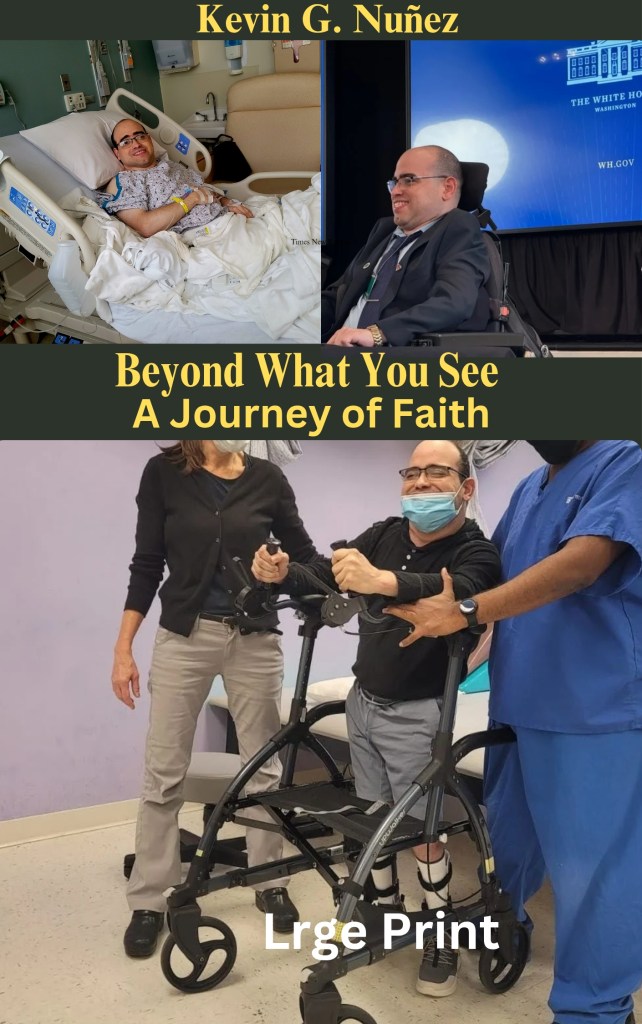
    My journey, from needing total physical care to becoming a forceful advocate who speaks at big events and has a popular podcast, shows how strengths and weaknesses work together. My physical “weakness” has actually made my mind sharper and made me want to fight even harder for others. It has given me a way to understand and speak up for those who might not be heard.

    To move forward, we need to get rid of this harmful idea of a hierarchy. Instead of comparing needs or ranking disabilities, we must see the true worth and special talents of every person in the disability community. We need to understand that real strength comes from working together, from making each other’s voices louder, and from supporting all the different ways we give and get help. Only then can we truly unite to demand the resources and respect we all deserve. We won’t be broken groups fighting over scraps, but a strong, united force for change. This September, let’s promise to see all the different strengths in our community and say no to anything that tries to divide us.

    The Podcast

    Published Books

    Subscribe to Letter from Limbo

    Read more of this content when you subscribe today.

    One-Time
    Monthly
    Yearly

    Make a one-time donation

    Make a monthly donation

    Make a yearly donation

    Choose an amount

    $1.00
    $3.00
    $5.00
    $5.00
    $15.00
    $100.00
    $5.00
    $15.00
    $100.00

    Or enter a custom amount

    $

    Your contribution is appreciated.

    Your contribution is appreciated.

    Your contribution is appreciated.

    DonateDonate monthlyDonate yearly
  • Letters from Limbo Newsletter  September 1, 2025

    Letters from Limbo Newsletter September 1, 2025

    Subscribe to continue reading

    Become a paid subscriber to get access to the rest of this post and other exclusive content.

  • Tales of Affection

    Tales of Affection

    Subscribe to continue reading

    Subscribe to get access to the rest of this post and other subscriber-only content.