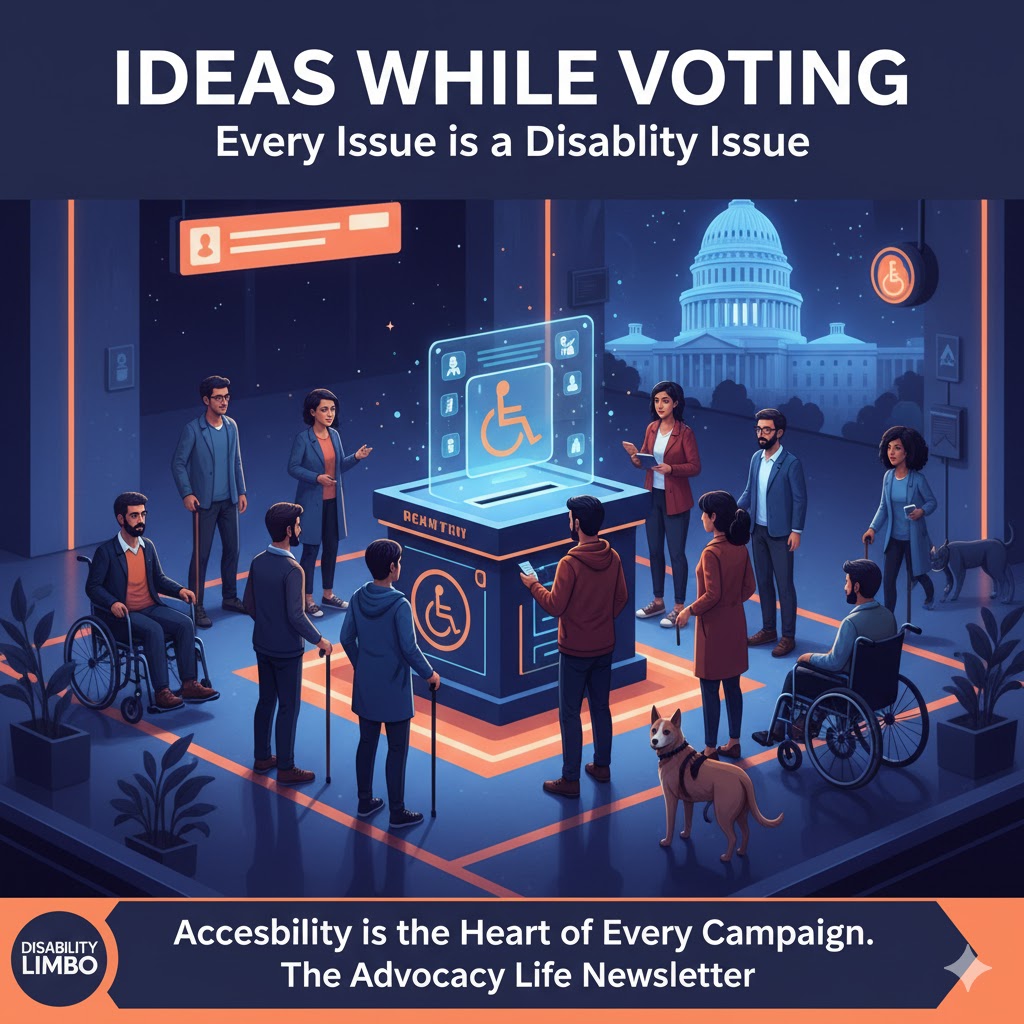
Description: Have you ever said, “I hate politics,” or felt like the government is just too complicated to understand? You’re not alone. In this episode of The Advocacy Life Podcast, I’m doing something a little “insane”—I’m going to oversimplify government and politics so you can get involved without losing your mind. Using nothing but a few imaginary pizza pies, we’ll break down:The “Kevin Definition” of Politics: Why it’s actually just the art of politely arguing over resources.The Majority Rule Myth: Why a direct democracy doesn’t always work and how our representative system actually gives you a voice.The Disability History Gap: Why advocates must know their own history and how it ties into the greater American story.Accountability: Why “eternal vigilance” is the price of freedom and how you can hold elected officials accountable.As disability advocates, we have a role to play. If we sit back and stay silent, we won’t get the resources or rights we need. Let’s bridge those gaps together in a fun, conversational style
: 0:00 – Welcome to The Advocacy Life 1:30 – Fun Fact: My thoughts on the Stranger Things finale 4:15 – The Pizza Analogy: How politics and resources work 9:00 – Choice vs. Control: Socialism, Group Homes, and Prisons 15:30 – Democracy vs. Representative Republic 20:00 – The Constitution & Why Education Matters 25:00 – A Call to Action for Disability Advocates
In 2006, I was given my first job offer. To be a greeter at Walmart. I filled out the application online with tons of enthusiasm. I was in the final weeks of my senior year. This would have been a respectable first employment. I was hit with a horrid dilemma. Around their 18th birthday, there is a bizarre rite of passage that takes place for my community, and that is their initial enrollment for Social Security benefits: Supplemental Security Insurance (SSI)
I rushed home to tell my dad, he was furious.
“If you’re going to risk your life, don’t be a clown in people’s circus. You can’t grow there. Sooner or later, you will lose the benefits you need, and then what are you going to do? You’re going to go there with the best of intentions, saying hi to everyone, and people are just going to walk right by you. You could work there for 20 years, and you’ll be exactly where you are now. You don’t have a safety net in this life. Everything you do must be calculated. Do something where you can make a difference and make sure it’s worth it. “
The summer before I went to college, I did an internship for my local mayor’s office. That was the right fit. Her office was right by the high school. The school bus would drop me off. I spent afternoons there twice a week. I put together all the packets for the new residents. Complete with a signed letter from the mayor. I was a good office clerk. After 2 weeks, I was featured in the town newsletter. My dad kept that for the longest time.As a parting gift, they gave me a small blue piggy bank for me to save my money.
“I’ve always believed that, given the tools and equipment they need and on a level playing field, American workers can out compete and beat the pants off anybody, anywhere.”-Rnold Reagan.
In the midst of the pandemic, I worked with Assemblywoman Carroll Murphy to improve New Jersey’s Workability program. It required an update. It is not perfect by any means, but it’s a needed step in the right direction. While everyone was watching Netflix and gaining weight during the shutdown. I worked with the NJCDD to launch the disability legislative caucus across the Garden State. It is completely nonpartisan with leadership from both sides of the aisle. The goal is to foster conversations with legislators before bills are passed into law.
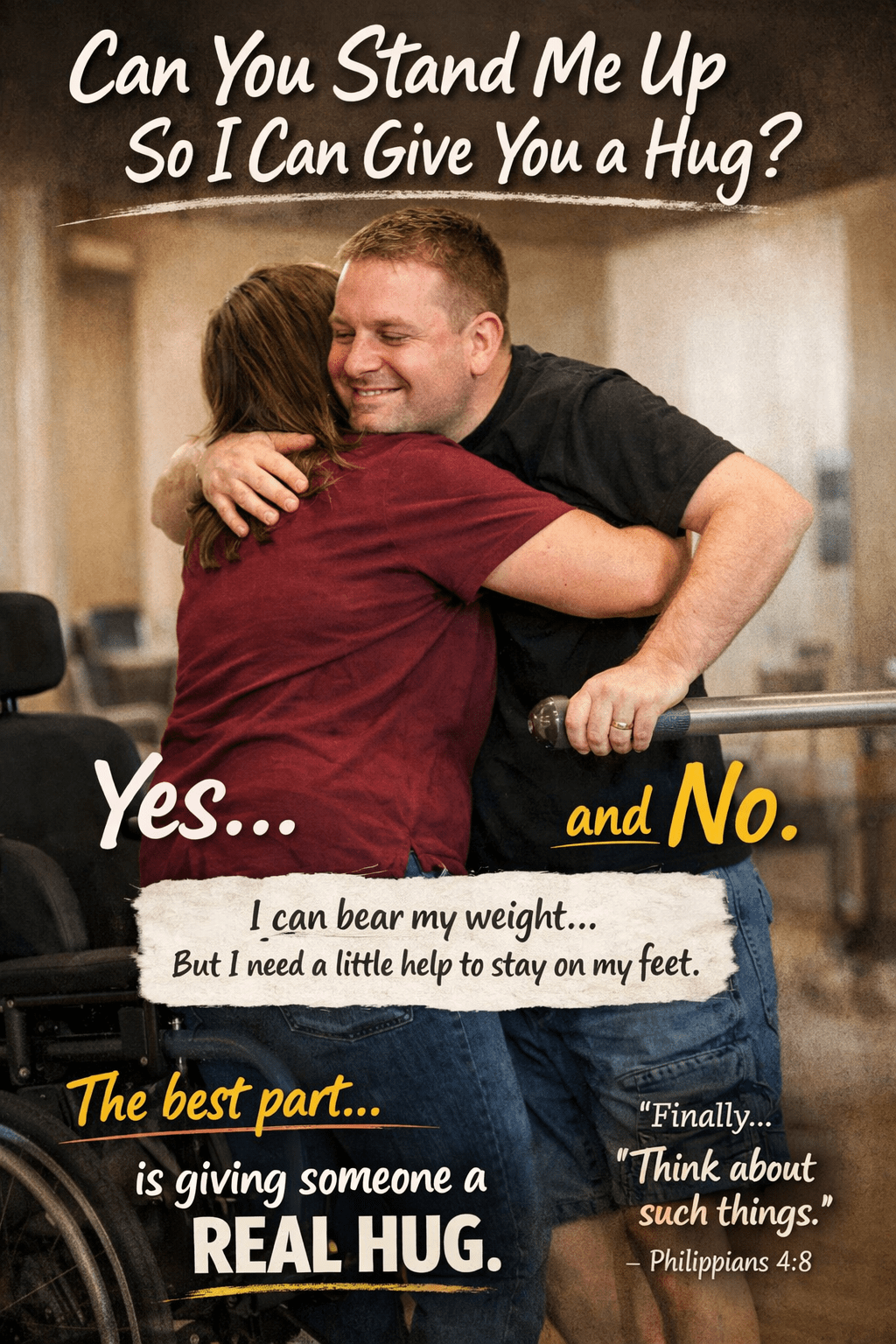
As I look ahead to everything we’re building this year, I’ve decided to go back to the beginning. Every now and again, alongside our new community posts, I’ll be refreshing some of my “classic” writings—pieces I wrote years ago that still speak to the core of the advocacy life today.We start with a question I get asked more than almost any other: “Can you stand up?”
It’s time to answer that once and for all. The answer is both “yes” and “no.”I can bear my own weight, which creates the illusion of standing. But in reality, I am a balance act; I can tip over the second I’m placed in that position. I can only stand semi-independently if I’m holding onto a grab bar or something similar. Eventually, my arms will give out, and I’ll be on the floor until someone picks me up.When I say I am “bearing my weight,” I mean my muscles are doing the work of sustaining my body mass. I just need someone there to stabilize the frame. It doesn’t take specialized medical skill to help me—it just takes practice and the confidence to realize that we aren’t going to drop each other.
The ironic thing is that many people in my life have never seen me do this. I usually save it for transfers or therapy. But the most important reason I stand isn’t for exercise. It’s because it puts me in the perfect position to do something I can’t do from my chair: give a real hug.
Finally, brothers and sisters, whatever is true, whatever is noble, whatever is right, whatever is pure, whatever is lovely, whatever is admirable—if anything is excellent or praiseworthy—think about such things. Philippians 4:Because
I am always in a seated position, I can’t easily give the people I love a gentle, chest-to-chest embrace. I usually have to wait for them to come down to my level. Most people know me in two ways: either as the loudmouth, obnoxious joker, or the constant professional looking for the next advocacy opportunity. They are so used to the “Seated Kevin” that they don’t even consider the “Standing Kevin.”The look of shock—and sometimes horror—I get when I ask, “Can you stand me up so I can give you a hug?”
Never gets old. Sometimes I don’t even ask because I can sense their discomfort.But I’m sharing this now because we live in a world where simple, human affection is often frowned upon or treated as something “wrong.” The truth is, so many people are starving for simple human contact. There are so many people I’ve wanted to hug over the years but never did because the world was too afraid of the mechanics to see the man.I’m done hiding the “trays” of my life. If you see me this year, don’t be afraid of standing. Be ready for the embrace.
Apologies that this entire post is in one paragraph. There was some sort of glitch to like fix it.
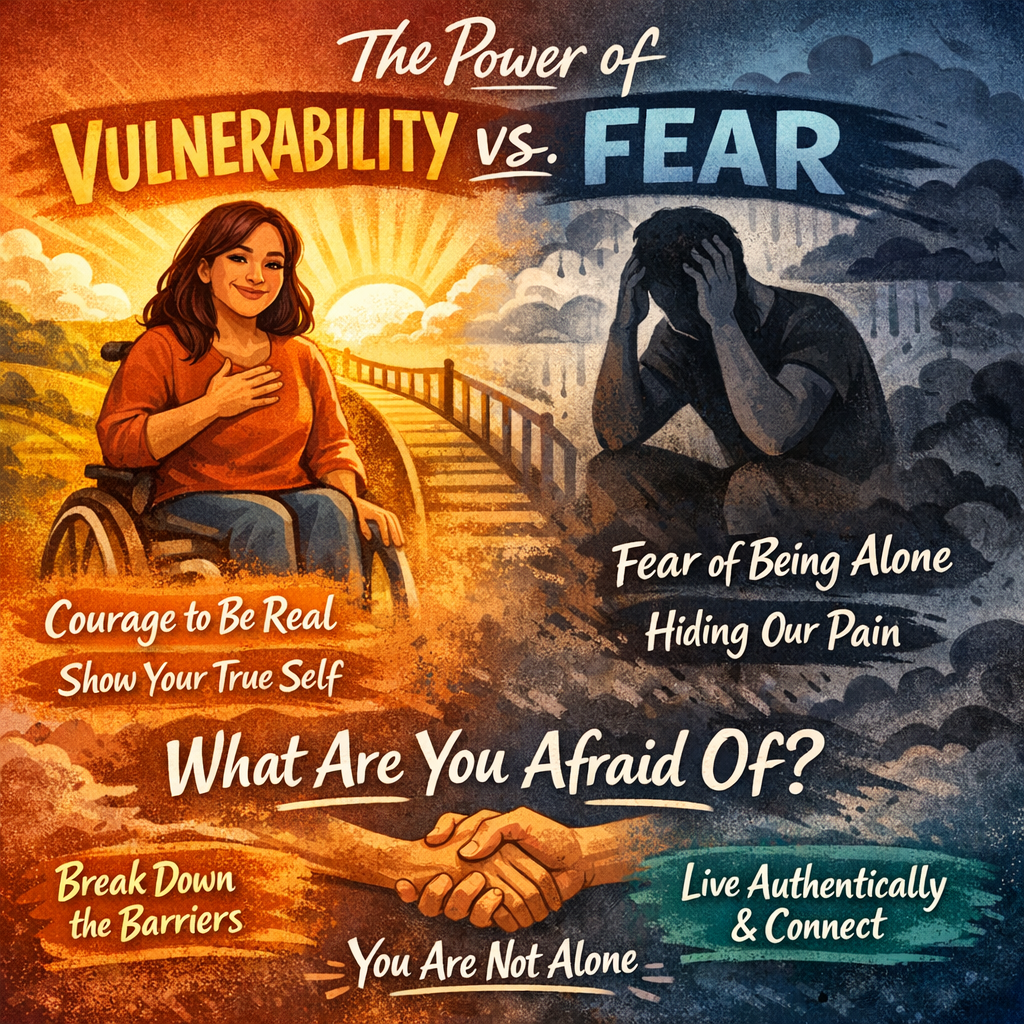
What are you afraid of?”It’s a question that feels like it belongs on a high-stakes reality show, but for those of us navigating the advocacy world and the disability community, it’s a question we live with every single day. We often feel pressured to be the “fearless” leaders, the ones who always have the answers and never let the weight of our diagnosis or our circumstances pull us down.True strength isn’t about the absence of fear; it’s about the courage to be vulnerable despite it.I found myself watching the new season of Fear Factor. Watching people face physical challenges made me reflect on my own life and the things society expects me to be afraid of. People look at my life and assume I must be terrified of losing my job, my caregivers, or even my future.The truth? I’m not afraid of those things. I’ve been living on a budget since I was 18. I’ve had my fair share of bad caregivers and I know how to direct my own care. I’m not afraid of a world that’s afraid of me. I’ve spent my whole life adapting, and I know that if I get a chance at a real paid job, I’ll be the employee of the month in thirty days.I am no longer afraid of my diagnosis as I was when I was a kid. I’m no longer afraid to ask for help from my best friend, Jesus Christ.So, if I’m not afraid of the “big” things society points to, what am I afraid of?If I’m being perfectly honest—and completely vulnerable—I’m deathly afraid of dying alone. As I approach 40 in a few years, I think about the partnerships and relationships we all long for.In our world, people often focus so much on surface values and physical appearance that they never look beyond to the person underneath. Relationships often stall because society doesn’t always see the person with a disability as a partner to build a life with. I’m not afraid of trying to have a relationship; I’m afraid I won’t get the chance.Why Vulnerability is Your SuperpowerThis is the part of the “limbo” that we rarely discuss in public. We talk about policy, we talk about resources, and we talk about legislation. But we rarely talk about the human desire for connection and the fear of being left behind.I share this because I believe that showing our vulnerability is where our true strength lies. When we hide who we are or what our needs are—like I used to hide my school tray in the back of the class so other kids wouldn’t see it—we are living in fear. When we step out and say, “This is who I am, this is what I need, and this is what I hope for,” we reclaim our power.Advocacy is about more than just fighting for the “big” things; it’s about fighting for the right to live a full, human life—complete with all its fears and vulnerabilities.I’ve shown you my heart. Now, I want to hear yours. What are you afraid of? What are the barriers—internal or external—that you’re working to overcome this week?Let’s stop hiding in the back of the room. Let’s bridge those gaps together and show the world that we are not a community defined by fear, but a community defined by the courage to live authentically.Keep on rolling. Keep on living.
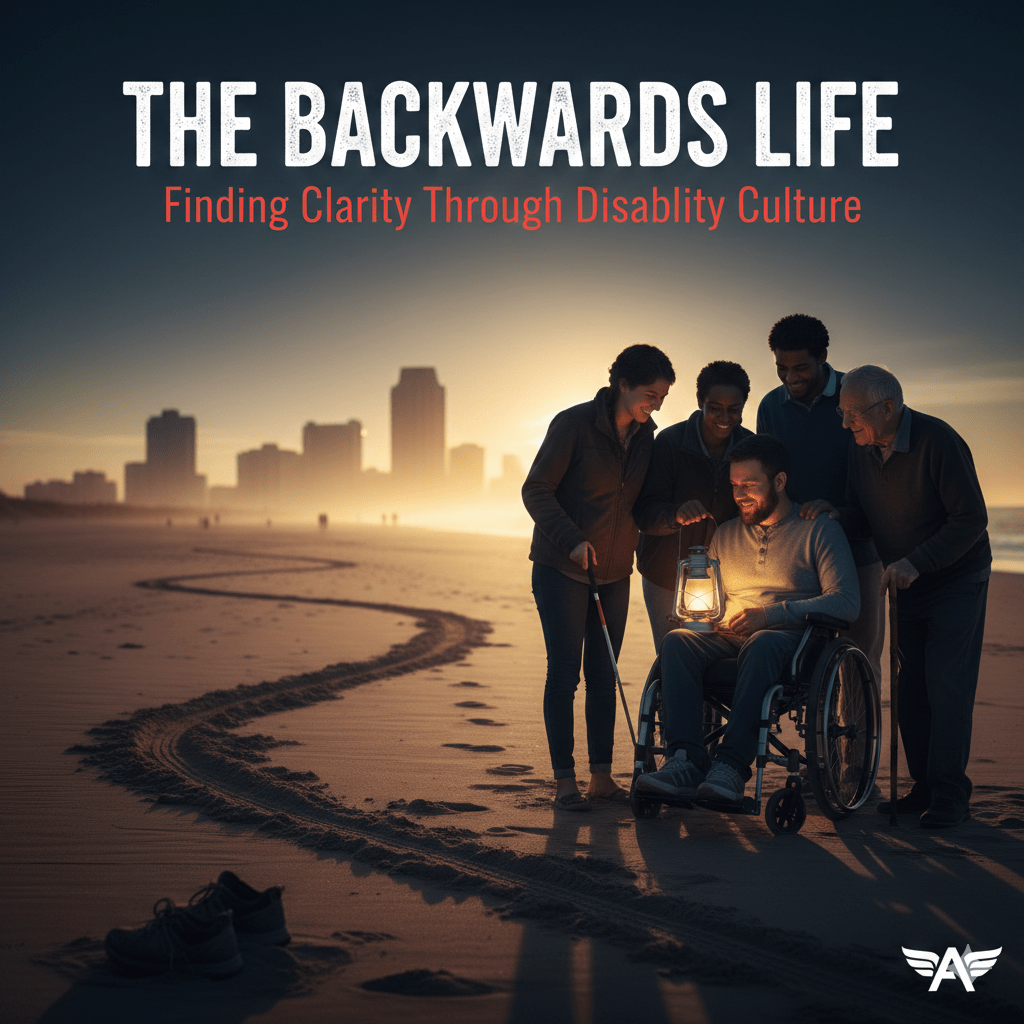
The best way to master a new language is to immerse yourself completely in its culture. For the first community blog of 2026, I invite you to join me in this exploration. I want to invite you into the world of disability awareness—not just to see how I live, but to learn how disability culture can reshape your understanding of the world.
John 12:25 NIV [25] Anyone who loves their life will lose it, while anyone who hates their life in this world will keep it for eternal life.
From the outside looking in, many people see my life through a lens of lack. They might see a man without a traditional nine-to-five career and assume he has no path, no prospects for a family, or no chance at success. In a society that measures worth by visible output, they might call it a “loser” lifestyle. To an extent, their observations of my physical limitations are correct—but their conclusions are entirely wrong. Disability has taught me the immense value of living what I call a “backwards life”.
In America, we are often guilty of a dangerous short-sightedness. We tend to only value what is directly in front of us—the things we can touch, see, or buy. We chase momentary satisfaction and fast-paced metrics, but disability forces a different perspective. It demands that we look at the bigger picture of humanity.
Take the simple act of getting out of bed. I cannot do this on my own. On the surface, that feels like a loss of independence. But in reality, it creates a moment of profound connection. To get up, I have to hug a caregiver or a friend. In a world where so many people live without love or physical affection, I start every single day with a human embrace. Who is truly more “independent”—the person who stands up alone, or the person who begins their day fueled by a community of support?
During a recent physical therapy session, I took approximately 20 steps. By the end, I was exhausted, drenched in sweat, and guzzling water as if I’d run a marathon. It was a monumental effort for a seemingly small distance. Contrast that with the thousands of people who walk miles every day but never actually “go” anywhere. They move through their lives on autopilot, working jobs they don’t like to buy fashion they don’t need or tools they won’t use. They are moving, but they aren’t progressing. They are chasing a momentary satisfaction that evaporates as soon as the next trend arrives. I am a capitalist—I sell books and bonus content because money and resources are necessary tools for advocacy. But money only matters if you are intentional with it. We are wasting our lives in front of screens and empty consumerism. We are existing, but we aren’t necessarily living.
Perspective applies to our hearts, too. Many people spend their lives chasing relationships they know are wrong for them, simply to avoid being alone. I’ve been there. I’ve gone to sleep crying because I had to accept that a person I wanted was not “the one” for me.
But I’ve learned that it is better to find the one person who truly matters than to chase four relationships that go nowhere. The “backwards” way to find love isn’t to chase it; it’s to stand out and let it come to you. When you stop chasing the wrong things and instead let your own light shine, the world begins to see you for who you truly are.
As we move into 2026, I challenge you to look at your own “front-facing” values. Are you walking just to move, or are you walking with purpose? Are you surrounding yourself with things, or with people?
Living a backwards life isn’t about moving in reverse—it’s about refusing to follow a society that is heading in the wrong direction. Thank you for being part of this community, for reading, and for listening. Let’s make this year about the things we can’t always see, but that matter the most.
Following up on our conversation last week about the state of disability advocacy, I want to drill down into a crucial, and often painful, question: Why do so many advocacy organizations, even those founded with fire and passion by disabled individuals, stray from their mission and devolve into nothing more than a social club.
The answer isn’t a lack of passion; it’s a lack of professional structure. For an organization to last beyond its first two years, it must establish a proper foundation. First, there must be a clear mission or purpose. Ideas are plentiful, but without a singular, defined goal, energy dissipates into general activities that accomplish little. This is quickly followed by the necessity of a clear Leadership structure. A plan for decision-making must be ironed out within the first six months; without it, the organization becomes directionless.Mission and leadership mean little without accountability. Proven accountability must be figured out from the very beginning.
Stakeholders—from staff to community members—need to know how serious issues will be addressed. Furthermore, advocacy requires resources, so a clear financial structure and plan must be in place before you begin. Make your financial proposal accessible and transparent to all interested parties; professional integrity starts with financial transparency.To avoid simply becoming a complaint factory, we must think outside the box. Advocacy organizations must propose solutions and not just complain about problems. This is where we show our mettle. We must also cultivate an organization of advocates willing to do the work, not just talk about doing the work. The dignity of the advocacy movement demands that the organization also take on the dignity of risk—meaning we are willing to take bold action and accept the professional risks that come with true, game-changing efforts.As an organization matures, it must define its lane. What is your competitive Advantage.
to make your organization different from all the others? Simply advocating for “disabled people” is too broad. You must pull the resources and strength of your membership, recognizing that everyone has a story and a different set of skills. That difference is a strength, not a liability, but it means that not everyone can perform the same tasks.This brings us to mission clarity: If your organization is designed for teaching, then teach. If your organization is for change, then focus on change; you can’t effectively do both without splitting your efforts and diminishing your impact. The advocacy movement is not new, but we are undeniably in a new era, and we need to find new ways to deliver our message.This
This new era demands structure, specialization, and professional accountability.The time for passion alone to drive advocacy is over. We must match the intensity of our commitment with the clarity of our organizational design. Only then can we guarantee that our organizations last, grow, and truly fulfill their vital mission. For my incredible community.
Note
be sharing an additional Community Blog this week to keep our conversations flowing! Until I get my podcast back up and running, you can expect these bonus Community Blogs every Wednesday. Thank you for your understanding and continued engagement!
For years, I’ve observed and participated in the vital work of disability advocacy. We have incredible organizations, passionate individuals, and powerful stories. Yet, despite our collective strength, there remains a persistent sense that we often react rather than truly shape the national agenda. We fight battles, win some, lose some, but the systemic shift that many of us yearn for feels perpetually just out of reach.
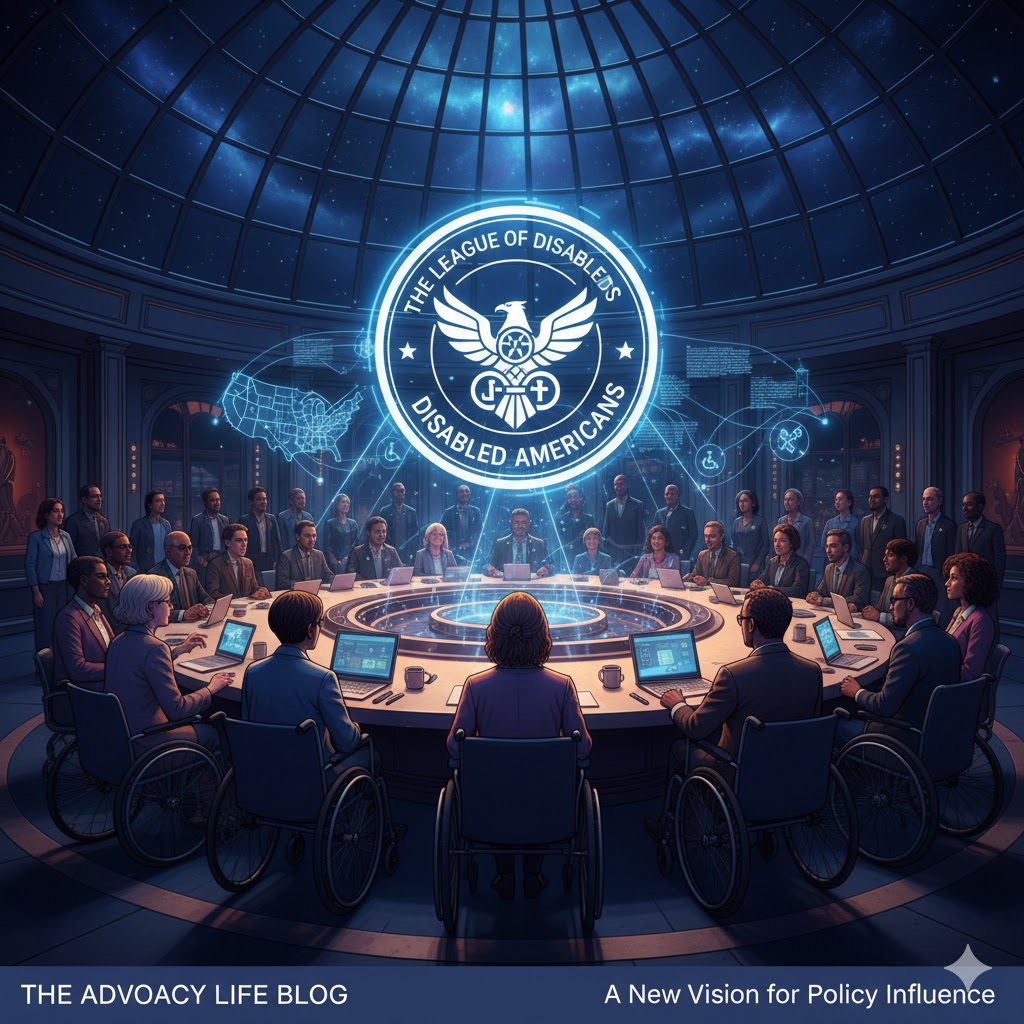
It’s time for a new approach. It’s time to think bigger, to act more strategically, and to consolidate our power where it matters most: influencing policy at the highest levels. My vision is for a new advocacy organization, unlike any other, dedicated solely to influencing policy in America. I call it: The League of Disabled Americans.
This League would be comprised exclusively of individuals with disabilities – a powerful testament to our lived experience and expertise. Imagine: two representatives from each of the 50 states, plus two from each of the U.S. territories, for a total of 112 dedicated advocates. Each member would be directly nominated by the disability community within their respective state or territory, ensuring true grassroots representation and accountability.
From day one, this body would operate with a clear, decisive purpose. A steering committee, formed from these initial representatives, would immediately begin drafting a concise list of goals and objectives. These wouldn’t be vague aspirations, but concrete policy targets. Well-organized instructions and bylaws would govern its operation, ensuring transparency, efficiency, and a unified voice. This is about precision, not popularity contests.
One of the greatest pitfalls for many advocacy organizations is thinking too small and attempting to grow organically without a clear, scaled strategy. The League of Disabled Americans would reverse this paradigm. Instead of building from the bottom up, hoping to gain traction, we would think backwards. What is the ultimate, audacious goal – a truly inclusive America, fully represented in policy? Now, how do we break that down into smaller, achievable objectives that culminate in that vision? This means setting a high bar from the outset, focusing on impact, and building a structure designed for influence.
Crucially, this organization needs to start with well-recognized advocates. This isn’t to exclude anyone, but to establish immediate credibility and leverage. We need figures who command respect, who understand the political landscape, and who can walk into a room and be heard. The goal is to establish a presence so undeniable that organizations, legislative bodies, and policymakers come to us for insight and partnership, rather than us constantly having to beg for funds and support. We must shift from being supplicants to being indispensable partners in policy development.
Finally, and perhaps most importantly, The League of Disabled Americans would exist to help break down the silos within the broader disability advocacy community. We are too often fragmented, each fighting our own specific battle. While vital, this fragmentation can diminish our collective power. The League would serve as a unifying force, identifying cross-disability issues, sharing best practices, and presenting a cohesive, national front on policy matters that affect us all. It would be a hub of knowledge, strategy, and power, ensuring that the diverse voices of the disabled community speak with a singular, unignorable purpose in the halls of power.
This is an ambitious vision, yes. But the time for timid advocacy is over. The time for a truly independent, disabled-led, policy-focused force is now. Let’s build the League of Disabled Americans and demand our seat at every table where decisions are made.