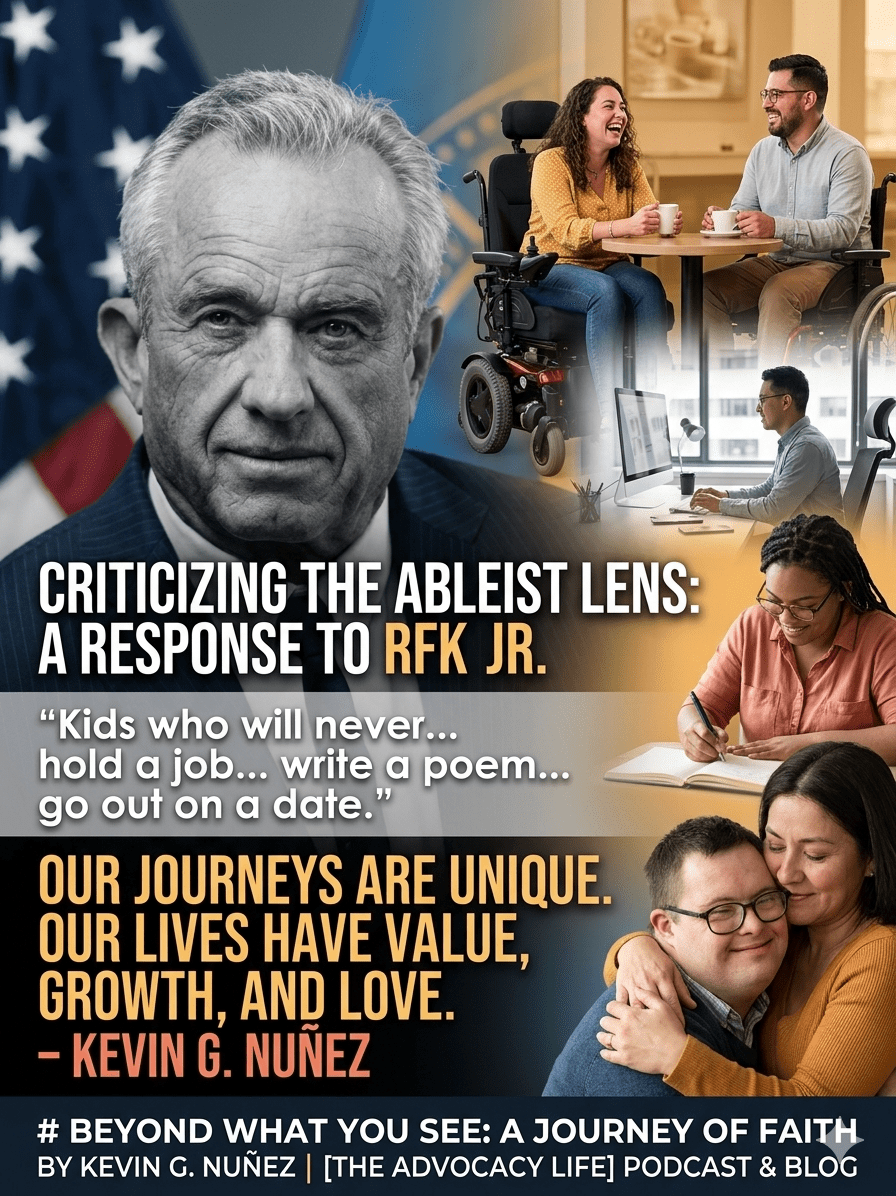
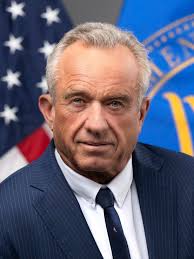
“These are kids who will never pay taxes. They’ll never hold a job. They’ll never play baseball. They’ll never write a poem. They’ll never go out on a date. Many of them will never use a toilet unassisted.” Robert F. Kennedy Jr.
I want to state from the outset: I don’t hate RFK Jr. I respect and love him as a fellow human walking this earth, despite disagreeing on several key issues. Quotes like these are particularly damaging. They embody the ableism and fear that permeate modern American culture.
The problem with this perspective is that it ignores the fundamental truth that every person with a disability has their own unique journey, their own growth process, their own setbacks, and their own successes.
So often, people with disabilities are lumped into boxes by a system that refuses to let them out. We are treated as if our lives are a “nice, comfortable jail cell.” We don’t realize that the door is a cell door until it gets slammed in our faces—and by then, it’s too late to get out.
RFK Jr.’s comments about dating are a prime example of the dehumanization we face. Just because someone may be non-verbal or have different physical needs does not mean they are unable to consent to or enjoy a loving, caring relationship. There are plenty of non-verbal individuals who have had rich, complex romantic lives—some of them having had more sexual encounters than I will ever have!
Society often measures our value by our productivity—by whether we pay taxes or hold a traditional job. With the new “Home and Community Based services HCBS” cuts coming to the nation in October 2026, many of us will be forced to choose between our health insurance and our ability to work.
We are forced to disclose our limitations and decide: Do we stay in poverty to keep our benefits, or do we risk it to earn a little bit of money? It is these societal norms that are damaging us, not our wants or our wills. We want to work—we want to work harder than most other Americans. We just need the real opportunities to do so.
Quotes like these don’t help anyone; they just hurt. If you want to help someone with a disability, don’t look for what you think they “can’t” do. Make them stronger, and they will make you better.
Don’t be afraid of us. Thrive with us. Push us. Educate us—because we can educate you in the same way. Together, we can learn from each other. That is what a good society does. That is what a good America does.
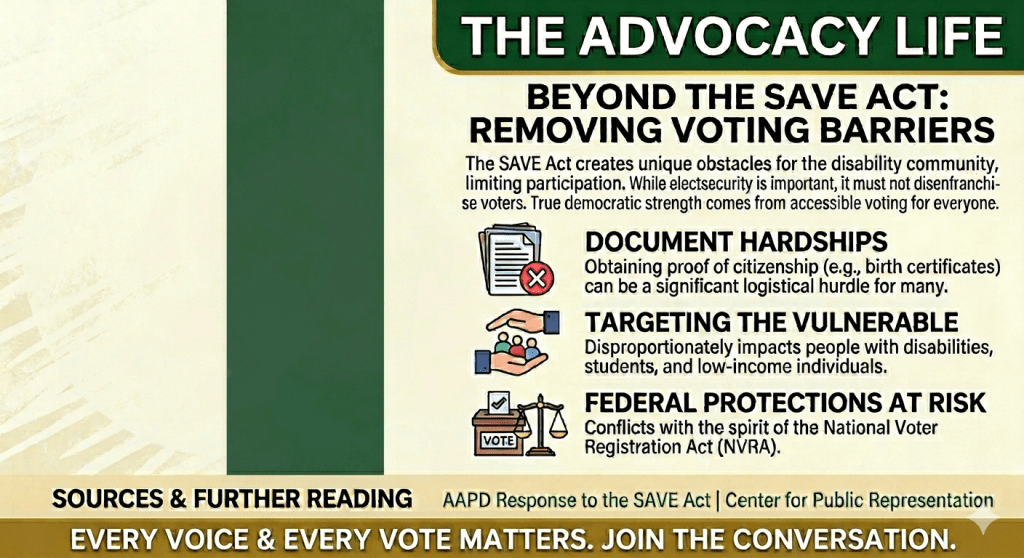
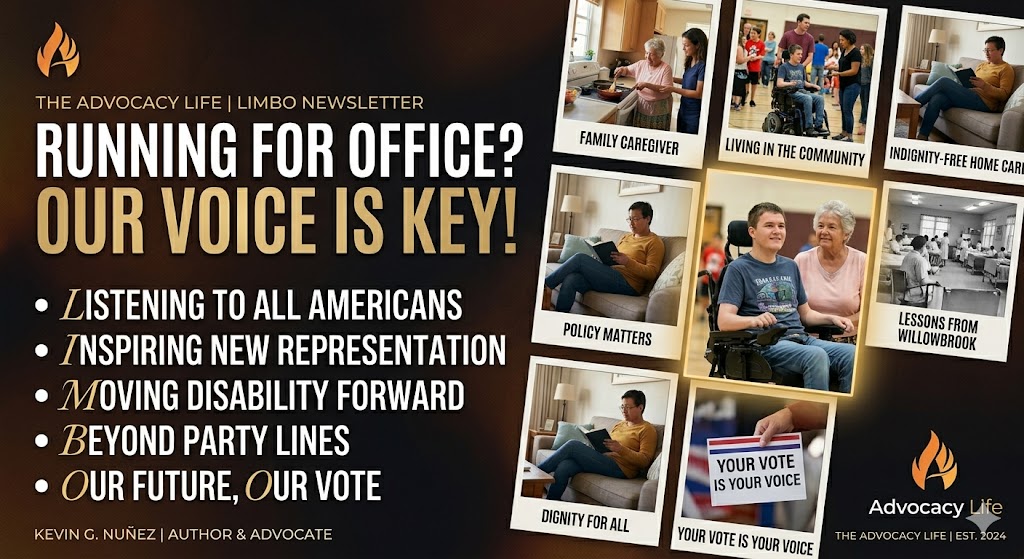
While the integrity of our elections is a goal we can all respect, it should never come at the cost of disenfranchising a significant portion of our population. The Safeguard American Voter Eligibility (SAVE) Act (H.R. 8281) creates functional barriers that strike at the heart of our democratic principles: the idea that every voice—and every vote—matters.
For many in the disability community, the SAVE Act introduces “limbo” in the form of administrative The Act requires documentary proof of citizenship (like a passport or birth certificate) to register to vote. Millions of Americans lack these documents readily at hand, and for those with mobility or transportation challenges, the process of obtaining them can be nearly impossible.including
the AAPD, have noted that these requirements disproportionately impact people with disabilities, students, and low-income individuals who may not have the means to navigate complex bureaucratic systems.
By adding these layers, the Act undermines the National Voter Registration Act (NVRA), which was designed to make it easier—not harder—for all citizens to participate in their government.Excluding a population from the polls is against the very spirit of our nation. True election integrity comes from ensuring that every eligible citizen, regardless of their physical or cognitive ability, has a clear path to the ballot box.
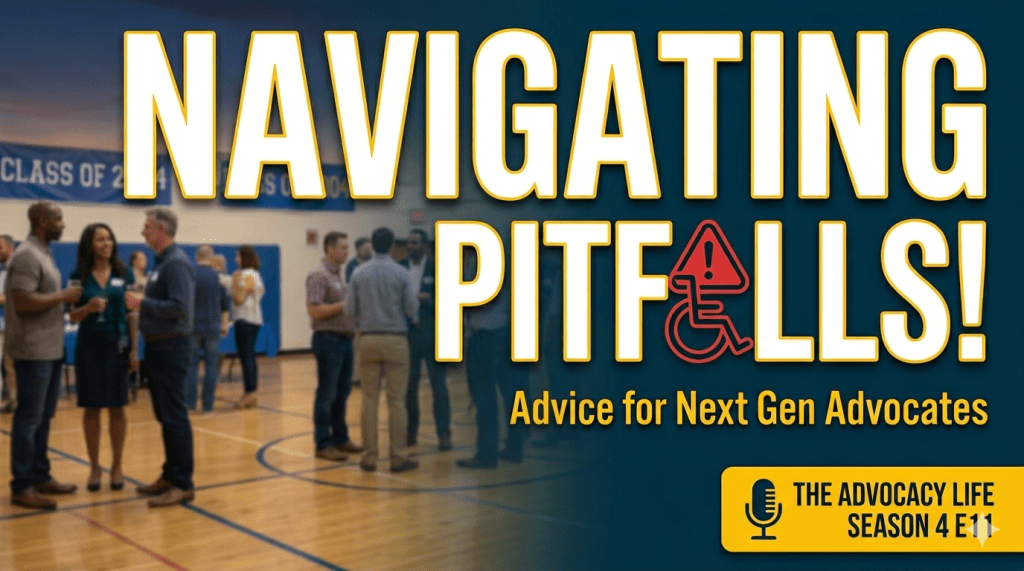
As summer approaches, host Kevin Nunez marks a major milestone—his 20th high school reunion. Looking back at his time as a young man with a visible disability navigating a mainstream public school of 2,700 students, Kevin reflects on the literal and metaphorical pitfalls he fell into.From accidentally steering his wheelchair into a bush to avoid crowded school hallways, to facing down an intimidating intake officer at the Social Security office at age 18, Kevin shares the raw, unvarnished realities of growing up disabled. He breaks down why we need to move past “inspiration porn” on social media and focus on genuine peer mentoring, building thick skin, and embracing failures as catalysts for major success (like getting a standing ovation at his high school talent show!).This episode is a must-listen for disabled youth (ages 18–25), parents, transition coordinators, and anyone ready to look past the stereotypes and bridge the gaps together.”Disability and death are the only two strategies in life. There is a misconception in our world that disability will not affect anyone, when the fact is, it affects all of us.” — Kevin Nunez
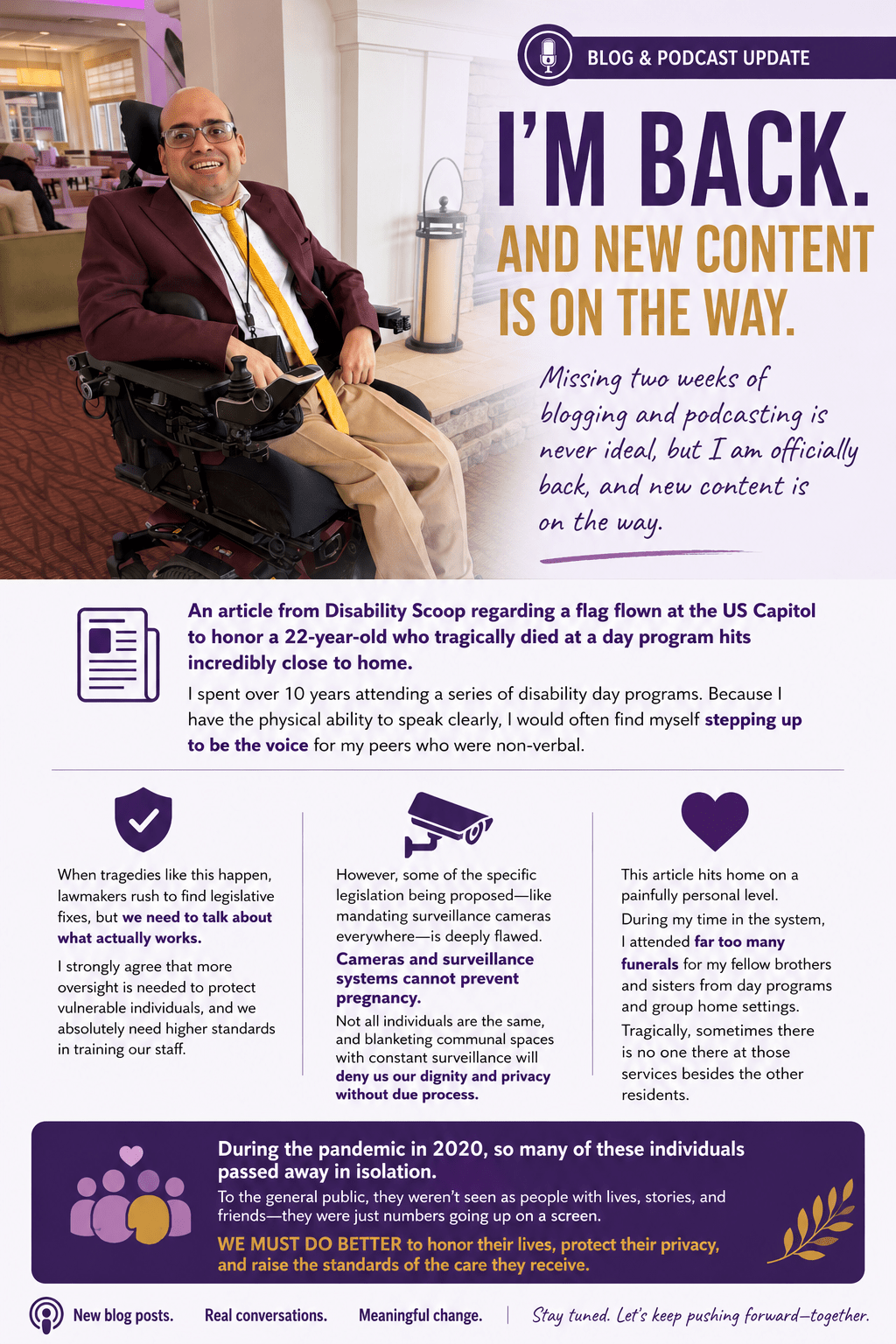
Missing two weeks of blogging and podcasting is never ideal, but I am officially back, and new content is on the way.
An article from Disability Scoop regarding a flag flown at the US Capitol to honor a 22-year-old who tragically died at a day program hits incredibly close to home. I spent over 10 years attending a series of disability day programs. Because I have the physical ability to speak clearly, I would often find myself stepping up to be the voice for my peers who were non-verbal. When tragedies like this happen, lawmakers rush to find legislative fixes, but we need to talk about what actually works.I
I strongly agree that more oversight is needed to protect vulnerable individuals, and we absolutely need higher standards in training our staff. However, some of the specific legislation being proposed—like mandating surveillance cameras everywhere—is deeply flawed. Cameras and surveillance systems cannot prevent tragedies.
Not all individuals are the same, and blanketing communal spaces with constant surveillance will deny us our dignity and privacy without due process. This article hits home on a painfully personal level. During my time in the system, I attended far too many funerals for my fellow brothers and sisters from day programs and group home settings. Tragically, sometimes there is no one there at those services besides the other residents.During
During the pandemic in 2020, so many of these individuals passed away in isolation. To the general public, they weren’t seen as people with lives, stories, and friends—they were just numbers going up on a screen.We
We must do better to honor their lives, protect their privacy, and raise the standards of the care they receive.
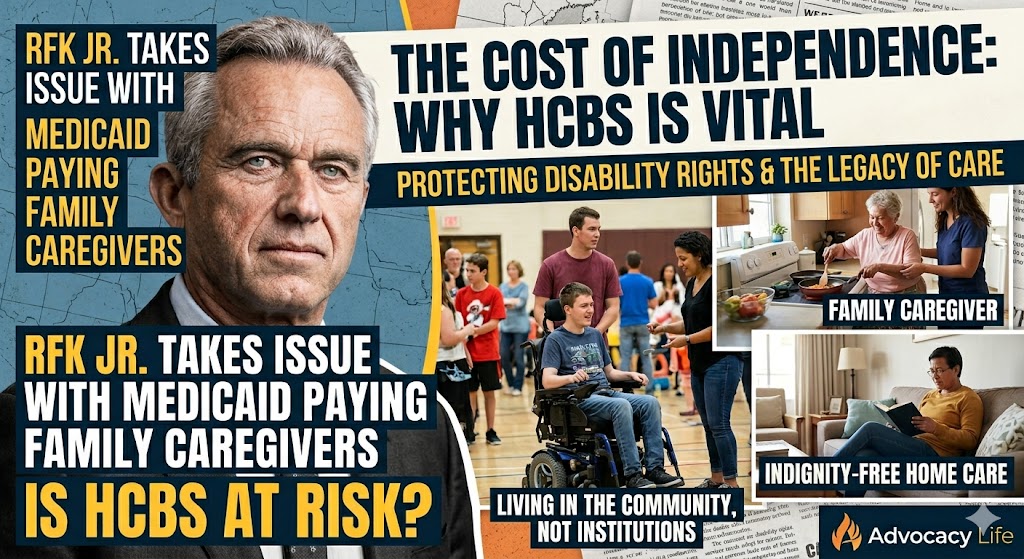
History has a strange way of looping back on itself. In 1965, Robert Kennedy Sr. visited the Willowbrook State School and called it a “snake pit.” He saw children living in filth and rags, and his outrage helped spark a revolution. It led us away from the dark halls of institutions and toward the light of the community.Fast forward to last week. His son, HHS Secretary Robert F. Kennedy Jr., stood before Congress and took issue with Medicaid paying family caregivers.
He called these programs “rife with fraud,” suggesting that family members are getting paid for things they “used to do for free,” like driving a loved one to the doctor or picking up groceries.
As an advocate who has spent my life navigating the space between policy and reality, I have one thing to say: Independence isn’t free, and it isn’t fraud.Home and Community-Based Services (HCBS) are not a luxury. They are the vital lifeline that allows 8.4 million Americans with disabilities to live in their own homes rather than the institutions the senior Kennedy once decried.
When Secretary Kennedy suggests that families should just do this work “for free,” he is ignoring the economic reality of 2026. Providing care is a full-time job. When a family member becomes a caregiver, they often have to leave the traditional workforce.Being
Being paid through a Medicaid waiver isn’t a “get rich quick” scheme; it’s what keeps that family out of poverty.We are in the middle of a massive shortage of direct care workers. Often, a family member is the only person available to do the job.If these family-led supports are cut, where do people go? Back to nursing homes and institutions.Those facilities cost taxpayers far more than HCBS and, as history has shown us, they often rob us of our dignity.
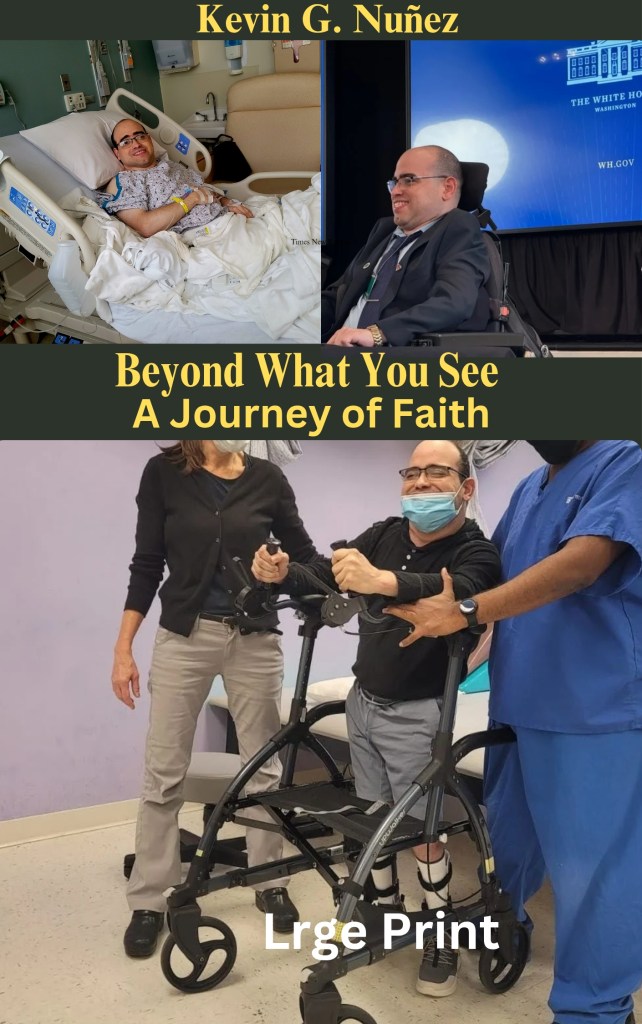
In my book, Beyond What You See, I wrote that “Life begins beyond what you see.” What the Secretary sees as “balancing a checkbook” is actually the maintenance of a human life.Disability doesn’t have a political party. It doesn’t care about your skin color. As I’ve said before, disability is America. We are an example of hope and endurance, but that endurance is tested when the people in charge of our healthcare look at our support systems as “waste, fraud, and abuse” rather than “justice, dignity, and freedom.The
The current administration and the disability community cannot be enemies. We must be allies. To Secretary Kennedy, I say this: Do not let the legacy of Willowbrook be forgotten. Do not dismantle the very systems that allow us to reach for the stars—not because it’s easy, but because it’s hard, and because it is the right thing to do.America is made great when we learn from our past. Let’s not repeat the mistake of undervaluing the lives of the disabled.
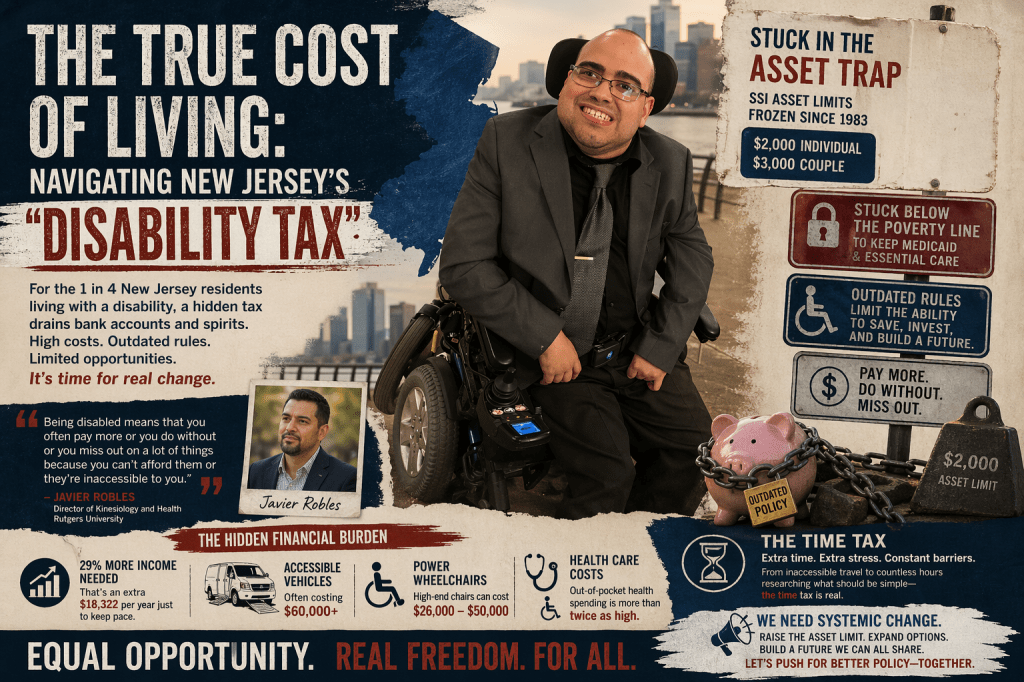
For many, the American Dream is built on a foundation of opportunity and the freedom to grow. But for the one in four New Jersey residents living with a disability, that dream is often deferred by a “hidden tax” that drains both bank accounts and spirits. I am a 38-year-old advocate with a developmental disability, and while I love this country and its potential, I often feel like I am financially suffocating.
Living with a disability means ordinary tasks—like grocery shopping or attending a doctor’s appointment—come with added economic burdens. Research shows that U.S. households with a disabled member need approximately 29% more income to maintain the same standard of living as those without. At a median income, that’s an extra $18,322 per year just to keep pace.
Accessible Vehicles: Often costing upwards of $60,000.
Power Wheelchairs: High-end, necessary chairs can cost as much as $26,000 to $50,000.
The most frustrating barrier to financial independence isn’t just the high cost of living; it’s the outdated policy that keeps us in poverty. To maintain essential Medicaid-funded personal care, many must stay below the poverty line.
For decades, the Supplemental Security Income (SSI) asset limits have been frozen. Since 1983, an individual is capped at $2,000 in their bank account, while a married couple is limited to $3,000. This “marriage penalty” and the inability to save for the future means we are effectively barred from the wealth-building tools—like stocks or significant savings—that other Americans rely on.
Beyond the dollars and cents, there is a heavy “time tax.” My colleague Javier Robles, Director of Kinesiology and Health at Rutgers University, highlights how this shapes every decision.
Whether it’s paying more for a guaranteed accessible hotel or the hours spent researching destinations only to find “accessible” promises aren’t met, the stress is constant. Javier famously recalled a trip to Italy where he had to be carried onto a boat by firefighters because the promised accessibility was non-existent.
As Javier puts it:
“Being disabled means that you often pay more or you do without or you miss out on a lot of things because you can’t afford them or they’re inaccessible to you.”
We need to move beyond complex workarounds like ABLE accounts or Special Needs Trusts, which can be restrictive. True advocacy means fighting for systemic change—like raising the individual asset limit to $10,000.
New Jersey has taken steps with updated Workability programs, but implementation remains slow. It is time to ensure that all Americans, regardless of ability, have the freedom to contribute to the economy and build a secure future. Without financial freedom, the “Land of Opportunity” remains out of reach for millions. Keep on rolling. Keep on Living.