Tag: Commentary on Society

  • The Disability Love Paradox

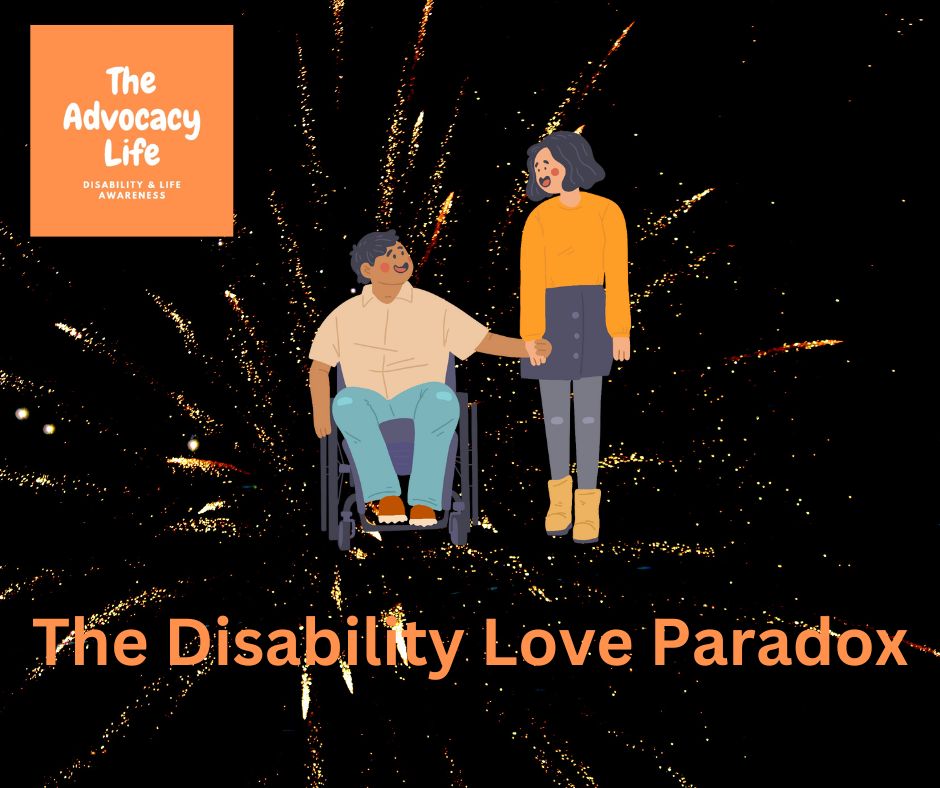
    The Disability Love Paradox

    Hello friends,

    Happy Wednesday to you all! Thank you once again for spending a little time with me. There’s been something on my mind lately, and I want to share it with you guys. This is going to be a bit of a controversial blog. A lot of people will not agree with this. Some people will call me an ableist. Ableism is defined as

    “discrimination in favor of able-bodied people.“discrimination in favor of able-bodied people”.

    Last week, I wrote a blog entitled The Disability Paradox. This is a very complicated sequel. There’s no nice way to say this; romantic relationships are complicated. Having a disability is also complicated. Mixing those two things is not easy. I need to say from the outset that there are individuals with such complex needs that they are not able to have a romantic relationship. That does not mean that they’re not allowed to feel their feelings and try to process them the best way they can. Remember that no two individuals living with a disability are the same, despite whatever the diagnosis says.

    Reality television has done a much better job of including individuals with disabilities in its programming. There was a man on the spectrum who won a season of Big Brother. Years later, there was another female who won the Favorite House Guest award on another season of Big Brother without disclosing her autism diagnosis until the very end of the season. In addition, there was a deaf contestant on the competition series The Circle.

    There is another reality show called Love on the Spectrum that features individuals trying to date with various intellectual disabilities. These are very real people with real feelings I don’t know if it’s the production and editing of the show, but the show comes across as very “inspirational and safe.” They want the individuals to be seen as happy and overcome all kinds of obstacles in their way. Yes, people with disabilities need more support, but the show does not focus on the long-term issues of the relationship, and how they handle those is scarcely shown. This show is designed to make the viewer feel happy. This show doesn’t feel real.

    ‭‭1 Corinthians 13:4-5 NIV‬‬ [4] Love is patient, love is kind. It does not envy, it does not boast, it is not proud. [5] It does not dishonor others, it is not self-seeking, it is not easily angered, it keeps no record of wrongs.

    As a person with a physical disability, I feel left out. There is another show I want to focus on called Love is Blind. For those of you unfamiliar with this show, able-bodied folks meet without seeing each other; they date for a few weeks before deciding to get married. This is appealing to me because this is the only scenario where someone would get to know me and not see me as someone in a wheelchair first. I cannot hide, nor do I want to be part of myself. I just want people to learn to look past the disability first.

    I want to have a real conversation about faith, finances, long-term goals with a partner, sex, etc. Why are people with disabilities always segregated amongst ourselves? Everyone on Love is Blind is physically fit and has solid careers. The casting department was able to cover all ethnic backgrounds, but they forgot about the largest minority in the United States. It is important to show that individuals with disabilities should have romantic relationships. However, they are insinuating that they can only date others with disabilities This is not an example of inclusion but rather of exclusion. We are all part of the same human race, and we will have obstacles to overcome, regardless of ability. Real love should be what’s on the inside, not the outside. I know this is the beginning of a much deeper conversation Hopefully, someone will continue around the dinner table tonight.
    Latest Moments of Brightness Newsletter

  • A Valentine’s Day Message

    A Valentine’s Day Message

    Happy Valentine’s Day! I hope this blog brings some joy to your day. Over the weekend, many couples celebrated Valentine’s Day, which is honestly my favorite holiday. Even though we should show love to our friends and family every day, it’s easy to forget in the hustle and bustle of life. That’s why having a special day dedicated to love is so important.

    To me, Valentine’s Day isn’t about fancy gifts like flowers and chocolates. It’s more about showing genuine care and support for someone, even in small ways.

    Now, let’s talk about something important: advocating for people with disabilities. Before we get into it, I want to be clear. Some people with disabilities may not be able to understand or consent to romantic relationships, and that’s okay. But for those who can, it’s important to challenge misconceptions about what they’re capable of.

    ‭‭1 Corinthians‬ ‭13:4‭-‬5‬ ‭NIV‬‬ [4] Love is patient, love is kind. It does not envy, it does not boast, it is not proud. [5] It does not dishonor others, it is not self-seeking, it is not easily angered, it keeps no record of wrongs. 

    Years ago, people with disabilities were often kept out of sight in institutions. But things are changing, just like they did for the LGBTQ community. It takes time, but education and breaking down stereotypes are key.

    Having a disability can make romantic relationships more challenging, but it’s not impossible. It just takes understanding and communication from both partners. There might be people who don’t understand or stare, but love knows no boundaries, whether one or both partners have a disability.

    It’s important to see the person beyond their disability. I’ll share links to two couples who are in integrated relationships to show that it’s possible. I promise to keep talking about this topic regularly in my blog because awareness is important, just like having accessible facilities.

    I’m sending love to everyone who needs it today, and I’ll see you next Wednesday!

    Sources:

    Roll with coal and Charisma

    Squirmy and Gloves

    Latest Moments of Brightness Newsletter

  • Hope for Children

    Hope for Children

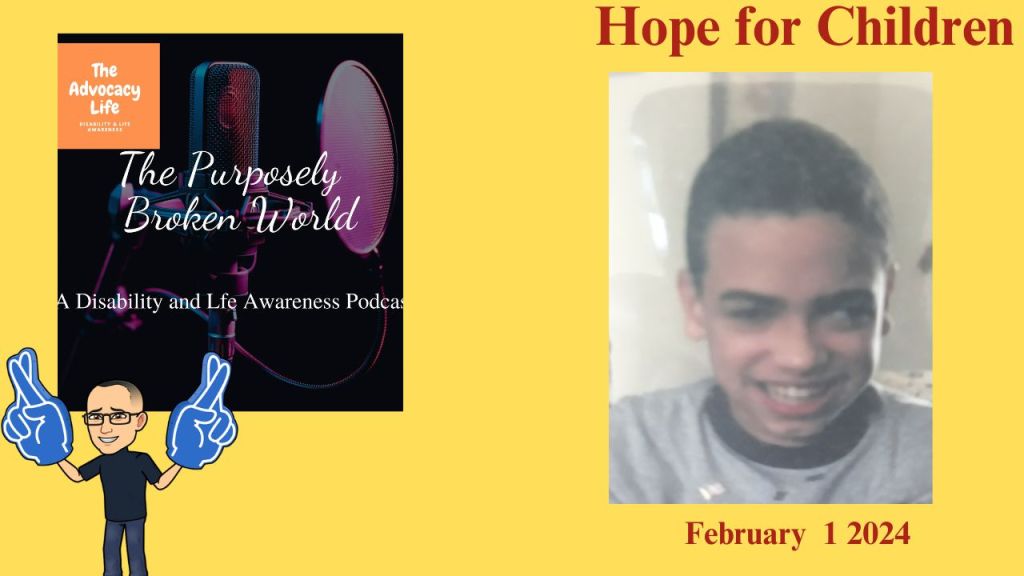
    As February begins, Kevin puts his focus on hope for children and how the future of society will go. Are children raised too fast thanks to television and other forms of media? Whose fault is it? What can we do about it? Hopefully, after listening to this, parents will be able to have a good conversation with their children Join the conversation today.

    Spottily link
    YouTube
  • Lessons From Chess

    Lessons From Chess

    Hi friends, I hope everyone is having a wonderful Wednesday. What are some of the hobbies or sports you like to participate in? I am 35 and have limited mobility due to my disability. So my options are limited. Yes, there are challenge or baseball leagues, and the Special Olympics has every sport you can imagine. I’m at the age where most other participants are either way too old or way too young. In addition, the concept of everyone getting a trophy or metal at the end doesn’t seem right to me. Most importantly, it would take 50 more steps if I just wanted to play wheelchair basketball for an hour. What if I just wanted to distract myself for a few minutes? Yes, there are plenty of video games with adaptive controllers. That truly is wonderful. However, I wanted something more realistic and a guaranteed challenge.

    “for gaining wisdom and instruction; for understanding words of insight; for receiving instruction in prudent behavior, doing what is right and just and fair;” Proverbs 1:2‭-‬3 NIV

    I recently discovered chess. I know the game of chess has been around almost forever, but it really is a brilliant game, and it has so much to teach us about life. I picked up the following lessons from playing the game, among others Have a good day, everyone. Let me know in the comments if anyone has tried playing chess and what they’ve learned from it

    • No matter how much you can or cannot move, you can still play even if someone else moves the pieces for you because every piece and square on the board has a name.
    • Chess is not for nerds! It’s a very social game you can always learn from other players. Especially in today’s world with players constantly streaming their matches. Players of all races are represented. There’s always someone waiting to connect even if it’s just to teach or play a game.
    • I currently have the lowest rating in all of Chess, but it is almost impossible to play the same game twice so you always constantly being challenged and learning a new strategy.
    • Every piece on the board has a specific role you have to see the big picture. I specifically enjoy this aspect because we get so focused in this world about what we’re doing in the moment we never take a step back to look at the whole board of life.
    • Most people when they start a plan of any kind. Get excited when they start a new project but lose interest in the middle and never get to the end. In chess the middle game is where the challenge really begins. The game will not end until the king is captured so you constantly have to keep adapting to a new scenario.
    • After you play games, you have to study your mistakes. In life people don’t want to learn from mistakes but in chess if you don’t analyze your past you can’t get better in the future.
    • Chess does not require physical strength, but strictly. Your mind and your heart working together.

    Disability Limbo Newsletter

    I started Letters from the Limbo as a way to connect with you on a deeper level. Twice a month, I send out an email filled with personal anecdotes, professional updates (like my recent reelection as Vice Chair of the NJCDD), and the policy insights I don’t share anywhere else. This isn’t just another email—it’s an unfiltered look at the life of a disability advocate. Join my community and get an exclusive, honest look at the work that matters

    ← Back

    Thank you for your response. ✨

  • The Language Rabbit Hole

    The Language Rabbit Hole

    The following was an opinion piece Kevin Nuñez wrote for the Burlington County Times in March 2020. Click here to read

    I am a 32-year-old disability advocate living with cerebral palsy. I am of sound mind and spirit, and I’m inviting you to go down a linguistically inspired rabbit hole with me to start a much deeper conversation about human awareness and language.

    Before beginning, I know what I’m about to say is controversial and might raise more questions than answers. I am trying to make people aware of the way we are communicating with one another. Unlike Alice in Wonderland, we cannot wake up from this nightmare. Just like my disability, it will not disappear. This should be an ongoing conversation, with people allowed to draw their own conclusions. We should learn to understand the meaning behind words and phrases before we use them. If we look up the etymology of most words, we would find a negative connotation for most of them.

    My function as an advocate is to educate and collaborate with others to better the lives of those affected by disability. I have come to realize that I am more of a human advocate, because everyone has a disability.

    One day, I was giving an orientation to new direct support professionals (DSPs) on how to treat individuals with respect and so forth. Later that night, I was out with friends whom I have not seen in a long time. During the conversation, they jokingly used the R-word once. I did not want to break up the conversation and begin a lecture on disability and why the word is offensive. No one at the table was trying to be offensive; there was no malice behind it. I immediately cringed internally. What was I to do? I can’t wear my advocacy hat all the time. I have the right to have fun as well.

    The simple believe anything, but the prudent give thought to their steps.- Proverbs 14:15 NIV

    When the night ended, I pulled the one person aside and simply explained the situation. That person apologized, and that was the end of it. There was no need to cause a scene in the middle of a restaurant. I did not have to shame them in front of everyone. We didn’t have to stop being friends because they made a mistake. All I had to do was express myself in a calm way and make sure they didn’t forget it.

    These days, everyone preaches acceptance, but we also need to preach tolerance. People will say the wrong thing. This does not mean they should be punished for the rest of their lives. Words are tools, like hammers and knives. Yes, they can be used to hurt. They can also be used to build and create wonderful statements that can change the world. We are so quick to destroy anyone who says something we don’t like, instead of educating them to make the change.

    Comedian Kevin Hart made a joke many years ago about how he would discipline his son if he ever said he was gay or transsexual. At the last Oscars ceremony, Hart was scheduled to host. There was such a huge uproar about his statement that he removed himself. If we are going to judge every word every person ever said, then we should all put tape over our mouths and learn to communicate telepathically.

    In conclusion, language is like comedy — totally subjective. It’s not what you say; it’s how you say it. Tone and delivery matter. Think of it like this: Have you ever texted someone and then had to send another text immediately after to explain it?

    How we communicate is like driving. Everyone does it a little differently. We have all sped up and broken a rule once in a while. We may cause a major tragedy, a tiny fender bender, or get away with it.

    We can do only so much. First of all, know your audience. Find the most effective way to deliver your message. Learn to accept feedback and reactions. Most importantly, be patient with how to respond to someone’s message back to us.

    Disability Limbo Newsletter

    I started Letters from the Limbo as a way to connect with you on a deeper level. Twice a month, I send out an email filled with personal anecdotes, professional updates (like my recent reelection as Vice Chair of the NJCDD), and the policy insights I don’t share anywhere else. This isn’t just another email—it’s an unfiltered look at the life of a disability advocate. Join my community and get an exclusive, honest look at the work that matters

    ← Back

    Thank you for your response. ✨

  • Finding your Belessings

    Finding your Belessings

    By David Champignon

    Hello, loyal friends and readers. It’s David Champignon. My friend Kevin is hard at work on many upcoming writing projects and has asked me to step in for a few weeks in the interim. With that said, I would like to share something that my wife Jenny and I watched on Sunday. That night we saw the movie The Blessing Bracelet on Hallmark Movies and Mysteries. To my amazement, it’s based on a genuinely beautiful story.

    A woman named Dawn had gone through a divorce and faced mounting doubt and the looming threat of foreclosure at the house where she and her son lived when a friend reminded her of bracelets she used to make. longing for something different but unsure of what exactly to do for those she loved. Like so much that happens in real life, the improvements started off slowly.

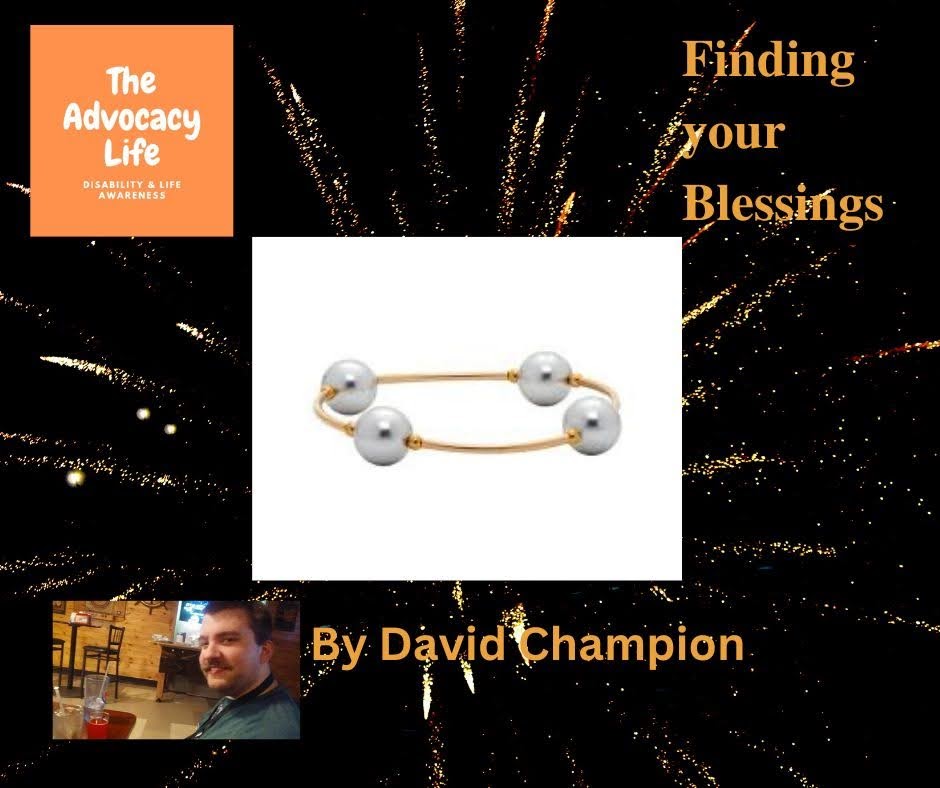
    Working at a local restaurant, she began giving the blessing bracelets to customers as a little something extra in addition to her existing great customer service skills. Part of the magic of the blessing bracelets is that they are made with four beads so that people can reflect on the four blessings present in their lives at any time of the day.

    Over time, her community, including her church, rallied around her, and she could barely keep up with demand for the bracelets. Dawn and her loving son made enough money to pay off their debt and cancel the foreclosure. To this day, blessing bracelets are a vibrant business you can order from for yourself or your family.

    What is the lesson here? While not everyone can be an entrepreneur and start a small business to bring joy and blessings to the world, the challenge is to remember the blessings we all have in life. Remember to not take things for granted, no matter how routine our lives get. Finally, remember that the people who matter in life will stick around no matter what. Love those people with all your heart and soul because those people are truly special. Have a great week, and I will see you next week.

    Sources:

    The Blessing Bracelet Movie

    https://www.hallmarkmoviesandmysteries.com/the-blessing-bracelet/about-the-blessing-bracelet

    https://decider.com/2023/04/10/we-found-the-bracelet-from-hallmarks-the-blessing-bracelet/

    Disability Limbo Newsletter

    I started Letters from the Limbo as a way to connect with you on a deeper level. Twice a month, I send out an email filled with personal anecdotes, professional updates (like my recent reelection as Vice Chair of the NJCDD), and the policy insights I don’t share anywhere else. This isn’t just another email—it’s an unfiltered look at the life of a disability advocate. Join my community and get an exclusive, honest look at the work that matters

    ← Back

    Thank you for your response. ✨

  • People V. Hate

    People V. Hate

    Do people ever do little things or say little things that bother you? A pet peeve is defined as just that: ” Something that a particular person finds especially annoying.” I decided to do something a little bit different with this blog post. I want to tell you about one of my “pet peeves” to hopefully create a discussion about how people interact with each other. It bothers me when people say, “I hate people.” I can’t believe people hate every single person in the world that exists on the planet today. So, what exactly do people hate?

    Jesus replied, “ ‘Love the Lord your God with all your heart and with all your soul and with all your mind.’ And the second is like it: ‘Love your neighbor as yourself.’ All the Law and the Prophets hang on these two commandments.” Matthew 22:37‭, ‬39‭-‬40 NIV

    We live in an on-demand society. We have the world at our fingertips, with unlimited amounts of information. You can have your groceries delivered to you within two hours. You can watch any show you want anytime you want. The fact is, people, do not work the same way. It takes time to get to know a person. With the invention of social media, we lead ourselves to believe that we do know someone. Then we are disheartened when it turns out that they were not who they said they were. We no longer use social skills to introduce ourselves, now we use keystrokes. Have you ever been to a party and seen all the kids in a corner together? They communicate with each other without ever saying a word to each other. I find this to be very sad.

    We no longer have patience because everything comes to us right away. People may be rude and inconsiderate, but we no longer try to understand one another. If you think I’m wrong, answer this question Do you know your neighbor? Your best friends used to be your neighbors. I know these are just a few reasons why we all have lost the ability to consistently and effectively create a positive relationship. After reading this, I challenge you to speak to three new people in your world today. Take care, and I will see you next Wednesday as usual.

    Disability Limbo Newsletter

    I started Letters from the Limbo as a way to connect with you on a deeper level. Twice a month, I send out an email filled with personal anecdotes, professional updates (like my recent reelection as Vice Chair of the NJCDD), and the policy insights I don’t share anywhere else. This isn’t just another email—it’s an unfiltered look at the life of a disability advocate. Join my community and get an exclusive, honest look at the work that matters

    ← Back

    Thank you for your response. ✨

  • Breaking the Societal Box

    Breaking the Societal Box

    Disability Limbo Newsletter

    I started Letters from the Limbo as a way to connect with you on a deeper level. Twice a month, I send out an email filled with personal anecdotes, professional updates (like my recent reelection as Vice Chair of the NJCDD), and the policy insights I don’t share anywhere else. This isn’t just another email—it’s an unfiltered look at the life of a disability advocate. Join my community and get an exclusive, honest look at the work that matters

    ← Back

    Thank you for your response. ✨

    Available on all podcast platforms
    Watch it on YouTube

    Title: Breaking the Societal Box

    Gender, sexual orientation, and ethnicity are all labels society tries to put on us. In this episode, I’m trying to help us see the whole person. The human experience cannot be confined to one category. Please join me for a thoughtful conversation All opinions are my own. My work for this episode is based on the blog below. Please subscribe for bonus content.

    Blog post:
    https://wp.me/pblmva-oz

    Bonus Episodes:
    https://anchor.fm/theadvocacyllifepodcast/subscribe

    The Advocacy Life website:
    https://advocatekevinnunez.wordpress.com/

  • February Mental Timeout

    February Mental Timeout

    Happy Wednesday friends, as always I hope this week’s message finds you well. We get so busy in this world with our schedules and obligations. We don’t make time to sit and reflect on our lives and where it’s headed. It is for that purpose I created this new series where I leave you with a series of questions for you to ponder. The theme for this week is, “the importance of listening.” In the comments please let me know what you think of this idea. I wanted to create awareness for our spiritual and mental growth. Thank you all for reading enjoy the rest of your day.

    To answer before listening— that is folly and shame.
    Proverbs 18:13 NIV
    • When your friend calls you, do you talk more than you listen?
    • At a restaurant when the waiter comes over, do you wait to listen for the specials, or do you just tell them to order?
    • In a job interview who should speak first, the employer or the prospective employee?
    • Do you notice your eyes rolling when you’re annoyed by comments?
    • Are you aware of others’ body language?
    • When you sit down on the airplane, do you listen to the safety demonstration? I hope we all know with you if God forbid the plane goes down.
    • Are you comfortable around older adults? Their advice might be important someday.
    • Do you take your hearing for granted?
    • When you pray do you listen for God’s response?
    • Do you know the difference between hearing and listening?

    Disability Limbo Newsletter

    I started Letters from the Limbo as a way to connect with you on a deeper level. Twice a month, I send out an email filled with personal anecdotes, professional updates (like my recent reelection as Vice Chair of the NJCDD), and the policy insights I don’t share anywhere else. This isn’t just another email—it’s an unfiltered look at the life of a disability advocate. Join my community and get an exclusive, honest look at the work that matters

    ← Back

    Thank you for your response. ✨

  • What Is Our Charge?: David Takeover

    What Is Our Charge?: David Takeover

    Go to the about page to learn more about David
    by, David Champignon

    It has become an overused trope. millennials are lazy job hopers who have no patience for work or tolerance for bosses telling them what to do. Well for some at least part of this trope is true there is scant evidence if any that today’s young people deserve the scathing indictment some are ready to give them. 

    The world is not like it was when our parents and grandparents were young. There is no war in which the whole world is involved at the same time, taking sides for and against each other. There is no draft. At the moment there are smaller regional wars that are largely being taken care of by concerned regional partners without direct US military involvement. That could change at any time but for now, that part hasn’t changed. I firmly believe right after 9/11 had president Bush declared WW3 and instituted a draft America would have gone along with it. His clarion call during that time was to go shopping. I’m not saying that the military hasn’t made enormous sacrifices but largely the sacrifices are theirs and their families alone while the rest of us just go about our day as ordinary Americans only aware of the extraordinary sacrifices others make when it comes to our phones and television screens.

    In a way, we are better off than we were at the time of WW2 because our army is an all-volunteer army but it has also created a situation where the serious problems of the world are always taken care of by other people. Even from a street-level perspective when we see a fight or a rape in progress we go, “that’s sad.” and hope somebody else calls 911. “I’ve got to get to work,  ta ta for now.” 

    I swear we have one side of a recent generation that is every man or woman for themselves and there’s another side genuinely trying to make things better for not only themselves but other people. Unions are fighting for better wages, health benefits, and for our current generation not to be on call with our bosses 24/7 as we hold our baby in our hands and make dinner for our families with our free hand.

     To be clear, people can do this but people shouldn’t have to. We want to be able to go to the doctor without being fired from our jobs or being forced into economic disaster. If recent times have proven anything it’s that the vast majority of the world is more resilient than we give ourselves credit for not only as Americans but I genuinely believe as a world. So as the old question goes, “Will the kids be okay?” The short answer, I believe is yes.  We must also remember that the adults in every modern generation have said that the following one will be far worse off because of their ineptitude. At this point, that prediction is as old as time itself. With my optimism noted, there are things we can do to make the world a better place without having to move mountains.

     We have to make deliberate attempts to care more about each other. We should recognize that just because Ryan pulls Susie’s hair on the playground doesn’t mean Ryan will be an irredeemable serial killer for the rest of his life. Men and women evolve their political views change, groups don’t think monolithically and  We would be better off if we didn’t treat someone’s political affiliations or views as if it were a sports team we must be with no matter what. Oh, and while we are at it can we stop using the terms fake news or alternative facts.

     It is already difficult to navigate our changing world without one’s views being willing to accept new and emerging facts. We must also recognize cult behavior when it comes to our politics. One man or one woman alone can’t fix the problems that ale America and the world despite what anyone says. Real problems require thinking outside the box and coalition building even when embracing the concept is outside our interests. The concept of acting in the interest of the common good must be re-established and vigorously defended from age to age like it once was. There is no one size fits all solution to what troubles the world but I believe what I’ve written here is a good start toward improving the large canvas that is our collective souls.

    Source: 

    https://www.c-span.org/video/?c4552776/user-clip-bush-shopping-quote