
Subscribe to continue reading
Become a paid subscriber to get access to the rest of this post and other exclusive content.
Become a paid subscriber to get access to the rest of this post and other exclusive content.
Hello Friends,
Hope you guys are having a great day. You guys will be seeing this the day after I have spoken at the White House in Washington DC. Yes, the Little old man got to speak at 1600 Pennsylvania. As part of a panel celebrating the 25th anniversary of the Olmstead decision. Avenue! Glory be to God. Here are the two questions I was asked and my responses. You will find the link to the entire event HERE
Colossians 4:6 NIV [6] Let your conversation be always full of grace, seasoned with salt, so that you may know how to answer everyone.
1. [All – 2 minutes/panelist]: Thank you all for being here. I’d like to begin today’s discussion with a two-fold question. Can each of you talk about your journey: what barriers have you encountered throughout your life and how has that shaped you as an advocate today?
Thank you Anna and thank you to the Biden-Harris administration for this opportunity to mark the 25th Anniversary of the Olmstead Decision. There is a saying in the disability community, “If you know one person with a disability, then you ONLY know one person with the disability”. Like a few of my fellow panelists today I was diagnosed at birth with Cerebral Palsy (CP.) If you examine our day-to-day lives you will find some similarities. We use wheelchairs. We all came here with our Direct Support Professionals (DSP). We need help with transfers, bathing, and other daily tasks. Those are the kinds of things people imagine when they think of those with disabilities. Some people believe that we are helpless. I began my advocacy journey because I wanted to change misconceptions. Ladies and gentlemen, I am Puerto Rican. I immigrated here with my family in 1991. You may be thinking of the same story “We came here for a better life.” My story comes with a bit of a twist, my twin brother Abner and I live with the same diagnosis. As with most twins, we are opposite, I am right-side dominant and he is left-side dominant. We both have different personalities, different goals, and most importantly, different needs.
As I got older, I had to balance the big picture and what obstacles were directly in front of us. Every day presents its share of obstacles, that’s what the mission is. That is the duty of a disability advocate to face each day and push through the challenges in hopes that you are paving a smoother road for someone else.
Getting active and involved as a self-advocate has been a game-changer for me. I currently serve as the Vice Chair of the New Jersey Council on Developmental Disabilities (NJCDD) and the chair of our Council’s Grants Committee. This is another opportunity for paving the road ahead.
We must keep in mind that according to the Centers for Disease Control (CDC), one in four Americans is diagnosed with at least one disability. That is a quarter of the population. We are your neighbors, we are your family, we are your friends. Our opinions matter, our stories matter, and our voices matter. Ultimately, I became an advocate because I was tired of seeing people I know feel stuck and isolated because they didn’t have a chance to be heard. I traveled here today to be heard and I appreciate your listening.
[Kevin Nuñez – 4 minutes each]: For people with disabilities watching this live stream, the idea of being a disability advocate can be a little intimidating. How did you get started in advocacy? What closing words of advice can you offer?
As a person with a disability, there are certain aspects of life I have to accept. I cannot get out of bed alone unless someone physically gets me out of bed. I know there are many things in my life I cannot do for myself. The term “learned helplessness” is real. Thankfully I found my way to learn how to help myself and others by writing a book, hosting a blog, and in my role as Vice Chair of the New Jersey Council on Developmental Disabilities. At NJCDD, we are paving the way with advocacy, systems change, and capacity-building activities. There are many examples to share, but I will focus on a few that have had an impact on meeting our Council’s goals and challenging ableism.
Six years ago, NJCDD funded a project to educate state officials and the NJ legislature about the significant role and responsibilities of Direct Support Professionals (DSPs). Providing education about DSP’s critical job functions paved the way for DSP recognition and the legislature included direct support professional wage increases in the state’s budget for the past six years. As a Council, we advocated, changed perspectives about the vital work of DSPs, and lifted some of the societal biases and discrimination against people with disabilities in the process.
Just before the COVID-19 pandemic that shuttered the disability community and locked most of us in our homes, the Council spearheaded and launched a bipartisan NJ Legislative Disability Caucus along with almost 40 members of our Senate and Assembly and an additional 45 supporting organizations. The main goal of the Caucus is that lawmakers form relationships with the people impacted by their work and consider the needs of people with disabilities before making laws. We were successful as a state in extending school for up to three years for graduating special education students who could not meet their educational goals due to COVID-19. Legislative Caucus members heard us and passed a bill allowing students to extend their educational entitlements. Around the same time, I participated in interviews and met with members of the legislature to address my experiences as a student with disabilities and the lack of proper planning to have me safely evacuate during school emergencies. Well, I can tell you today that because of advocacy and educating lawmakers, our state has a law that now requires school district emergency planning to better ensure the safety and security of students with disabilities.
Today we commemorate the 25th Anniversary of The Olmstead Decision. Two women used their experiences and voices to make a difference for others before judges and lawyers.
We must help each other and pave the way.
In closing, don’t live in fear because of your disability… find your abilities. Get involved with your Council on Developmental Disabilities because years ago, someone took a chance on a kid who had given up on college. Now, I sit here today in the White House! It is time for others to make a difference for the next generation. Don’t just sit at the table where the decisions are made but lead the discussion. Dream big and be great. Don’t be afraid! Never give up!
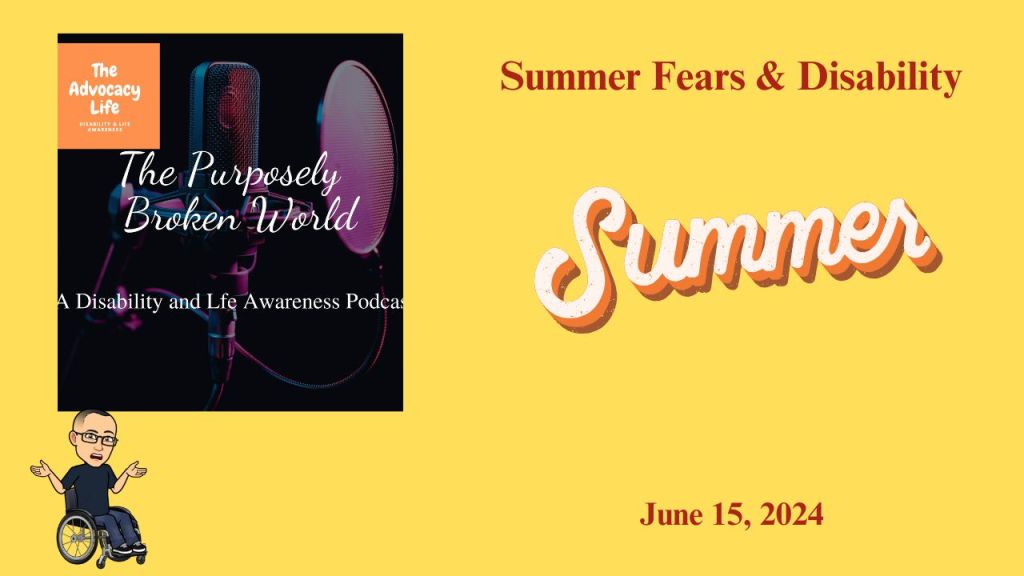
On the summer finale of The Purposely Broken World. Kevin breaks down ableism and fear with disabilities. thank you all for all the support this year I will be back with more episodes in September click on this link for more information. if you want to support the podcast.
As a child with a disability, I attended mainstream classes all my life. One memorable class was DARE (Drug Awareness Resistance Education), aimed at preventing drug addiction—a fear shared by all parents. This program made me realize the importance of early education on critical issues. Just as children learn about the dangers of drugs, they should also be taught about disability etiquette and inclusion from a young age.
Children’s natural curiosity about differences should be nurtured, not stifled. When a child asks about someone with a disability, parents often shush them out of discomfort. This only perpetuates ignorance. Instead, open discussions can foster understanding and empathy. I recall a time at a mall with my brother Abner and our caregivers. We exited an elevator and overheard a father tell his son, “Thank God you’re not like them.” This comment stung, but more than that, it made me pity the man for his ignorance—a product of likely never having been exposed to individuals with disabilities.
The disability community is the largest underrepresented and underserved group in the U.S., encompassing every body shape, skin color, sexual orientation, and gender. Despite this, society often ignores us to avoid disrupting their busy lives. Disability is not going away; it’s a natural part of the human experience. Everyone is only “temporarily able” and might need help eventually.
Living with a disability means no days off; it’s a constant presence. Every day, I face frustrations and struggles. In school, I wasn’t just the last picked for dodgeball—I was excluded entirely because it was deemed “too dangerous.” In home economics, while others learned to sew, I was switched to a different elective because the teacher assumed I couldn’t use the sewing machine pedal. I was never given a chance to adapt or prove my abilities.
Ableism limits growth for societal convenience, imposing barriers that exclude rather than include. Consider the story of Judy Heumann and the 504 sit-in—a pivotal moment in American history that highlights the fight for disability rights. Stories like hers should be part of our collective knowledge, teaching us about resilience and the importance of inclusivity.
Exposure to disability issues from a young age can normalize differences and reduce stigma. Integrating disability awareness into education can help children grow into empathetic, informed adults. The more we see and understand people with disabilities, the less “other” they become.
Our society must recognize that disability is part of the human condition and that inclusivity benefits everyone. By breaking down barriers and challenging ableist attitudes, we create a world where everyone has the opportunity to thrive. We must move beyond fear and ignorance to embrace a future where all individuals are valued for their unique contributions.

Become a paid subscriber to get access to the rest of this post and other exclusive content.

For the majority of my 20s, I wasn’t partying or drinking on the weekends. I was attending a series of habilitation day programs. I know most people don’t know what that is; don’t worry, I didn’t know what it was either until I got there. The easiest way to describe it is as an adult daycare for individuals with disabilities. This blog is not about me, but the impact “Baby Doll” had on me and those around her.
Every so often, we come across someone whose life story is so hard to believe that part of it becomes a legend. Baby Doll was a strong African American woman. She was petite, but her heart was three times bigger than she was. Unlike most people, she was not afraid of letting the world see her heart. If she knew you, she would love you! She did not care what your skin color was. Gay or straight, that had no consequence. Every day, she hugged anyone. Oh, how I miss those hugs.
This story needs to be shared because there’s a large sector of the disability community that has been neglected and has become less human. This makes me feel so angry. I chose the alias “Baby Doll” because that is what she called all of us who attended the day program. We knew who she was talking to just by the way she said the words “Baby Doll.”
Those of us who can help others must fulfill that responsibility. Baby Doll was born completely “normal,” a pure product of her environment. Her own family forced her into prostitution and drug use. This did not take place in Russia or some third-world country—right here, in the land of hot dogs and the New York Yankees!
She was eventually burned alive by the waste. After her brain was fried and her body was all used up, she was given over to the state of being an adult. When you’re given a court-appointed guardian, you can’t even get a library card in your name.When I met her, she was a shell of her physical self. Her wonderful smile had no teeth. She seldom wore short sleeves, even in the summer. Baby Doll had gray, thinning hair. She used a small collection of wigs. The nicest one she had, she wore to her funeral.
The Lord your God is with you, the Mighty Warrior who saves. He will take great delight in you; in his love he will no longer rebuke you, but will rejoice over you with singing.” Zephaniah 3:17
Yet there are a few aspects of disability life of which people should be aware. Do you know what people with disabilities have in common with prisons and communal settings? The government pays for all essential parts of life. The participants are paid less than the minimum wage. Most importantly, the individuals are denied some critical freedoms. Let me be clear. We do need more medical and behavioral facilities for those with severe needs. We are past the crisis point where we need quality caregivers who deserve a decent wage. The system is so focused on protecting itself. It denies flexibility to the human element.
Become a paid subscriber to get access to the rest of this post and other exclusive content.
Become a paid subscriber to get access to the rest of this post and other exclusive content.
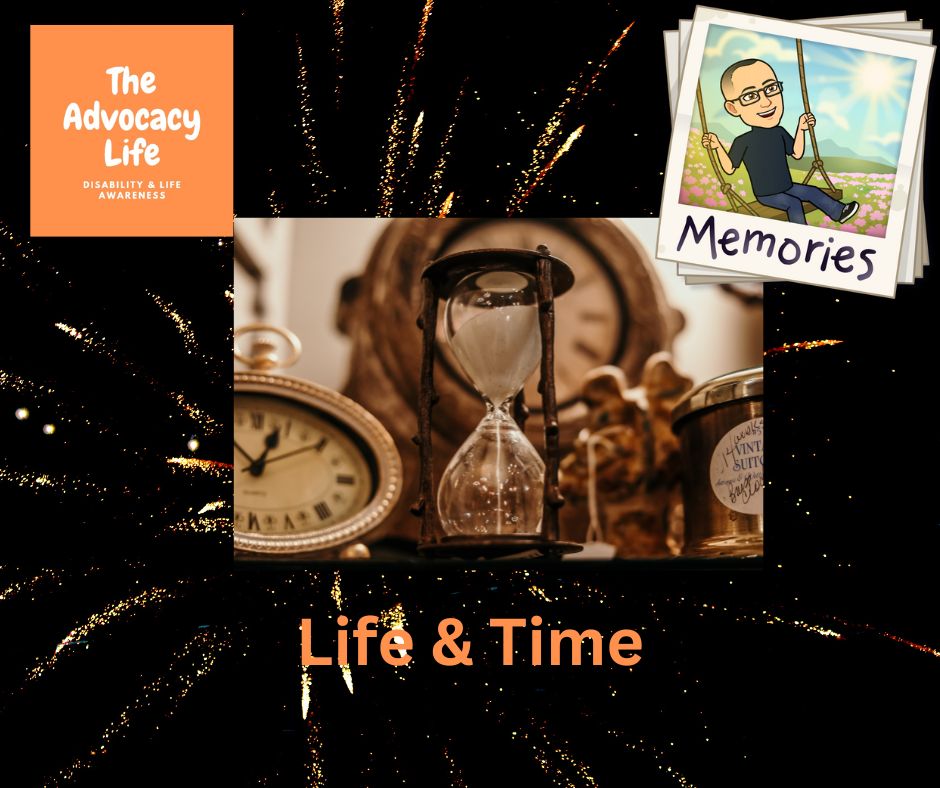
Happy Wednesday, my dear friend. I want to begin this blog by saying thank you for your time. Time is such a strange gift, isn’t it? We can’t keep it. We can’t make more of it. We can only lose it, waste it, or make the most of it. When you have a disability like mine. Time seems to go slower. There’s no spontaneity in my life. Either I or someone else must plan every detail. Some days I feel like a tree is growing but not moving. This is not the ideal life, but I am so thankful for it.
Click Here to Read the Rest: Life and TimeSome people look at my life and think it must be a living hell. Once, I was walking through a mall. A father saw me look at his child and said, ‘’Thank God you’re not like them.” Referring to my brother and me, the tree grows vertically in the same way the spirit should. I remember feeling bad for this man. Yes, my pride was hurt. The comment was rude. I was wondering how you spent his time. Worrying and being scared. life has its own rhythms and seasons that we can’t possibly comprehend or control fully.
John 12:8 NIV “You will always have the poor among you, but you will not always have me.”
It’s easy to look past the tree because it doesn’t move; it just sits there. Sorry, I had to make myself laugh. it would be wonderful for me to always want to blog about all the things I’ve done and places I’ve gone. Those agreed memories and wonderful experiences, but that’s not my daily reality. Most days I’m in front of my tablet or laptop, making Zoom calls. I make sure my calendar is up-to-date. Everyone wants to live a life that is full of joy and great memories That’s a wonderful goal, but it’s not going to happen every day.
I always get a little offended when someone says they’re bored. For those of us in the Western Hemisphere of the world, we have so many options for what to do with our time. I know that sounds foolish, but you don’t have to work wherever you work. You don’t have to pay your bills. Yes, there are consequences if you don’t. However, there are plenty of people content to live off the grid and off the land. There are people who make plenty of money at home playing video games. To become a doctor, you have to spend 8 years of your life in medical school.
There are people who spend hours a week in chairs receiving chemotherapy. There are people who are spending their time behind bars. I know the local news has moved on, but there is still a war going on in Ukraine. You may be tired of scrolling through TikTok, but don’t forget about those who have become refugees to avoid bombings in Israel and Gaza. Life and time are about perspective. We have all felt like trees Once in a while, remember that the figure gives life. Without their oxygen, we can’t live, and without our carbon monoxide, they can live. Your life may not be perfect. Sorry to tell you this; it’s never going to be. You can be aware of how you spend your life and your time. As always, thanks for your time. See you next week!
Become a paid subscriber to get access to the rest of this post and other exclusive content.

