Tag: disability rights

  • The Math of Disability

    The Math of Disability

    2024 is shipping up to be my best advocacy year! In October, this blog reached 3ed its anniversary. The podcast will be 3 years old in January. I was honored to be invited to the White House to speak. I’m optimistic that I can finish the first draft of my second book by December. I serve on both state and National disability advocacy boards to improve the lives of my brothers and sisters with disabilities. What does all this success add up to? As far as this world goes, less than Zero. I don’t want to be Logan Paul or Joe Rogan I just want to live. I live a backward life and I love it

    I have over 160 followers on this website. On average only 30 open the blogs when it is sent to their emails. About 12 folks listen to the podcast regularly. I started a bonus newsletter, and I have four subscribers. Last week, I looked in my bank account. I have more money in there than ever, thanks to book sales, and other projects I’m involved with. It’s less than $2,000 because I must stay legally broke to maintain my Medicaid eligibility. Money matters in this life how can I live?

    Matthew 16:25 NIV 25] For whoever wants to save their life will lose it, but whoever loses their life for me will find it.

    I did the math. I need roughly $100,000 to employ caregivers and other long-term support. This does not include rent, food, or utilities. To live as independently as possible, I estimate I would need about $150,000 a year, assuming I have no debt.

    Some of my dream jobs include being a translator at the UN. The top-level translator makes approximately 54,000 a year. That’s not going to cut it. The average legislative aid salary in Washington, DC, is $ 78,000 a year. That doesn’t work either. 68,000 a year is the average salary of a paralegal in New York City. Nope, that still doesn’t work. Let’s try one more: in New Jersey, a social worker makes just under 64,000 a year at the top level.
    Photo by MART PRODUCTION on Pexels.com

    To be clear, it is possible to work and keep your benefits at the same time, but it is purposely dangerous to navigate this system. It’s like navigating a minefield naked. For most of us, we have to call our benefits counselor twice a month feeling like the Orphan Oliver “Please sir, may I have some more?” something doesn’t add up.

    It costs 20 to 25% more to raise a disabled child some people out there think that individuals like myself should not be allowed to live. I think it’s because of the financial burden. People like me just want a chance to live to show you that we can do more and be more than you ever expect because life is not about numbers it’s a journey to learn and grow every day. There is a Bill in Congress right now to raise the asset limit from $2,000 set in 1983 to $10,000. This would be a very small step toward equality but people don’t even know about it.
    Photo by RDNE Stock project on Pexels.com

    We have men and women fighting all over the world to protect our freedom. As Americans. Disabled Americans need to rise and have their voices heard so we can be financially free and have the same opportunities As Americans. America does employ two models of socialism. Prisons and developmental centers. The government provides all the essentials to live, but there’s one thing missing: freedom.

    Where are the warriors of the Next generation to make sure that this vital population of America does not get left behind? I love my disabled life and I’m thankful for it because it’s taking me so many places and showing me the real value of life. Americans need to stop being afraid; they need to live; they need to help others live. Mr President and other elected officials help us streamline the disability system so we can do our part to take care of those who are more vulnerable than me and live a joyful American Life.
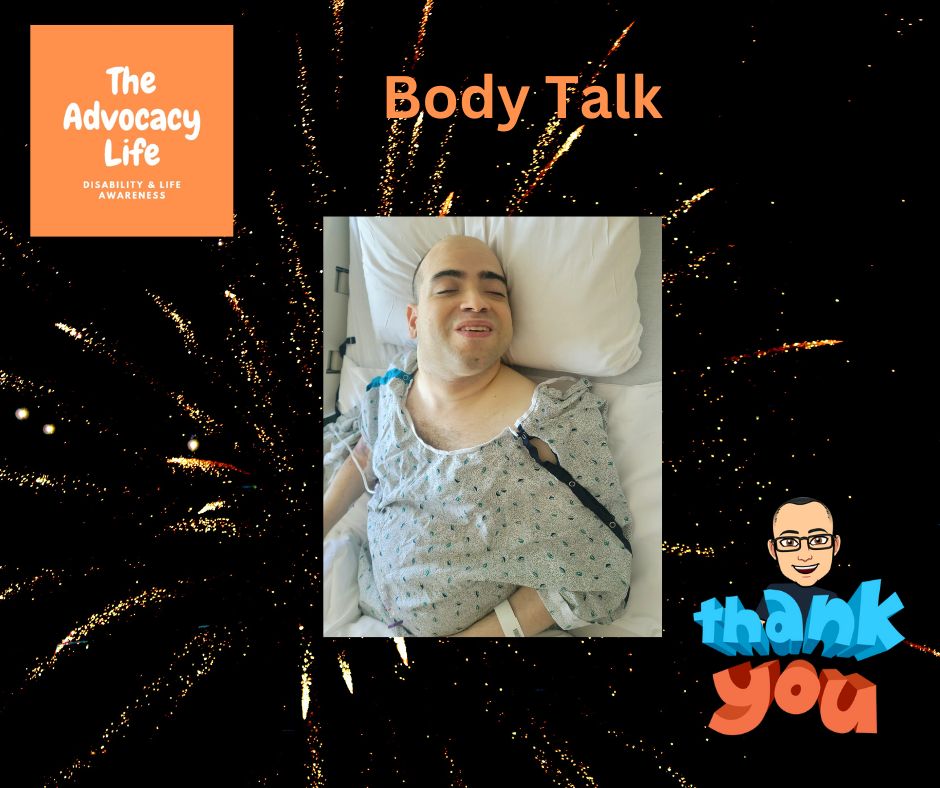
  • Body Talk

    Body Talk

    Greetings once again to all my readers. I don’t just enjoy writing blogs; I love reading them, too. Recently, I came across an inspiring post by Lily Pierce, a remarkable woman who lives with a disability. She wrote a powerful piece on how we perceive our physical appearance, and her words deeply resonated with me. I’ll include a link to the post for those interested. Lily’s post sparked an idea within me—one that I want to share today: a letter to thank my body for everything it has done for me, even when I’ve taken it for granted.

    When people first see me, they may notice someone standing no taller than five feet, with little hair on my head since my twenties—but plenty elsewhere! Grooming can be awkward for anyone, but imagine having to ask for help to do it. That’s my reality. Some people may focus on the scars I carry from countless surgeries, or how no matter how much time I spend at the gym, I’ll never regain the six-pack I lost at sixteen.

    I often joke that it’s only my body that’s broken—not my mind or heart. Of course, I know that’s not entirely true. But humor has always been a way for me to embrace my situation and make light of things. In a world that often values outward appearances, I can’t change societal standards—but perhaps, with this letter to my body, I can inspire a shift in how we view ourselves.

    Galatians 5:17 NIV [17] For the flesh desires what is contrary to the Spirit, and the Spirit what is contrary to the flesh. They are in conflict with each other, so that you are not to do whatever you want. 

    Dear Body,

    Many hands have helped care for you—not just mine. So many doctors, nurses, friends, family, and caregivers have played a role in keeping you strong, and I thank you for accepting all of them. Thank you for enduring years of medication and surgeries, and for allowing me to stay as healthy as I am today. I’m grateful that those medical interventions have lessened as we’ve aged.

    Thank you to my eyes for showing me the beauty in the world, even when others focus on its negatives. Thank you to my nose for savoring the smells of home-cooked meals, and to my ears for absorbing laughter, wisdom, and the sounds that make life rich. Thank you to my voice and lips for helping me speak up for others and advocate for those in need.

    To my arms and legs, thank you for always trying—despite the pain you endure. Even when walking or standing isn’t easy, you never give up. And as personal as this may sound, I want to thank my “male organ”—for reminding me that no matter how the world sees me, I am a man, whole and complete.

    Lastly, thank you to my feet. Though I’ve never stood fully on you, I know I would have no foundation without you.

    Our bodies may not always look or function as we wish, but they carry us through life nonetheless. For that, I am deeply thankful. Thank you for reading, and I hope you have a wonderful day.

    Note:

    This is a Rewritten exert for my first book Confessions From Disability Limbo. Exclusively on Amazon.

    Latest Podcast

  • Childhood: Book Selection

    Childhood: Book Selection

    Subscribe to continue reading

    Become a paid subscriber to get access to the rest of this post and other exclusive content.

  • Education For ALL

    Education For ALL

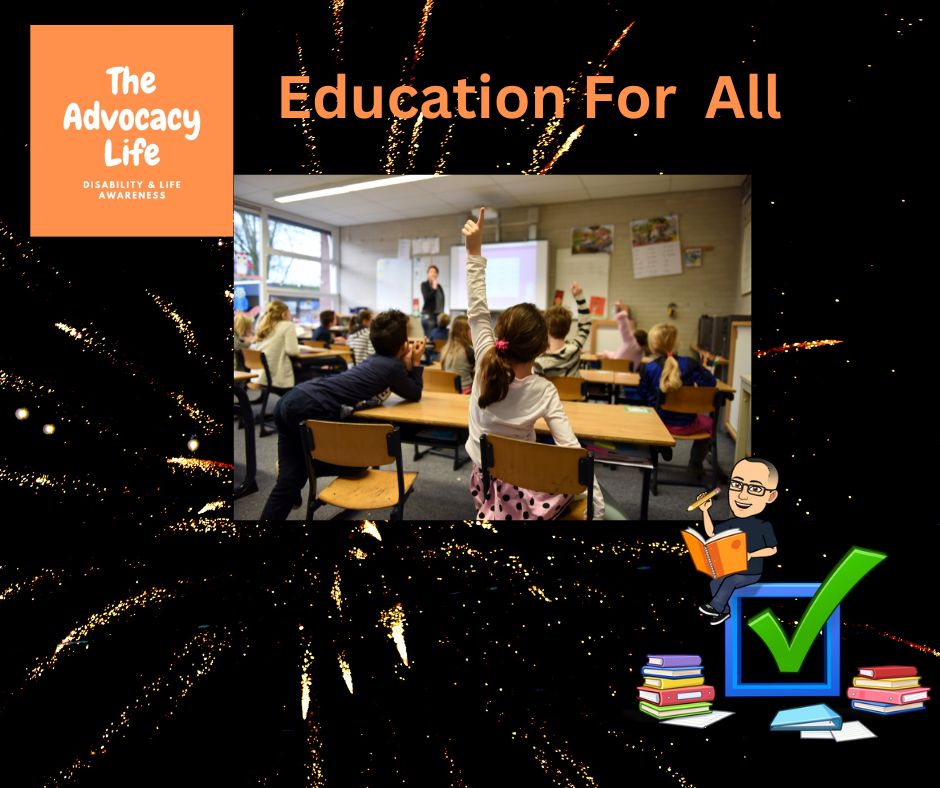
    As an individual living with Cerebral Palsy (CP), I take pride in being nonpartisan. My disability does not care if I support the elephants or the donkeys in November. Most likely, I will not walk in January regardless of who is sitting in the Oval Office. I may have been born disabled but everyone else is temporarily abled. Your body will fail, and you will need help from someone else to help you live your life. I can see both sides of most hot-button issues if you want to balance the economy ask someone who has a balanced budget on a fixed income for the majority of their life.

    I would never impede anyone’s opinions or beliefs, Please be a patriot and go vote in November. Many suggest that eliminating the Department of Education would help balance the budget and bring money back to the states. This is not an efficient way to cut down on wasteful spending. This would be wrong and dangerous for individuals and families with disabilities.

    Most Americans have never heard of the Individuals with disabilities education Act (IDEA). The legislation was revised in 1990 under a republican administration. Here is a quick overview of the law. According to Access for Special KidsResource Center (ASK)

    • Free Appropriate Public Education (FAPE)
    • Appropriate Evaluation
    • Individualized Education Program (IEP)
    • Least Restrictive Environment (LRE)
    • Parent and student participation in decision-making
    • Procedural Safeguards

    I am not ashamed to admit that I had an IEP meeting every year since I can remember. It ensured I had the proper support I needed to thrive as a student. I had a paraprofessional accompany me to every class who took my notes, helped me review materials after class, and helped me with my personal takes. I attended mainstream classes. I was not locked away in the special ed classroom. Every year some of the teachers f thought that’s where I belonged because I was a wheelchair user. I loved proving them wrong. The other students had to see me as a person not just a disability. I was a student just like them with goals, dreams, and embarrassing moments to overcome.

    Psalms 41:1 NIV [1] Blessed are those who have regard for the weak; the Lord delivers them in times of trouble.

    Disability should not be a burden on society, it should be an asset to their communities. Students without disabilities should not be afraid to approach those who are different. All children should be able to learn and help each other. That is how we build a prosperous future for America The reporter Geraldo Rivera exposed the horrors of Institutional living in the mid-80s. All these years later our population is still being Isolated. What makes one student less than another? Disabled students are placed in out-of-district schools that “specialize in disabilities.” They need to be allowed to see if they can adapt and grow with non-disabled peers before being segregated. The easiest solution is not always the best solution. There should not be a disabled population, versus a non-disabled population, but Americans. We need to move forward not backward.

  • What’s Next

    What’s Next

    Subscribe to continue reading

    Become a paid subscriber to get access to the rest of this post and other exclusive content.

  • America Ignores the Paralympics

    America Ignores the Paralympics

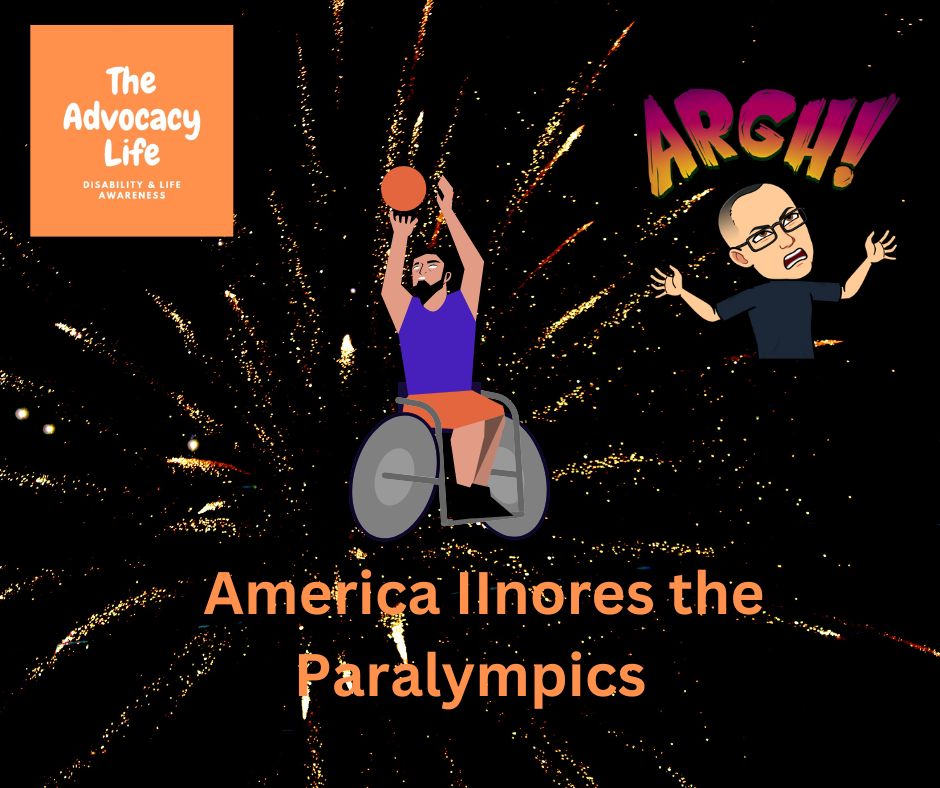
    I’ve spent the last week and a half watching the Paralympics, have you? I am a proud American and love this country with all my heart. I would have enlisted to defend this nation long ago. Since I turned 18 I made sure to vote in every election, including the primaries. Most people don’t even know who sits on their School boards but I do. I always do my due diligence to research the candidates. That’s what you’re supposed to do. I am part of the American population that has been ignored, and I finally have a way to prove it. There is a sad truth in America. Unless disability affects your life in some way people don’t care about you. A few weeks ago there was non-stop coverage of the 2024 Paris Olympics. Everyone knew that LeBron James carried the flag at the opening ceremonies. Does anyone know who carried the flag for the USA in the Paralympic games?

    Steve Serio has participated in several Paralympic games; he is the captain of the US wheelchair basketball team. All the sports channels went crazy when the US rugby team won a medal. Does anyone know what the Paralympic rugby team won? For years Michael Phelps and Simone Biles were on in primetime. The Paralympics have never been in primetime. Is it because the girls who play seated volleyball don’t wear revealing outfits like the ones in beach volleyball? I never saw any tick-tock with Snoop Dogg next to a paralympic athlete. For 17 days there were recaps every night of all the events if you didn’t have the peacock app they don’t televise 99% of the events. Channels in other languagesPromoted the Olympics for months, not this time

    Does anybody care? We have all moved on to our fantasy football leagues and pumpkin spice lattes. America likes to preach equality and equity, but when it comes to the disabled we are hypocrites. I feel it is because America has this misguided belief that individuals with disabilities no matter what the diagnosis only serve to inspire and encourage the rest of the population. We cannot be seen as equals because otherwise the rest of America would have to see their mistakes and see their weaknesses. Americans like to pretend we are invincible. Besides liking a real on Instagram that lasts 3 minutes long we cannot be bothered to be moved outside of our comfort zone.

    Leviticus 19:18 NIV  “ ‘Do not seek revenge or bear a grudge against anyone among your people, but love your neighbor as yourself. I am the Lord.

    Paralympic athletes are athletes. Instead of asking Alexa some dumb question ask it to give you a list of all the paralympic records that have been shattered over the last week and a half! Instead of complaining that there’s nothing on Netflix to watch. I dare you to look at a game of Goalball, paralympic bench pressing, or Blindsoccer. Everyone has their struggles but the disability population was not created just to make you feel good about your tribulations. We are your friends, we are your neighbors, and we should be treated as such we should be respected like every American!

    Special Note:

    i am hosting the Region 7 for SABE Click Here to register before September 6, 2024.

  • Examples of  Ableism

    Examples of Ableism

    As a child with a disability, I attended mainstream classes all my life. One memorable class was DARE (Drug Awareness Resistance Education), aimed at preventing drug addiction—a fear shared by all parents. This program made me realize the importance of early education on critical issues. Just as children learn about the dangers of drugs, they should also be taught about disability etiquette and inclusion from a young age.

    Children’s natural curiosity about differences should be nurtured, not stifled. When a child asks about someone with a disability, parents often shush them out of discomfort. This only perpetuates ignorance. Instead, open discussions can foster understanding and empathy. I recall a time at a mall with my brother Abner and our caregivers. We exited an elevator and overheard a father tell his son, “Thank God you’re not like them.” This comment stung, but more than that, it made me pity the man for his ignorance—a product of likely never having been exposed to individuals with disabilities.

    The disability community is the largest underrepresented and underserved group in the U.S., encompassing every body shape, skin color, sexual orientation, and gender. Despite this, society often ignores us to avoid disrupting their busy lives. Disability is not going away; it’s a natural part of the human experience. Everyone is only “temporarily able” and might need help eventually.

    Living with a disability means no days off; it’s a constant presence. Every day, I face frustrations and struggles. In school, I wasn’t just the last picked for dodgeball—I was excluded entirely because it was deemed “too dangerous.” In home economics, while others learned to sew, I was switched to a different elective because the teacher assumed I couldn’t use the sewing machine pedal. I was never given a chance to adapt or prove my abilities.

    Ableism limits growth for societal convenience, imposing barriers that exclude rather than include. Consider the story of Judy Heumann and the 504 sit-in—a pivotal moment in American history that highlights the fight for disability rights. Stories like hers should be part of our collective knowledge, teaching us about resilience and the importance of inclusivity.

    Exposure to disability issues from a young age can normalize differences and reduce stigma. Integrating disability awareness into education can help children grow into empathetic, informed adults. The more we see and understand people with disabilities, the less “other” they become.

    Our society must recognize that disability is part of the human condition and that inclusivity benefits everyone. By breaking down barriers and challenging ableist attitudes, we create a world where everyone has the opportunity to thrive. We must move beyond fear and ignorance to embrace a future where all individuals are valued for their unique contributions.

  • My super Suit

    My super Suit

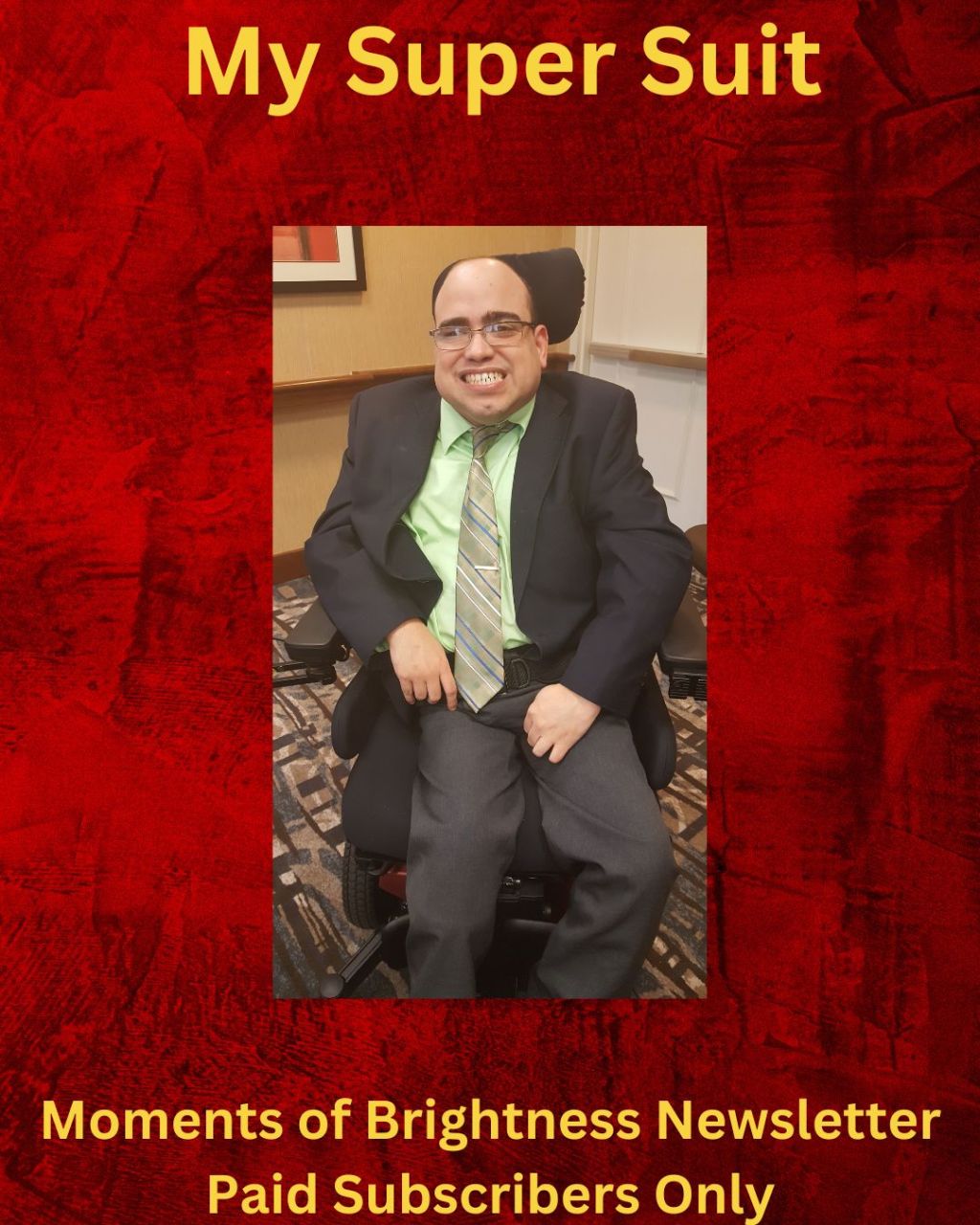
    Subscribe to continue reading

    Become a paid subscriber to get access to the rest of this post and other exclusive content.

  • Remembeing  Baby Doll

    Remembeing Baby Doll

    For the majority of my 20s, I wasn’t partying or drinking on the weekends. I was attending a series of habilitation day programs. I know most people don’t know what that is; don’t worry, I didn’t know what it was either until I got there. The easiest way to describe it is as an adult daycare for individuals with disabilities. This blog is not about me, but the impact “Baby Doll” had on me and those around her.

    Every so often, we come across someone whose life story is so hard to believe that part of it becomes a legend. Baby Doll was a strong African American woman. She was petite, but her heart was three times bigger than she was. Unlike most people, she was not afraid of letting the world see her heart. If she knew you, she would love you! She did not care what your skin color was. Gay or straight, that had no consequence. Every day, she hugged anyone. Oh, how I miss those hugs.

    This story needs to be shared because there’s a large sector of the disability community that has been neglected and has become less human. This makes me feel so angry. I chose the alias “Baby Doll” because that is what she called all of us who attended the day program. We knew who she was talking to just by the way she said the words “Baby Doll.”

    Those of us who can help others must fulfill that responsibility. Baby Doll was born completely “normal,” a pure product of her environment. Her own family forced her into prostitution and drug use. This did not take place in Russia or some third-world country—right here, in the land of hot dogs and the New York Yankees!

    She was eventually burned alive by the waste. After her brain was fried and her body was all used up, she was given over to the state of being an adult. When you’re given a court-appointed guardian, you can’t even get a library card in your name.When I met her, she was a shell of her physical self. Her wonderful smile had no teeth. She seldom wore short sleeves, even in the summer. Baby Doll had gray, thinning hair. She used a small collection of wigs. The nicest one she had, she wore to her funeral.

    The Lord your God is with you, the Mighty Warrior who saves. He will take great delight in you; in his love he will no longer rebuke you, but will rejoice over you with singing.” Zephaniah 3:17 

    Yet there are a few aspects of disability life of which people should be aware. Do you know what people with disabilities have in common with prisons and communal settings? The government pays for all essential parts of life. The participants are paid less than the minimum wage. Most importantly, the individuals are denied some critical freedoms. Let me be clear. We do need more medical and behavioral facilities for those with severe needs. We are past the crisis point where we need quality caregivers who deserve a decent wage. The system is so focused on protecting itself. It denies flexibility to the human element.

  • SABE, Books, & More

    SABE, Books, & More

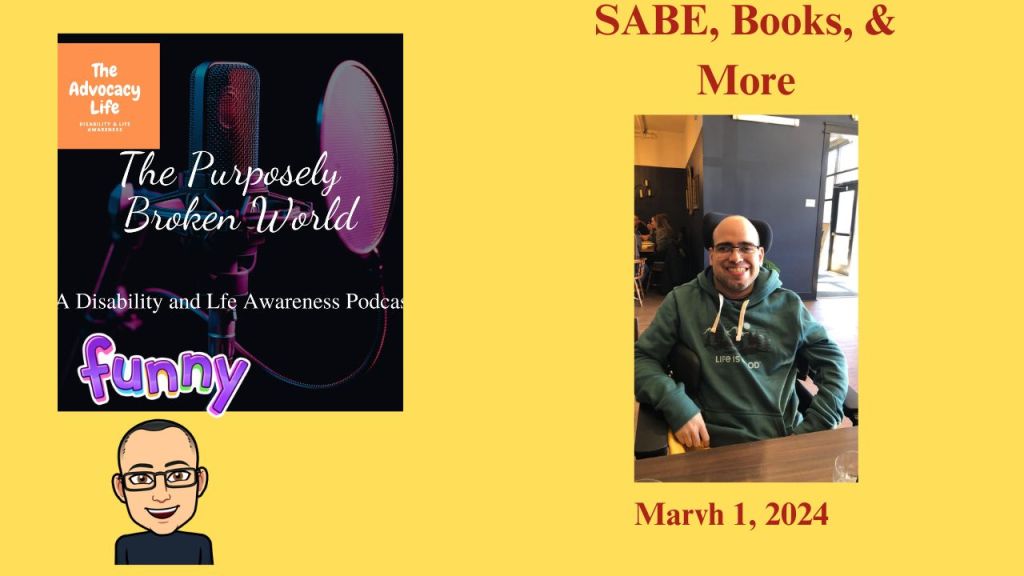
    For the first episode of March, Kevin is proud to present this laid-back episode where he simply updates you on the fun times he had in the last few months. This is a different kind of podcast from your favorite little podcaster.

    SHOW NOTES

    New Jersey Council on Developmental Disabilities

    SABE

    MOX

    A Promised Land